
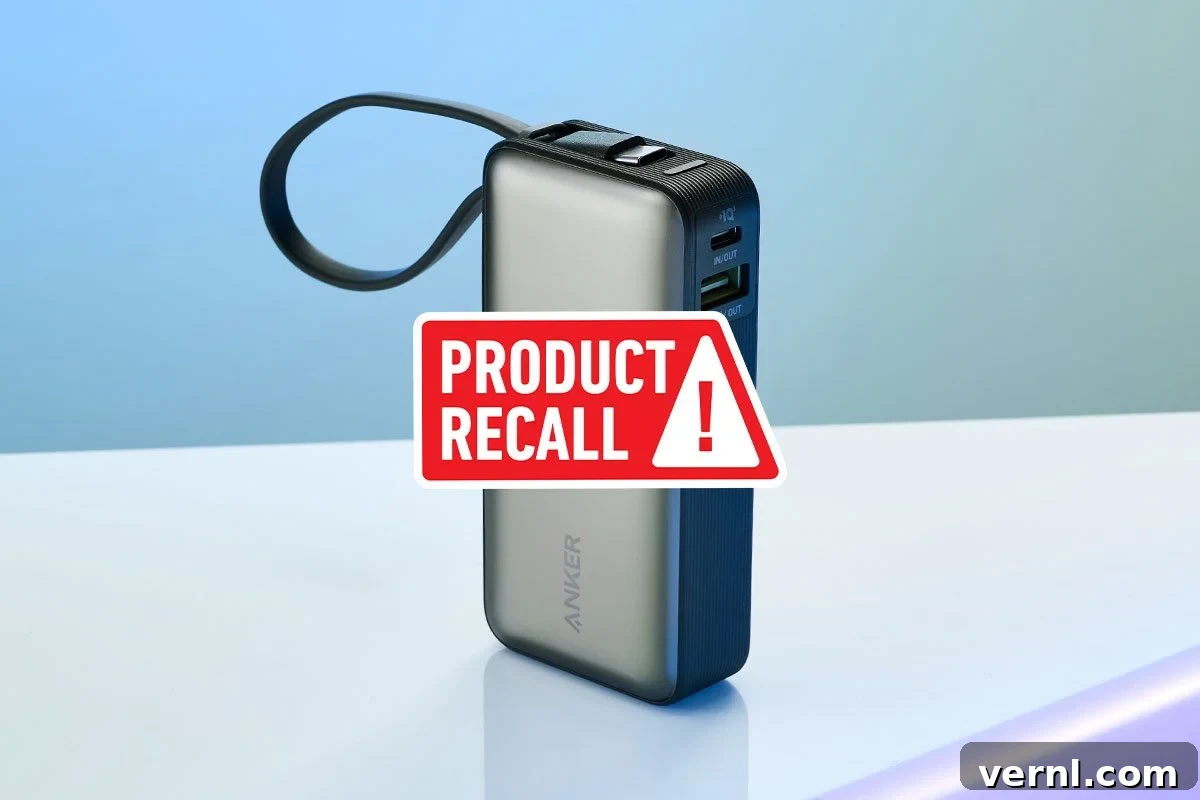
In our increasingly connected world, the convenience of a portable power bank is undeniable. From keeping your smartphone alive during a long commute to ensuring your tablet is charged for a flight, these compact devices have become indispensable companions. They offer the freedom to keep your devices charged even when a wall outlet is out of reach, making them crucial for both daily errands and extensive travel. However, this convenience comes with a critical responsibility: ensuring the safety of these powerful gadgets. Recent news has cast a shadow on this everyday essential, specifically for owners of certain Anker power bank models. A significant recall has been announced due to concerns over potential fire hazards linked to these devices.
If you own an Anker power bank, it’s paramount to understand the implications of this recall. Certain models have been identified as posing a fire risk, urging immediate action from consumers. This comprehensive guide will delve into the reasons behind Anker’s decision, provide a clear list of the affected power banks, and outline the essential steps you need to take if your device is among those posing a safety hazard. Prioritizing device safety is not merely a recommendation; it’s a necessity to protect yourself, your property, and those around you from potential harm.
Anker Power Bank Recall: Unpacking the Critical Lithium-Ion Battery Safety Concerns
The primary reason behind Anker’s widespread recall of its power banks stems from an issue with their lithium-ion batteries. While the company’s initial statements were somewhat vague, a deeper dive into their official recall FAQ reveals a manufacturing defect originating from a single vendor. Lithium-ion batteries are the powerhouse behind most modern portable electronics, revered for their high energy density and compact size. However, these very advantages also come with inherent risks, particularly if manufacturing defects or damage compromise their integrity. Issues such as overheating, internal short circuits, or damage can lead to a phenomenon known as thermal runaway, where a battery’s temperature rapidly increases, potentially leading to smoke, fire, or even explosions.
Anker stated that they initiated “enhanced quality assurance protocols” to identify potential defects earlier in the production cycle. These safeguards, including “expanded component-level audits and supplier testing,” reportedly helped them pinpoint a “potential issue with common, lithium-ion battery cells from a single vendor.” This suggests that the problem wasn’t a design flaw across all products but rather a specific batch of faulty battery cells that made their way into certain Anker power bank models. Despite the company asserting that the “likelihood of malfunction is considered minimal,” the grave risks associated with faulty lithium-ion batteries—specifically, a “higher risk of fire”—necessitated a voluntary global recall. Anker emphasizes the importance of handling recalled units differently from regular batteries due underscoring the severity of the potential danger. The company has formally notified and is actively coordinating with regulatory authorities in all affected regions to ensure the recall process adheres to local guidelines and reaches all potentially impacted consumers effectively.
Is Your Anker Power Bank a Fire Hazard? Identifying Recalled Models
For many consumers, this latest Anker recall might trigger a sense of déjà vu. Earlier this year, the United States Consumer Product Safety Commission (USCPSC) announced a recall involving over one million Anker PowerCore 10000 power banks, specifically model A1263. Unfortunately, the scope of the problem has proven to be more extensive than initially believed, leading to this expanded recall effort. The updated recall now encompasses additional models, highlighting a broader manufacturing concern within Anker’s product lines.
It is absolutely crucial to check if your Anker power bank is among the newly identified at-risk devices. Anker has provided a definitive list of the models now included in this global recall. To identify your power bank’s model number, typically you can find it printed on the device itself, often on the back or bottom surface, or on the original packaging. If you own any of the following Anker power bank models, you must cease using them immediately:
- Anker Power Bank (10K, 22.5W) — Model A1257
- Anker Power Bank (20,000mAh, 22.5W, Built-In USB-C Cable) — Model A1647
- Anker MagGo Power Bank (10,000mAh, 7.5W) — Model A1652
- Anker Zolo Power Bank (20K, 30W, Built-In USB-C and Lightning Cable) — Model A1681
- Anker Zolo Power Bank (20K, 30W, Built-In USB-C Cable) — Model A1689
Once you’ve identified your device’s model number, cross-reference it with this list. If there’s a match, the company’s directive is clear: stop using the power bank immediately. However, it’s equally important not to dispose of the device prematurely. Anker explicitly states that you should hold onto the unit until you receive official confirmation from them regarding its qualification for the recall program. This critical step ensures that you can properly participate in the recall process and receive a replacement or compensation, while also preventing improper and potentially dangerous disposal.
Navigating the Anker Recall Process: Replacements, Refunds, and Safe Disposal
For owners of the affected Anker power bank models, the next logical question is: what’s the solution? Anker has established a clear process for consumers to address this safety concern. The company offers a Product Recall Submission Form designed to facilitate the exchange of your recalled device for either a replacement product or a gift card of equivalent value. The first step in this process is to accurately confirm that your device’s model number is indeed on the official recall list. After verifying this, proceed to submit the form with all the required information. This submission will initiate the official recall procedure for your specific unit.
Upon receiving confirmation from Anker that your device qualifies for the recall, the most critical step that follows is the safe and proper disposal of the affected unit. This isn’t a task to be taken lightly, as recalled lithium-ion batteries pose significant hazards. Anker strongly warns against simply throwing these power banks into regular household trash or even typical recycling bins. Most standard recycling centers and battery drop-off points “are not equipped to handle recalled lithium-ion products like power banks,” due to their heightened fire risk. Improper disposal could lead to fires in waste collection vehicles, recycling facilities, or landfills, endangering workers and causing substantial property damage.
Therefore, it is essential to locate a certified facility that specializes in accepting and safely processing recalled lithium-ion batteries and other hazardous waste. To do this effectively:
- Research Local Facilities: Check your local municipal waste management website or contact your city/county’s public works department. They often provide information on hazardous waste collection events or permanent disposal sites.
- Contact Specialised Recyclers: Look for electronics recyclers or hazardous waste centers in your area that explicitly state they handle lithium-ion batteries or “recalled battery products.”
- Call Ahead: Always call the facility beforehand to confirm their specific requirements for accepting recalled lithium-ion power banks. This ensures they are prepared to handle your device safely and can provide any necessary instructions.
By following these guidelines for submission and disposal, you not only protect yourself and your community but also contribute to responsible waste management practices, minimizing environmental impact and potential safety incidents.
Beyond the Recall: Essential Tips for Power Bank Safety and Maintenance
The Anker recall serves as a powerful reminder that while portable power banks offer immense convenience, they also demand vigilance and responsible handling. Understanding and implementing best practices for power bank usage and maintenance is crucial for preventing future safety incidents, regardless of the brand. Here are key considerations for ensuring the longevity and safety of all your portable charging devices:
- Purchase from Reputable Brands: Always opt for power banks from well-known manufacturers that adhere to strict safety and quality standards. Counterfeit or generic brands often use cheaper, lower-quality components that are more prone to failure and safety hazards.
- Avoid Extreme Temperatures: Lithium-ion batteries are sensitive to temperature extremes. Do not leave your power bank in direct sunlight, in a hot car, or expose it to freezing conditions. High temperatures can accelerate battery degradation and increase the risk of thermal runaway, while extreme cold can permanently damage the battery’s capacity.
- Prevent Physical Damage: Treat your power bank with care. Avoid dropping it, subjecting it to heavy impacts, or puncturing its casing. Any physical damage can compromise the internal battery cells, leading to short circuits and potential fire hazards. If your power bank appears swollen, warm to the touch without charging, or has any visible damage, discontinue use immediately.
- Use Original or Certified Cables: Always use the charging cables that came with your power bank or certified third-party cables. Substandard cables can cause inefficient charging, overheating, and even damage to both the power bank and the devices connected to it.
- Monitor Charging: While modern power banks have safety features to prevent overcharging, it’s good practice to avoid leaving them charging unattended for extended periods, especially overnight. Unplug the device once it’s fully charged. Similarly, avoid completely draining the battery, as deep discharging can reduce its lifespan.
- Proper Storage: When not in use, store your power bank in a cool, dry place, away from flammable materials. Ideally, keep it charged to about 50-80% for long-term storage, as this helps preserve battery health.
- Regular Inspection: Periodically inspect your power bank for any signs of swelling, leaks, unusual odors, or changes in performance. These could be indicators of internal damage or battery failure, signaling that the device should be safely retired.
Beyond individual device safety, product recalls like Anker’s underscore the broader importance of consumer awareness and manufacturer accountability. They highlight the continuous need for rigorous quality control in the electronics industry and the vital role regulatory bodies play in protecting the public. By staying informed, acting promptly on safety notices, and adopting safe usage habits, consumers can enjoy the benefits of portable power with peace of mind. Your proactive approach to gadget safety can make a significant difference in preventing potential dangers.
Sources
- Anker Innovations Initiates Global Voluntary Recall for Selected Power Banks, Anker, 2025
- More than One Million Anker Power Banks Recalled Due to Fire and Burn Hazards; Manufactured by Anker Innovations, United States Consumer Product Safety Commission, 2025
Related Articles
- See a Green Dot on Your Android Phone? Here’s What It Means
- If You Get a USPS Scam Text, You Need To Do This Immediately
- This Is How Often You Should Restart Your Phone