
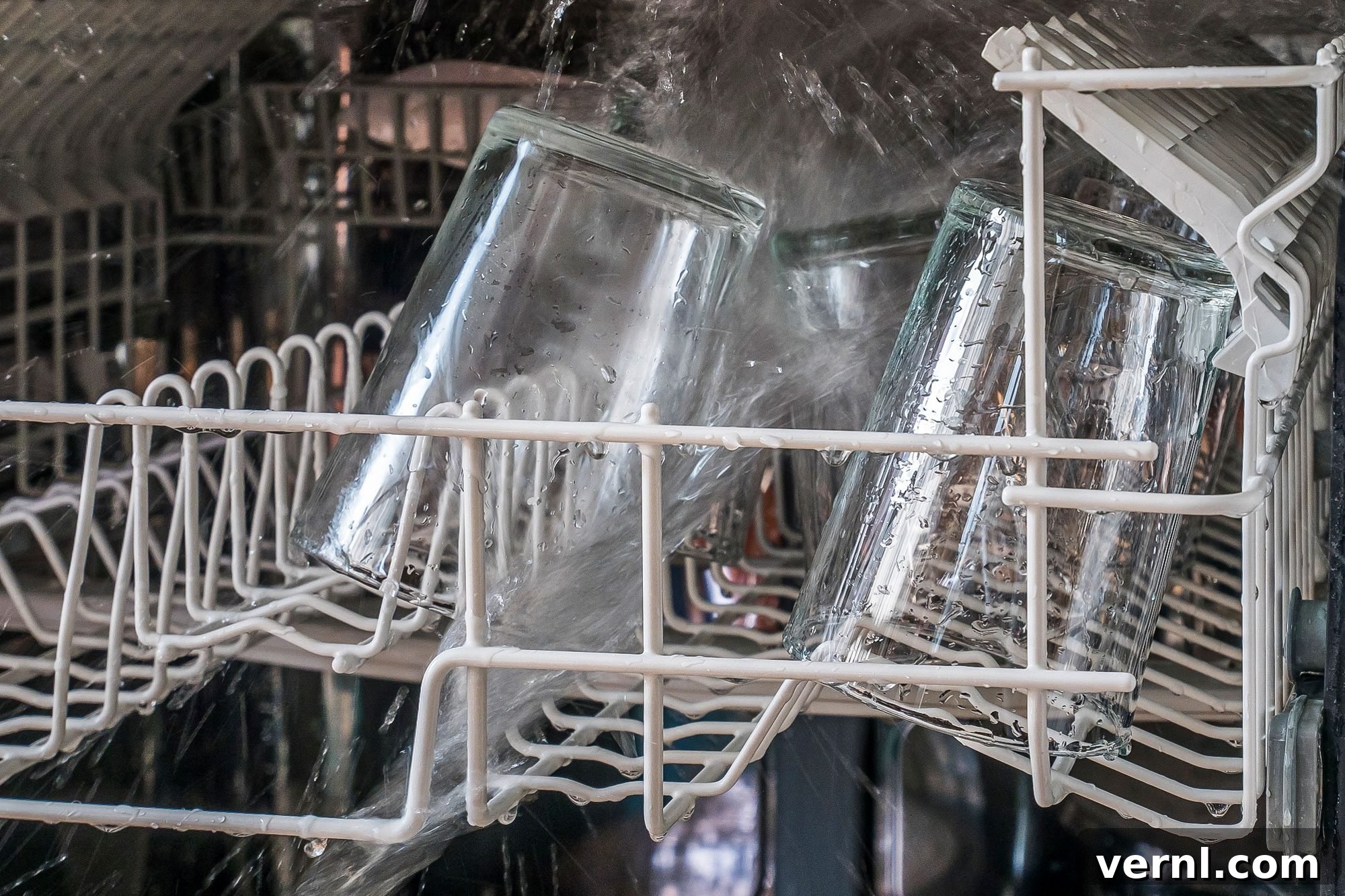
A properly functioning dishwasher relies heavily on incredibly hot water to deliver truly sparkling, sanitized dishes. With decades of experience in appliance repair, I’ve frequently encountered situations where dishwashers fail to clean effectively or completely dissolve detergent because the water isn’t reaching the necessary temperature. This often leads to frustrating results like cloudy glassware, greasy plates, and undissolved soap residue, indicating a fundamental problem with the appliance’s heating system.
While your home’s water heater typically supplies water at around 120 degrees Fahrenheit, this temperature is generally insufficient for your dishwasher to perform its job optimally. Modern dishwashers are designed to boost this incoming water temperature significantly, often reaching an internal temperature of up to 160 degrees Fahrenheit. This elevated temperature is crucial for several reasons: it’s high enough to effectively kill most common pathogens, ensuring your dishes are not just visually clean but also hygienically sanitized, and it’s essential for thoroughly melting and activating dishwasher detergent for superior cleaning performance.
One of the simplest ways to quickly assess your dishwasher’s heating capability is to perform a mid-cycle steam check. Approximately 30 minutes into a regular wash cycle, carefully open the dishwasher door. If everything is working correctly, you should observe a significant plume of steam billowing out, indicating that the water inside has reached its high operational temperature. If you open the door and there’s no visible steam, or only a very faint wisp, it’s a strong indicator that something is amiss with your dishwasher’s heating system, and further investigation is required.
The most frequent culprit behind a dishwasher failing to heat water adequately is an issue with the water inlet valve. This critical component is responsible for controlling the flow of water into the dishwasher tub. If it doesn’t allow enough water to enter, the heating element may not be fully submerged or may be prevented from activating as a safety measure. To check this, again, about 30 minutes into the wash cycle, open the door. You should see a water level high enough to completely cover or at least prominently touch the heating element, which is typically located near the bottom of the dishwasher tub. Insufficient water means insufficient heating, regardless of the element’s condition.
It’s worth noting that some advanced dishwasher brands, such as Bosch and Miele, feature hidden heating elements for aesthetic and operational benefits. For these models, checking the water level requires a slightly different visual reference. On Bosch dishwashers, the water level should typically reach the very top of the round plastic filter handle. For Miele dishwashers, the water should rise to the bottom edge of the white plastic filter handle. Understanding these specific indicators is key to accurate troubleshooting for these premium appliances.
When a dishwasher’s fill valve (another term for the water inlet valve) malfunctions and prevents the correct amount of water from entering the unit, the subsequent lack of water means the heating system cannot effectively raise the temperature to the required levels. This directly impacts the dishwasher’s ability to clean dishes thoroughly and sanitize them. Fortunately, in many cases, replacing the fill valve can directly resolve this common problem, restoring your dishwasher’s full heating and cleaning capabilities. This is often a straightforward repair that can be performed by a homeowner with basic DIY skills, provided proper safety precautions are followed.
Beyond the water inlet valve, several other components can contribute to poor water heating in a dishwasher. Identifying the specific cause is crucial for an effective repair. Here are some of the other possible reasons your dishwasher might not be getting hot enough:
- Controller Heater Relay Malfunction: The controller heater relay acts as a switch, signaling the heating element to turn on and off based on the cycle’s requirements. If this relay fails, it won’t send the necessary power to the heating element, preventing it from generating heat. This often requires testing the relay for continuity or simply replacing the control board if the relay is integrated.
- Worn Out or Melted Heating Element: The heating element itself is the primary component responsible for heating the water. Over time, or due to prolonged use with insufficient water, it can wear out, burn out, or even melt. A visual inspection might reveal cracks, discoloration, or a complete break in the element. If it’s physically damaged, it won’t be able to heat the water, and replacement is necessary.
- Blown Heating Circuit Hi-Limit (Fuse): Dishwashers are equipped with safety fuses, such as a high-limit thermostat or a thermal fuse, designed to prevent overheating. If the dishwasher’s temperature exceeds a safe threshold, or if there’s an electrical surge, this fuse will blow, cutting power to the heating circuit. This is a safety feature, but it will prevent the element from heating until the fuse is replaced and the underlying cause of the initial blow is addressed.
- Broken or Rodent-Chewed Wire to Heating Element: The heating element requires a continuous electrical connection to function. If the wiring leading to the element is compromised – perhaps due to rodent damage, chafing, or corrosion – power won’t reach it. A simple visual inspection for damaged wires can sometimes reveal this issue, though testing for continuity with a multimeter might be required for hidden breaks.
- Faulty Thermostat or Thermistor: While not listed above, a faulty thermostat or thermistor (temperature sensor) can also cause heating issues. These components monitor the water temperature and send signals to the control board. If they provide inaccurate readings, the control board might not activate the heating element correctly, leading to underheating or even overheating.
How Hot Do Dishwashers Get? The Science of Clean
As previously mentioned, most dishwashers aim to heat water to approximately 160 degrees Fahrenheit during the main wash cycle. This temperature is deliberately chosen because it’s ideal for dissolving grease, activating enzymes in detergent, and achieving effective sanitation. The heat helps break down food particles more efficiently than cooler temperatures, ensuring a more thorough clean. Furthermore, during the drying cycle, the heating element can elevate the internal temperature even further, sometimes reaching up to 170 degrees Fahrenheit. This intense heat aids in evaporating residual water, contributing to streak-free and spotless drying results. However, this high temperature comes with a caveat: certain plastic items, particularly those placed on the bottom rack close to the heating element, can deform or even melt at these extreme temperatures. It’s always best practice to place all plastic items, especially those not labeled “dishwasher safe,” on the top rack where temperatures are generally lower.
It’s also important to understand the role of specific cycles, such as the “Sanitize” cycle. This specialized setting is designed to meet strict sanitation standards, often requiring the water to reach an even higher temperature, typically between 155-165 degrees Fahrenheit, and to maintain that temperature for a prolonged period. This ensures the maximum elimination of bacteria and other microorganisms, making it ideal for items like baby bottles, cutting boards, or dishes used by sick individuals. If your dishwasher isn’t reaching these temperatures, its sanitizing capabilities will be compromised.
Can You Use Your Dishwasher Without Hot Water? Understanding the Compromise
While technically possible to run your dishwasher with only cold water, it is far from optimal and comes with significant drawbacks. If your dishwasher takes in cold water exclusively, it will still attempt to clean the dishes, but the cleaning efficacy will be severely reduced. Without the benefit of hot water, detergents struggle to dissolve and activate properly, leading to poor soil removal, undissolved soap residue on dishes, and a persistent cloudy or greasy film. Furthermore, the sanitization aspect, a key benefit of using a dishwasher, will be completely lost, leaving your dishes unhygienic.
Beyond the immediate cleaning issues, running the dishwasher consistently with cold water can also place undue stress on the appliance. The heating element will be forced to work much harder and for significantly longer durations to attempt to raise the water temperature, leading to a much longer overall cycle time. This prolonged strain can cause the heating element to wear out prematurely, requiring costly repairs or replacement sooner than expected. In essence, while the dishwasher might technically complete a cycle, the results will be subpar, and the appliance’s lifespan could be shortened.
Does a Dishwasher Use Less Hot Water Than Washing Dishes by Hand? The Efficiency Debate
Absolutely, in most modern households, a dishwasher is significantly more efficient in its use of hot water compared to traditional hand washing. A typical energy-efficient dishwasher uses anywhere from 3 to 5 gallons of water per cycle, including the hot water component. In contrast, hand washing dishes, even with careful technique, can easily consume 10 to 20 gallons of water or more for a similar load, much of which is hot water continuously running down the drain. This means that using a dishwasher can lead to substantial savings on your water bill, and consequently, on the energy required to heat that water.
Beyond water consumption, there’s a significant hygiene advantage. When washing dishes by hand, most people use water that is only around 105-120 degrees Fahrenheit – a temperature that is safe for skin but insufficient to kill many common pathogens that can cause food poisoning. A dishwasher, by consistently reaching 160 degrees Fahrenheit or higher, provides a level of sanitization that hand washing simply cannot achieve without posing a burn risk. This makes the dishwasher a more hygienic choice for preventing the spread of bacteria and ensuring the health of your household.
How Long Do Dishwashers Run? Factors Influencing Cycle Duration
The average dishwasher cycle, encompassing both washing and drying, typically runs for about 90 minutes. However, this is merely an average, and the actual run time can vary significantly based on several factors. Modern dishwashers often feature advanced sensors that detect the soil level of the dishes, automatically adjusting the cycle length and water usage accordingly. Heavier soil loads will naturally require longer wash times to ensure thorough cleaning.
A simple yet effective tip to potentially shorten your dishwasher’s run time and improve its efficiency is to run your kitchen sink’s hot water faucet for about five minutes immediately before starting the dishwasher. This ensures that the hot water from your water heater has reached the tap, and thus the dishwasher, much faster. If the dishwasher fills with pre-heated water, it will take less time for its internal heating element to boost the temperature to the desired level, leading to a shorter overall cycle. This small pre-emptive step can save both time and energy over the long run.
Furthermore, specialized cycles will inherently alter the run time. “Sanitize” cycles, for instance, are designed to extend the high-temperature wash and rinse phases to ensure maximum germ elimination, meaning they will take longer than a standard cycle. Similarly, “Heavy Duty” or “Pots & Pans” cycles are programmed for more rigorous cleaning, typically involving longer wash times and potentially additional rinses. Conversely, “Express” or “Quick Wash” cycles are designed for lightly soiled dishes and significantly reduce the run time, but they may compromise on drying efficiency or sanitation.