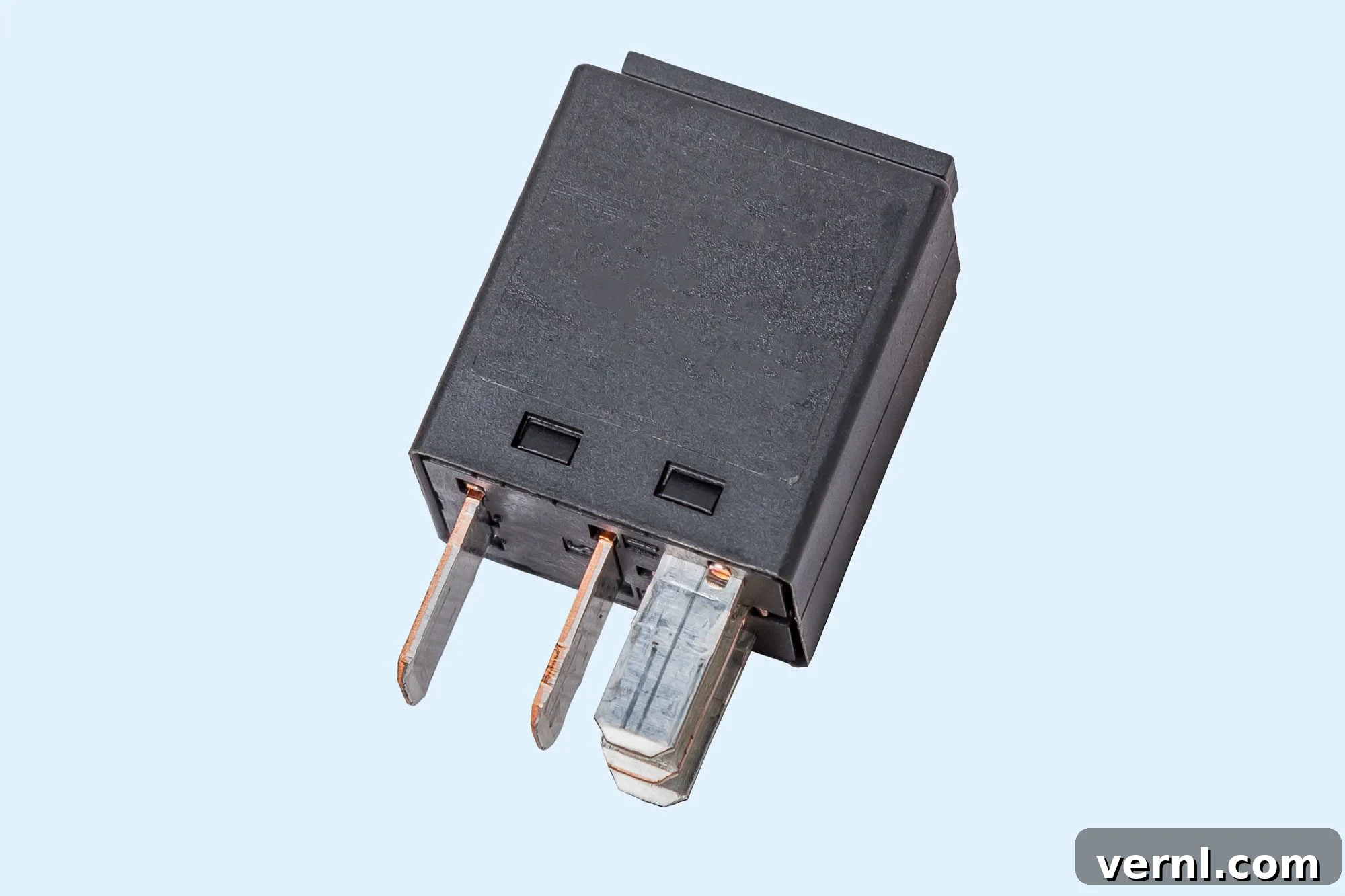
With nearly six decades immersed in the automotive repair industry, serving as both an ASE and GM Master Technician and a vocational education instructor, I’ve witnessed a remarkable transformation. Vehicles have evolved from rudimentary transportation devices into highly sophisticated, high-tech marvels. Modern cars, with their intricate electronic systems, offer enhanced safety features, significantly improved fuel efficiency, and a more engaging driving experience. However, this technological leap, while beneficial, has also introduced unprecedented challenges when it comes to diagnosing and repairing vehicle issues.
It was one of my most trusted colleagues, ASE and Mazda technician Tom Diamond, who recently introduced me to the ingenious simplicity of automotive bypass relays. These inexpensive yet profoundly effective tools, I quickly realized, are an absolute must-have for every DIY automotive enthusiast and seasoned professional technician alike. My immediate reaction was a resounding, “Why didn’t I think of this sooner!” Join us as ASE Master Technicians delve into the myriad benefits—and crucial limitations—of integrating automotive bypass relays into your diagnostic toolkit.
Understanding the Heart of Automotive Electrical Control: What Is an Automotive Relay?
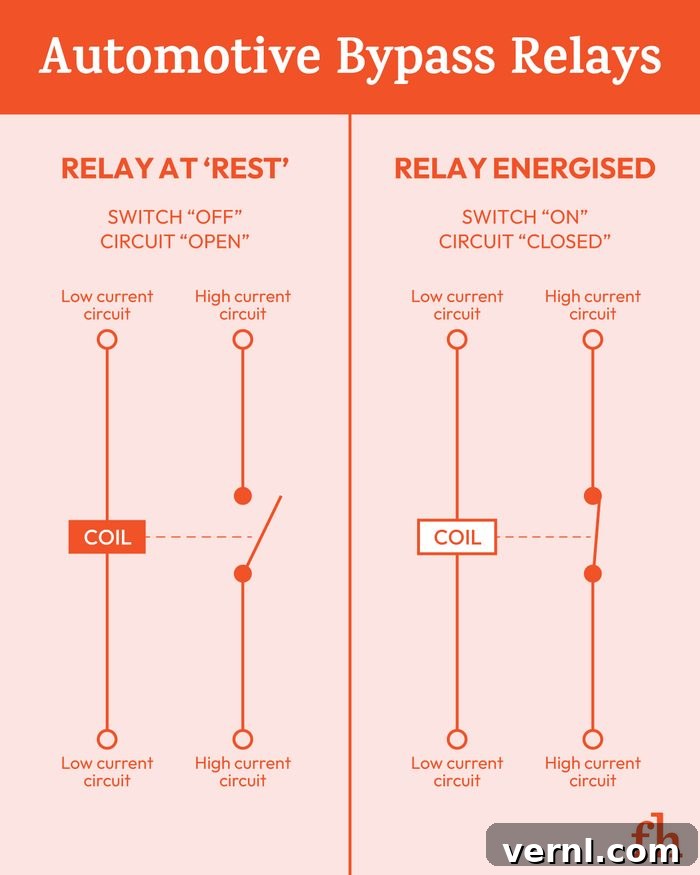
At its core, an automotive relay acts as an electrical switch, ingeniously allowing a small, independent, low-current circuit to safely control a completely separate, high-current circuit. Imagine, for instance, activating your rear window defogger switch. This action sends a minimal electrical current, typically protected by a small five- or ten-amp fuse, through a coil or electromagnet situated inside the relay. As this coil becomes energized, it generates a magnetic field that “pulls” the contact on the high-current side of the relay, effectively closing the circuit.
The high-current side of the circuit, often protected by its own robust 25- or 30-amp fuse, is designed to be continuously “hot” or “on” until commanded otherwise. Once the relay’s internal contact closes, this high-current path is completed. Consequently, a substantial flow of current surges out of the relay and directly to the rear window defogger’s grid wires, efficiently heating the glass. This clever design strategy empowers manufacturers to utilize smaller gauge wires within the dashboard, steering column, and various fuse/relay blocks, simplifying wiring harnesses and reducing overall vehicle weight and complexity.
However, the functionality of this system hinges on the integrity of each component. A blown fuse in either the low-current control circuit or the high-current load circuit, a fractured relay contact, or a faulty coil within the relay itself will prevent the system from operating. Conversely, contacts that are stuck in the “on” position or corroded can cause the circuit to remain active, potentially draining your vehicle’s battery. To pinpoint issues, consult your vehicle’s owner’s manual to locate the specific in-car and engine compartment fuse/relay blocks, helping you identify the relay responsible for the malfunctioning system. It is precisely in these diagnostic scenarios that the true value and beauty of an automotive bypass relay shine through, offering a direct path to uncovering the root cause of the problem.
- Important Note: Many rear window defogger relays incorporate a built-in timer. This feature automatically deactivates the relay after a set period, a crucial safety mechanism designed to prevent the glass from overheating and potential damage.
Unlocking Diagnostic Potential: What Is an Automotive Bypass Relay?
For advanced diagnostic purposes, automotive bypass relays provide technicians and DIYers with an unparalleled ability to “bypass” or override a specific control circuit, completely independent of its usual input or control system. As ASE Master Technician Frank Roeder explains, “Automotive bypass relays are ingeniously designed to be used in place of the circuit’s original relay that is currently being tested. This allows the technician to manually turn the relay function on and off by hand, which not only aids in precise diagnosis but also helps protect the system being worked on from potential harm.”
Roeder further emphasizes the versatility of these tools, adding, “Automotive bypass relays prove invaluable in troubleshooting a wide array of vehicle systems. They can effectively diagnose intricate climate control systems, complex trailer wiring issues, or even something as seemingly straightforward as a malfunctioning horn circuit.” Their ability to directly activate components streamlines the diagnostic process, isolating issues to either the component itself or the control circuit.
Simplifying Complexities: How Does an Automotive Bypass Relay Aid in Electrical Problem Diagnosis?
An automotive bypass relay serves a dual purpose in electrical fault finding: it can simultaneously test if a specific component is functioning correctly and, by extension, help evaluate the health of the original relay itself. Tom Diamond highlights their utility in elusive scenarios: “Automotive bypass relays are exceptionally helpful when a fuse or circuit breaker repeatedly trips intermittently, without any obvious or immediate cause. In such cases, you can connect a clamp amp probe or multimeter to the main feed wire within the circuit. Then, by powering the circuit on using the bypass relay, you can meticulously observe if the component begins to draw excessive amperage after operating for a period, pinpointing potential overheating or internal shorts.”
This direct control allows for systematic elimination. If a component activates correctly with the bypass relay, you can rule out the component itself and focus on the vehicle’s control circuit, wiring, or the original relay. Conversely, if the component fails to activate even with the bypass relay, the problem likely resides within the component or its direct wiring, offering clear direction for repair.
Practical Applications: When Would You Need an Automotive Bypass Relay?
Automotive bypass relays were specifically engineered to expedite the troubleshooting of relay-controlled circuits throughout your vehicle’s intricate electrical system. Their primary function is to temporarily circumvent the control system side of a circuit, providing direct activation of various components. By directly applying power to essential systems such as a fuel pump, radiator cooling fans, the air conditioning compressor clutch, or a blower fan motor (especially if the high blower resistor has failed multiple times), you can swiftly and confidently verify their operational status. This direct engagement bypasses complex control modules, wiring, and switches, allowing for a quick and accurate assessment of component health. Whether you’re checking a headlight circuit, a power window motor, or even the starter solenoid, the bypass relay offers a direct line to diagnostics.
Beyond Diagnostics: The Comprehensive Benefits of an Automotive Bypass Relay
The advantages of incorporating an automotive bypass relay into your diagnostic arsenal extend far beyond simple component testing. As Tom Diamond articulates, “You’ll no longer be forced to carefully pry open a relay’s housing just to visually inspect its delicate mechanical contacts or springs for signs of breakage or welding.” This direct benefit saves considerable time and eliminates the risk of damaging a perfectly good relay during a visual inspection attempt. From my own extensive experience, one of the most significant advantages is the elimination of dangerous improvisation. Gone are the days of fumbling with crude jumper wires to establish a connection between the input and output sides of a circuit. Bypass relays inherently remove the significant danger of accidentally jumping the wrong terminals within the fuse/relay block, which can lead to catastrophic damage to sensitive electronic components.
Another ingenious application shared by Diamond illustrates their practical utility: “Installing a bypass relay in place of the fuel pump relay can transform the task of emptying a gas tank, making it considerably easier and, crucially, much safer.” This eliminates the need for siphoning or other cumbersome methods when draining fuel for maintenance or repairs.
Frank Roeder further expands on their versatile applications: “Bypass relays are incredibly useful when undertaking modifications or making custom installations in vehicles. Whether you’re integrating high-powered sound systems, elaborate light packages, or heavy-duty winches, these tools help in safely testing the new components without overloading existing wiring systems. They allow you to assess the current draw and functionality of added accessories independently before fully integrating them into the vehicle’s electrical architecture.” This preventative measure ensures the long-term reliability and safety of both factory and aftermarket components.
Crucial Considerations: Precautions When Using an Automotive Bypass Relay
While automotive bypass relays are undeniably powerful diagnostic aids, it’s vital to recognize their inherent limits. It’s a critical error to mistake these devices for a permanent solution. They are specifically engineered to diagnose a circuit’s integrity and functionality, not to serve as a long-term replacement for a defective original relay. Leaving a bypass relay permanently installed can be dangerous and lead to unforeseen issues or component failure due to the lack of proper control circuit protection.
In my extensive experience, improper diagnostic techniques can lead to costly mistakes. For example, using the wrong type of test light (only a high-impedance test light should be used on modern low-current circuits) or incorrectly connecting relay terminals in the fuse/relay block using a standard jumper wire can instantaneously destroy sensitive solid-state components. Modules like the Body Control Module (BCM), which governs the low-amperage side of many circuits, are particularly vulnerable. Often, shorting out such a module or a critical control circuit component can inadvertently damage an otherwise perfectly functional original relay, even after it’s reinstalled. This vulnerability is precisely why most automotive parts stores and dealership parts departments maintain a strict policy against accepting returns on relays that have been previously used.
Furthermore, it’s imperative to be aware of the specifications of your bypass relay set. My personal, inexpensive set of bypass relays, for example, is not individually fused, and several units are rated for only 10 amps. This means that if you encounter a circuit with a significantly higher current draw than the bypass relay’s rating, there’s a real risk that the internal switch, coil, or contacts within the bypass relay itself could fail, potentially creating further complications or damage. Always match the bypass relay’s current rating to the circuit you are testing, and ideally, invest in fused bypass relays for enhanced protection.
FAQ: Demystifying Automotive Electrical Components
What is the difference between an automotive relay, a fuse, and a circuit breaker?
Understanding the distinct roles of relays, fuses, and circuit breakers is fundamental to comprehending your vehicle’s electrical system. Fundamentally, relays are primarily control devices; they act as electrically operated switches, enabling a low-current signal to activate a high-current circuit. This protects sensitive switches and allows for optimal wire sizing. In contrast, fuses and circuit breakers are fundamentally circuit and device protectors.
Both fuses and circuit breakers are specifically engineered to safeguard a circuit from the perils of short circuits (where a wire carrying voltage inadvertently contacts ground before reaching its intended device) or dangerous overloads (when a component attempts to draw more current than the circuit is designed to handle). To prevent severe damage, fuses and circuit breakers are designed to “open” or “break” a circuit immediately if the current (amperage) flowing through it exceeds their predetermined load limits. The crucial difference lies in their reset capabilities.
Once a fuse “pops” or blows, its internal metallic strip melts, permanently breaking the circuit. It then absolutely must be replaced with a new fuse of identical amp rating to restore circuit functionality and maintain protection. Unlike the robust, manually resettable circuit breakers found in your home’s main electrical service panel, most automotive circuit breakers are not designed for manual resetting. Instead, they typically feature an automatic reset mechanism. If the excessive load on the breaker returns to normal levels, the circuit breaker will automatically reset itself, hoping it was merely a one-time electrical “glitch” rather than an indicator of a component beginning to fail. However, for specialized applications such as protecting expensive, high-powered aftermarket sound systems, custom light packages, or heavy-duty winches, the automotive aftermarket does offer manually resettable circuit breakers, providing an extra layer of user control and protection.
Meet the Experts Behind the Insights
- Frank Roeder brings 46 years of invaluable experience in the automotive repair and custom car industry. He holds certifications as an ASE Master Technician, General Motors Master Technician, and is a Pennsylvania Department of Transportation (PennDoT) inspection and emission inspector. Mr. Roeder is currently employed at J&E Performance and Fabrication, located in Chalfont, PA. (Interviewed April 18, 2025).
- Tom Diamond boasts over 35 years of comprehensive experience in the automotive repair industry, excelling as a technician, a certified original equipment manufacturer (Mazda) trainer, and a shop supervisor. He has proudly maintained his ASE Master Technician status for over 25 years, including achieving the prestigious ASE L1 advanced automotive engine performance certification. Additionally, Mr. Diamond is a PennDoT certified state safety, emissions, and reconstructed vehicle inspector, as well as a certified welder. (Interviewed April 14, 2025).
Additional Resources for Deeper Understanding
- Bill Kirkpatrick, ASE and Volkswagen Master Technician; original interview for Heater Blower Motor Replacement, Explained By an Expert
- Dorman Products: “Shop Press” (April 3, 2025)
- ASE Webinar: “EV Contactors and Interlock Circuits” (October 8, 2024)
- Special thanks to the administration, staff, and students from the Faulkner Automotive Institute, at the Career Pathways Academy, Father Judge High School, Phila., PA, for all their invaluable assistance in preparing this story.
In an automotive landscape increasingly dominated by complex electronics, the automotive bypass relay emerges not just as a tool, but as an essential ally for anyone venturing into vehicle diagnostics. Its ability to simplify troubleshooting, enhance safety, and protect delicate components makes it an indispensable addition to the toolbox of both the eager DIYer and the seasoned professional. By mastering the use of these simple yet powerful devices, you can navigate the intricate electrical systems of modern vehicles with greater confidence and efficiency, transforming challenging diagnostic puzzles into straightforward solutions.