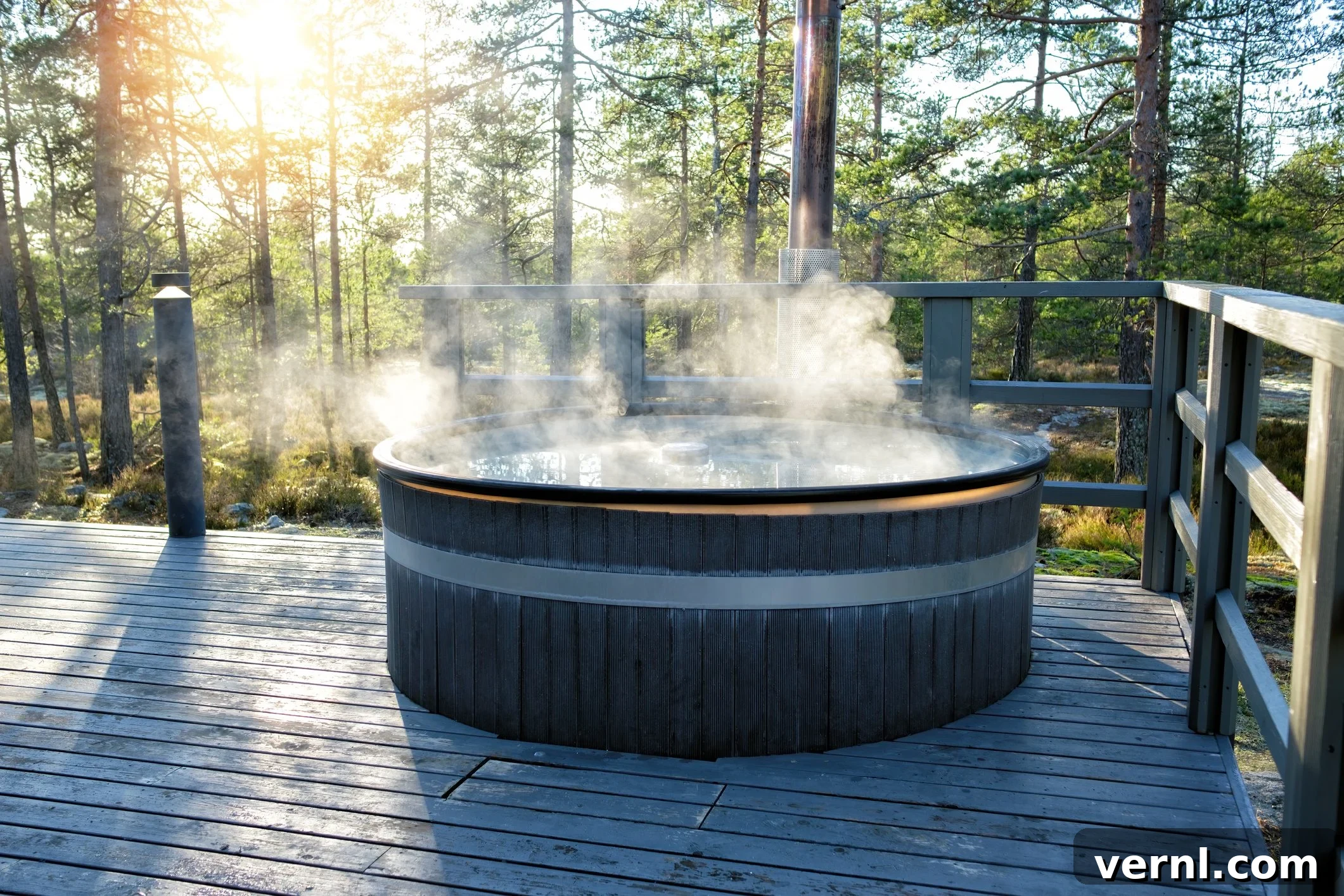
Jacuzzi vs. Hot Tub: Unraveling the Popular Spa Terminology
Stepping into a warm, bubbling pool after a long day is a universal pleasure, offering a sanctuary of relaxation and rejuvenation. Whether at a luxurious resort, a local fitness center, or in your own backyard, these heated water havens are a cherished amenity. My community’s state-of-the-art fitness club, for instance, boasts an impressive array of features for health-conscious individuals, including a large heated outdoor pool and, right beside it, a spacious eight-person hot tub. This particular hot tub often hosts more than its official capacity, becoming a vibrant social hub where neighbors gather to unwind and collectively discuss the day’s events in the comforting 104-degree water.
The tub is equipped with powerful jets, which I often keep off when seeking solitary tranquility. However, most users prefer the invigorating sensation of the jets, so it frequently cycles between serene, still water and a dynamic cascade of hydro-therapeutic bubbles. This common experience naturally sparks a frequent question: Does a hot tub transform into a Jacuzzi the moment its jets are activated? The answer, while seemingly simple, carries a nuanced distinction: yes, in common parlance, but no, it will never truly be a capital ‘J’ Jacuzzi.
What Exactly is a Jacuzzi? Unveiling the Brand Behind the Bubbles
Just like household names such as Kleenex (for tissues) or Xerox (for photocopies), “Jacuzzi” has transcended its original identity as a brand name to become a generic term widely used to describe any hot tub or whirlpool spa featuring hydrotherapy jets. This widespread adoption has led to considerable confusion, blurring the lines between a specific product and a general category.
The fascinating history of the Jacuzzi brand dates back to 1915 when the Jacuzzi brothers founded their company. Originally, their expertise lay in manufacturing parts for airplanes, showcasing an early aptitude for engineering and innovation. However, a pivotal moment in the company’s trajectory arrived in 1940. According to official company archives, Candido Jacuzzi invented a unique hydrotherapy pump specifically designed to provide relief for his toddler son, who suffered from rheumatoid arthritis. This groundbreaking invention marked the birth of personal hydrotherapy.
Building on this success, the company’s engineers further developed the concept, eventually creating the world’s first integrated hydro-therapeutic spa. The inaugural model was introduced to the public in the 1950s, and its popularity soared rapidly. It wasn’t long before the Jacuzzi name became synonymous with luxurious, jetted baths and outdoor spas, revolutionizing the way people thought about relaxation and therapeutic water immersion.
In a strict legal and copyright sense, only hot tubs manufactured by the Jacuzzi company itself can legitimately carry the capital ‘J’ Jacuzzi brand name. Despite this, it’s incredibly common to hear the lowercase “jacuzzi” used informally to refer to any brand of hot tub equipped with jets. Today, the appeal of jetted tubs has grown immensely; many individuals enjoy the luxury of a spa in their own homes, and bubbling tubs are a highly sought-after feature in quality hotels and motels worldwide.
The earliest Jacuzzi models were primarily one- or two-person bathtubs that had been ingeniously modified to incorporate underwater jets. These pioneering designs laid the groundwork for modern spa technology. Contemporary Jacuzzis, however, have evolved considerably. They are now available in a multitude of sizes, capable of accommodating multiple users, and can be installed both indoors, often as part of a lavish bathroom retreat, or outdoors, integrated into a patio or garden landscape. Regardless of their size or location, all genuine Jacuzzi brand products, and indeed all jetted hot tubs, share two fundamental characteristics: they contain hot water, and they utilize mechanical pumps to circulate water under pressure through an array of jets strategically placed below the surface, creating the signature bubbling and massaging action.
What Defines a Hot Tub? Beyond Just a Soaking Vessel
At its most basic, a hot tub is essentially a soaking tub designed for warm water immersion. While single-person tubs, common in traditional Japanese homes, could conceptually fit this description, the term “hot tub” – particularly as it’s understood and used in North America – typically refers to a larger vessel. These tubs are generally spacious enough to comfortably accommodate several people, making them not just a place for relaxation but also a popular setting for socializing and intimate gatherings.
It’s crucial to understand the hierarchy here: a Jacuzzi is, by definition, a specific type of hot tub. However, the reverse is not true; a hot tub is not necessarily a Jacuzzi. A hot tub will always feature a heating mechanism, which can be either gas-powered or electric, to maintain its warm temperature. The critical distinction that elevates a hot tub to the informal “jacuzzi” (and a true Jacuzzi brand product) is the presence of mechanical circulation jets. Without these powerful, water-propelling jets, a hot tub remains primarily a soaking vessel.
Consider the allure of natural hot springs found across North America, Asia, and other parts of the world. Here, you can immerse yourself in natural geothermal pools, experiencing the earth’s warmth firsthand. Alongside these natural wonders, you might also discover man-made tubs designed to capture and contain the spring water, allowing you to relax as the naturally heated water flows gently around your body, sometimes with a mild pressure created by gravity. While these are undoubtedly “hot tubs” in their function and feel, they are distinctly not Jacuzzis unless they have been augmented with artificial, mechanical jets designed to create a more vigorous, targeted massage experience. This emphasizes that the presence and operation of powered jets are the defining characteristic differentiating a generic hot tub from a jetted spa or a branded Jacuzzi.
Jacuzzi vs. Hot Tub: A Deeper Dive into the Core Differences
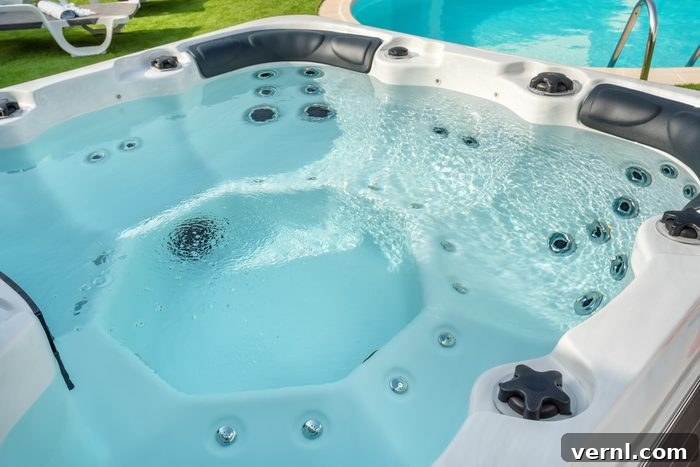
For individuals currently in the market for an outdoor hot tub, it’s becoming increasingly challenging to find models that do not include mechanical jets. Modern hot tub manufacturers have largely embraced hydrotherapy as a core feature, and consequently, nearly all their products now incorporate powerful jets. Even more economical options, such as small foam or inflatable tubs, frequently come equipped with an air-bubble system or water jets, signifying the widespread demand for a jetted experience.
If your preference is specifically for an outdoor tub without jets – a pure soaking experience – you might find yourself exploring more unconventional routes. This could involve considering a custom-built solution, perhaps a DIY project constructed from durable wood, a repurposed stock tank, or similar materials. These alternatives cater to those seeking a simpler, non-jetted communal or solitary bathing experience.
When it comes to outfitting a bathroom with an indoor spa feature, the options are plentiful for both soaking tubs and those with integrated jets. Indoor jetted tubs, often colloquially referred to as “Jacuzzis,” are frequently deeper and sometimes wider than standard soaking tubs, designed to offer a more immersive and therapeutic experience. Making the right choice involves carefully weighing the advantages and disadvantages of each type.
The Allure of Jetted Tubs: Pros and Cons
Deciding whether a jetted tub is right for you involves considering several key factors, from the health benefits to the practicalities of ownership.
Pros of Jetted Tubs (Including Jacuzzis):
- Unparalleled Hydrotherapy Benefits: The primary appeal of jetted tubs lies in their ability to deliver powerful hydrotherapy. The pressurized water from the jets works wonders on stiff, aching muscles, providing deep tissue massage that promotes relaxation and can significantly alleviate tension. Beyond general relaxation, hydrotherapy offers specific health benefits for various ailments, including improved circulation, relief from arthritis pain, enhanced sleep quality, and reduced stress levels. The pulsating water can stimulate endorphin release, providing a natural mood boost.
- Potential Increase in Home Value: Installing a well-maintained, high-quality jetted tub, especially as part of a beautifully designed master bathroom, can elevate your home into a luxury retreat. This can significantly increase your home’s appeal and perceived value to potential buyers, making it a desirable feature that sets your property apart in the real estate market. It transforms a standard bathroom into a spa-like sanctuary.
- Enhanced Social and Relaxation Hub: For outdoor installations, a jetted hot tub becomes a fantastic focal point for social gatherings and family relaxation. It provides an inviting space for conversation, entertainment, and shared moments of leisure, extending the usability of your outdoor living areas throughout the year.
- Variety of Jet Options: Modern jetted tubs offer a vast array of jet types and configurations, including directional jets for targeted massage, rotating jets for a broader therapeutic sweep, and air jets for a gentler, effervescent sensation. This customization allows users to tailor their hydrotherapy experience precisely to their needs.
Cons of Jetted Tubs (Including Jacuzzis):
- Higher Initial and Operational Costs: The installation of a jetted tub is typically more expensive than that of a standard soaking tub. This is due to the complex plumbing and electrical wiring required to power the pumps and heating elements. Furthermore, the jets and heating mechanisms consume a significant amount of electricity, leading to higher ongoing utility bills. The purchase price of a jetted tub itself is also generally higher.
- Increased Maintenance Demands: Jetted tubs are inherently more complex to maintain and keep clean than simple soaking tubs. The intricate plumbing and jet systems can harbor bacteria and require regular cleaning with specialized products to prevent biofilm buildup. This involves frequent water testing, chemical balancing, filter cleaning or replacement, and periodic draining and scrubbing, all of which demand more time and attention.
- Greater Potential for Mechanical Issues: With more moving parts – pumps, heaters, jets, and controls – jetted tubs naturally have a higher likelihood of mechanical breakdowns compared to simpler soaking tubs. Repairs can be costly and may require specialized technicians.
- Noise Production: While relaxing, the operation of jets and pumps can generate a considerable amount of noise. This might be a concern for those seeking absolute quiet or for installations in close proximity to neighbors.
Choosing the Right Spa for You: Key Considerations
When deciding between a simple hot tub for soaking and a jetted spa, whether it’s a “jacuzzi” or a branded Jacuzzi, it’s essential to evaluate your priorities:
- Purpose: Are you looking primarily for quiet relaxation and warmth, or do you crave the therapeutic massage and invigoration that jets provide?
- Budget: Consider not just the purchase price, but also installation costs, ongoing utility expenses, and the budget for maintenance chemicals and potential repairs.
- Space and Location: Do you have adequate space indoors or outdoors? Consider factors like structural support for heavy filled tubs, access for maintenance, and privacy.
- Maintenance Commitment: Are you prepared for the regular cleaning and water chemistry management that a jetted tub requires?
- Features: Explore different jet types, seating configurations, lighting options, and control systems to find a tub that perfectly matches your desired experience.
Ultimately, whether you choose a simple soaking tub or a feature-rich jetted spa, the goal is to create a personal oasis that brings you joy, relaxation, and a touch of luxury. Understanding the distinctions between a generic hot tub and a branded Jacuzzi empowers you to make an informed decision, ensuring your investment perfectly aligns with your vision for the ultimate aquatic retreat.