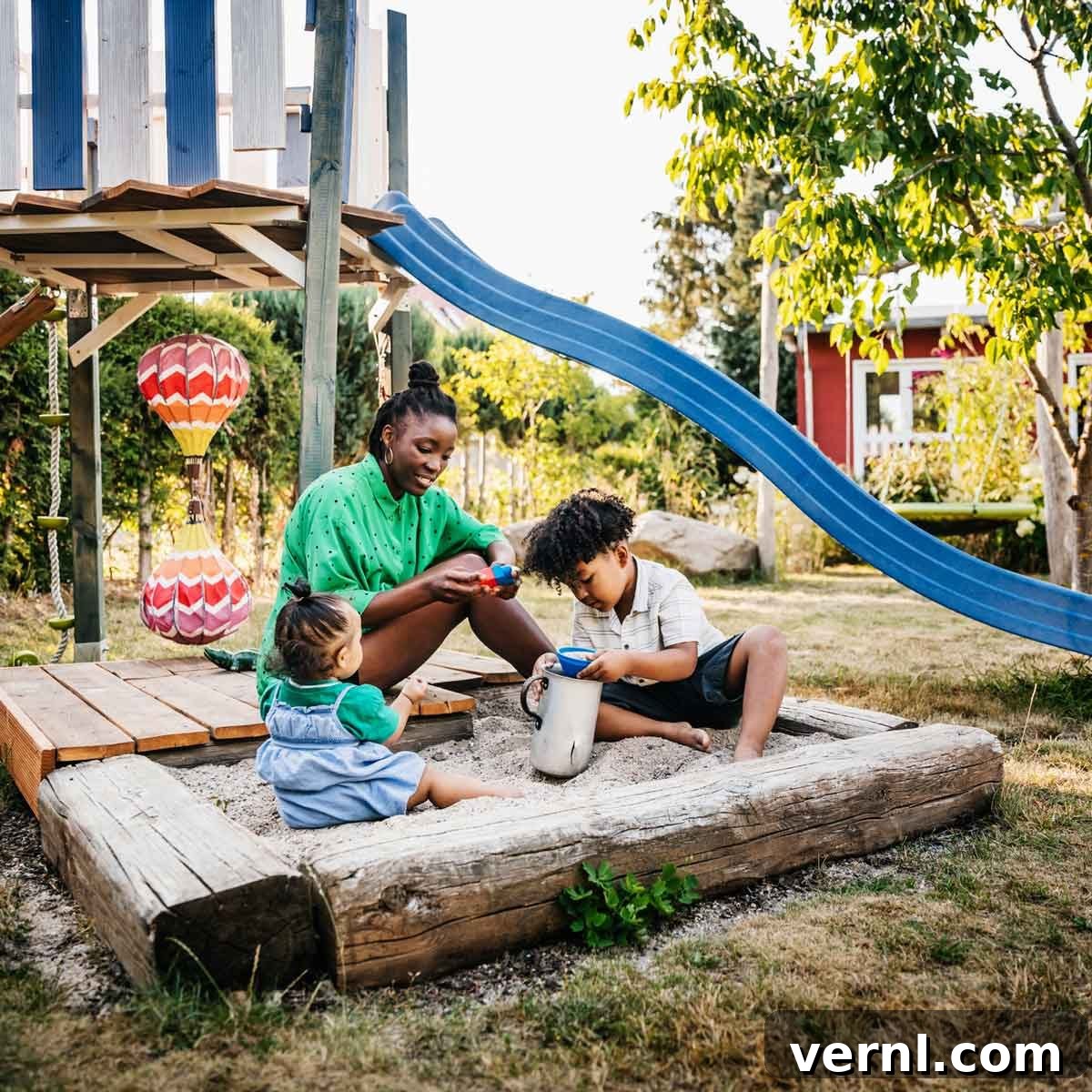
If you’re a parent seeking engaging ways to encourage your children to explore the outdoors and step away from screens, a classic sandbox might be the perfect addition to your backyard. More than just a container for sand, a well-chosen sandbox offers a rich, tactile experience that fuels imagination and supports crucial developmental milestones. This timeless play staple, while seemingly old-fashioned, continues to provide unparalleled benefits for children of various ages.
For toddlers, a simple sandbox provides an immediate avenue for developing essential motor skills. Activities like digging, scooping, pouring, lifting, and measuring help refine both fine and gross motor coordination. As children grow and play together, the sandbox becomes a natural environment for learning vital social skills such as sharing, cooperation, and communication. Beyond skill development, the open-ended nature of sand play allows creativity to flourish, transforming a patch of sand into farms, bustling cities, intricate racetracks, or any fantastical world a child can envision. It’s a space where young minds can build, destroy, and rebuild, fostering problem-solving abilities and a sense of accomplishment.
This comprehensive guide will explore the diverse types of sandboxes available, delve into the myriad benefits they offer, provide practical advice on choosing the right one for your family, discuss installation considerations, and outline essential tips for keeping your sandbox a clean, safe, and endlessly entertaining play area for years to come.
Exploring Diverse Sandbox Types for Every Backyard
Backyard sandboxes come in an impressive variety, designed to suit different spaces, age groups, and aesthetic preferences. From compact, portable designs perfect for small patios to expansive, custom-built structures that become the centerpiece of neighborhood play, there’s a sandbox solution for almost every need. Understanding the characteristics of each type will help you make an informed decision for your family.
Plastic Sandboxes
Ideal for smaller backyards, patios, or even apartment balconies, plastic sandboxes offer a lightweight and often highly portable solution for outdoor play. These units are typically molded from durable, child-safe plastic and are frequently equipped with integrated covers, like the popular Little Tikes Turtle Sandbox. A key advantage of plastic sandboxes is their splinter-free construction, making them a safer choice for little hands compared to some wooden alternatives. They are incredibly easy to clean and maintain, often requiring just a quick wipe-down. While perfectly suited for toddlers and younger children (typically up to ages five or six), their contained size might become restrictive for older kids seeking more elaborate play space. They also come in a variety of fun shapes and colors, adding a cheerful element to any outdoor area.
Sand and Water Tables
A brilliant innovation for curious toddlers and preschoolers, sand and water tables merge two fundamental sensory experiences into one versatile play station. These plastic tables, often elevated, can be filled with either sand or water, or some clever designs even allow for simultaneous sand and water play areas. This dual functionality is fantastic for sensory exploration, allowing children to experiment with different textures, learn about buoyancy, and understand basic concepts of volume and flow. Many models come with built-in accessories like scoops, boats, and molds, further enhancing imaginative play. Their elevated design makes them comfortable for children to stand and play, reducing the need to sit on the ground and minimizing the amount of sand tracked indoors. They are also relatively compact, making them suitable for smaller outdoor spaces.
Wooden Sandboxes
The classic wooden sandbox offers a sturdy, often more aesthetically pleasing option that can blend beautifully into backyard landscapes. As the name suggests, these sandboxes typically feature a square or rectangular wooden frame, which is then filled with play sand. Some wooden sandboxes come with integrated bottoms, while others require a separate tarp or landscape fabric laid beneath the sand to prevent weeds and allow for drainage. Wooden sandboxes often provide more room for play compared to plastic models, making them suitable for multiple children or older kids.
There is a wide array of options when it comes to wooden sandboxes, each with unique features designed to enhance play and convenience:
- A popular choice is a 5-foot by 5-foot wooden model featuring built-in corner seats and a mesh cover. The corner seats offer comfortable resting spots for kids (or parents!) during play, while the mesh cover is essential for keeping out debris, leaves, and neighborhood critters.
- Another innovative design includes a model with a retractable canopy roof, providing crucial sun protection on hot days. This particular design often incorporates wooden benches that cleverly convert into a solid cover when not in use, offering superior protection against weather elements and unwanted visitors.
- For comprehensive sun and insect protection, a cabana-style sandbox provides a shaded and enclosed play environment, perfect for long summer afternoons. These models often feature fabric roofs and sides, creating a cozy and secure space for children.
- While not strictly made of wood, certain wood-look models offer incredible versatility. For instance, some designs are crafted from durable, weather-resistant materials that can convert into a garden or vegetable planter once children outgrow the sandbox phase. This eco-friendly feature extends the product’s lifespan and utility, providing excellent long-term value.
In-Ground Sandboxes
For those looking for a more integrated and permanent solution, an in-ground sandbox can be a fantastic DIY project. By setting all or part of the sandbox frame into the ground, you create a seamless edge that blends harmoniously with your landscaping, significantly reducing tripping hazards. This approach also allows for the creation of much larger play areas than many freestanding wooden frames, accommodating more children and grander building projects. While installation might involve a bit more digging and leveling, the stability, aesthetic appeal, and expansive play space of an in-ground sandbox are often well worth the effort, creating a truly natural extension of your outdoor living area.
The Profound Benefits of Sandbox Play
Beyond being a simple source of fun, engaging with a backyard sandbox provides a wealth of developmental benefits for children, fostering growth across multiple domains. This makes a sandbox a highly valuable investment in a child’s early learning journey.
- Sensory Development: Sand play is a rich sensory experience. Children engage their sense of touch by feeling the texture of dry sand sifting through their fingers, the coolness of damp sand, or the grittiness of coarse sand. This tactile input is crucial for sensory integration, helping children process and understand their environment. Adding water introduces a new sensory dimension, allowing exploration of wet and dry, soft and firm.
- Fine Motor Skills: Activities like scooping sand with a small shovel, pouring it into buckets, molding shapes with their fingers, or sifting it through sieves all contribute to the development of fine motor skills. These precise movements strengthen hand-eye coordination and the small muscles in their hands and wrists, essential for future tasks like writing and drawing.
- Gross Motor Skills: Digging, kneeling, sitting, standing, and moving around the sandbox engage larger muscle groups, promoting the development of gross motor skills. Children build strength, balance, and coordination as they navigate their sandy environment, pushing toy trucks or hauling buckets of sand.
- Cognitive Skills: Sand play inherently involves problem-solving and critical thinking. Children learn about cause and effect (e.g., wet sand holds its shape, dry sand doesn’t), explore basic physics concepts (gravity, weight, volume), and develop spatial reasoning as they plan and construct their creations. They learn to adapt their building techniques based on the properties of the sand.
- Creativity and Imagination: A sandbox is a blank canvas for imaginative play. Children transform sand into anything they can conceive – castles, roads, mountains, rivers, cakes, or entire miniature worlds. This open-ended play fosters creativity, storytelling, and the ability to think abstractly. Role-playing scenarios enhance their understanding of the world and their place in it.
- Social and Emotional Development: When multiple children play together in a sandbox, they naturally learn vital social skills. They practice sharing toys, taking turns, cooperating on building projects, communicating their ideas, and negotiating conflicts. This collaborative play helps children develop empathy, learn emotional regulation, and build self-confidence. The soothing texture of sand can also have a calming effect, helping children manage stress and express emotions.
- Outdoor Engagement: In an increasingly digital world, a sandbox provides a compelling reason for children to spend quality time outdoors. Exposure to fresh air and sunlight is beneficial for physical health, vitamin D production, and overall well-being. It encourages a connection with nature and reduces screen time, promoting a balanced lifestyle.
Choosing the Perfect Sandbox for Your Family
Selecting the right sandbox involves weighing several practical considerations to ensure it meets your family’s specific needs and complements your outdoor space.
First, consider the **available space in your yard or patio**. For compact areas, a small plastic sandbox or an elevated sand and water table is an excellent choice, as they offer contained play without overwhelming the space. Larger backyards, on the other hand, can accommodate more expansive wooden sandboxes or even custom-built in-ground options, allowing for more elaborate play and multiple children.
Next, think about the **age of your children and their developmental stage**. Toddlers will be perfectly content with smaller, simpler plastic sandboxes or engaging sand and water tables that are easily accessible. For preschoolers and older children, or if you envision your backyard as a vibrant neighborhood gathering spot, a larger wooden or in-ground sandbox will provide ample room for creativity and collaborative play. Consider if the sandbox will grow with your child or if you anticipate needing to replace it as they age.
**Local weather conditions and climate** are also crucial factors. If your sandbox will be exposed to direct sunlight for extended periods, especially during hot summers, investing in a model with a built-in roof, retractable canopy, or a sturdy sunshade is highly advisable to protect children from harmful UV rays and prevent the sand from becoming too hot.
Finally, regardless of where you live, **plan on acquiring a sandbox with a cover, or purchase a separate tarp or covering**. This is perhaps the most important consideration for hygiene and maintenance. A reliable cover is essential for keeping the sand clean, dry, and free from debris, leaves, and animal intrusions when the sandbox is not in use. Many modern sandboxes come with integrated covers, but for those that don’t, a custom-fitted tarp or even a DIY plywood cover is a worthwhile investment.
Sandbox Costs and Installation Essentials
Compared to other types of backyard play equipment, sandboxes are generally one of the most budget-friendly investments you can make for outdoor fun. Basic plastic sandboxes typically start around $70, offering an affordable entry point into sand play. Wooden sandboxes, which often provide more space and aesthetic appeal, usually begin at around $100. For a good quality wooden model with desirable features like covers or seating, a budget of $120 to $160 will provide a wide range of excellent choices. DIY enthusiasts can even build their own sandbox for a potentially lower cost, utilizing readily available materials.
Assembling most sandboxes is a straightforward process that typically doesn’t require professional assistance. Before you begin installation, selecting the right spot and preparing the ground are crucial steps. Choose a level area in your yard that is free of rocks, tree roots, or any other intrusions that could damage the sandbox bottom or interfere with play. Good drainage is also vital; if your yard has poor drainage, consider adding a layer of gravel beneath the sandbox or ensuring the chosen material allows water to seep through.
Once the sandbox frame is assembled, the next step is filling it with sand. The manufacturer’s instructions will specify the recommended quantity of sand, usually in pounds or cubic feet. It is absolutely imperative to use specially marked **play sand** that is specifically designed for children’s sandboxes. This type of sand is typically washed, finely sieved, and free of silica dust and harmful contaminants, making it safe for children. Conversely, paving sand, masonry sand, or builder’s sand are not suitable for children’s play as they may contain sharp particles, dust, or chemicals that could be harmful.
The price of play sand can vary significantly. You might find a 50-pound bag for as little as $5.25 at hardware stores like The Home Depot. However, specialty options like sustainably sourced or colored play sand can be considerably more expensive, often costing $30 or more for smaller bags. Factor the cost of sand into your overall budget, and remember that quality and safety should always be prioritized over the lowest price.
Prioritizing Sandbox Safety and Maintenance for Healthy Play
While a sandbox offers endless fun, it’s crucial to acknowledge and address potential safety and hygiene concerns. If not properly protected and maintained, the sand can unfortunately become a breeding ground for dangerous bacteria, parasites, mold, and yeast, which can pose health risks to children. Contaminants can originate from various sources, including dirty hands, feet, and diapers, or from animals (like cats and raccoons) that may view an uncovered sandbox as an ideal outdoor litter box.
To ensure a clean, safe, and healthy backyard sandbox for your children, consistent maintenance is key. Follow these essential steps:
- Consistent Covering: The single most effective measure is to keep the sandbox covered whenever it is not in use. This prevents leaves, debris, and, most importantly, animal feces and urine from contaminating the sand. Invest in a tight-fitting, durable cover that can withstand weather.
- Ensure Proper Drying: If the sand becomes wet from rain or water play, always allow it to dry out thoroughly before replacing the cover. Covering wet sand creates a warm, moist environment that is ideal for the growth of mold, mildew, and bacteria. Raking the sand helps expose it to air and sunlight, speeding up the drying process.
- Promote Hand and Foot Hygiene: Establish a routine where kids wash their hands and feet thoroughly before and immediately after playing in the sandbox. If weather permits and the sand is clean, encourage them to play barefoot; this enhances sensory experience but also means feet need extra cleaning afterward.
- Change Clothes Post-Play: To prevent tracking sand (and any potential contaminants) into your home, have children change their clothes right after coming inside from sandbox play. A quick shake-off of clothes and shoes outdoors can also help.
- Frequent Sand Inspection and Debris Removal: Regularly check the sand for any foreign objects, sharp items, insects, and especially evidence of animal feces or urine. If you discover animal waste, at a minimum, scoop out all the sand surrounding the tainted area and dispose of it safely. If the sandbox is heavily used by toddlers who are prone to putting their hands (and sand) in their mouths, or if contamination is extensive, the safest course of action is to replace all the sand.
- Periodic Sand Sanitization: Experts, such as those at Playground Resource, recommend periodically treating the sand with a natural, child-safe sanitizing solution. A mixture of one part distilled white vinegar and one part water can be lightly sprayed over the sand, which helps to kill bacteria and neutralize odors. Ensure the sand dries completely afterward.
- Regular Sand Replacement: Even with diligent cleaning and sanitizing, sand inevitably degrades and accumulates microscopic contaminants over time. Plan to change out all the sand every year or two, or even more frequently if the sandbox sees heavy use from many children, or if you notice persistent odors, excessive clumping, or a marked change in its appearance.
- Wooden Sandbox Maintenance: For wooden sandboxes, regularly inspect the frame for any splinters, loose fasteners, or signs of wood rot. Promptly sand down splinters, tighten screws, and repair or replace any damaged sections to prevent injuries and extend the lifespan of the sandbox. Consider applying child-safe, non-toxic wood sealant or paint to protect the wood from the elements.
By diligently following these safety and maintenance guidelines, you can ensure that your backyard sandbox remains a hygienic, safe, and endlessly enjoyable haven for imaginative play, providing countless hours of fun and developmental benefits for your children.