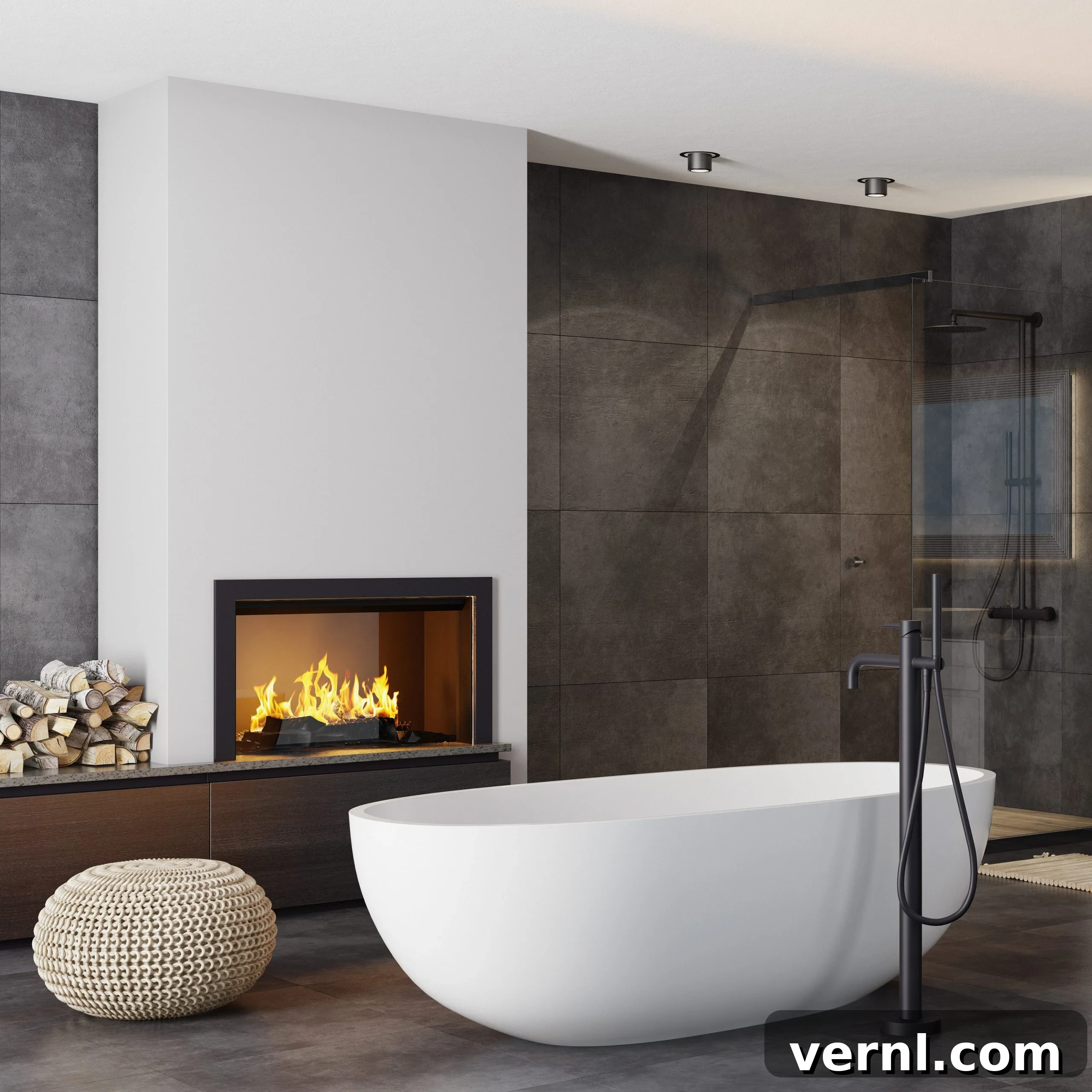
Elevate Your Oasis: A Comprehensive Guide to Bathroom Fireplaces
Imagine unwinding after a long day, sinking into a warm bath, and watching the comforting flicker of flames from a fireplace right in your bathroom. This serene vision, once an exclusive luxury demanding extensive renovations, is now surprisingly attainable for homeowners looking to add a unique touch of warmth and elegance to their personal sanctuary.
In today’s design landscape, accessibility to sophisticated home amenities is greater than ever. Michael Clarke, founder of Pulled, an app dedicated to providing design and construction resources, highlights that many modern prefabricated fireplaces offer a “plug-and-play” installation experience. Even units that require a bit more effort still boast significantly simpler installation processes compared to their traditional counterparts.
While bathroom fireplaces remain a rare and distinctive feature, data from Home Stratosphere suggests their scarcity makes them an even more appealing prospect for the design-conscious individual seeking to make a truly unique statement. Though not always specifically marketed as “bathroom fireplaces,” a variety of bathroom-approved models are readily available. These are typically sized and engineered to ensure the heat output is perfectly calibrated for smaller spaces, providing warmth without overwhelming the room.
The Allure of a Bathroom Fireplace: More Than Just Warmth
Beyond the obvious aesthetic appeal, integrating a fireplace into your bathroom offers a multitude of benefits that transform it from a functional space into a luxurious retreat. It’s an investment in comfort, relaxation, and the overall ambiance of your home.
- Unparalleled Ambiance and Relaxation: The flickering flames create a naturally soothing atmosphere, perfect for de-stressing after a long day. Combined with a warm bath, it elevates your relaxation routine to a spa-like experience.
- Enhanced Warmth and Comfort: Bathrooms can often be chilly, especially in colder climates or during winter mornings. A fireplace provides supplemental heat, ensuring a cozy environment even before you step out of the shower or tub.
- Unique Design Statement: As a relatively uncommon feature, a bathroom fireplace instantly becomes a focal point, showcasing sophisticated taste and an eye for distinctive design. It sets your home apart.
- Increased Home Appeal and Value: Luxurious amenities like a built-in fireplace can significantly boost a home’s perceived value and appeal to potential buyers, making it a wise long-term investment.
- Improved Mood and Well-being: The visual comfort of a fire has been scientifically linked to reduced stress and a greater sense of calm, turning your bathroom into a true sanctuary for mental and physical rejuvenation.
Exploring the Types of Bathroom Fireplaces
Given the typically smaller dimensions of a bathroom, the choice of fireplace is crucial. Optimal units are designed to fit snugly and provide an appropriate level of warmth. A heat output ranging from 5,000 to 6,000 BTUs is generally sufficient to warm a standard bathroom without making it uncomfortably hot.
Modern bathroom-friendly fireplaces come in various forms, from sleek rectangular designs to more intricately shaped units like the Heat & Glo Crescent II Gas Fireplace. These contemporary options typically generate heat through gas or electricity, eliminating the need for traditional logs, messy ash cleanup, or cumbersome stovepipes.
Vented Gas Fireplaces: The Authentic Glow
Vented gas fireplaces are prized for their authentic flame appearance and robust heat output, closely mimicking the experience of a traditional wood-burning fire. These units require a vent system to safely expel combustion by-products to the outdoors. Installation is often simplified when placed against an exterior wall, allowing for direct venting. However, venting through the roof is also an option, similar to conventional fireplaces, offering more flexibility in placement.
Most vented gas fireplace models come with comprehensive framing and venting instructions, making DIY installation feasible for the experienced homeowner. Nevertheless, it is critically important that all gas line installations and connections are performed by a licensed professional to ensure safety and compliance with local codes. Beyond running gas pipes and cutting vent holes, professional installation accounts for structural modifications, which adds to the overall cost.
Unit prices for vented gas fireplaces typically range from $1,000 to $10,000, depending on features, materials, and BTU output. When factoring in professional installation, which can involve running new gas lines and extensive venting work, the average total cost generally falls between $3,500 and $7,500. These fireplaces offer significant design versatility and can be mounted on a flat wall, tucked into a corner, or even integrated into a peninsula for a stunning 360-degree view of the flames.
Pros
- Offers the most realistic and authentic flame appearance, often with realistic log sets.
- Provides a wide variety of designs, finishes, and configurations to match any bathroom aesthetic.
- Produces clean heat without introducing combustion by-products into the room.
Cons
- Generally the most expensive type of fireplace to purchase and install.
- Requires external venting, which can limit placement options and increase installation complexity and cost.
- Professional installation for gas lines and venting is essential, adding to the total expense.
Vent-Free Gas Fireplaces: Efficient and Flexible
Vent-free gas fireplaces offer an innovative solution for spaces where external venting is impractical or undesirable. These units operate by drawing in ambient air, burning the gas, and then re-releasing the heated air back into the room after combustion by-products have been minimized through advanced catalytic conversion processes or similar technologies. They are rigorously tested to meet stringent federal safety regulations and often incorporate essential safety features like in-built carbon monoxide detectors and oxygen sensors to monitor air quality continuously.
A key advantage of vent-free fireplaces is their exceptional heating efficiency; since no heat is lost through a vent, all generated warmth stays within the room. Some models are freestanding, offering complete portability, while many are designed as built-in units that seamlessly blend into the wall, appearing indistinguishable from vented fireplaces once installed. They are also a more budget-friendly option, with some units starting as low as $600, though high-quality models typically range from $2,000 to $4,000 or more. Including installation (primarily for gas line connection), the average cost typically falls between $2,000 and $3,500.
Pros
- Installation requires only a gas line and, for built-in models, basic wall framing, significantly reducing complexity.
- Their compact design and lack of venting requirements allow for installation in a much wider array of tight or challenging spaces.
- Highly efficient, as 100% of the generated heat remains within the room, leading to lower operating costs.
Cons
- May occasionally emit faint odors, especially upon initial use or if not properly maintained.
- Can produce moisture as a by-product of combustion, potentially increasing humidity levels in the bathroom, which requires adequate ventilation.
- Due to air quality concerns, vent-free fireplaces are prohibited in some regions, notably the state of California, limiting their availability.
Electric Fireplaces: Simplicity and Style
Electric bathroom fireplaces stand out as the easiest and most versatile option for adding warmth and ambiance. Their installation is remarkably simple, often requiring little more than positioning the unit and plugging it into a standard electrical outlet. Like their vent-free gas counterparts, electric units come in both freestanding and mantel-style configurations, as well as built-in recessed models that conserve valuable bathroom floor space.
The best electric fireplaces typically range from $300 to $1,000, making them the most cost-effective option for a bathroom fireplace. This affordability, combined with minimal installation requirements, allows for significant savings. While most units simply plug into an existing electrical outlet, you might incur additional costs if a new outlet needs to be installed, or if a dedicated circuit is required for higher wattage models.
Pros
- Provides clean, odor-free heat with a typical electricity usage ranging from 600 to 1,250 watts.
- Offers the simplest installation process; many are plug-and-play, requiring no gas lines, venting, or extensive renovations.
- Extremely safe, as there are no actual flames, combustion by-products, or hot glass to worry about.
- Flame effects can be operated independently of the heat, allowing for year-round ambiance.
Cons
- The flames are simulated, making them generally the least realistic compared to gas options, though modern 3D technologies are improving.
- Will not function during a power outage, limiting their utility as a primary heat source in such scenarios.
- The heat output may not be as robust as gas fireplaces for larger bathrooms, acting more as a supplemental heat source.
Key Features and Considerations When Choosing Your Bathroom Fireplace
Selecting the perfect bathroom fireplace involves more than just picking a style. Thoughtful consideration of features and practical aspects will ensure your chosen unit meets both your aesthetic desires and functional needs.
- BTU Output for Bathroom Size: As mentioned, 5,000 to 6,000 BTUs is typically ideal for most bathrooms. Overpowering a small space can lead to discomfort, while too little heat won’t achieve the desired warmth.
- Size and Placement: Carefully measure your available space. Consider whether a recessed built-in unit, a wall-mounted model, or a freestanding fireplace best suits your bathroom layout and design, without hindering traffic flow or other fixtures.
- Aesthetics and Design Integration: The fireplace should complement your bathroom’s existing decor. Modern units come with various finishes, mantel styles, and flame effects (for electric) to seamlessly integrate into contemporary, traditional, or transitional designs.
- Safety Features: Beyond basic safety, look for features like overheat protection, cool-touch glass, tip-over switches (for freestanding units), and robust safety sensors, especially for vent-free gas models.
- Remote Control and Smart Features: As Michael Clarke notes, remote operation is a highly desirable feature, allowing you to activate the fireplace from the tub or even another room. Many advanced models include wall-mounted thermostats, timers, and even app control, enabling you to program the unit to warm the bathroom before you even step inside.
- Moisture Resistance: In a bathroom environment, moisture resistance is key. For electric units, look for appropriate IP (Ingress Protection) ratings if you plan to install it close to water sources, although most electric fireplaces are generally safe for typical bathroom environments.
- Running Costs: Consider the long-term operational costs. Electric fireplaces consume electricity, while gas units use natural gas or propane. Compare utility rates in your area to estimate which option will be more economical over time for your usage patterns.
Installing Your Bathroom Fireplace: DIY vs. Professional
The installation process varies significantly depending on the type of fireplace you choose. Understanding these differences will help you decide between a DIY project and hiring a professional.
An electric bathroom fireplace is often an ideal DIY project. With costs generally just a few hundred dollars for the unit itself, it can typically be accomplished over a weekend. Basic tools like a drill, level, measuring tape, and possibly a drywall saw for recessed models are usually sufficient. However, if you need to install a new electrical outlet or a dedicated circuit, it’s advisable to consult or hire a qualified electrician, typically costing $75 to $125 per hour.
Gas units, due to the need for new supply pipes and intricate venting systems (for vented models), almost always necessitate professional installation. This elevates the total project cost to between $2,000 and $3,000, depending on the complexity of gas line routing and structural modifications. A built-in unit, whether gas or electric, will require some drywall and framing work, along with vent holes if applicable. While interior wall modification tools are standard for DIYers, rerouting pipes or wires within walls demands specialized plumbing and electrical tools and expertise.
For professional installation, local fireplace dealers are an excellent resource, as many have their own installation teams. If you opt for a DIY approach for an electric unit or are self-installing the structural components of a gas unit, any local plumber licensed as a gas fitter can safely install your gas lines. Always ensure that any professional you hire is licensed, insured, and has experience with fireplace installations.
Remember to check local building codes and obtain any necessary permits before beginning any installation, especially for gas fireplaces or significant structural alterations. Compliance ensures safety and avoids potential issues during future home inspections.
Maintaining Your Bathroom Fireplace
Proper maintenance ensures the longevity, safety, and efficient operation of your bathroom fireplace.
- Electric Fireplaces: These require minimal maintenance. Regularly wipe down the exterior to remove dust. Ensure vents are clear of obstructions. Periodically check the electrical cord for any damage.
- Gas Fireplaces (Vented and Vent-Free): Annual professional inspection is highly recommended. A technician can check gas lines, connections, vent systems (for vented units), and ensure all safety sensors are functioning correctly. Clean the glass and exterior surfaces regularly. For vent-free units, ensure the oxygen depletion sensor (ODS) and carbon monoxide detectors are operational.
Beyond the Fireplace: Other Bathroom Heating Solutions
If a fireplace isn’t the right fit for your bathroom, or if you’re looking for additional warmth, there are other effective solutions:
- Explore radiant heat installation for luxurious warmth underfoot.
- Consider efficient small bathroom heaters for targeted warmth.
- Investigate bathroom heat lamps for instant warmth after a shower.
Everything You Need to Know About Indoor Fireplaces
From choosing the right style to ensuring safety and proper maintenance, knowing the essentials will help you get the most out of your indoor fireplace.
- Indoor Fireplace Safety for Beginners
- How to Properly Babyproof a Fireplace
- Is My Fireplace Illegal?
- Best Indoor and Outdoor Ethanol Fireplaces
- How to Clean a Brick Fireplace
- A Step-by-Step Guide to Fireplace Refacing
- Tips for Choosing Fireplace Andirons and Grates
- Everything You Need to Know About a Fireplace Damper
Conclusion: Ignite Your Bathroom’s Potential
A bathroom fireplace is more than just a heating appliance; it’s a lifestyle upgrade. It transforms a functional space into a personal oasis, offering unparalleled warmth, ambiance, and a touch of luxury. With a diverse range of options from authentic vented gas units to versatile electric models, there’s a fireplace solution to suit every design preference, budget, and installation requirement. By carefully considering the type, features, and installation nuances, you can confidently select and integrate a stunning fireplace that elevates your bathroom into the ultimate retreat, providing comfort and style for years to come.