
Carolina Jessamine: Balancing Natural Beauty with Essential Safety for Pets and Family
Carolina jessamine, a plant often celebrated for its vibrant yellow blooms and captivating sweet fragrance, recently became the subject of tragic headlines after a beloved dog in Washington, D.C., died from ingesting its flower petals. This heartbreaking incident has sparked widespread concern across the nation, leading to impassioned discussions and even calls from some groups to ban the plant entirely from residential landscaping. While the impulse to protect our cherished pets and children is profoundly natural, it’s equally important to approach this issue with a balanced understanding of Carolina jessamine’s dual nature: it is both a beneficial native plant with significant ecological value and a source of potent neurotoxins.
This attractive vine is a common sight in the wild and a popular choice in many cultivated yards and gardens. Its cheerful, early spring flowers are crucial for a variety of pollinators, including essential species like bumblebees and blue orchard bees, providing vital nectar when other food sources may be scarce. Its role in supporting local ecosystems is undeniable, making a blanket ban a complex and nuanced consideration. Furthermore, Carolina jessamine is not an anomaly in its toxicity; many other popular garden plants, from colorful azaleas and rhododendrons to cheerful daffodils and elegant lilies, also harbor dangerous compounds. The ultimate solution lies not in universal eradication, which may not always be feasible or desirable, but in comprehensive education, responsible landscaping choices, and consistent, vigilant safety practices.
This in-depth guide aims to provide a thorough understanding of Carolina jessamine, detailing its characteristics, its ecological benefits, and—most crucially—effective strategies to mitigate its inherent dangers. Our goal is to equip you with the knowledge needed to ensure the utmost safety for your pets, children, and all vulnerable members of your household, allowing for responsible enjoyment of nature’s beauty.
Understanding Carolina Jessamine: Appearance, Habitat, and Ecological Role
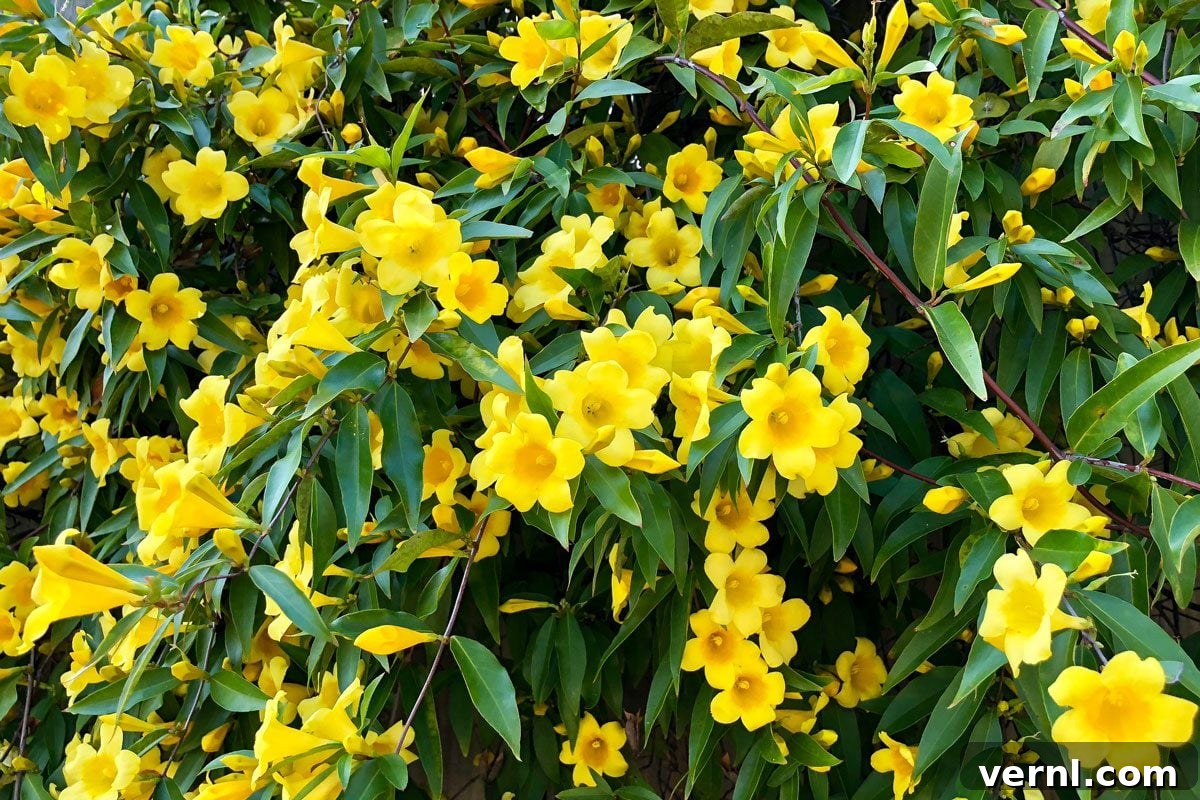
Known variously as false jasmine, yellow jessamine, or scientifically as Gelsemium sempervirens, Carolina jessamine has become a favored choice in landscaping due to a compelling combination of attributes. It is remarkably low-maintenance, exhibits vigorous and fast growth, and produces an abundance of attractive, bright yellow, trumpet-shaped flowers. Beyond its visual appeal, the plant provides substantial ecological benefits, actively sustaining local wildlife populations, particularly various bee species and hummingbirds, which are drawn to its early and abundant nectar source.
Distinctive Features and Growth Habits
Carolina jessamine is characterized as a graceful, twining, and vining plant. Its slender, pointed leaves maintain a glossy, vibrant green hue throughout the year, making it an evergreen asset in many climates. In designed landscapes, it is frequently trained to climb and cascade over structures such as walls, fences, arbors, and trellises, creating lush green backdrops adorned with cheerful yellow blooms. In its natural environment, this robust vine can be found expertly ascending tree trunks within wooded areas and dense thickets, showcasing its natural climbing prowess.
Jessica Chase, a respected farmer and florist, notes its enduring appeal: “Its evergreen foliage stays attractive even through the winter months, offering continuous visual interest when many other plants are dormant. As early spring arrives, typically from late winter to early spring depending on the specific region, the plant erupts with a profusion of cheery yellow flowers that emit a sweet, pervasive fragrance, often likened to honeysuckle. This delightful scent not only adds to its charm but also plays a crucial role in attracting early-season pollinators.” The timing of its bloom is particularly valuable for these pollinators, providing essential sustenance at the beginning of their active season.
Native Range and Ideal Growing Conditions
Carolina jessamine is a true native of the southeastern United States, with its natural habitat extending from Virginia southward through Florida and westward across to Texas. It thrives in USDA Plant Hardiness Zones 7 through 10, demonstrating remarkable adaptability to a range of environmental conditions within these regions. This resilience, coupled with its ease of care, makes it a popular and enduring choice for gardeners looking for a vigorous, native vine that can flourish with minimal intervention.
The Hidden Threat: Unpacking Carolina Jessamine’s Potent Toxicity
Despite its undeniable aesthetic and ecological contributions, it is absolutely critical to understand that Carolina jessamine poses a serious health risk. Every single part of the plant—its roots, stems, leaves, and most alluringly, its bright yellow flowers—contains highly potent neurotoxins. These dangerous compounds, primarily a group of alkaloids known as gelsemine, gelseminine, and sempervirine, act rapidly and directly on the nervous system. This means that even a seemingly small ingestion can be severely dangerous, or tragically, lethal, particularly for smaller individuals such as puppies, small-breed dogs, and cats. The hazard is not limited to pets; ingesting any part of Carolina jessamine is also extremely dangerous for children, adult humans, and livestock, underscoring its universal toxicity.
The tragic loss of Goose, a 2-year-old Lagotto Romagnolo in Washington, D.C., stands as a poignant and heartbreaking illustration of the plant’s rapid and devastating effects. Goose was simply playing in a courtyard when he ingested some of the plant’s attractive yellow petals. Within a matter of minutes, he exhibited severe symptoms of poisoning and, tragically, did not survive. Michael Gruenstaeudl, an assistant professor at Fort Hays State University with a focus on plant biology, confirms the scientific basis of this danger: “There are several reports that the toxins of Gelsemium sempervirens, or one of its related species, have been the source of various fatalities, including such that were under criminal investigations. Hence, the news that a dog died from eating this plant is, unfortunately, very much possible.” His expert statement reinforces the scientifically acknowledged potency and rapid, life-threatening nature of these plant toxins.
The neurotoxins present in Carolina jessamine are absorbed into the bloodstream with alarming speed, leading to an incredibly rapid progression of clinical symptoms. These symptoms can include muscle weakness, tremors, convulsions, significant respiratory distress, and in the most severe cases, full-body paralysis leading to death. While immediate and aggressive veterinary intervention can sometimes offer a chance of survival, it is by no means guaranteed due to this swift absorption and profound systemic impact. This rapid onset of severe symptoms critically emphasizes why immediate emergency care is paramount.
Why Pets Are Attracted to and Ingest Toxic Plants
To effectively prevent plant poisoning, it’s essential to understand the underlying reasons why pets, particularly dogs and cats, might be drawn to and ingest a dangerous plant like Carolina jessamine. Veterinary physiotherapist Lucy Miller highlights that puppies and younger dogs are especially susceptible. Their natural inclination to explore their environment, particularly during teething phases, often involves mouthing and chewing objects indiscriminately. “They are especially prone to chewing plants indiscriminately when teething and exploring their environment,” Miller explains. The bright, trumpet-shaped yellow flowers and the sweet, appealing scent of Carolina jessamine can prove irresistible to a curious pet, luring them in for a closer, yet potentially fatal, investigation.
Beyond youthful curiosity, pets may consume plants for a variety of other reasons. Miller points out, “Sometimes pets eat plants out of boredom, nutritional deficiencies or even just for the texture and sensory experience.” It’s a sobering fact that, unlike humans who can be taught to identify dangerous plants, animals lack the innate ability to differentiate between safe and toxic flora based purely on their appearance or smell. Their natural exploratory instincts, combined with these other factors, can tragically lead them to ingest harmful substances.
While plant toxicity is a serious concern, it’s also beneficial to place it within a broader context of pet hazards. According to the ASPCA, plants account for approximately 8.1% of all pet toxin exposures, ranking as the sixth most common type of toxin pets encounter. Human medications and common household foods and beverages—such as chocolate, chewing gum (especially xylitol-containing varieties), grapes, raisins, and various protein supplements—collectively represent a staggering over 60% of reported pet poisonings. Other significant dangers that frequently appear on the ASPCA’s top-10 list include household cleaning products, rodenticides, insecticides, and even recreational drugs. This broader perspective underscores the necessity for comprehensive pet-proofing strategies, addressing a wide array of potential hazards within both the home and garden environments.
Emergency Protocol: Immediate Action for Suspected Plant Ingestion

If you have any reason to suspect your pet has ingested any part of a Carolina jessamine plant, immediate action is paramount. Do not delay waiting for symptoms to appear, as the toxins are absorbed rapidly, and the pet’s condition can deteriorate with alarming speed. Furthermore, do not attempt to administer home remedies, as these are often ineffective, can waste precious time, or even cause additional harm. Instead, follow these critical steps and seek professional veterinary emergency care without a moment’s hesitation:
- Immediate Oral Decontamination (If Safe): If your pet is conscious and not exhibiting severe distress, and if it is safe for you to do so without risk of being bitten, carefully attempt to remove any visible plant material from their mouth. This simple step can prevent further ingestion of toxins.
- Rinse Mouth: Gently but thoroughly rinse your pet’s mouth with fresh, clean water. This can help wash away any residual toxins adhering to the mucous membranes inside their mouth.
- Seek Emergency Veterinary Care IMMEDIATELY: This is the most crucial step. Contact your veterinarian or the nearest animal emergency clinic without delay. It is highly advisable to call ahead if possible, informing them of your suspected poisoning and the type of plant, so they can prepare for your arrival and expedite treatment.
- Bring a Plant Sample: If it is safe and practical to do so, bring a sample of the plant with you to the veterinary clinic. This will greatly assist the veterinary team in confirming the plant’s identification and toxicity, allowing them to tailor the most effective and appropriate treatment plan.
Upon your pet’s arrival at the veterinary clinic, the medical team will perform a rapid assessment and initiate aggressive treatment protocols. The specific interventions may include:
- Inducing Vomiting: If the ingestion occurred very recently and your pet is neurologically stable, the veterinarian might induce vomiting. This procedure aims to remove undigested plant material from the stomach, but it is only performed under strict veterinary supervision to ensure it is safe and appropriate for your pet’s current condition.
- Administering Activated Charcoal: Activated charcoal, a powerful adsorbent, may be given orally. It works by binding to any remaining toxins within the gastrointestinal tract, significantly reducing their absorption into the bloodstream.
- Providing Intensive Supportive Care: Given the potential for rapid onset of severe respiratory and neurological symptoms, supportive care is absolutely vital. This may involve providing oxygen therapy to assist with breathing, administering intravenous fluids to maintain hydration, support kidney function, and help flush toxins, and prescribing various medications to manage specific symptoms such such as tremors, seizures, cardiac irregularities, or pain.
- Continuous Monitoring: Pets suspected of Carolina jessamine poisoning will require intensive and continuous monitoring. This typically includes blood work to assess organ function (especially liver and kidney), and often 24-hour observation, particularly to detect any delayed reactions or a worsening of neurological signs.
Proactive Measures: Cultivating a Pet-Safe Garden Environment
Effectively managing Carolina jessamine in your yard to ensure the safety of your pets and family requires a multifaceted approach involving vigilance, thoughtful planning, and consistent effort. Given its reputation as a fast and aggressive grower, unchecked Carolina jessamine can quickly spread and become more accessible. Here are comprehensive strategies to protect your pets and children from this deceptively beautiful yet toxic vine:
Strategic Garden Planning and Design Principles
- Thorough Plant Research: Before introducing any new plant to your garden, always consult reliable resources such as the ASPCA’s extensive toxic plant list. This invaluable database is your primary tool for identifying and avoiding harmful species.
- Creating Designated Safe Zones: If you choose to keep toxic plants, strategically place species like Carolina jessamine in areas of your garden where pets and children do not commonly play or spend unsupervised time. Consider designing specific “pet-safe zones” within your landscape that are entirely free of hazardous plants.
- Utilize Vertical Space: Whenever possible, plant Carolina jessamine in hanging baskets or train it on high trellises that are completely out of reach. However, always remember that even elevated plants can pose a risk from fallen petals and leaves, which retain their toxicity.
Implementing Physical Barriers and Effective Containment
- Sturdy Fencing: Install robust and appropriately sized fencing around garden beds or areas where Carolina jessamine is growing. Ensure the fence is tall enough to prevent pets from jumping over and secure enough at the base to prevent burrowing or slipping underneath.
- Protective Cages or Netting: For individual plants or smaller groupings, consider constructing decorative wire cages or employing durable garden netting to create an impenetrable barrier directly around the plant itself.
- Consistent Pruning: Regular and consistent pruning is absolutely essential to control the plant’s aggressive spread and prevent long, trailing vines from extending into easily accessible areas. All pruned material must be disposed of carefully and immediately, following the guidelines for toxic waste.
Ongoing Maintenance and Vigilance
- Daily Debris Cleanup: Even if Carolina jessamine is growing on an overhead trellis, well out of reach of curious paws, it is critical to promptly sweep up any fallen petals, leaves, or other plant debris from the ground. These fragments maintain their toxic properties and can be just as dangerous as the live plant.
- Ground Cover Deterrents: As farmer and florist Jessica Chase wisely suggests, “Using poky mulch materials like bark or rocks at the base of the plant may also discourage pets from approaching and digging.” These textures are generally unappealing and uncomfortable for paws, serving as a natural barrier.
Behavioral Training and Active Supervision
- Constant, Active Supervision: Never leave pets or young children unsupervised in any garden area where toxic plants are present. Active and direct supervision remains the most effective and reliable deterrent against accidental ingestion.
- Boundary Training for Pets: Invest time in training your pets to understand and respect boundaries within the garden. Utilize positive reinforcement techniques with high-value treats to teach crucial commands such as “leave it” or “drop it.” Veterinary physiotherapist Lucy Miller emphasizes, “Training your pet to obey commands like ‘leave it’ would greatly help, especially with nippy dogs who tend to mouth everything they encounter.”
- Mental and Physical Enrichment: Ensure your pets receive adequate mental stimulation and sufficient physical exercise. Miller advises, “Another thing to do is to keep your pets mentally stimulated and exercised, so there is less likelihood of them wandering around chewing plants out of boredom or anxiety.”
- Offer Safe Chewing Alternatives: For cats, providing dedicated cat grass (typically a mix of oat, wheat, or barley grass) offers a safe, appealing, and healthy alternative for them to chew, effectively redirecting their natural instincts away from potentially harmful plants.
Educating All Family Members
Rather than striving for the often-impossible goal of eliminating every single poisonous plant from every environment, a more practical and empowering approach is to familiarize yourself and your entire family with them. Knowing which plants pose a threat empowers you to implement appropriate safety measures wherever you are, whether at home, in a park, or visiting friends. Furthermore, if you have children, transforming plant identification into a vital safety lesson and an engaging learning experience can be profoundly beneficial. Teaching them about the plants in your landscape, which ones to admire from a distance, and which ones to absolutely avoid not only instills crucial safety habits but also fosters a deeper curiosity and respect for the natural world around them.
Managing or Removing Carolina Jessamine from Your Property
While effective containment strategies can significantly reduce risk, some homeowners may ultimately decide that completely removing Carolina jessamine is the safest and most responsible option for their specific household. However, as Jessica Chase aptly cautions, “Carolina jessamine is a survivor, making it a tough plant to fully remove.” Its aggressive growth habit and robust root system demand a systematic and persistent approach for successful eradication:
- Essential Protective Gear: Always wear sturdy gardening gloves, long sleeves, long pants, and protective eyewear when handling Carolina jessamine. While ingestion is the primary concern, skin contact with its sap can potentially cause irritation in sensitive individuals.
- Vigorous Cutting and Root Extraction: Begin by cutting the above-ground plant material back severely. Then, meticulously dig out as much of the root system as possible. Be aware that even small, remaining fragments of roots can regenerate and lead to new growth.
- Smothering Technique for Remaining Roots: After extensive digging, smooth the soil over the affected area. Then, apply a thick, overlapping layer of landscape fabric, which should then be covered with a substantial layer of cardboard or organic mulch (at least 6-8 inches deep). This method effectively starves any remaining roots of essential light and air, inhibiting their ability to regrow.
- Persistent Monitoring and Removal: Regularly inspect the area for any new shoots or sprouts that manage to emerge. Any new growth must be removed immediately upon sight to deplete the plant’s energy reserves and prevent it from re-establishing.
- Proper Disposal of Plant Material: Crucially, all removed plant material—roots, stems, leaves, and flowers—must be disposed of in sealed trash bags. Do NOT compost Carolina jessamine, as its tenacious nature means it can easily re-root and continue to grow, spreading its toxicity within your compost pile.
- Ongoing Yard Inspection: Even after what appears to be thorough removal, continue to periodically inspect your yard for any signs of new growth or fallen vines, particularly if neighboring properties have Carolina jessamine. Remember that even dried leaves and petals retain their toxic properties and can pose a risk.
For individuals who appreciate Carolina jessamine’s beauty and wish to retain it, but prioritize pet safety, implementing a robust, well-maintained physical barrier or establishing a completely fenced-off area that is absolutely inaccessible to pets is a necessary compromise. This allows for the enjoyment of its aesthetic qualities while significantly minimizing the inherent risks.
Beyond Jessamine: Other Common Plants Posing a Threat to Pets
Carolina jessamine, while a significant concern, is merely one of many plants that, despite their beauty, can be dangerously toxic to both pets and humans. A surprising number of common landscaping plants, and even popular cut flowers frequently purchased from florists, conceal potent toxins. As Jessica Chase highlights, “Some even double as popular cut flowers from florists, but remain toxic even after cutting,” emphasizing that beauty does not equate to safety. Familiarizing yourself with these prevalent toxic plants is an essential step in creating a truly safe and protective environment for your entire family.
Lilies (Lilium spp. and Hemerocallis spp.)
Perhaps one of the most dangerously toxic plants for cats, true lilies (such as Easter lilies, Asiatic lilies, tiger lilies, and daylilies) can cause acute and often fatal kidney failure in felines. Ingesting even a minute amount of any part of the plant—including the pollen, leaves, or flowers—can be devastating. “Especially indoor cats are often drawn to lilies because of their scent and appearance,” warns Chase. “Even brushing against the pollen can contaminate their fur, and grooming afterward can quickly lead to a medical emergency.” For all cat owners, it is strongly recommended to completely avoid having lilies both inside and outside the home.
Oleander (Nerium oleander)
Every single part of the oleander plant is highly toxic due to the presence of cardiac glycosides. Ingestion, even of a small leaf, can lead to severe gastrointestinal upset, lethargy, and potentially fatal cardiac arrhythmias, culminating in heart failure in dogs, cats, and humans. It is a widely used ornamental shrub in warmer climates, making its presence a significant and widespread risk.
Sago Palms (Cycas revoluta)
These distinctive ornamental plants, often employed in landscaping for their exotic, tropical aesthetic, contain cycasin, a potent toxin primarily affecting the liver. Ingestion of even a tiny fragment of any part of the plant, but especially the highly palatable and accessible seeds, can cause severe liver failure in dogs. The consequences are often devastating and can be fatal without immediate and aggressive veterinary intervention.
Azaleas and Rhododendrons (Rhododendron spp.)
Members of the large Rhododendron genus, both azaleas and rhododendrons contain grayanotoxins in all their parts. Ingestion can result in a wide range of severe symptoms including persistent vomiting, diarrhea, excessive drooling, dangerously reduced blood pressure, cardiac irregularities, tremors, seizures, coma, and even death. These popular and widely planted flowering shrubs necessitate extreme caution, particularly where pets and children are present.
Foxglove (Digitalis purpurea)
Renowned for its beautiful, bell-shaped, often spotted flowers, foxglove contains digitoxin and other cardiac glycosides, which act similarly to the toxins in oleander. Ingesting any part of the plant, including dried leaves, can severely injure the heart, leading to cardiac dysfunction, arrhythmias, and potentially fatal outcomes in both pets and humans.
Additional Common Toxic Plants to Be Aware Of:
- Daffodils (Narcissus spp.): Particularly the bulbs, which can cause severe vomiting, diarrhea, abdominal pain, convulsions, and cardiac arrhythmias if ingested.
- Tulips and Hyacinths (Tulipa spp., Hyacinthus orientalis): The bulbs are the most concentrated source of toxins, causing intense gastrointestinal irritation, excessive drooling, and potential respiratory distress.
- Autumn Crocus (Colchicum autumnale): This plant contains colchicine, which can cause severe gastrointestinal issues, liver and kidney damage, and bone marrow suppression.
- Castor Bean (Ricinus communis): Contains ricin, one of the most potent plant toxins known, concentrated primarily in its attractive, mottled seeds. Ingestion can be fatal.
- Dieffenbachia (Dumb Cane): A very common houseplant, it causes intense oral irritation, burning, swelling of the mouth and throat, and difficulty swallowing due to insoluble calcium oxalate crystals.
- Philodendron (Philodendron spp.): Another popular houseplant containing calcium oxalate crystals, causing similar oral irritation, pain, and swelling as Dieffenbachia.
- Ivy (Hedera helix): Varieties of English ivy can cause gastrointestinal upset, abdominal pain, and excessive drooling.
- Mistletoe (Phoradendron serotinum): While often associated with holidays, ingestion can cause gastrointestinal upset, cardiovascular issues, and collapse.
This comprehensive list, while extensive, is by no means exhaustive. It serves to highlight the critical importance of ongoing education and unwavering vigilance. Always consult the ASPCA’s comprehensive online plant database for specific concerns about any plant in your environment or before introducing new flora.
About Our Esteemed Experts
The invaluable insights, practical advice, and expert recommendations featured throughout this article are sourced from leading professionals in their respective fields, whose expertise ensures the accuracy and reliability of this information:
- Jessica Chase is an accomplished farmer, skilled florist, and the dedicated owner of Sierra Flower Farm, beautifully situated in the picturesque Tahoe area. She is also the thoughtful author behind the informative Sierra Flower Farm Blog, sharing her knowledge and passion for horticulture.
- Lucy Miller, MSc, is a compassionate and dedicated veterinary physiotherapist practicing at Step Ahead Veterinary Physiotherapy in the UK. Her profound expertise lies in enhancing animal welfare, rehabilitation, and understanding animal behavior.
- Michael Gruenstaeudl, Ph.D., holds the position of assistant professor at Fort Hays State University in Kansas. His extensive and impactful work focuses on cutting-edge research in genetics, bioinformatics, and plant biology, providing a deep scientific understanding of botanical subjects and their biological implications.
By thoughtfully understanding the potential risks and diligently implementing smart safety strategies, we can continue to appreciate the natural beauty and ecological benefits of plants like Carolina jessamine while steadfastly ensuring the well-being and safety of all members of our families—both two-legged and four-legged.