
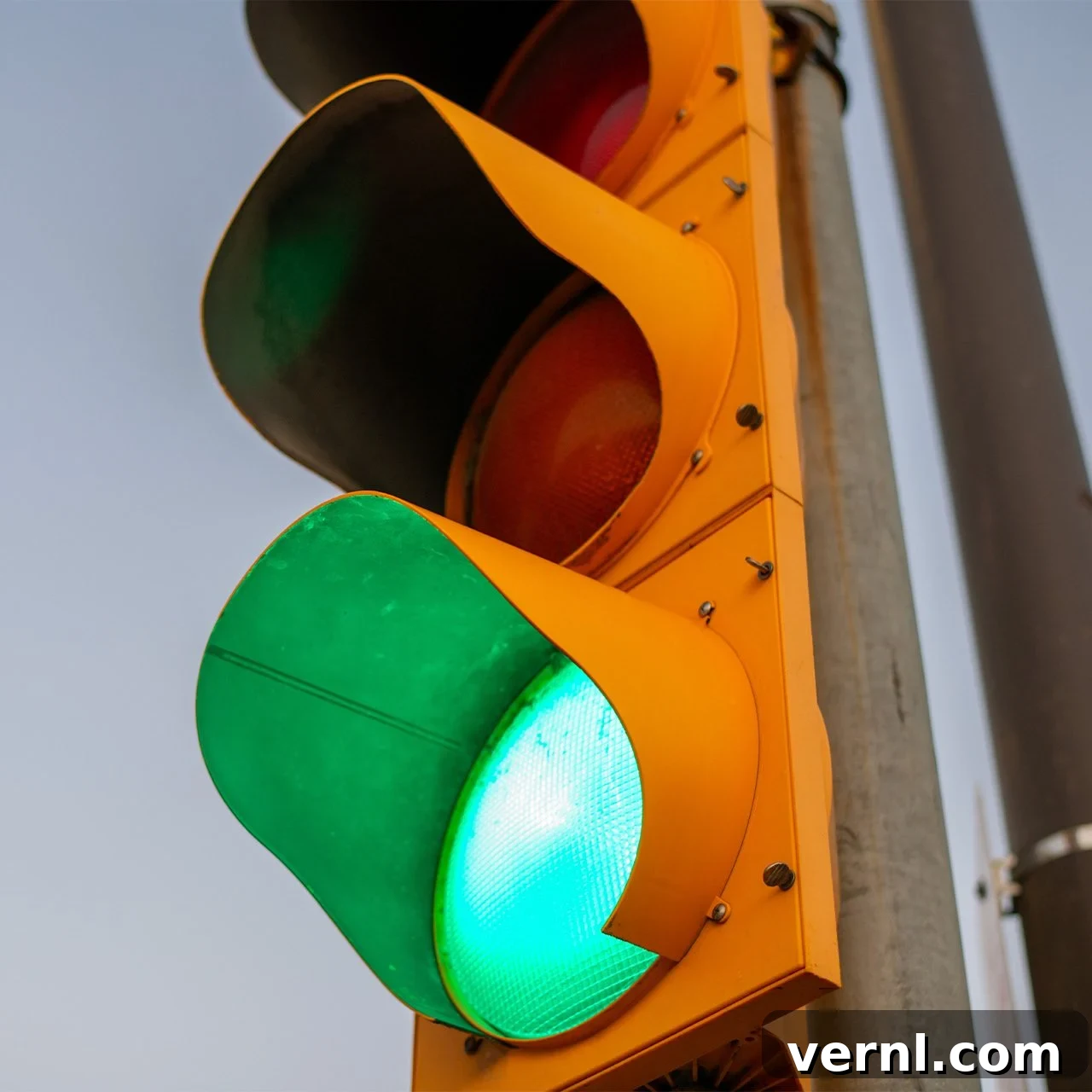
Few things on the road are as frustrating as waiting at a red light — especially when it feels like every signal in a row turns red just as you arrive. Some cities are responding by using traffic signal strategies that reward drivers who obey the speed limit. One of those strategies, known as “rest in red,” gives drivers traveling at or below the posted speed a better chance of hitting green lights, while faster drivers are more likely to stop.
Learn how rest in red works, why cities believe more green lights can encourage slower driving, which places are testing it, and whether the idea could spread across the United States.
How Rest in Red Traffic Lights Reward Drivers Who Follow the Speed Limit
Rest in red keeps traffic signals at red when no vehicles are approaching, then uses sensors to detect incoming cars and change the light to green. Some systems include speed sensors that allow drivers traveling at or below the set speed to trigger an earlier green, while drivers exceeding the limit may face a longer wait.
According to the Portland Bureau of Transportation, rest in red can display red lights in all directions during late-night and early-morning hours when traffic volumes are low, instead of running the regular daytime cycle of green, yellow, and red. That approach reduces unnecessary cycles and gives drivers an incentive to maintain safe speeds.
Albuquerque, New Mexico, already uses this approach along Lead and Coal Avenues. There, the lights rest on red and will turn green sooner for vehicles traveling at acceptable speeds. Jennifer Turner, Albuquerque’s director of municipal development, told the Associated Press that drivers learn quickly that speeding increases the chance they’ll have to stop.
The city says rest in red is part of a broader effort that includes automated speed enforcement and signal coordination designed to calm traffic and improve safety. Portland has piloted rest in red on sections of Southeast Powell Boulevard during low-traffic hours and highlights the safety benefits of reduced speeds. The city notes that higher speeds dramatically increase the risk of death or serious injury in crashes, and lower speeds reduce both crash likelihood and severity.
Rest in red differs from the familiar “green wave,” which times consecutive lights so vehicles moving at a target speed can pass through several greens in succession. Rest in red starts from a stopped position and uses the promise of an earlier green to encourage drivers to slow down rather than speed up. Some implementations rely only on vehicle detectors that sense an approaching car; others add speed detection to actively reward compliant drivers.
Will Rest in Red Traffic Lights Work on Every Road?
Rest in red is most effective where traffic is light and open roads make speeding more likely, such as late at night or in early morning hours. During peak times or on busy corridors, signals often need to prioritize traffic flow, so a different setup may be required to avoid congestion.
Some intersections may also need updated detectors or signal equipment before a city can adopt rest in red. Researchers are still evaluating potential downsides, including whether repeatedly encountering red lights could encourage risky behavior like running them. As a result, additional testing and study will likely be necessary before the approach becomes widespread.
The basic message is simple for drivers: staying near the posted speed limit can increase your chance of reaching the next green light instead of racing toward another red one.
Sources
Associated Press, “Some US cities have begun rewarding careful drivers with fewer red lights”
City of Albuquerque, New Mexico, “Lead and Coal Corridor Safety Alternatives Survey”
Portland Bureau of Transportation, “‘Rest in red’ traffic safety technology”
North Carolina Department of Transportation, “Rest in Red Evaluation”
RELATED:
- Do You Know What That Little Button on Your Seat Belt Is For?
- What Those Lines on Your Backup Camera Really Tell You
- Here’s What The Small Panel On Your Car’s Front Bumper Is For