
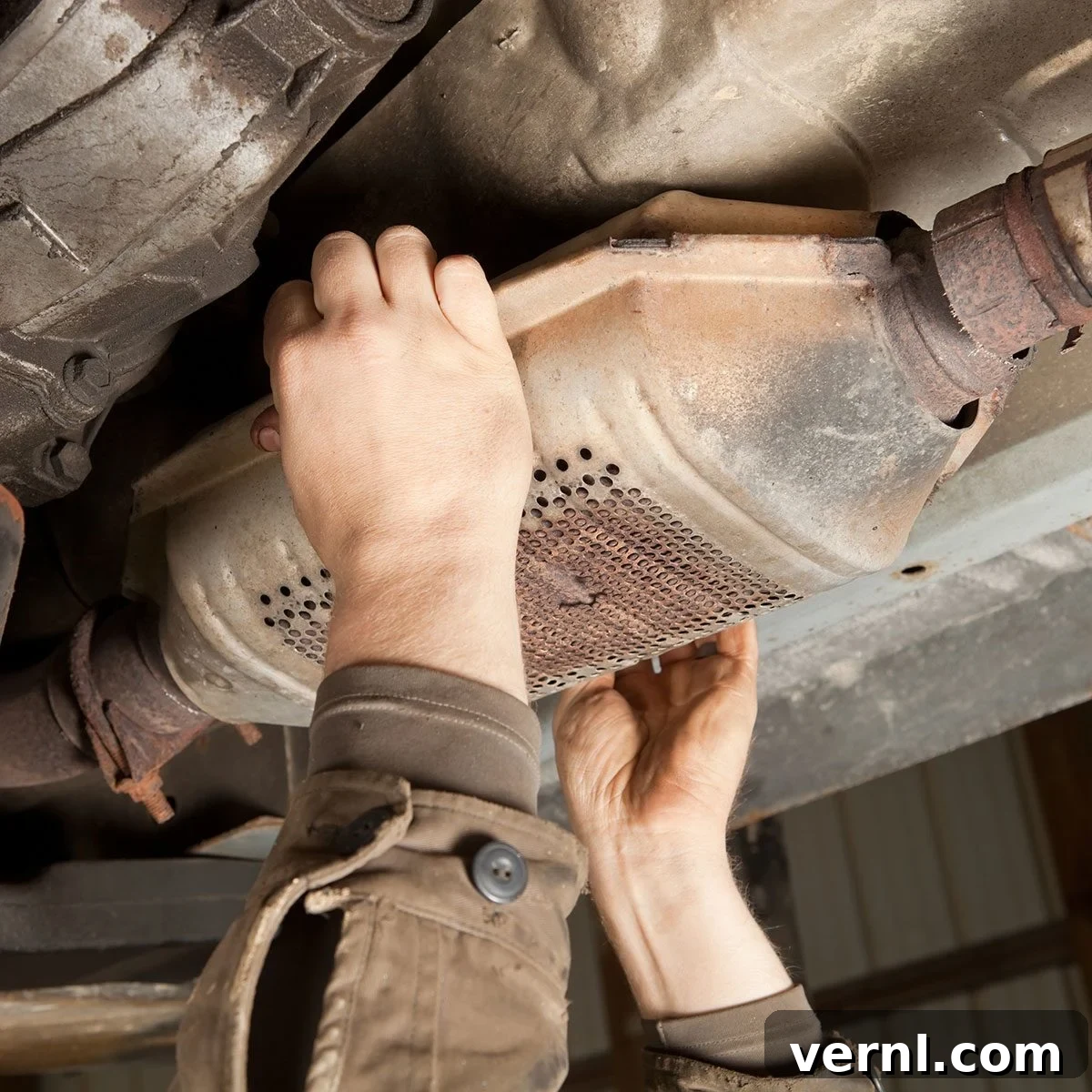
Imagine starting your car and instead of the usual hum, you’re greeted by a jarring, loud rumble, sounding more like a souped-up race car than your daily driver. This unmistakable sign is often the first indicator that a crucial component of your vehicle’s exhaust system, the catalytic converter, has been stolen. This alarming scenario has become increasingly common, turning a vital environmental device into a prime target for thieves.
Catalytic converters are an integral part of modern vehicles, designed to reduce harmful emissions and mitigate the negative environmental impact of automobile traffic. By transforming toxic pollutants into less harmful byproducts, they play a critical role in maintaining cleaner air. However, these unassuming devices have unfortunately become a hot commodity in the illicit market, with thefts surging in many areas, particularly during late winter and early spring months.
This comprehensive guide delves into the reasons behind the alarming rise in catalytic converter thefts, explores what makes them so attractive to opportunistic car thieves, and most importantly, outlines practical, effective strategies you can employ to prevent your vehicle from becoming the next victim.
Why Are Catalytic Converters Being Stolen? The Lure of Precious Metals
At the heart of the catalytic converter theft epidemic lies its inherent value. These devices are not merely exhaust components; they are a veritable treasure trove for thieves seeking a quick profit. The secret to their worth lies in the rare and highly valuable precious metals housed within them.
The High Value of Rare Earth Metals
Catalytic converters utilize a sophisticated ceramic honeycomb structure coated with specific precious metals: platinum, palladium, and rhodium. These metals act as catalysts, facilitating chemical reactions that convert hazardous gases—such as carbon monoxide, nitrogen oxides, and unburnt hydrocarbons—into less harmful substances like carbon dioxide, nitrogen, and water vapor. The demand for these metals extends far beyond the automotive industry, encompassing electronics, jewelry, and various industrial applications, contributing to their high market prices.
- Palladium: Often trading for thousands of dollars per ounce, palladium is one of the most sought-after metals due to its catalytic properties and relative scarcity. Its price fluctuations can directly impact the profitability of catalytic converter theft.
- Platinum: While often associated with jewelry, platinum is also a powerful catalyst used in converters. Its stability and resistance to corrosion make it invaluable.
- Rhodium: The most expensive of the trio, rhodium is exceptionally rare and possesses superior catalytic efficiency, particularly in reducing nitrogen oxides. Its market price can soar, making even small amounts incredibly valuable.
The fluctuating market prices of these metals mean that a single catalytic converter can yield hundreds, or even thousands, of dollars for thieves on the black market, making it an incredibly appealing target.
Ease of Theft and Lack of Identification
Beyond the intrinsic value of the metals, two critical factors contribute to the prevalence of catalytic converter theft: the remarkable ease with which they can be removed and the almost complete lack of identifying features. A determined thief, often equipped with nothing more than a reciprocating saw, can crawl under a vehicle and sever the converter from the exhaust system in a matter of minutes, sometimes less than a minute. In many instances, the car doesn’t even need to be jacked up, especially for vehicles with higher ground clearance.
Once stolen, catalytic converters pose a significant challenge for law enforcement. Unlike other vehicle parts that carry a Vehicle Identification Number (VIN) or other serial markers, catalytic converters typically lack any unique identification. This makes it virtually impossible to trace them back to a specific stolen vehicle, allowing thieves and illicit scrap metal dealers to process them with little fear of being caught or having the items identified as stolen property. This anonymity fuels a thriving illicit market, where converters are often sold to unscrupulous scrap yards for their precious metal content.
Can a Car Run Without a Catalytic Converter? Understanding the Consequences
The immediate good news for car owners is that, yes, your car will physically run without a catalytic converter. Since its primary function is to filter exhaust and reduce emissions, it doesn’t directly impact the engine’s operational capabilities or your vehicle’s actual driving performance. In fact, some might even notice a slight increase in engine noise or a change in exhaust sound.
However, the long-term consequences of driving without a catalytic converter are significant and far-reaching. Firstly, the absence of this crucial component means your vehicle will emit significantly higher levels of harmful pollutants directly into the atmosphere, contributing to air pollution and environmental degradation.
Secondly, and perhaps more immediately impactful for the owner, driving a vehicle without a catalytic converter is illegal in most jurisdictions. Due to stringent environmental protection laws and emission regulations, operating a vehicle without a functioning catalytic converter can lead to substantial fines, vehicle impoundment, and the inability to pass mandatory emissions tests. Many states require regular emissions inspections, and a missing or non-functional converter will result in an immediate failure, rendering your vehicle illegal to drive until repairs are made.
The Cost of Replacement: A Heavy Financial Burden
Replacing a stolen catalytic converter is not a trivial expense; it can represent a significant financial burden for vehicle owners. The cost can vary widely, ranging from hundreds to several thousands of dollars, depending on several factors:
- Vehicle Make and Model: Converters for luxury vehicles, high-performance cars, or larger trucks and SUVs typically cost more than those for standard sedans. Some vehicles may even have multiple converters, further increasing the replacement cost.
- Quality of the Converter: Aftermarket converters are generally less expensive than original equipment manufacturer (OEM) parts, but their quality and longevity can vary. OEM parts often come with a higher price tag but guarantee fit and performance standards.
- Labor Costs: Installation requires skilled labor, which adds to the overall expense. Unless you possess advanced automotive repair skills and specialized tools, attempting to replace it yourself is generally not advisable due to the complexity and potential safety risks involved.
- Additional Damage: Thieves often cut through exhaust pipes and oxygen sensor wires during the theft, which may require additional repairs beyond just replacing the converter itself.
Fortunately, if your vehicle is covered by comprehensive car insurance, the cost of replacing a stolen catalytic converter should typically be covered. Comprehensive coverage protects against non-collision damages, including theft, vandalism, and natural disasters. While you will likely be responsible for paying your deductible, the insurance company will cover the remaining balance, significantly reducing your out-of-pocket expenses. It’s always wise to review your policy details and contact your insurance provider immediately after a theft to understand your specific coverage and claims process.
Effective Strategies: How to Prevent Catalytic Converter Theft
While catalytic converter theft is a pervasive problem, there are several proactive measures vehicle owners can take to deter thieves and protect their assets. A multi-layered approach combining physical security, identification, and smart parking practices offers the best defense.
Physical Security Enhancements
- Weld the Converter: One of the most effective preventive measures is to have your mechanic weld the converter’s bolts or even the converter itself more permanently to the vehicle’s undercarriage. Adding extra welds or rebar around the converter can make it significantly harder and more time-consuming for thieves to remove with a saw, acting as a powerful deterrent.
- Install Catalytic Converter Security Devices: A growing market offers specialized security kits and cages designed to encapsulate the catalytic converter, making it much more difficult to cut and remove. These devices, often made from hardened steel cables or plates, create a formidable barrier that slows down or completely frustrates thieves, forcing them to abandon the attempt.
- Engrave Your VIN: While converters typically lack identification, you can have your car’s Vehicle Identification Number (VIN) or another unique identifier professionally engraved onto the catalytic converter. This doesn’t prevent theft outright but makes it traceable if recovered and acts as a deterrent for scrap yards unwilling to deal with potentially identifiable stolen parts. Some law enforcement agencies and mechanics offer this service for free or at a low cost.
Smart Parking and Environmental Awareness
- Park in Secure, Well-Lit Areas: Whenever possible, park your vehicle in a closed, locked garage. If a garage isn’t available, choose well-lit, highly visible locations that are frequently monitored by people or security cameras. Thieves prefer the cover of darkness and seclusion.
- Park Close to Entrances: When parking in public lots, try to park as close as possible to building entrances or main roads where there’s more foot traffic and visibility.
- Consider Security Cameras: For home parking, installing motion-activated security cameras can deter thieves and provide valuable evidence if a theft occurs.
- Adjust Vehicle Position: If you have a vehicle with high ground clearance, try to park it with the exhaust side against a wall or curb if possible. This makes it harder for thieves to access the converter from underneath.
Advanced Security Systems
- Alarm Systems with Tilt Sensors: Standard car alarms might not detect someone crawling under your car. However, advanced alarm systems equipped with tilt or vibration sensors can trigger an alert if the vehicle is lifted or significant vibrations (like those from a reciprocating saw) are detected.
- Dash Cams: While primarily for accident evidence, a dash cam with a parking mode that records motion can sometimes capture images of thieves around your vehicle, aiding in identification.
FAQ: Your Questions Answered
Are car thieves still targeting catalytic converters in 2025?
Yes, unfortunately, catalytic converter theft remains a persistent problem in 2025 and is projected to continue. As Melanie Musson, an auto industry expert with CarInsurance.org, explains, “Because catalytic converters contain precious metals like platinum, palladium, and rhodium, they continue to be a prime target for car thieves, especially on vehicles with high clearance.” She emphasizes, “The higher the clearance, the easier thieves can get under the vehicle and cut the catalytic converter out quickly and efficiently.” Popular targets often include SUVs, trucks, and older hybrid vehicles like the Toyota Prius, which may contain a higher concentration of these metals.
While the rate of thefts has seen some fluctuations, legislative efforts and increased awareness are battling the issue. “New laws that prevent scrap metal businesses from taking them without proof they are not stolen have helped,” notes Chris “Moose” Pyle, an automotive expert with JustAnswer. However, Pyle cautions, “Although states and federal laws and recycling yards are trying to make it much harder, thieves still find ways to pass them off as if they were removed from a low-mileage wrecked vehicle, finding loopholes in the system.” This suggests an ongoing cat-and-mouse game between thieves, legislators, and law enforcement, meaning vigilance from vehicle owners is still paramount.
What other car parts are commonly targeted by thieves?
Catalytic converters are just one item on a longer list of car parts sought by thieves. According to Kevin Oliff, general manager at AutoNation BMW, “Rims, tires, airbags, radios, navigation systems, vehicle doors, and side mirrors are common targets due to their value and relative ease of removal.” These parts can be resold quickly on various black markets, either individually or to unscrupulous repair shops.
Melanie Musson adds batteries to this list, noting that “they’re easy to access and are increasing in value, especially with the growing demand for renewable energy components.” Furthermore, Chris “Moose” Pyle highlights “spare tires on Jeeps and rear LED taillights because they are fast, easy to remove, and can fetch a pretty penny online.” Pyle provides a startling example: “For instance, one rear taillight on a 2020 Ford F150 can be worth $600.” This illustrates the diverse range of valuable components that make vehicles attractive targets for thieves looking for profitable, easily transportable items.
About the Experts
- Melanie Musson is an esteemed auto industry expert with CarInsurance.org, where she has contributed her insights for nearly a decade, specializing in vehicle safety and insurance trends.
- Chris “Moose” Pyle is a master-certified automotive technician boasting over 20 years of hands-on experience in the automotive field. He has also served as a trusted expert for JustAnswer, the leading expert on-demand platform, since 2006.
- Kevin Oliff serves as the general manager at AutoNation BMW in Buena Park, California. With a deep understanding of the auto industry, he has been a valuable professional in the sector since 2010.