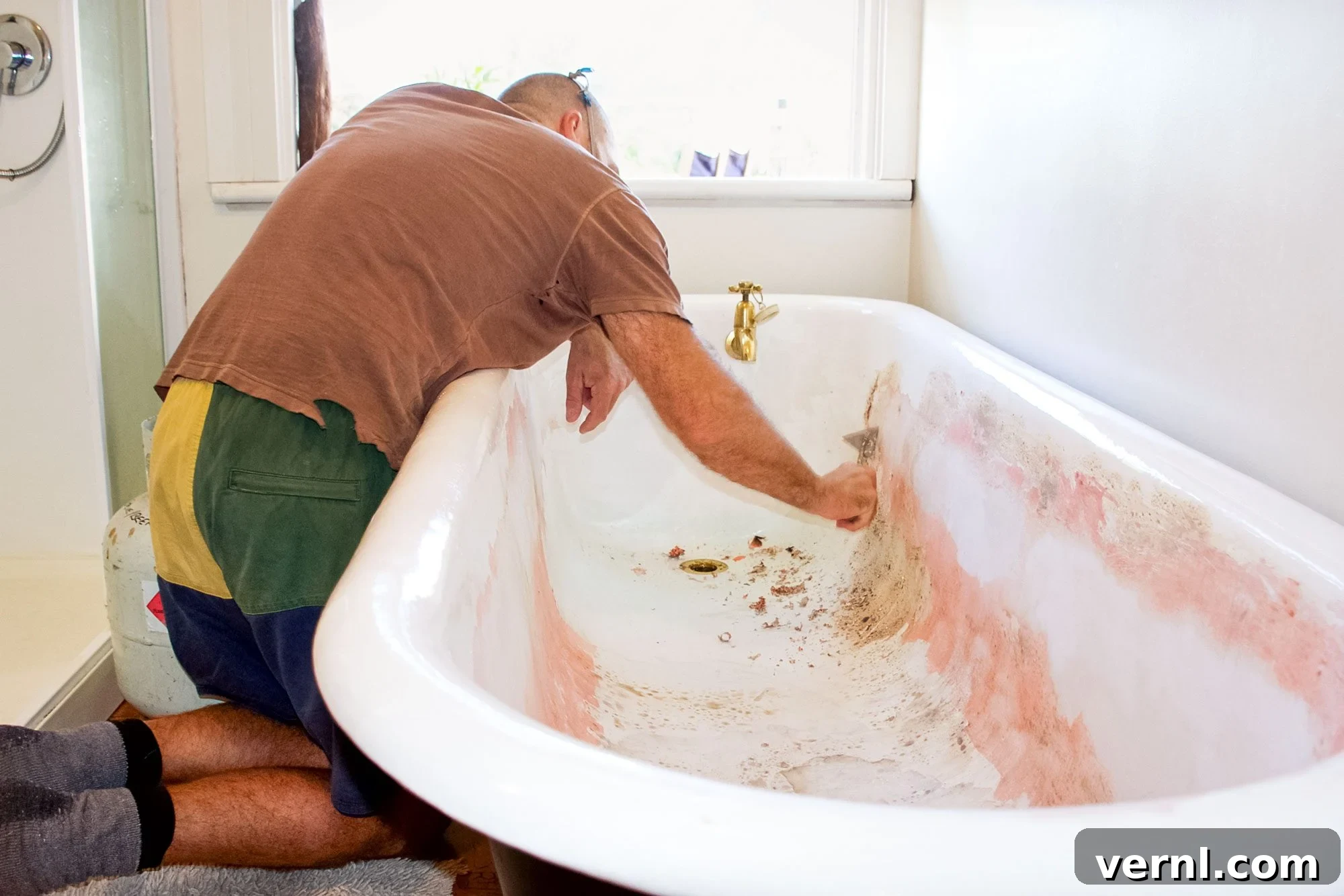
Dreaming of a sparkling new bathtub? The reality of replacement costs, often soaring to $5,000 or more, can quickly turn that dream into a financial headache. However, a complete tear-out and replacement isn’t your only option, especially when your existing tub is structurally sound but merely showing its age with chips, stains, or a dull finish.
Fortunately, transforming a dated or worn bathtub doesn’t have to break the bank. Cost-effective alternatives exist that can dramatically improve its appearance without the hefty price tag and significant disruption of a full replacement. As a property owner, I’ve personally experienced the immense savings and satisfaction of refinishing a tub in one of my rental units, sidestepping thousands of dollars in renovation expenses.
To provide you with the most reliable and in-depth information, we’ve consulted with two leading experts in the field: Nick Coletti from Superior Bathtub Refinishing and Nathan Oettinger from The Painted Otter Refinishers. Together, we’ll explore various bathtub refinishing options, weigh their pros and cons, and clarify what you can expect in terms of costs and longevity.
About Our Industry Experts
Our insights are bolstered by the extensive experience of these seasoned professionals:
Nathan Oettinger is the proud owner of The Painted Otter Refinishers, operating in both New York and Texas. With over 15 years dedicated to the tub and tile refinishing business, Nathan brings a wealth of practical knowledge and a deep understanding of advanced techniques.
Nick Coletti owns Superior Bathtub Refinishing, based in Lynnfield, Massachusetts. Nick’s impressive career spans more than two decades in the industry, making him an authority on durable and high-quality refinishing solutions.
What Exactly Is Bathtub Refinishing?
Bathtub refinishing, also known as resurfacing or reglazing, is the process of restoring an existing tub’s surface by applying a new, durable coating or layer over the damaged, worn, or discolored areas. This method is an appealing alternative to full replacement because it requires no demolition, minimizes waste, and can make your existing tub look brand new without the mess and expense of construction.
This transformative process typically involves cleaning, repairing imperfections, and applying specialized coatings designed to withstand the harsh conditions of a bathroom environment. There are three primary methods for achieving a refreshed tub, each offering distinct advantages:
1. DIY Bathtub Painting
Bathtub painting is often the most accessible and budget-friendly option, making it a popular choice for handy homeowners and property managers. As the name suggests, it involves painting your tub, but with specialized products rather than ordinary household paints. This method is generally considered a do-it-yourself (DIY) project or one that a skilled handyperson can undertake.
Most DIY bathtub refinishing kits come complete with a primer and a topcoat product, or a comprehensive two-part epoxy system that simplifies the process into a single application. These kits are formulated to endure the high moisture exposure, temperature fluctuations, and cleaning chemicals common in a bathroom. As Coletti emphasizes, “Ordinary paints will not work” due to their inability to adhere properly and resist the demanding environment of a bathtub.
While DIY painting offers an immediate aesthetic upgrade, it’s crucial to manage expectations regarding durability. The results can vary significantly depending on the quality of the kit, the thoroughness of the preparation, and the frequency of use. Typically, a painted tub will maintain its pristine appearance for about six months to a year under heavy daily use. In less frequently used areas, such as a guest bathroom, you might enjoy longer-lasting results. This option is best viewed as a short-term solution to buy time before a more permanent fix, like professional reglazing, becomes necessary. It’s ideal for quick cosmetic fixes or for rental properties where cost-effectiveness and rapid turnaround are priorities.
2. Professional Bathtub Reglazing
Reglazing represents a significant step up from DIY painting, offering a far more durable and long-lasting solution performed by skilled professionals. Bathtub reglazing involves the application of industrial-grade coatings that are significantly harder and more resilient than any DIY product. The process is similar in concept to painting, but the materials and application techniques are vastly superior, yielding results that can easily mimic the look and feel of a brand-new tub.
Nathan Oettinger highlights the advanced nature of these materials: “The products we use are designed to have a very high strength and a very high flexibility. They often begin as industrial products that are then brought over to the tub refinishing industry and reformulated for use on bathtubs and tile. It’s very strong stuff.” These professional-grade epoxies, urethanes, and acrylics offer exceptional adhesion, chemical resistance, and a brilliant, long-lasting sheen.
Beyond the superior materials, the success and longevity of a reglazing job heavily rely on the meticulous preparation work. “The prep work really separates a DIY job from a pro, because that will determine the performance of the coating,” Oettinger explains. Professional preparation typically involves deep cleaning, sanding, repairing chips and cracks, etching the surface for optimal adhesion, and applying multiple layers of primer and topcoats. This labor-intensive process ensures a smooth, flawless finish that is chemically bonded to the original surface.
So, how long can you expect a professional reglazing job to last? According to Nick Coletti, “At least 10 years, at a minimum, but you could get 20 years depending on the use.” With proper care and maintenance, a professionally reglazed tub can provide years of beauty and functionality, making it an excellent investment for homeowners seeking a durable and aesthetically pleasing solution.
3. Fitted Bathtub Liners
For those seeking a completely new surface without the demolition, a fitted tub liner offers another professional solution. This option is typically provided by larger, national companies specializing in bathroom renovations. Unlike painting or reglazing, which apply a new coating, a fitted tub liner involves installing a custom-molded plastic shell directly over your existing bathtub.
The process begins with a company representative visiting your home to take precise measurements of your current tub. These detailed specifications are then used to manufacture a new liner, typically made from durable acrylic or PVC. The custom manufacturing process and subsequent shipping can take several weeks. Once the liner arrives, skilled technicians return to your home for installation, a process that can often be completed within a single day.
During installation, the existing tub is thoroughly cleaned, and any significant damage is addressed. Special adhesives and silicone sealants are used to bond the new liner securely to the old tub, creating a watertight seal. The result is a seamless, new-looking tub surface that instantly upgrades your bathroom’s appearance. Acrylic tub liners, when installed by a reputable company, are known for their superior durability and can last anywhere from 10 to 20 years. PVC liners offer a more budget-friendly option, with an expected lifespan of up to 10 years.
While tub liners provide a swift visual transformation, it’s worth noting a few considerations. Imperfect installation can sometimes lead to moisture being trapped between the old tub and the new liner, potentially causing mold growth or a “hollow” sound when the liner is stepped on. Choosing an experienced installer is paramount for a long-lasting and problem-free result.
Understanding Bathtub Refinishing Costs
The cost of refinishing a bathtub can vary significantly, ranging from as little as $150 for a DIY kit to more than $5,000 for complex liner installations. This wide range depends on the method chosen, the extent of the existing tub’s damage, geographic location, and the specifics of the service provider. Here’s a breakdown of what to expect for each refinishing option:
1. DIY Painting Costs
Opting to paint your tub yourself is undoubtedly the most economical choice. Most DIY bathtub refinishing kits are priced under $150, with many quality brands available for $50-$100. A significant advantage of these kits is that they often include most or all of the necessary materials and tools, such as the primer, topcoat, sandpaper, and sometimes even brushes or rollers, making the kit cost very close to your total project expenditure.
However, it’s wise to budget for a few extra expenses to ensure a professional-looking and safe application. These may include heavy-duty cleaning agents to thoroughly prepare the tub surface, additional sandpaper of various grits, painter’s tape, drop cloths, and crucially, a high-quality canister mask and proper ventilation to protect against fumes. Despite these additions, DIY painting remains an incredibly inexpensive way to achieve a clean, new look for your tub, which is why it’s a popular choice for quick cosmetic updates in rental properties where long-term durability is less critical than immediate aesthetic improvement.
2. Professional Reglazing Costs
For a professional reglazing service, you can expect to pay anywhere from $350 to $900. The specific cost is influenced by several factors, including your geographic location, the reputation and experience of the reglazing company, and the size and current condition of your bathtub. Nathan Oettinger, for example, notes that his company charges around $450 for the same reglazing service in Texas, while the price increases to $550 in New York, reflecting regional differences in labor and operational costs. Nick Coletti also points out that prices can climb to as much as $900 in high-cost-of-living areas like Boston.
When seeking a professional reglazer, exercise caution regarding unusually low prices. The refinishing industry has varying levels of oversight, and some newer companies might offer cut-rate services by using inferior products or cutting corners on the critical preparation steps. Such shortcuts can lead to premature peeling, chipping, or a less durable finish, ultimately costing you more in the long run. It is highly recommended to research established companies with a strong track record, looking for businesses with numerous four- and five-star reviews, clear warranties, and proof of licensing and insurance. Request multiple quotes and compare not just the price, but also the detailed scope of work and the materials used.
3. Fitted Bathtub Liner Costs
Fitted tub liners represent the most significant investment among refinishing options, often costing thousands of dollars. Nathan Oettinger provides a clear picture of these costs: “Pricing for a tub liner in my area [in New York] ranges from around $1,500 to as much as $4,000.” If your project extends beyond just the tub to include a coordinated wall surround, the costs escalate further, with Oettinger stating, “When you’re looking at a tub and surround, anywhere from $4,500 to as much as $10,000.”
These costs are primarily driven by the company providing the service, the complexity of your bathtub style (e.g., standard alcove vs. unique shapes), and most importantly, the material used for the liner. Acrylic tub liners are the most popular choice due to their superior durability, resistance to staining, and smooth, high-gloss finish, but they also come at a higher price point, typically ranging from $700 to $1,400 for the material itself, not including installation. PVC liners offer a more budget-friendly alternative, with material costs generally lower than acrylic. While the upfront cost is higher than reglazing, the advantage of a brand-new, seamless surface installed in a single day can be appealing to many homeowners.
When to Choose Bathtub Refinishing Over Replacement
Deciding between refinishing and full replacement boils down to several factors, including your budget, desired longevity, and the existing condition of your tub. Refinishing is an ideal solution when:
- Your Tub is Structurally Sound: If the tub itself is in good shape with no major cracks or leaks, but merely looks old, stained, or chipped, refinishing is a perfect fit.
- Budget is a Concern: Refinishing options are consistently more affordable than a full tear-out and replacement, saving you thousands of dollars.
- Time and Convenience are Priorities: Refinishing is significantly less disruptive, often completed in a day or two, compared to the week-long or more involved process of replacing a tub.
- You Value Sustainability: Refinishing prevents old tubs from ending up in landfills, making it an eco-friendlier choice for home renovation.
- Preserving Original Features: For homes with vintage or clawfoot tubs, refinishing allows you to retain the charm and integrity of original fixtures that would be costly or impossible to replace.
Maintenance Tips for Your Refinished Bathtub
To ensure your newly refinished bathtub remains beautiful and durable for years to come, proper care is essential. Here are some key maintenance tips:
- Use Gentle Cleaners: Avoid abrasive cleaning powders, harsh chemicals, or scour pads. Instead, opt for non-abrasive, liquid cleaners and soft cloths or sponges. Many refinishing professionals recommend simple dish soap and water or mild bathroom cleaners.
- Avoid Abrasive Tools: Never use steel wool, scouring pads, or stiff brushes that can scratch and dull the new surface.
- Promptly Address Stains: Don’t let stains sit. Clean them as soon as they appear to prevent them from setting into the finish.
- Prevent Leaks: Repair dripping faucets immediately, as constant water exposure and mineral buildup can degrade the finish over time.
- Use Bath Mats Carefully: If you use a bath mat, choose one without suction cups, as these can trap moisture and potentially damage the finish. If you must use one, ensure it’s removed and hung to dry after each use to prevent water from getting trapped underneath.
- Repair Chips Quickly: If a chip or scratch occurs, contact your refinisher for a professional repair to prevent water from getting underneath the coating and causing further damage.
Conclusion: Make an Informed Choice for Your Bathroom
Upgrading your bathroom doesn’t always require an extensive, budget-draining renovation. Bathtub refinishing offers a range of effective and economical solutions to transform a tired tub into a focal point of cleanliness and beauty. Whether you opt for a short-term DIY paint job, a long-lasting professional reglazing, or the complete surface overhaul of a fitted liner, each method presents distinct benefits and cost considerations.
By understanding the nuances of each option, consulting with experienced professionals like Nathan Oettinger and Nick Coletti, and weighing the costs against the expected longevity and aesthetic impact, you can make an informed decision that perfectly suits your needs and budget. Embrace the opportunity to revitalize your bathroom, extend the life of your existing tub, and enjoy a fresh, clean bathing space without the nightmare of a full replacement.