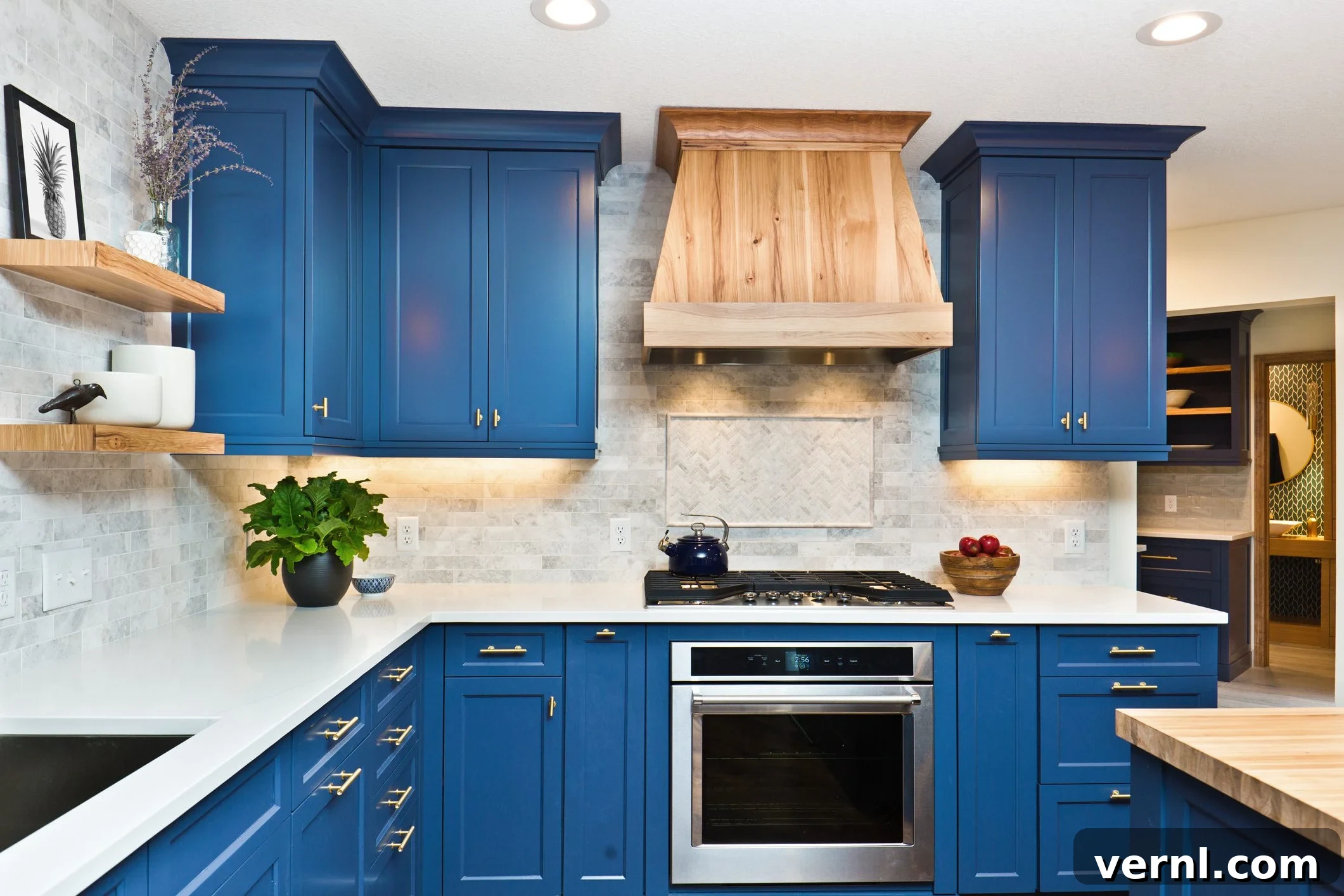
Kitchen cabinets are often much more than mere storage solutions; they are the architectural anchors of your culinary space, setting the tone for the entire room’s aesthetic. More than just functional elements, they are central to a homeowner’s design vision, reflecting personal style and creating a welcoming backdrop for everyday living and memorable gatherings with family and friends.
Whether you’re embarking on a complete kitchen overhaul, designing a new home from the ground up, or simply looking to refresh your existing space with a kitchen upgrade, the decision-making process for kitchen cabinets requires careful consideration. With a vast array of options available, understanding the nuances of materials, construction, styles, and costs will empower you to find the perfect cabinets that align seamlessly with your taste, budget, and any planned DIY involvement.
Choosing the Right Kitchen Cabinets: A Comprehensive Guide to Design, Function, and Value
The selection of kitchen cabinets represents a significant investment and a foundational decision that impacts both the practicality and beauty of your kitchen. From enhancing storage efficiency to defining the room’s character, the right cabinets can elevate your home’s value and your daily living experience. This comprehensive guide will walk you through the essential factors to consider, ensuring you make an informed choice that brings your dream kitchen to life.
Key Factors to Consider When Selecting Kitchen Cabinets
To navigate the myriad choices and ensure your investment delivers lasting satisfaction, focus on these six major factors:
1. Kitchen Cabinet Materials: Durability, Aesthetics, and Cost Implications
The fundamental composition of your kitchen cabinets significantly dictates their longevity, visual appeal, and overall cost. Understanding the properties of various materials is crucial for making a selection that meets your needs. As Rachael Reczenski, Kitchen Design Manager at Jay-K Lumber, explains, “The box of a cabinet is usually made with plywood or particleboard, or sometimes MDF [medium-density fiberboard] or solid wood.” However, the visible elements like doors and face frames often feature a combination of solid wood, plywood, and/or MDF.
- Plywood: Renowned for its strength and moisture resistance, plywood is a premium choice for cabinet boxes. It consists of multiple thin layers of wood veneer glued together, making it stable and less prone to warping or sagging compared to particleboard. While it comes at a higher price point, its durability often justifies the investment, especially in high-humidity environments.
- Particleboard: An economical alternative, particleboard is engineered from wood particles bonded with resin. It’s lighter and more susceptible to moisture damage and chipping than plywood, making it a less durable option for cabinet boxes. However, when properly sealed and laminated, it can offer a cost-effective solution for less demanding applications.
- Medium Density Fiberboard (MDF): Made from fine wood fibers pressed with resin, MDF offers a smooth, dense, and uniform surface ideal for painting or laminating. It resists warping and cracking better than solid wood, making it an excellent choice for cabinet doors and panels, particularly for painted finishes. It falls between particleboard and plywood in terms of cost and durability.
- Solid Wood: The classic choice for cabinet doors and face frames, solid wood offers unparalleled beauty, warmth, and the ability to be refinished multiple times. Common species include oak, maple, cherry, hickory, and birch, each with distinct grain patterns and characteristics. While highly durable and repairable, solid wood is susceptible to expansion and contraction with humidity changes, which can lead to cracks or warping if not properly managed. It is typically the most expensive material option.
- Laminates and Thermofoil: These materials are often applied over particleboard or MDF substrates. Laminates consist of decorative paper and resin, offering a wide range of colors and patterns, including convincing wood-look finishes. Thermofoil is a vinyl film that is heat-fused to an MDF core, creating seamless finishes often mimicking painted wood or modern, sleek looks. Both are durable, easy to clean, and budget-friendly, though thermofoil can be prone to peeling with excessive heat.
- Stainless Steel: While less common in residential kitchens, stainless steel cabinets offer a sleek, industrial, and highly durable option. They are exceptionally resistant to heat, moisture, and stains, making them ideal for high-traffic or professional-style kitchens. However, they are prone to fingerprints and can be a more expensive choice.
Ultimately, the blend of materials chosen for your cabinet boxes, doors, and face frames will significantly influence their cost, aesthetic impact, and long-term performance in your kitchen.
2. Kitchen Cabinet Construction: Understanding the Framework for Functionality
The method by which cabinets are built dictates their strength, stability, and the overall look of the finished kitchen. According to the Kitchen Cabinet Manufacturer’s Association (KCMA), most cabinets derive from four primary construction types.
- Traditional Face Frame Construction: This classic method involves a sturdy frame of horizontal rails and vertical stiles affixed to the front of the cabinet box. This frame provides significant reinforcement, structural integrity, and a robust mounting surface for doors and drawers. Face frame cabinets offer a traditional aesthetic and can support heavier countertops due to their inherent strength.
- Overlay Cabinets: Within face frame construction, overlay cabinets feature doors and drawer fronts that “overlay” or cover the cabinet frames. There are two main types:
- Partial Overlay: Doors and drawers leave a portion of the face frame exposed, creating a more traditional look with visible cabinet structure.
- Full Overlay: Doors and drawers almost completely cover the face frame, offering a sleek, contemporary appearance that minimizes the visible cabinet frame.
Full overlay designs are popular for their clean lines and maximize internal storage space as the door covers the opening entirely.
- Inset Cabinets: Also a type of face frame construction, inset cabinet doors and drawer fronts are precisely crafted to fit flush *inside* the cabinet frames, creating a smooth, elegant, and furniture-like appearance. This style requires meticulous craftsmanship and installation, making it typically the most expensive option. The tight tolerances mean that wood movement due to humidity changes must be carefully managed.
- European Frameless-Style Cabinets: Often referred to as “full access” cabinets, frameless designs eliminate the face frame entirely. Doors and drawers are mounted directly to the sides of the cabinet boxes using hidden hinges and slides. This construction maximizes accessibility and internal storage space, as there’s no frame lip to obstruct access. Frameless cabinets are characteristic of modern, minimalist design aesthetics due to their clean lines and seamless appearance.
Ready-to-Assemble (RTA) Cabinets: For homeowners seeking a cost-effective and DIY-friendly option, ready-to-assemble (RTA) cabinets are shipped directly to your residence complete with all components, fasteners, parts, and instructions. Brands like IKEA are well-known examples of this flat-packaged approach. RTA cabinets significantly reduce costs by allowing homeowners to handle the assembly and often the installation themselves.
However, RTA cabinets do come with a notable limitation: they are typically only available in one or two currently popular styles. As Rachael Reczenski points out, manufacturers focus on the most in-demand style at the time. “Right now, they’re focusing on shaker style,” she observes. “Give it a few years and they’ll offer RTA cabinets in whatever style is in demand at the time.” This means less flexibility in design choices compared to custom or semi-custom options, but it provides an accessible entry point for achieving a modern, on-trend look.
3. Kitchen Cabinet Styles: Reflecting Your Design Aesthetic
Cabinet styles are the visual cornerstone of your kitchen, conveying everything from classic elegance to sleek modernism. While framed cabinets often feature patterns and elements that display a traditional, classic, or transitional aesthetic, the simple, unadorned design of frameless cabinets inherently defines a minimalist or contemporary style. The beauty of modern cabinetry lies in its versatility; whatever your core design aesthetic, you can further customize your cabinets and truly personalize your space by strategically switching out hardware like pulls, knobs, and handles.
Carlos Coronado, lead designer of Muretti, offers valuable advice for those feeling indecisive: “If you’re indecisive, take a walk around your home and see what feels best.” This approach helps ensure that your new kitchen cabinets complement the existing decor and architectural style of your entire home, fostering design cohesiveness.
Here are six prominent styles of kitchen cabinets:
- Shaker: This timeless and incredibly versatile style features simple, clean lines with a flat recessed-panel door and often a sturdy frame. Shaker cabinets are easy to clean and can be personalized to suit nearly any design preference, from rustic to ultra-modern, simply by changing the finish or hardware. Their enduring popularity stems from their understated elegance and adaptability.
- Craftsman (Mission): Characterized by robust construction, clean lines, and a focus on natural materials, Craftsman or Mission style cabinets exude a sense of handmade quality. They often feature tongue-and-groove joinery and may incorporate distinctive vertical stiles on the door, reflecting the Arts and Crafts movement’s emphasis on simplicity, utility, and honest craftsmanship.
- Flat-Front (Slab): Also known as slab doors, these cabinets feature single, unadorned flat-panel doors without frames, panels, ornamentation, or beveling. Their smooth, minimalist surface defines a distinctly modern or contemporary aesthetic, promoting clean lines and an uncluttered look. They are incredibly easy to clean and often used in conjunction with handle-free designs.
- Beadboard: Evoking a charming, cottage, or farmhouse feel, beadboard cabinets feature vertical panels with uniform beads and recessed lines. This detail adds texture and visual interest, creating a quaint and inviting atmosphere. While beautiful, their grooved surfaces can accumulate dust and grime, requiring more diligent cleaning.
- Handle-Free: These cabinets offer the ultimate in sleek, minimalist design by eliminating traditional exterior handles or pulls. Instead, they operate using integrated groove, channel, lip, or finger-pull functions, or by incorporating a push-to-open or tap-latch system. This style creates an incredibly streamlined and seamless kitchen appearance, often seen in high-end modern designs.
- Raised-Panel (Traditional): As the name implies, these cabinets feature a central panel that is raised above the surrounding frame, often with decorative routing or beveling. This creates a classic, ornate, and traditional aesthetic, adding depth and visual richness to the cabinet fronts. Raised-panel designs are often associated with more formal or elaborate kitchen styles.
A common concern among homeowners is whether a chosen cabinet style will withstand the test of time. Reczenski wisely recommends choosing what genuinely appeals to you. “Unless you live in a very urban market, chances are, what’s popular today will still be acceptable in five years,” she advises. However, if you’re planning on selling your house within the next five years, it’s prudent to consider a neutral interpretation of currently on-trend styles in your specific area. This approach ensures broader market appeal without sacrificing modern relevance.
4. Kitchen Cabinet Maintenance and Upkeep: Ensuring Lasting Beauty and Functionality
The longevity and pristine appearance of your kitchen cabinets depend significantly on their material, finish, style, and the care they receive. Understanding these interdependencies will help you choose cabinets that align with your lifestyle and maintenance preferences.
- Style’s Impact on Cleaning: Cabinet styles with intricate details, deep crevices, or decorative elements like beadboard or elaborate raised panels are inherently harder to clean and maintain than simpler styles with flat panels. Dust, grease, and food splatters can accumulate in grooves and corners, requiring more thorough and frequent cleaning to keep them pristine. Flat-front (slab) or Shaker-style cabinets, with their smooth surfaces and minimal detailing, offer a much easier cleaning experience.
- Finish Type: The type of finish applied to your cabinets plays a significant role in their ease of cleaning and ability to conceal daily wear. A satin finish, for instance, is far better at hiding fingerprints, smudges, and minor imperfections than a matte finish, much in the same way a higher paint sheen on walls offers better scrubbability. While high-gloss finishes create a striking, modern look, they are also prone to showing every fingerprint and smudge.
- Painted Cabinets: Reczenski notes, “But painted cabinets are notorious for showing dirt, fingerprints, coffee drips and spaghetti sauce.” Light-colored painted cabinets, in particular, highlight every mark. Furthermore, scratches and chips in paint are generally harder to repair seamlessly than minor damage to stained wood, often requiring touch-ups that may not perfectly match the original finish.
- Wood Type: The inherent properties of the wood species also affect maintenance. Reczenski advises that “Harder woods with more visible wood grain hold up better to daily wear and tear and hide any dirt and dust.” She specifically highlights, “So hickory and oak will wear much better than maple or birch.” The pronounced grain patterns and natural variations in woods like hickory and oak are excellent at camouflaging minor scuffs and dust, making them a practical choice for busy kitchens. Maple and birch, while beautiful, have finer, more uniform grains that tend to show imperfections more readily.
Proactive cleaning with mild soap and water, avoiding harsh chemicals, and prompt cleanup of spills are universally good practices. By selecting cabinet styles and finishes that align with your lifestyle and willingness to maintain them, you can ensure your kitchen remains beautiful and functional for years to come.
5. Kitchen Cabinet Cost: Budgeting for Your Dream Kitchen
The financial outlay for kitchen cabinets can represent a significant portion of a kitchen renovation budget, varying widely based on material choices, construction methods, style complexity, and level of customization. Retailers and manufacturers typically base minimum pricing estimates on a standard 10-ft. x 10-ft. kitchen layout, which generally translates to about 20 linear feet of cabinetry.
- Stock Cabinets: At the lower end of the price spectrum, preassembled stock cabinets purchased from home improvement stores generally range from $1,500 to $3,000 for a 10×10 kitchen. These are mass-produced in standard sizes, colors, and limited styles, offering the most budget-friendly and quickest installation solution. While options are limited, they provide excellent value for basic functionality.
- Semi-Custom Cabinets: Occupying the middle tier, semi-custom cabinets typically fall within the $3,000 to $7,000 range for the same size kitchen. These offer a wider selection of sizes, finishes, styles, and accessories than stock cabinets, allowing for more personalized designs without the full cost of customization. They can be modified to fit specific dimensions, and often come with upgraded construction features and more durable finishes.
- Custom Cabinets: Representing the higher end of the spectrum, custom cabinets offer unparalleled design flexibility, unique materials, and precise sizing to fit any kitchen layout, including irregular spaces. These can be sourced from designers partnering with home improvement stores or from independent custom cabinet shops and high-end kitchen designers. For a 10×10 kitchen, custom cabinets can start from $7,000 and easily exceed $30,000 or more, depending on the complexity, materials, and specialized features. This option provides the highest quality craftsmanship and a truly bespoke kitchen.
Installation Costs: Beyond the cost of the cabinets themselves, professional installation typically adds an additional $1,500 to $3,000 to your budget. It’s important to note that certain cabinet styles can increase these labor costs. Frameless and inset cabinet styles, for example, demand a higher level of precision and more time-consuming installation due to their tight tolerances and flush-fitting components, which can translate to higher installation fees.
DIY and RTA Options: For the most budget-conscious or hands-on homeowners, RTA (ready-to-assemble) cabinets offer a compelling alternative. These kits, which you assemble and install yourself, start around $2,000 shipped to your door, drastically cutting labor costs. If you possess woodworking skills and choose to build your cabinets from scratch, your costs are limited primarily to the raw materials you select, potentially offering the greatest savings while allowing for complete customization.
Understanding these distinct tiers and associated costs is fundamental for setting a realistic budget and making an informed decision that balances your financial comfort with your design aspirations.
6. Kitchen Cabinet Installation and DIY Friendliness: A Project for Every Skill Level
The scope of DIY involvement in kitchen cabinet projects can range from simple aesthetic updates to full-scale construction, accommodating various skill levels. Whether you’re a seasoned woodworker or a beginner looking to tackle a home improvement task, there’s a cabinet project suited for you.
- Beginner-Friendly Projects: Many accessible DIY projects can significantly enhance your cabinets’ appearance and functionality. These include refinishing existing cabinets (sanding, painting, or staining), installing new hardware (knobs, pulls, hinges), or adding simple organizational inserts. Refacing cabinets, while more involved, is also often considered a doable DIY project for those with patience and basic tool skills. Installing basic dowel and pocket screw constructions for simpler cabinet builds can also be within a beginner’s reach.
- Intermediate to Advanced Woodworking: More complex cabinet projects, such as building entire cabinet boxes, fabricating custom doors, or employing advanced joinery techniques, require specialized woodworking skills. Bruce Hogan, a veteran cabinetmaker and founder of The Wood Joint School, highlights that intricate tasks like fitting mortise-and-tenon joints demand significant expertise and precision. Cabinetmakers frequently use mortise-and-tenon joints on all stiles and rails for cabinet doors because they are widely recognized as the strongest and most durable way to join wood, ensuring the longevity and stability of the door structure.
Building Cabinet Doors: Slab doors, being made from a single piece of wood or panel material, are generally the easiest style to build for DIYers due to their straightforward construction. For those aspiring to a Shaker aesthetic, Reczenski notes that it’s “fairly simply to add faux stiles and rails to a slab door to get a Shaker door,” which can save time and complexity compared to building a true frame-and-panel Shaker door. However, when working with wood, it’s crucial to consider how it expands and contracts with changes in heat and humidity. For this reason, Reczenski recommends using plywood for a slab door or the center panel of a Shaker-style door, as plywood’s cross-grain construction helps prevent the wood from splitting or warping due to environmental fluctuations.
Pro Tip: Cabinet Refacing: If you’re mulling over refacing your existing cabinets, remodeling expert and writer Philip Schmidt confirms it’s a highly doable DIY project. Schmidt explains that while cabinet box construction can vary in material and build quality, “a cabinet box is a cabinet box.” This means that if your current cabinet boxes are structurally sound and in decent shape, you can transform their appearance dramatically. “Done properly, the cabinets look entirely new, and no one’s the wiser that you saved up to 75 percent by keeping the old boxes,” Schmidt says. The process typically involves covering the existing boxes with a new skin of hardwood veneer, then replacing the doors, drawer fronts, and, if desired, the hardware, offering a significant aesthetic upgrade without the extensive labor and cost of a full cabinet replacement.
Conclusion: Crafting Your Ideal Kitchen Space with Confidence
Choosing the right kitchen cabinets is a pivotal decision that merges aesthetic preferences with practical functionality, durability, and financial considerations. By thoroughly exploring the diverse range of materials available, understanding the various construction methods, identifying styles that resonate with your home’s design, and anticipating maintenance requirements, you equip yourself to make informed choices.
Furthermore, budgeting wisely for cabinet costs and assessing your comfort with DIY installation versus professional services ensures a smooth project execution. Ultimately, the cabinets you select will not only define the look and feel of your kitchen but also significantly impact its daily usability and long-term enjoyment. With careful planning and attention to these key factors, you can create a kitchen that is both a beautiful reflection of your personal style and a highly functional heart of your home.