
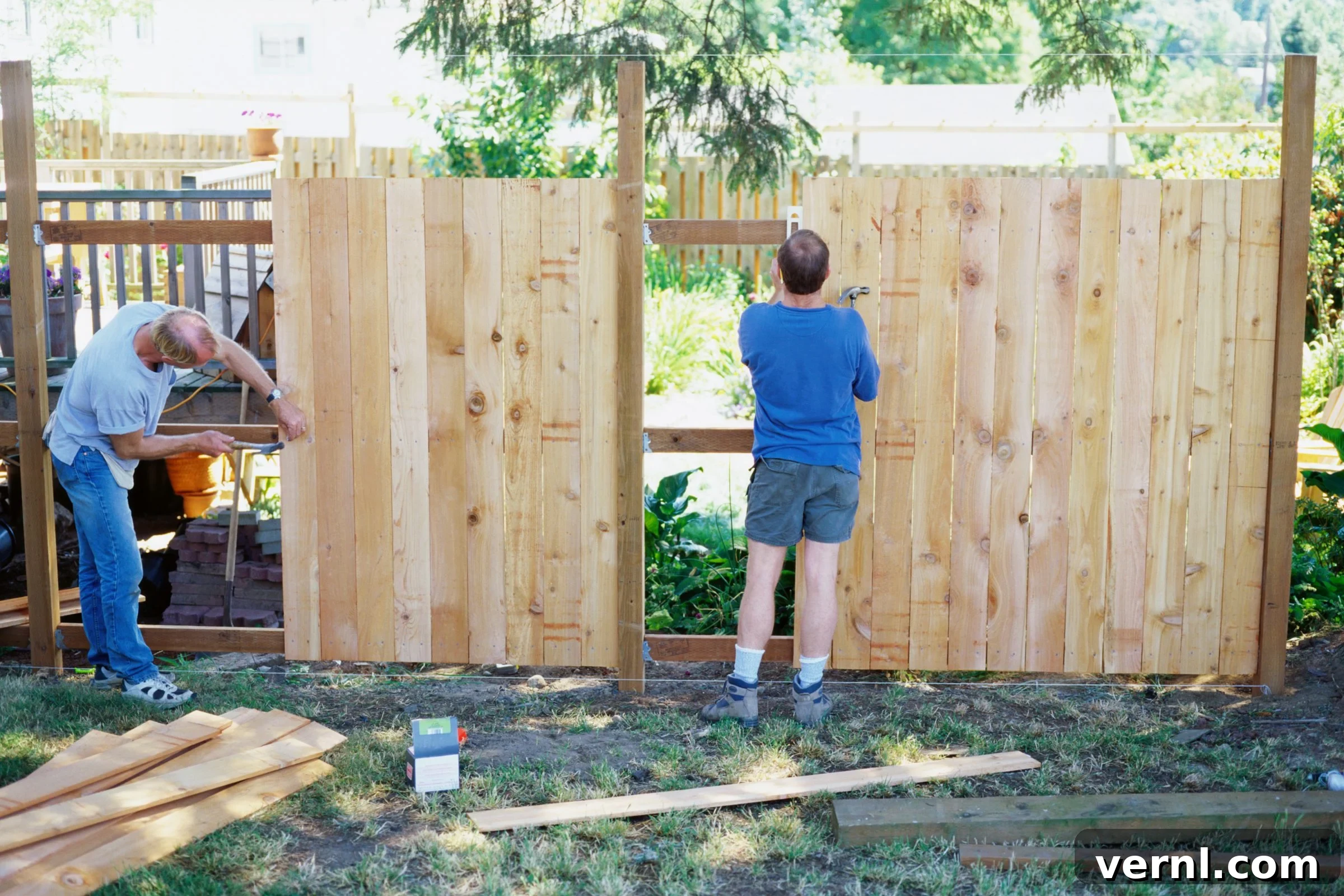
Fence Post Spacing: Ensuring a Sturdy and Attractive Fence
Proper fence post spacing is a critical factor in the success of any fencing project. Incorrect spacing can lead to a host of problems, from a sagging, unsightly fence to one that is vulnerable to wind and other environmental stresses. This comprehensive guide provides expert advice on determining the ideal distance between fence posts for various fence types and terrains, ensuring a durable and visually appealing fence.
Whether you’re building a fence from scratch or using pre-fabricated panels, understanding the principles of fence post spacing is essential. The right spacing not only enhances the fence’s structural integrity but also contributes to its overall aesthetic appeal.
Why Fence Post Spacing Matters
The distance between fence posts significantly impacts the fence’s performance and longevity. Setting posts too far apart can result in the rails sagging, especially under the force of wind or the weight of the fence materials. This not only weakens the fence but also detracts from its appearance.
Conversely, placing posts too close together can lead to unnecessary costs and a cluttered look. It increases the amount of digging required and potentially wastes materials. Finding the right balance is key to a successful fence installation.
The type of fence material and the intended use of the fence also influence the optimal spacing. For example, a heavy-duty wood fence will require closer post spacing than a lightweight wire fence.
Factors Influencing Fence Post Spacing
Several factors play a role in determining the ideal distance between fence posts:
- Fence Material: Different materials, such as wood, chain link, and vinyl, have varying strength characteristics.
- Wind Conditions: Areas with high winds require closer post spacing to withstand the added stress.
- Terrain: Sloping ground can impact post placement and may require adjustments to the standard spacing.
- Fence Height: Taller fences generally need closer post spacing for added stability.
- Purpose of the Fence: Whether the fence is for security, privacy, or containing animals, this will influence the ideal post spacing.
Standard Post Spacing for Different Fence Types
The standard post spacing varies depending on the type of fence you are constructing. Understanding these guidelines is crucial for ensuring the fence’s structural integrity and longevity.
Wood Fences
For solid fences made from wood, composite, or vinyl, the standard spacing is typically eight feet. This spacing provides a good balance between strength and material usage. However, in areas with high winds, you may need to reduce the spacing to six feet for added stability. Remember that the type of wood and the height of your fence will influence these choices.
Chain Link Fences
For chain link fences, the posts can be spaced up to 10 feet apart. Chain link is generally stronger and more flexible than wood. However, if you plan to add privacy slats to your chain link fence or if you live in an area with heavy snowfall, consider reducing the spacing to six feet for added support. This helps prevent sagging and ensures the fence remains upright under stress.
Wire Fences
Posts for wire fences, such as those used for boundary or livestock control, can be spaced much further apart. The main requirement is to maintain adequate tension in the wire. Standard spacing for barbed wire or woven wire fences is usually between 10 to 12 feet. However, on sloping terrain, you might need to increase the number of posts to maintain proper wire tension and prevent the fence from sagging.
Adapting to Terrain: Fence Post Spacing on Slopes
Building a fence on a sloped property presents unique challenges. You can choose to follow the contour of the ground (racking) or set the rails level (step method).
When using the step method, the ground slopes away from the bottom rail. To avoid large gaps under the fence, which could allow animals to pass through, the posts should be spaced closer together than the standard eight feet. A minimum distance of four feet between posts can help prevent the fence from appearing to be made of isolated posts rather than a continuous barrier.
If you’re using pre-fabricated panels, you might consider racking panels with adjustable hinges. These panels are designed to follow the slope of the ground, eliminating the need for the step method and maintaining consistent spacing.
Panel Fence Installation: A Step-by-Step Guide
When installing pre-fabricated panel fences, the process differs from building a fence from scratch. Since the panel width is fixed, precise spacing is crucial.
- Prepare the Holes: Dig all post holes before you begin the fence construction. Accurate hole placement is key, so measure carefully.
- Set the Corner Post: Set one corner post in concrete first, usually on the highest point of the terrain. Allow the concrete to fully cure.
- Attach the First Panel: Attach the first panel to the corner post and the first line post. The panel will automatically level the line post in the direction parallel to the fence.
- Level the Line Post: You only need to level the line post perpendicular to the fence line.
- Install Subsequent Panels: Brace the post and install the subsequent panels in the same manner, working your way towards the opposite corner.
- Backfill the Holes: Once all panels are in place, backfill all the post holes with concrete.
This method ensures the panels are correctly aligned and the fence is stable.
Maximizing Fence Lifespan and Appearance
Beyond post spacing, consider these tips to enhance your fence’s longevity and aesthetics:
- Use High-Quality Materials: Choose durable wood, composite, or vinyl materials designed to withstand the elements.
- Proper Drainage: Ensure adequate drainage around the base of the posts to prevent rot.
- Regular Maintenance: Inspect your fence regularly for any signs of damage and make repairs promptly. This includes checking for loose boards, damaged posts, and any signs of rot.
- Consider the Finish: Apply a protective finish to wood fences, such as stain or paint, to protect them from moisture and UV rays.
- Professional Installation: When in doubt, consider hiring a professional fence installer. They have the experience and tools to ensure a high-quality installation.
By following these guidelines, you can build a fence that not only looks great but also provides lasting value and security for your property.
For further inspiration and ideas, explore these resources:
- Unique DIY Fence Ideas
- Popular Wood Fence Styles
- Cinder Block Fence
- Fence Repair Tips