
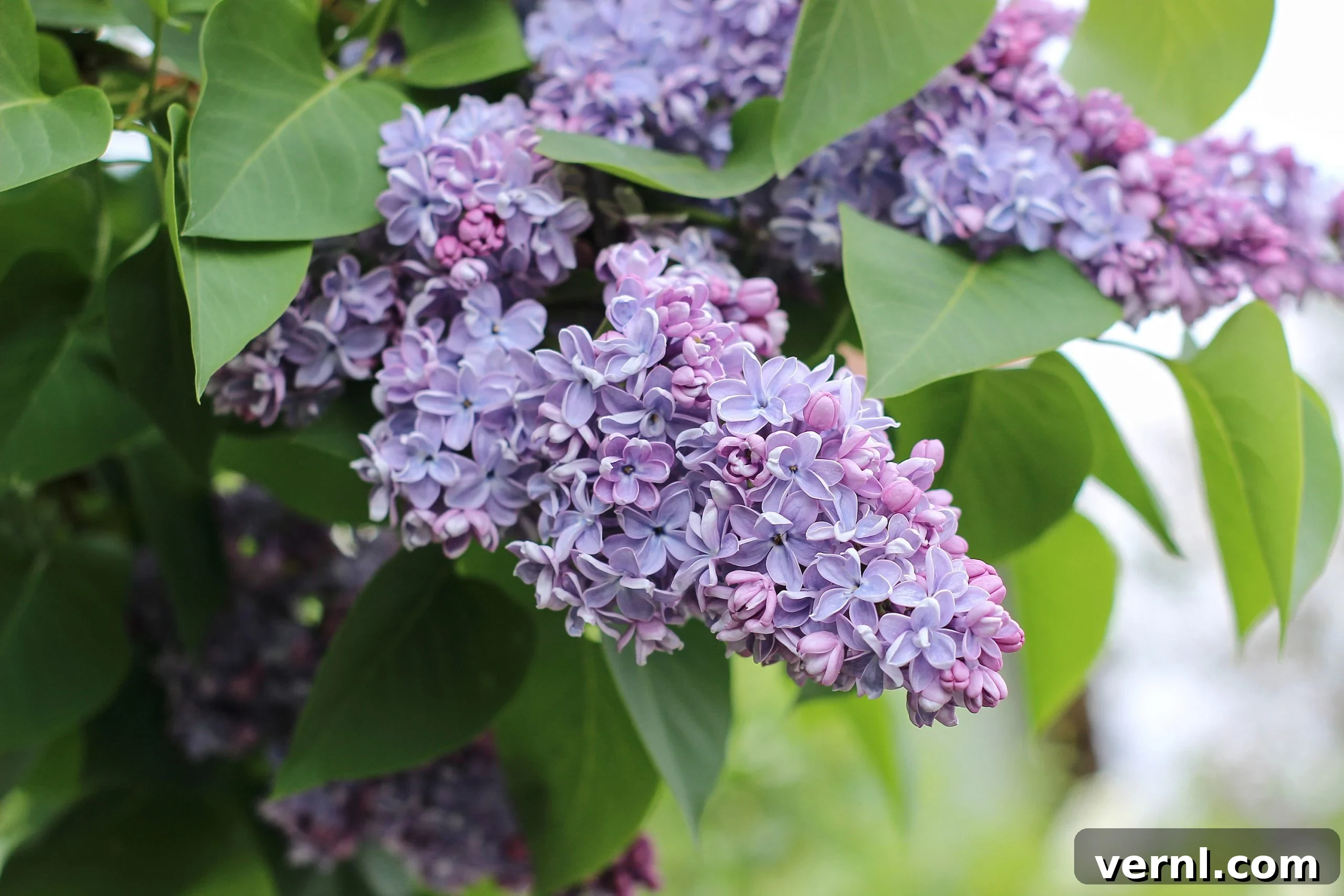
Lilacs hold a cherished place in the tapestry of American gardens, their presence woven into generations of memories and traditions. The intoxicating fragrance of these beloved shrubs instantly transports many back to the heirloom varieties that graced their grandparents’ yards, evoking a sense of nostalgia and timeless beauty. This deep connection is perhaps best immortalized in Walt Whitman’s poignant poem, “When Lilacs Last in the Dooryard Bloom’d,” written in the spring of 1865 following President Lincoln’s assassination, forever linking lilacs with moments of reflection and remembrance.
Each spring, the arrival of lilac blooms is a cause for celebration across the country. From vibrant annual festivals in Rochester, New York, to the picturesque Mackinac Island, Michigan, and the scenic Spokane, Washington, communities gather to honor these fragrant beauties. Bringing a lilac into your own yard is more than just a gardening choice; it’s an embrace of a cherished American tradition, a personal nod to history, and an invitation for delightful sensory experiences. Beyond their cultural significance, lilacs also play a role in the local ecosystem, attracting various pollinators and even the fascinating miller moths. With their enduring charm and relatively low maintenance once established, lilacs are a rewarding addition to any landscape.
If you’re ready to embark on this delightful journey, read on to discover comprehensive guidance on how to plant, nurture, and enjoy your very own lilac bush or tree, ensuring a spectacular display of blooms and fragrance for years to come.
When To Plant Lilacs for Optimal Growth
Timing is a crucial factor in the successful establishment of any new plant, and lilacs are no exception. The absolute best time to plant lilacs is in the fall, specifically after they have dropped their leaves, but before the ground freezes solid. This period, typically from late September to November in many regions, offers several significant advantages.
Planting in the fall allows the lilac to focus its energy on developing a robust root system throughout the cooler months. The soil remains warm enough for root growth even as the top growth goes dormant. By the time spring arrives, your lilac will have a strong foundation, making it more resilient to the stresses of the upcoming growing season and requiring less intensive watering during its first summer. This crucial head start contributes significantly to the plant’s long-term health and vigor, leading to more abundant blooms in subsequent years.
While fall planting is ideal, many gardeners find themselves tempted by the sight and scent of lilacs in full bloom at garden centers during the spring. It is perfectly acceptable to purchase lilacs in the spring when their flowers are a vibrant testament to their beauty, allowing you to choose exactly the color and fragrance you desire. If you do opt for spring planting, remember that these plants will need a bit more attention as they are actively growing. The key to success with spring-planted lilacs is consistent and thorough watering throughout the warmer months. Ensure they remain well-hydrated to help them overcome transplant shock and establish themselves before the intense summer heat sets in. Treat them as you would any new landscape addition, providing ample moisture, especially during dry spells, until they become fully established.
Where To Plant Lilacs: Site Selection for Bountiful Blooms
Selecting the right location for your lilac is paramount to its success and the abundance of its characteristic fragrant blooms. Lilacs are relatively unfussy, but they do have a few simple requirements that, when met, will reward you with a magnificent display each spring. Paying attention to these environmental factors will help you avoid common issues, such as lilac bushes that aren’t blooming.
Soil Requirements for Healthy Lilacs
Lilacs thrive in well-drained soil, a condition that is non-negotiable for their health. Poorly drained, heavy clay soils can lead to root rot and other fungal diseases, severely hindering the plant’s growth and flowering potential. The ideal soil pH for lilacs ranges from neutral to slightly alkaline, typically between 6.5 and 7.0. While they can tolerate a slightly wider range, an alkaline preference is notable.
If your garden soil tends to be acidic (below 6.5 pH), you may need to amend it to create a more hospitable environment for lilacs. Before attempting any adjustments, it is absolutely essential to perform a soil test. This provides accurate information about your soil’s current pH and nutrient levels, guiding your amendment strategy. Your local Cooperative Extension service is an invaluable resource for soil testing options in your area, often providing detailed reports and recommendations. Based on your soil test results, you might need to add agricultural lime to raise the pH. Incorporating organic matter such as compost can also improve soil structure and drainage, creating a healthier environment for lilac roots.
Sunlight: The Key to Abundant Flowers
Sunlight is the primary fuel for flower production in lilacs. To ensure your lilacs produce as many magnificent blooms as possible, they must be planted in an area that receives at least six hours of direct sunlight each day. Ideally, they prefer morning sun, which helps dry dew from their leaves and reduces the risk of fungal diseases, followed by full afternoon sun. Inadequate sunlight is one of the most common reasons why lilacs fail to flower. Lilacs rarely produce flowers in shaded conditions; instead, they will focus on leggy foliage growth at the expense of their iconic blossoms. Choose a spot where they won’t be overshadowed by larger trees or buildings as they mature.
Temperature and Hardiness Zones
Lilacs are deciduous shrubs that require a period of winter chill to properly set their flower buds for the following spring. They generally thrive in USDA Hardiness Zones 3 through 7. These zones provide the necessary cold temperatures during dormancy without being excessively harsh to damage the plants.
In warmer climates, specifically USDA Hardiness Zones 8 or higher, most common lilac varieties won’t receive enough winter chill to initiate flower bud formation. This often results in a plant that grows vigorously but produces few to no flowers. If you reside in one of these warmer zones and are determined to grow lilacs, don’t despair! Many plant breeders have developed specific lilac varieties that are better adapted to areas with milder winters. It’s crucial to consult with a local garden center or nursery. They can guide you towards heat-tolerant lilac cultivars specifically bred for your region, ensuring you select a plant that will actually bloom. You can easily determine your specific hardiness zone by referencing the USDA Hardiness Zone Map online.
Considering Air Circulation and Space
Beyond soil, sun, and temperature, good air circulation is another vital factor often overlooked. Planting lilacs in an open area with adequate space between them and other plants helps prevent fungal diseases like powdery mildew by allowing air to dry the foliage quickly after rain or irrigation. When selecting your planting site, also consider the mature size of your chosen lilac variety. Some common lilacs can grow quite large, up to 12-15 feet tall and wide, while dwarf varieties remain much smaller. Ensure there’s enough room for your lilac to reach its full potential without overcrowding nearby structures or other plants.
How To Care for Lilacs: A Guide to Nurturing Your Blooms

Once established, lilacs are remarkably resilient and require surprisingly little attention to provide a memorable annual spring show of scented blooms. Their hardiness and longevity make them a favorite among gardeners seeking beauty with minimal fuss. However, proper care during their initial years and thoughtful ongoing maintenance will ensure your lilac thrives and delivers a spectacular performance year after year.
Planting Lilacs: Step-by-Step Instructions
Whether you’ve purchased a container-grown lilac or a bare-root specimen, proper planting sets the stage for future success. It’s always best to plant your lilacs as soon as possible after purchasing them to minimize stress.
- For Bare-Root Lilacs: If you acquire a dormant bare-root lilac in early spring, it will typically come in a plastic bag with no soil around its roots. Before planting, soak the roots in a bucket of clean water for a few hours (but no more than 24 hours) to rehydrate them.
- Digging the Hole: For all lilacs, dig a wide, shallow hole that is twice as wide as the root ball but no deeper than the plant was growing in its nursery container or at its original soil line. The goal is to allow the roots to spread out horizontally into loosened soil.
- Amending the Soil: Mix some good quality compost or other nutrient-rich organic matter into the soil you removed from the hole. This improves soil structure, drainage, and nutrient availability.
- Positioning the Plant: Carefully place the lilac in the center of the hole. Ensure the top of the root ball or the original soil line is level with or slightly above the surrounding ground. Planting too deep can suffocate the roots.
- Backfilling: Gently backfill the hole with the amended soil, firming it lightly around the roots to remove any air pockets.
- Initial Watering: Water thoroughly immediately after planting. This helps settle the soil around the roots and provides much-needed moisture.
- Mulching: Apply a three to four-inch layer of organic bark mulch, wood chips, or shredded leaves over the ground around the lilac, extending out to the drip line. Keep the mulch a few inches away from the main stem to prevent rot. Mulch helps retain soil moisture, suppress weeds, and regulate soil temperature.
Watering Lilacs for Establishment and Beyond
Proper watering is critical, especially during the lilac’s first year in your garden.
- First Growing Season (Spring-Planted): If you plant your lilac in the spring, it will need consistent watering throughout its first growing season. During periods of little or no rainfall, water the lilac deeply once a week. This means providing enough water to penetrate at least 12-18 inches into the soil, encouraging deep root growth. Continue this regimen until fall, when the leaves drop and cooler temperatures set in. At this point, you can typically stop supplemental watering.
- Fall-Planted Lilacs: If you plant your lilac in late fall, ensure it is well-watered after planting and continue to water deeply until the ground completely freezes. This provides moisture for root establishment before winter dormancy.
- Established Lilacs: After its first year, most lilacs demonstrate remarkable drought tolerance. In regions with normal rainfall, they will typically survive dry periods of summer with no additional watering. However, during extended droughts or unusually hot weather, supplemental deep watering once every two to three weeks can be beneficial to prevent stress and ensure continued vigor and bloom production for the following year.
Pruning and Deadheading Lilacs for Health and Beauty
Pruning is an essential practice that can significantly impact the health, vigor, and flowering performance of your lilac. Regular maintenance pruning and occasional rejuvenation can keep your plant looking its best.
- Deadheading: Deadheading involves removing the spent flowers after they have bloomed. While not strictly required to ensure blooms the following year, deadheading helps the plant look tidier and can direct the plant’s energy away from seed production and towards vegetative growth and developing next year’s flower buds. Simply snip off the faded flower clusters just above a set of leaves or a lateral branch.
- Routine Pruning: Any pruning to shape your lilac, remove dead or damaged branches, or improve air circulation should be done within a few weeks after the flowering period concludes in late spring or early summer. This is crucial because lilac flower buds form on old wood during the summertime. Pruning too late in the season (e.g., in late fall or early spring) will inevitably remove these developing buds, sacrificing next year’s flowers. Focus on removing weak, crossing, or diseased branches to maintain an open structure.
- Rejuvenation Pruning: If you have an older, overgrown lilac, especially old-fashioned or common lilacs (Syringa vulgaris), which can grow up to 12 feet tall and wide, a more aggressive rejuvenation prune can breathe new life into it. You can do this without sacrificing an entire year’s worth of blooms by using a gradual approach. After blooming, cut out one-third of the oldest, thickest branches right down to the ground over a period of three years. This encourages vigorous new growth from the base and helps reduce the lilac’s overall size while revitalizing its flowering potential. The new growth will produce flowers in subsequent years.
- Managing Suckers: Many lilac varieties tend to produce suckers from their base. These should be removed as they appear, cutting them back to the ground. If left unchecked, suckers can divert energy from the main plant and contribute to an untidy, dense habit.
Fertilizing Lilacs: Less is Often More
In most home gardens, lilacs are surprisingly low feeders and generally do not require additional fertilizer, especially if they are growing in reasonably fertile soil or near a regularly fertilized lawn. Over-fertilizing, particularly with high-nitrogen fertilizers, can promote lush green foliage at the expense of flower production.
If your lilac is showing signs of nutrient deficiency (e.g., stunted growth, pale leaves) or if it’s planted in very poor soil and not flowering well despite adequate sun, you may choose to fertilize. If you do, select a balanced, slow-release granular fertilizer or one that is low in nitrogen and higher in phosphorus and potassium (e.g., a 5-10-5 or 10-10-10 formulation). Apply it in early spring before the leaves emerge, or immediately after flowering. Always follow the product’s instructions carefully to avoid over-application, which can burn roots. Alternatively, incorporating a layer of well-rotted compost around the base of the plant each spring provides a slow, steady release of nutrients and improves soil health naturally.
Managing Lilac Pests and Diseases
Lilacs are generally robust plants and are quite resistant to most common pests and diseases. This hardiness contributes significantly to their enduring popularity in home gardens.
- Powdery Mildew: One of the most common issues, especially on older varieties and in humid conditions with poor air circulation, is powdery mildew. This appears as a white, powdery coating on the leaves, particularly in late summer. While unsightly, powdery mildew is rarely serious and rarely kills the bush. Ensuring good air circulation through proper spacing and thoughtful pruning can help prevent it. In severe cases, horticultural oils or neem oil can be used, but generally, it’s not treated.
- Other Issues: Occasionally, lilacs can be affected by other issues such as bacterial blight (which causes dark brown spots on leaves and stems) or lilac borers (which tunnel into stems). Maintaining a healthy plant through proper siting and care is the best defense against these problems. Stressed plants are more susceptible to disease and pest infestations.
- Seeking Assistance: If you notice any unusual symptoms or persistent problems with your lilacs that you cannot identify, contact your local Cooperative Extension office. They offer expert advice, diagnostic services, and tailored recommendations for managing plant health issues in your specific region.
Can You Propagate Lilacs?
Yes, you can propagate lilacs, allowing you to create new plants from your existing favorites or share them with friends and family. While not the easiest process for every gardener, it is certainly achievable with patience and the correct technique.
Lilacs are most commonly propagated by taking cuttings of the branches in the spring. These are known as softwood cuttings because they are taken from new, flexible growth that has not yet fully hardened into woody stems. The ideal time for taking softwood cuttings is typically in late spring or early summer, after the plant has finished flowering but before the new growth becomes too stiff and woody.
Softwood Cuttings Method:
- Timing: Late spring to early summer, when new shoots are still pliable.
- Selection: Choose healthy, non-flowering shoots about 4-6 inches long with several sets of leaves.
- Preparation: Make a clean cut just below a leaf node (the point where a leaf joins the stem). Remove the lower leaves, leaving only two or three sets at the top. You can also lightly scrape a small portion of bark from the bottom inch of the stem to expose the cambium layer.
- Rooting Hormone: Dip the cut end into a rooting hormone powder or gel. This significantly increases the chances of successful rooting.
- Planting Medium: Insert the cuttings into a pot filled with a well-draining rooting medium, such as a mix of peat moss and perlite or coarse sand.
- Environment: Keep the cuttings in a warm, humid environment. A clear plastic bag or a propagation dome over the pot can help maintain humidity. Place them in bright, indirect light, avoiding direct sun.
- Care: Keep the rooting medium consistently moist but not waterlogged. Rooting can take several weeks to a few months. You’ll know they’ve rooted when new leaf growth appears or if you gently tug and feel resistance.
- Transplanting: Once a strong root system has developed, the young lilacs can be carefully transplanted into individual pots and grown on before eventually moving them to the garden.
Other Propagation Methods:
- Layering: This is a simpler method where a low-hanging branch is bent to the ground, a small section is buried, and it’s allowed to root while still attached to the parent plant. Once rooted, it’s severed and transplanted. This is a slower but often more reliable method.
- Division: For lilac varieties that produce suckers (new shoots from the base), you can sometimes carefully dig up and separate these suckers that have developed their own root systems.
- Seed Propagation: While possible, growing lilacs from seed is generally not recommended for home gardeners as the resulting plants may not be true to the parent plant’s characteristics, especially with hybrid varieties. It also takes many years for seed-grown lilacs to bloom.
Propagating lilacs requires a bit of dedication, but the reward of nurturing a new plant from your cherished specimen is immensely satisfying and a wonderful way to expand your fragrant garden.
Popular Lilac Varieties to Consider
The world of lilacs is far more diverse than just the common purple shrub found in many old gardens. Exploring the various species and hybrid cultivars can help you choose the perfect lilac for your specific needs, whether you’re looking for different bloom times, sizes, or unique characteristics.
- Common Lilac (Syringa vulgaris): This is the classic lilac that many people envision. Known for its strong, sweet fragrance and large, dense clusters of purple or white flowers, it’s a vigorous grower, often reaching 10-15 feet tall and wide. It’s incredibly hardy and long-lived, forming the backbone of many heirloom gardens.
- French Hybrid Lilacs: These are cultivars of Syringa vulgaris, developed through extensive breeding, primarily in France. They offer an incredible array of colors beyond the traditional purples and whites, including shades of pink, magenta, blue, and even bi-colors. They often have larger, more abundant flower panicles and can be slightly more compact than the species, though still substantial. Popular examples include ‘Sensation’ (purple with white edges) and ‘Beauty of Moscow’ (pink buds opening to white double flowers).
- Dwarf Lilacs: Ideal for smaller gardens, containers, or foundation plantings, dwarf lilacs typically grow 4-8 feet tall and wide. They offer the same charming blooms and fragrance in a more manageable size.
- ‘Miss Kim’ Lilac (Syringa pubescens subsp. patula ‘Miss Kim’): A popular Korean lilac known for its compact size (6-8 feet), reddish-purple buds that open to fragrant, lavender-blue flowers, and often burgundy fall foliage. It’s also more resistant to powdery mildew.
- ‘Palibin’ (Syringa meyeri ‘Palibin’): An even smaller dwarf variety (4-5 feet), with a rounded habit and fragrant, purplish-pink flowers. It’s an excellent choice for a low hedge or mixed border.
- Reblooming Lilacs: A newer innovation in lilac breeding, these varieties offer an extended bloom season. While they still have their main flush in spring, they can produce sporadic reblooms throughout the summer and fall, especially if deadheaded. ‘Bloomerang’ lilacs are a well-known series that includes purple and pink varieties.
- Tree Lilacs (Syringa reticulata): These are quite different from the typical shrub lilacs. Japanese Tree Lilacs can grow into small, ornamental trees, often reaching 20-30 feet tall. They bloom later in the season (late spring to early summer) with large, creamy white, often less fragrant flower clusters. They offer beautiful exfoliating bark and an upright habit, making them excellent specimen trees.
When selecting a lilac, consider its mature size, the color and fragrance of its blooms, its bloom time (to extend your garden’s interest), and its hardiness in your specific climate zone. With such a wonderful variety to choose from, there’s a perfect lilac for almost every garden.
Embracing the Enduring Charm of Lilacs
From their deep roots in American gardening history and their evocative fragrance to their vibrant spring displays, lilacs offer an unparalleled sense of charm and tradition. Whether you are planting your first lilac or tending to an established bush that has graced your garden for decades, the joy they bring each spring is truly special. While proper site selection and initial care are crucial, these resilient shrubs prove to be surprisingly low-maintenance once they’ve settled in, rewarding gardeners with years of magnificent, perfumed blooms.
By understanding their simple needs for ample sunlight, well-drained soil, and appropriate pruning, you can ensure your lilac thrives, becoming a cherished focal point in your landscape. Embrace the delightful process of nurturing these classic beauties, and prepare to be enchanted by their timeless elegance and the sweet, lingering scent that defines the essence of spring. Your garden, and your senses, will thank you for it.