
Replanting and Recycling Your Christmas Tree: A Guide to Sustainable Holiday Traditions
The festive season brings with it the joy and timeless tradition of decorating a Christmas tree. Each year, millions of households choose a magnificent evergreen to be the centerpiece of their holiday celebrations. According to the National Christmas Tree Association, a staggering 25 to 35 million real Christmas trees are harvested and sold annually across North America. This thriving industry also supports vast tree farms, with approximately 350 million Christmas trees growing at any given moment, waiting for their turn to bring cheer.
While many embrace the classic cut tree, an increasing number of individuals are turning towards a more sustainable and long-term option: the living Christmas tree. These trees come with their root systems intact, offering a unique opportunity to extend their purpose beyond the holiday season. The question then arises: what do we do with a living tree once the decorations are put away? Can it truly be replanted and continue to thrive?
Can You Replant a Christmas Tree? Understanding Your Options
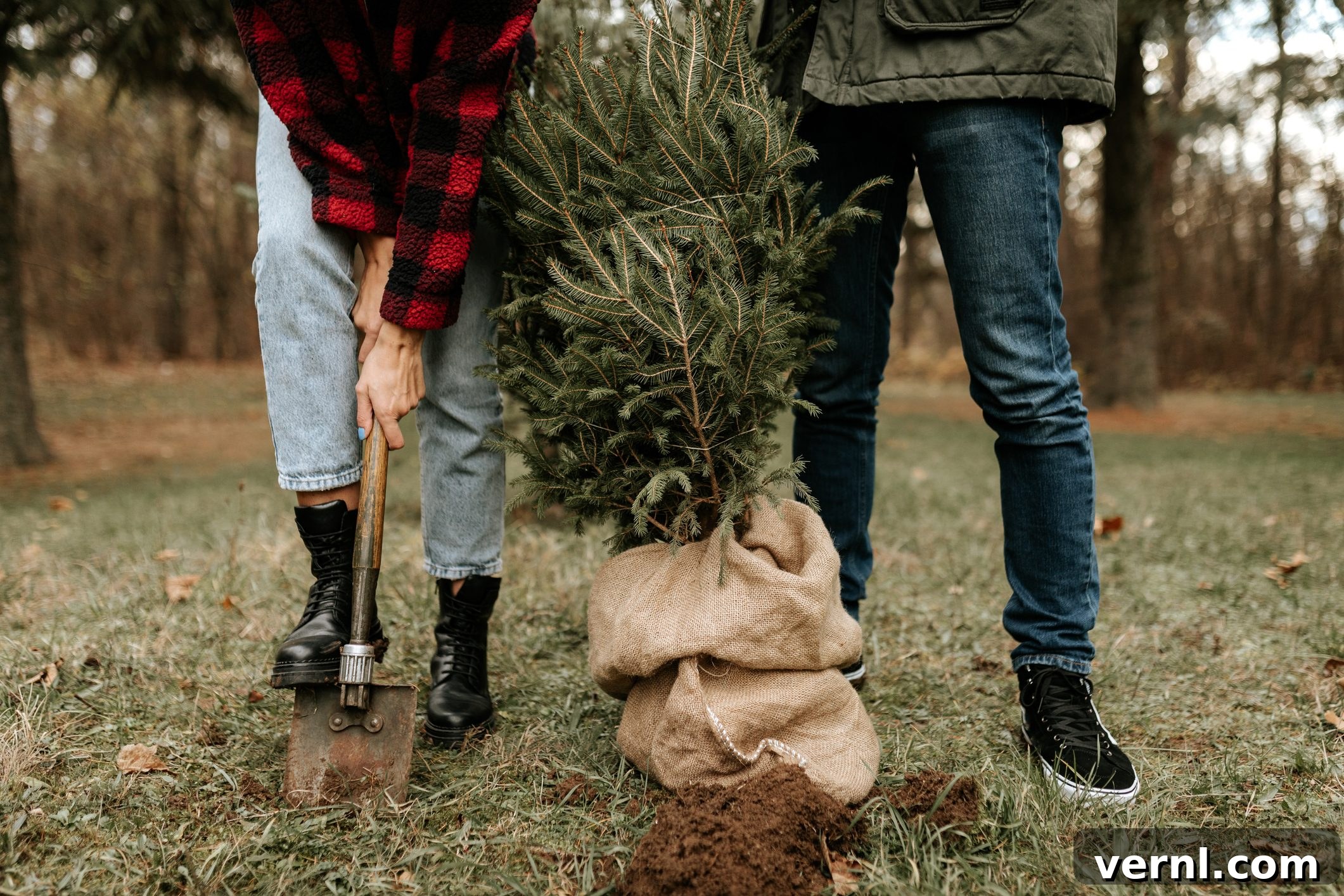
The answer to whether you can replant your Christmas tree largely depends on the type of tree you purchased. If you opted for a “living” Christmas tree, meaning it came either growing in a container with its roots contained or with its root ball carefully wrapped in burlap (often referred to as balled and burlapped, or B&B), then yes, replanting is absolutely possible and highly encouraged!
These living trees are specifically cultivated to be transitioned from an indoor holiday decoration to a permanent addition to your landscape. Their intact root systems allow them to recover from the temporary indoor environment and adapt to outdoor conditions. However, if your beloved Christmas tree was cut down—the most common type—and therefore lacks any roots, it cannot be replanted. These trees have a finite lifespan and require different post-holiday disposal methods, which we will also explore.
Choosing a living Christmas tree is a commitment to sustainability, offering the unique satisfaction of giving a tree a second life and contributing to the local ecosystem. It’s a truly rewarding experience to watch your former holiday centerpiece grow into a magnificent specimen in your yard.
Selecting the Ideal Living Christmas Tree for Replanting
When considering a living Christmas tree with the intention of replanting, not all evergreens are created equal. Expert advice is crucial for making the right choice. Eva Monheim, a distinguished horticulturist, certified arborist, and co-host of The Plant a Trillion Trees podcast, emphasizes selecting resilient evergreens that are well-suited to your local climate and won’t excessively drop their needles indoors. These characteristics make them excellent choices for living Christmas trees destined for a long life outdoors.
Monheim highly recommends various fir tree species, known for their strong needle retention and classic conical shape. Among these, the White Fir (Abies concolor) is a popular choice due to its attractive bluish-green needles and pleasant citrusy scent. The beloved Fraser Fir (Abies fraseri) is another excellent option, prized for its sturdy branches that can hold heavy ornaments and its wonderful fragrance. These firs generally prefer cooler climates and well-drained, acidic to neutral soils.
For those seeking something a bit more distinct, tall, and narrow, Monheim suggests the Topal Holly (Ilex x attenuata). While not a traditional coniferous Christmas tree, hollies offer a unique aesthetic with their evergreen foliage and often vibrant berries, making them striking landscape plants. Topal hollies are typically more tolerant of various soil conditions and are known for their hardiness in warmer zones, providing a different texture and form compared to the classic firs.
Beyond specific species, when purchasing your living Christmas tree, look for a healthy specimen with a robust root ball proportional to its size. Avoid trees with yellowing needles, brittle branches, or signs of pest infestation. A tree that looks vibrant and strong will have a better chance of surviving the transition from indoors to outdoors. Always consider the tree’s mature size and growth habits in relation to the space available in your yard, ensuring it has ample room to flourish without interfering with structures or power lines.
What To Do With a Real Christmas Tree After Christmas: Sustainable Disposal Methods
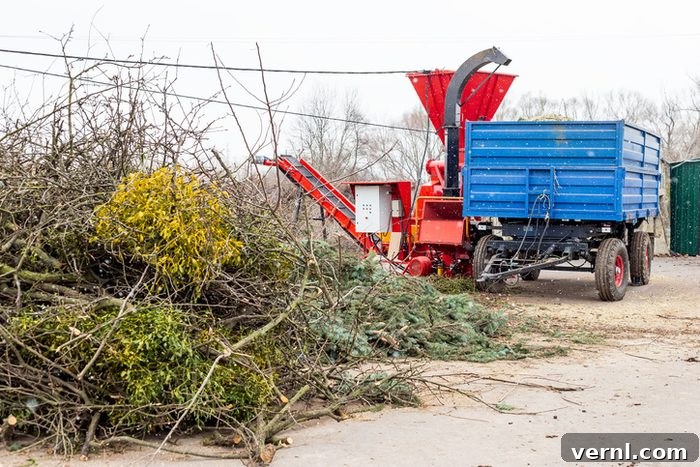
For the millions of households that choose a cut Christmas tree, the post-holiday question isn’t about replanting, but about responsible disposal. It’s crucial not to simply throw your real Christmas tree in the trash. Landfills are quickly overwhelmed, and these natural resources can be put to much better use. Fortunately, there are several environmentally friendly ways to repurpose your tree after the festivities conclude, contributing positively to your garden, local wildlife, or community efforts.
Recycle It Through Municipal Programs
One of the most common and convenient methods for cut tree disposal is through local recycling programs. Many cities and municipalities offer special collection services during the weeks following Christmas. These programs typically involve grinding up real Christmas trees into nutrient-rich mulch. This mulch is then often used in public parks, green spaces, or made available to residents for their own landscaping needs. Check with your local city or county waste management services to see if they offer curbside pickup for trees or if you need to transport them to a designated drop-off center.
In many communities, like mine, designated local parks or recycling centers become drop-off points. Workers at these facilities efficiently process the trees, transforming them into valuable landscape material. Before participating in any recycling program, it is absolutely essential to thoroughly remove all decorations. This includes every piece of tinsel, all ornaments, any leftover string lights, and tree stands. Non-organic materials can contaminate the mulch and damage equipment, so a clean tree is vital for successful recycling.
Create a Wildlife Refuge in Your Garden
Your discarded Christmas tree can provide invaluable shelter and habitat for local wildlife. Instead of discarding it, consider placing your real Christmas tree in a secluded corner of your garden or backyard. Throughout the winter months, its branches can offer much-needed refuge for birds and smaller animals, protecting them from harsh winds, snow, and predators. Birds may perch on its branches, finding a safe haven, and small mammals might use its base for cover.
Eventually, as the seasons change, the tree will dry out and its needles will begin to fall. At this point, it can be further repurposed. You can chop up the branches into smaller pieces and add them to your compost pile, where they will break down and enrich your soil. Alternatively, these smaller branches can be spread as a natural mulch around existing plants, helping to retain soil moisture and suppress weeds. The main trunk, once dried, can be transformed into a decorative garden element or even cut into steps for a sloped path.
Transform It into Firewood for Cozy Evenings
If you enjoy the warmth and ambiance of real wood fires, the trunk of your Christmas tree can be processed into firewood. Once the tree has completely dried out after its stint as a wildlife shelter, carefully chop the trunk into manageable sections suitable for your fireplace or wood-burning stove. It’s crucial to allow the wood to dry or “cure” for several months in a well-ventilated area before burning. Burning freshly cut or damp wood can lead to excessive smoke, creosote buildup in chimneys, and an inefficient burn. Pine and fir woods burn relatively quickly and provide good heat, making them a great addition to your firewood supply for a few festive fires.
Utilize It as a Fish Habitat in a Pond
For those with a small pond on their property or access to local retention ponds (with proper permission), a Christmas tree can be submerged to create a beneficial habitat for fish and other aquatic life. As the tree slowly degrades underwater, it provides shelter, hiding spots, and breeding grounds for fish. The branches offer surfaces for algae and invertebrates to grow, forming a food source for fish. This can significantly enhance the biodiversity of a pond. However, if considering this option for a public or community retention pond, always seek permission from the property owner or local authorities first to ensure compliance with environmental regulations and safety.
Mulch It Yourself with a Wood Chipper
For the avid gardener or homeowner with a larger property, investing in or renting a wood chipper can be a highly efficient way to process your real Christmas tree. Chipping the entire tree yourself allows you to create a plentiful supply of fresh, aromatic mulch. This homemade mulch can then be used throughout your garden and landscaping beds. It’s excellent for suppressing weeds, retaining soil moisture, regulating soil temperature, and slowly enriching the soil as it decomposes. Conifer mulch, in particular, is often acidic, making it beneficial for acid-loving plants such as rhododendrons, azaleas, and blueberries.
How To Replant a Living Christmas Tree: A Step-by-Step Guide for Success
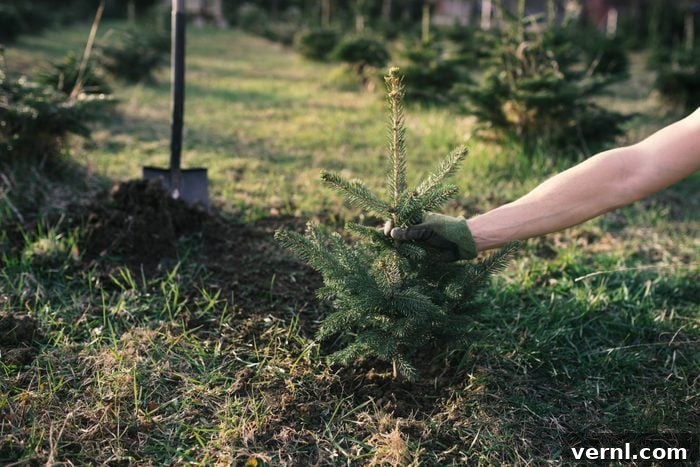
Replanting a living Christmas tree successfully requires careful planning and execution, especially given the transition from a warm indoor environment to potentially freezing outdoor conditions. Christopher Evans, an extension forester with the University of Illinois, provides crucial advice: “The less time the tree spends indoors where it’s warm, the better.” Warm indoor temperatures can trick the tree into breaking dormancy, making it more vulnerable to winter damage once moved outdoors. Therefore, aim to keep your tree inside for no more than 7-10 days.
Evans also advises against planting the tree in frozen ground, even if you prepared the hole in advance. If your ground is not frozen and the weather permits, plant the tree as soon as you’ve finished enjoying it indoors. Here’s a detailed guide to ensure your living Christmas tree thrives in its new outdoor home:
-
1. Acclimatize the Tree Gradually: The “Hardening Off” Process
After being indoors, your tree needs to gradually adjust to cooler temperatures before being planted outside. Move the tree to an unheated, sheltered location like a shed, garage, or enclosed porch for several days (3-7 days ideally). This intermediate step, known as hardening off, helps prevent shock and increases its chances of survival. During this period, continue to water the tree thoroughly to keep its root ball moist.
-
2. Prepare the Planting Site: Location and Hole Dimensions
Before bringing the tree indoors for the holidays, or immediately after it’s moved to the cooler location, select its permanent outdoor spot. Choose a site with adequate sunlight (most evergreens prefer full sun to partial shade), well-drained soil, and enough space for the tree to reach its mature size without interfering with power lines, buildings, or other plants. Dig a hole that is as deep as the root ball or the container the tree came in, but at least two to three times as wide. This wider hole provides loose soil for the roots to easily spread. Set the excavated soil aside, as you’ll use it to backfill the hole later. If your ground is already frozen, simply dig the hole in the spring, but ensure the tree is properly stored until then (see storage tips below).
-
3. Careful Planting: Removing the Container or Burlap
Once the tree is acclimatized and the hole is ready, carefully remove the tree from its container or unwrap the burlap and wire cage (if it’s a B&B tree). Be gentle to avoid damaging the delicate root ball. Place the tree in the center of the prepared hole, ensuring that the top of the root ball or the root collar (where the trunk flares out at the base) is level with or slightly above the surrounding ground. Planting too deep can suffocate the roots, while planting too shallow can cause the roots to dry out.
-
4. Backfill and Initial Watering
Gently backfill the hole with the soil you dug out earlier. As you add soil, lightly firm it around the root ball with your hands or feet to remove any large air pockets, which can dry out roots. Once the hole is filled, create a small berm or basin of soil around the edge of the planting area to help retain water. Then, water the tree thoroughly and deeply immediately after planting. This helps settle the soil around the roots and provides essential hydration.
-
5. Apply Mulch for Protection and Moisture
Cover the ground around the newly planted tree with a 2-4 inch layer of organic mulch, such as wood chips, pine needles, or shredded bark. This mulch layer helps conserve soil moisture, regulates soil temperature, suppresses weeds, and slowly enriches the soil as it decomposes. However, it’s crucial to leave a few inches of bare space around the tree trunk itself to prevent moisture buildup against the bark, which can lead to rot or pest issues. Mulching also acts as an insulator, protecting the roots from extreme cold in winter and heat in summer.
“Water the tree after planting it and keep it consistently watered throughout that first year as it establishes,” Evans emphasizes. “It needs to build a strong root system during that initial year, not necessarily focus on foliage growth, so refrain from fertilizing it. Fertilizers can push new, tender growth that is susceptible to frost damage, especially in the first year.” Regular watering, particularly during dry spells, is paramount for the tree to develop a robust root system capable of sustaining it for years to come.
If the idea of managing a living tree through the holidays and then replanting seems like too much effort during an already busy season, remember there are other ways to incorporate evergreens into your landscape. You can always buy and plant an outdoor Christmas tree in the spring, allowing it to establish itself during warmer months, and then decorate it in your yard every year. This creates a lasting tradition without the indoor-to-outdoor transition challenges.
Embracing a Greener Christmas: Long-Term Benefits and Enjoyment
Whether you choose to replant a living Christmas tree or responsibly recycle a cut one, embracing sustainable post-holiday practices offers numerous benefits. Replanting a living tree contributes to carbon sequestration, enriches your local environment, and provides a beautiful, lasting memory of your holiday celebrations. Watching a small Christmas tree grow into a majestic landscape feature year after year is a deeply satisfying experience that connects you with nature.
For those who opt for a cut tree, understanding and utilizing the various recycling and repurposing options ensures that these natural resources are not wasted. From creating wildlife habitats to enriching garden soil, every effort to sustainably manage your Christmas tree helps reduce landfill waste and supports ecological health. By making conscious choices about our Christmas trees, we can all contribute to a greener, more sustainable future, making our holiday traditions not just joyful, but also environmentally responsible.