
Electrifying Your Home: A Comprehensive Guide to Sustainable Living and Significant Savings
The journey towards a more sustainable and efficient home often leads to the concept of electrification. More and more homeowners are choosing to switch to electric appliances, advanced HVAC systems like heat pumps, and integrated battery backup solutions. This transition offers a multitude of compelling advantages, from substantially lowering energy bills and enhancing overall home comfort to significantly improving indoor air quality. Beyond personal benefits, electrifying your home plays a crucial role in reducing your carbon footprint and fortifying your household’s resilience against unpredictable power outages.
The urgency of climate change further underscores the importance of these decisions. As Alex Amend, Director of Communications at Rewiring America, points out, “the decisions we make in our households are responsible for 42 percent of energy-related greenhouse gas emissions, from the way we heat and cool our homes, heat our water, how we cook and how we get from one place to another.” Opting for an all-electric home is a powerful step in addressing these environmental challenges directly from your living space.
While the prospect of a fully electrified home is appealing, the initial investment can seem substantial, potentially reaching tens of thousands of dollars. This often prompts a fundamental question: Is the effort and expense truly worth it? This comprehensive guide delves into the intricate details of the costs, benefits, and practical steps involved in converting your home to an all-electric system, helping you make an informed decision for your future.
What Does It Mean to Electrify a Home? The Core Components of an All-Electric System
At its heart, electrifying a home means systematically replacing appliances and systems that traditionally rely on burning fossil fuels—such as natural gas, propane, or oil—with modern, energy-efficient electric counterparts. This transformation extends across various essential home functions, creating a cleaner, more efficient, and often more comfortable living environment.
Key areas of home electrification include:
- Heating and Cooling Systems: Swapping out traditional furnaces and air conditioners for highly efficient electric heat pumps. Heat pumps efficiently transfer heat, providing both heating and cooling from a single system, often at a fraction of the operating cost of older technologies.
- Water Heaters: Transitioning from gas-fired or conventional electric resistance water heaters to advanced electric heat pump water heaters. These systems are incredibly efficient, using ambient air to heat water and drastically reducing energy consumption for hot water supply.
- Clothes Dryers: Upgrading from gas dryers to electric models, including energy-saving heat pump dryers that recirculate air, offering gentler fabric care and significantly lower energy use.
- Stoves and Ranges: Moving away from gas cooktops to electric induction stoves. Induction cooking uses electromagnetic energy to heat cookware directly, resulting in faster cooking times, precise temperature control, and superior indoor air quality by eliminating combustion byproducts.
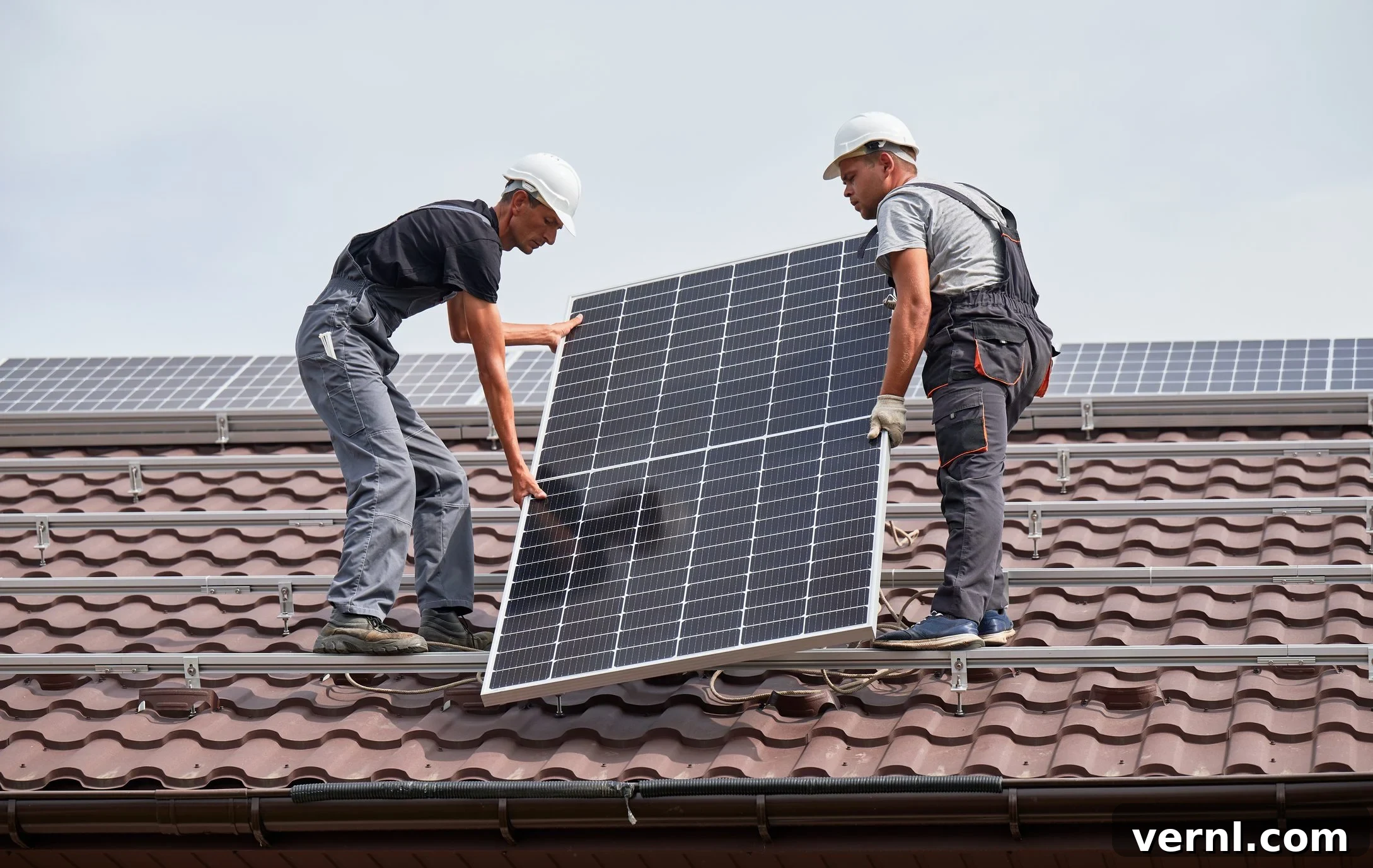
- Home’s Overall Power Supply: While not a direct appliance replacement, this involves assessing and potentially upgrading your electrical panel to handle increased electric load and considering renewable energy sources like rooftop solar panels or subscribing to community solar programs. This move detaches your home from reliance on a fossil-fuel-intensive grid.
- Electric Vehicles (EVs) and EV Chargers: Integrating personal transportation into the home electrification strategy by installing dedicated EV charging stations, often powered by your home’s solar array, further reducing your overall carbon footprint.
Beyond simply replacing appliances, adopting an all-electric approach is an opportune moment to implement further energy-saving measures, such as comprehensive home weatherization. This maximizes the efficiency of your new electric systems, leading to even greater energy savings and enhanced comfort. As Geraldo Rodriguez, a homeowner who has electrified his Raleigh, NC residence, aptly states, “To me, electrifying a home means identifying areas in your home where electricity is being inefficiently used and addressing them.”
Strategic Steps to Create Your All-Electric Home: A Phased Approach
Embarking on the journey to electrify your home might seem overwhelming, but by breaking it down into manageable, strategic steps, it becomes a feasible and rewarding endeavor. A phased approach allows you to prioritize effectively, manage your budget, and maximize the impact of each upgrade.
1. Prioritize Your Electrification Goals
The first step is to clearly define what “value” means for your household. “Understand where the most value comes from,” advises Rodriguez. “Is it your lights? Your fridge? Your water heater? Then make a plan to tackle those.” Your priorities might include:
- Indoor Air Quality: If clean indoor air is paramount, starting with replacing a gas stove with an induction model and a gas furnace with a heat pump can make an immediate and significant difference by eliminating combustion gases and particulate matter within your home.
- Energy Savings: Focus on the biggest energy hogs first. Often, heating and cooling systems, followed by water heaters, offer the most substantial potential for long-term energy cost reductions.
- Appliance Lifespan: A practical approach is to plan replacements as older machines near the end of their useful life or break down. This avoids premature replacement costs and ensures you upgrade to a better, more efficient electric version when you would have needed a new appliance anyway.
- Electrical Panel Capacity: Simultaneously, assess your home’s current electrical panel. Understanding the amperage coming into your panel box is crucial, as some larger electric appliances and systems (like heat pumps or EV chargers) may require an upgrade to support the all-electric plan.
2. Create a Realistic Budget and Explore Incentives
Fully electrifying a home is a significant financial undertaking, and most individuals cannot undertake all upgrades at once. Developing a clear budget and diligently researching available financial incentives are essential components of a successful plan.
“Most everyone, including me, is not going to be able to afford to do this all at once,” notes Amend. “It might make more sense to replace whatever appliance is aging out, before it dies, with a better electric version, since you’d have to buy a new one anyway.” Think of home electrification as a strategic home improvement project, similar to a major renovation, requiring careful planning and resource allocation. These are critical machines that impact your daily life and comfort.
Crucially, investigate federal, state, and local rebates, tax credits, and utility incentives designed to defray the upfront costs of electric upgrades. Programs like the Inflation Reduction Act offer substantial financial relief, making these investments more accessible and affordable.
3. Maximize Efficiency Through Home Weatherization
Before installing new electric appliances and systems, weatherizing your home—also known as winterizing or weatherproofing—is a foundational step that yields immense returns. Weatherization protects your home from external elements, minimizes energy loss, and dramatically improves the efficiency of your new electric systems.
Key weatherization measures include:
- Sealing Air Leaks: Identifying and sealing cracks, gaps, and penetrations in your home’s envelope (around windows, doors, pipes, and electrical outlets) prevents conditioned air from escaping and unconditioned air from entering.
- Adding Insulation: Enhancing insulation in your attic, walls, floors, and crawl spaces reduces heat transfer, keeping your home warmer in winter and cooler in summer.
- Upgrading Windows and Doors: Replacing old, inefficient windows and doors with modern, energy-efficient models can significantly reduce heat loss and gain.
Weatherization is often an affordable investment that delivers a substantial impact on energy savings. To pinpoint the most effective weatherization steps for your specific home, consider getting a professional energy audit. Many national rebates and incentives are also available for these improvements. Furthermore, a well-sealed and insulated home can allow you to install a smaller, less expensive heat pump, further reducing upfront costs and optimizing long-term performance.
4. Prepare Your Electrical System for the Future
To avoid being caught unprepared when an old system fails, proactive planning for your electrical infrastructure is vital. This involves future-proofing your home’s capacity to handle increased electric loads.
- Electrical Panel Assessment: Determine your current electrical panel rating. Homes with at least 150 amps typically have ample capacity for major electrification projects like heat pumps and EV chargers. If your panel is older or has lower amperage, an upgrade may be necessary.
- Pre-shop and Plan: Research electric appliance models in advance, identify qualified contractors who specialize in electric installations, and understand any necessary system upgrades. This foresight ensures a smoother transition and avoids emergency, high-cost replacements.
- Smart Home Integration: Consider integrating smart home technologies that can optimize energy usage, manage appliance schedules, and provide real-time data on your home’s energy consumption, enhancing both efficiency and convenience.
How Much Does It Cost to Convert a House to All Electric? Understanding the Investment
The cost of converting a house to all-electric varies significantly depending on the scope of upgrades, the size of your home, existing infrastructure, and regional labor rates. While some upgrades, like an electric heat pump water heater, can be relatively modest, a complete home electrification project, including solar panels and battery storage, represents a substantial investment.
To gain a personalized estimate, resources like Rewiring America’s Personal Electrification Planner can be invaluable. This tool helps homeowners calculate upfront costs, project annual bill savings, estimate emissions reductions, and even understand air pollution and health impacts. They also offer valuable insights on electrification for renters, demonstrating that not all benefits are exclusive to homeowners.
Typical Cost Breakdown for an All-Electric Home (Estimates)
While costs are highly variable, here’s an illustrative breakdown based on various projects and expert experiences, including Geraldo Rodriguez’s personal electrification journey:
- Solar Panels: A significant investment, often ranging from $15,000 to $30,000 or more, depending on system size, local incentives, and installation complexity. Rodriguez’s system cost $21,000.
- Backup Battery Storage: Essential for resilience during power outages, a home battery system can cost between $8,000 and $15,000 per unit, not including installation. Rodriguez’s cost was $8,000.
- Electric Heat Pump (HVAC): For a 1,500-square-foot home, upgrading to an electric heat pump typically ranges from $10,000 to $17,000, including installation. This replaces both heating and cooling functions.
- Electric Heat Pump Water Heater: These highly efficient units can range from $1,500 to $4,000, not including installation, which can add $500 to $1,500 depending on complexity.
- Induction Range/Stove: Prices vary widely, from $1,000 for basic models to $4,000+ for high-end options.
- Electric Clothes Dryer (Heat Pump): Expect to pay between $1,000 and $2,000 for a heat pump dryer.
- Electrical Panel/System Upgrades: If your existing panel needs to be upgraded to handle the new electric load, costs can range from $1,500 to $5,000 or more, depending on the extent of the upgrade. Rodriguez reported $2,500 for his electrical system upgrades.
- LED Lighting: Often an inexpensive or even free upgrade thanks to utility incentives. Rodriguez received his LED bulbs for free.
It’s crucial to remember that many of these expenses are long-term investments that ultimately pay for themselves through significant energy cost savings. For example, a rooftop solar system typically has an average payback period of about seven years. After this, for the remainder of its 20 to 40-year lifespan, you effectively have a free source of electricity to power your home and charge an electric vehicle, as Alex Amend highlights. These savings accumulate year after year, transforming your upfront costs into a wise financial decision.
Pros and Cons of Converting to an All-Electric Home: A Balanced Perspective
Making the switch to an all-electric home involves weighing various advantages against potential challenges. Understanding both sides of the coin helps homeowners make informed decisions aligned with their long-term goals and resources.
Pros of Home Electrification
- Significant Energy Savings: Modern electric appliances, especially heat pumps for HVAC and water heating, are remarkably efficient, leading to substantially lower monthly utility bills over time.
- Improved Home Comfort: Heat pumps provide consistent, even heating and cooling throughout your home, eliminating temperature fluctuations and cold spots often associated with older systems.
- Enhanced Indoor Air Quality: By removing combustion appliances (gas stoves, furnaces, water heaters) from your home, you eliminate sources of indoor air pollutants like nitrogen dioxide, carbon monoxide, and particulate matter, leading to a healthier living environment. Outdoor air quality around appliance vents also improves.
- Increased Resilience from Power Outages: Integrating battery storage systems with solar panels provides a reliable backup power source, ensuring your essential appliances and systems remain operational during grid outages.
- Positive Climate Impact: Significantly reducing your reliance on fossil fuels and decreasing your home’s greenhouse gas emissions contributes directly to combating climate change and fostering a healthier planet.
- Lower Operating Costs: For the majority of U.S. households, especially when considering local energy rates and the increasing efficiency of electric technologies, the long-term operating costs of an all-electric home are lower.
- Increased Home Value: Homes equipped with green features like solar panels, efficient electric HVAC, and smart energy systems are increasingly attractive to buyers, potentially increasing your property value.
- Historic Federal and Local Incentives: A wealth of tax credits, rebates, and grants from federal programs (like the Inflation Reduction Act), state initiatives, and local utilities are available to offset the upfront costs of electrification.
Cons of Home Electrification
- Higher Upfront Cost: The initial investment for replacing multiple fossil-fuel-dependent systems with their electric counterparts can be substantial, requiring careful financial planning.
- Availability of Qualified Contractors: The demand for skilled contractors specializing in heat pump installations, electrical panel upgrades, and solar systems is growing rapidly. Finding experienced and reputable professionals can sometimes be a challenge, leading to longer wait times or limited choices.
- Time Investment for Research and Planning: The process requires significant time for researching various systems, understanding different technologies, comparing models, and vetting contractors to ensure the right fit for the job. As Rodriguez notes, “It’s a time investment, just as much as it is a monetary one. The amount of vetting that has to be done to find the right fit for the job can be mentally taxing for most people.”
- Potential Electrical Infrastructure Upgrades: Older homes may require significant electrical panel upgrades to accommodate the increased power demand of multiple electric appliances, adding to the overall cost and complexity.
- Learning Curve: Adapting to new technologies, such as induction cooking or optimizing heat pump settings, may involve a slight learning curve for some homeowners.
Is Electrifying Your Home Worth It? The Long-Term Vision
Considering the multifaceted benefits, the answer is a resounding yes, particularly if you have the financial means to make the initial investment. An electrified home is not only more efficient and significantly healthier to live in but also offers enhanced resilience against grid outages and makes a profound positive impact on the planet.
However, it’s crucial to remember that home electrification is not an all-or-nothing proposition. Every step you take makes a difference, and even more affordable upgrades can yield substantial benefits. For instance, weatherizing your home, replacing an old gas range with an efficient induction model, or upgrading a gas dryer to an electric heat pump dryer are highly effective steps that can be implemented in stages, making the transition more accessible and manageable for a wider range of budgets. The long-term savings, improved comfort, and environmental stewardship collectively make electrification a truly worthwhile endeavor.
Frequently Asked Questions (FAQs) About Home Electrification
What’s the most expensive part of going all-electric?
Generally, the largest upfront costs are associated with installing solar panels and comprehensive battery backup systems. This is often followed by the installation of an electric heat pump for your HVAC needs. While these are significant investments, it’s important to view them as long-term assets that eventually pay for themselves through substantial energy savings over their lifespan. Additionally, for homes with outdated electrical wiring or undersized panels, the cost of necessary electrical infrastructure upgrades can add considerably to the overall project expense.
Is it cheaper to have an all-electric home?
Yes, for the vast majority of homes, an all-electric setup proves cheaper in the long run, though initial costs can be higher. This largely depends on your specific region, local energy rates, and whether you integrate solar panels. A compelling study from the National Renewable Energy Laboratories (NREL) indicates that 62% to 95% of American households that switch to a heat pump will experience a noticeable drop in their energy bills. When combined with thorough weatherization, this number rises even further, with 82% to 97% of households seeing savings. Similarly, another NREL study highlighted that electric vehicle (EV) owners can save up to $1,000 annually in fuel costs compared to gasoline vehicles.
As Rodriguez explains, “In the beginning, it may not seem cheaper. But with time, and especially if you remain in the home for more than five years, you definitely see the savings.” The cumulative effect of lower operating costs, reduced maintenance, and potential energy generation from solar significantly outweighs the initial investment.
Can you convert to an all-electric home in stages?
Absolutely. Converting to an all-electric home in stages is not only possible but often the most practical and recommended approach for many homeowners. This strategy allows for easier time management, better budgeting, and the flexibility to spread out expenses. Phased electrification also enables you to strategically take advantage of certain tax credits, such as those offered by the Inflation Reduction Act, which can be accessed across multiple years as you complete different eligible upgrades. Starting with the highest impact or oldest appliances first, as they naturally wear out, is a smart way to begin your electrification journey.
What tax breaks and rebates are available for converting to an all-electric home?
The Inflation Reduction Act (IRA) is a landmark piece of legislation that offers substantial tax credits and rebates designed to incentivize home electrification. This act provides direct tax credits to all eligible homeowners for various energy-efficient upgrades. Furthermore, it allocates significant funds to individual states to administer specific rebate programs, particularly aimed at supporting low-income households in making these crucial transitions. States like California, Hawaii, New Mexico, and New York are expected to have their comprehensive programs fully operational in 2024. Beyond federal and state initiatives, many local utility companies also offer their own rebates and incentives for energy-efficient electric appliance installations. To determine which rebates and tax credits you might qualify for, utilize resources such as Rewiring America’s Inflation Reduction Act Savings Calculator, and always consult your local utility company and municipal or state energy offices for the most current and specific information in your area.
About The Experts
- Alex Amend is the esteemed Director of Communications at Rewiring America, a leading organization dedicated to promoting home electrification. His personal commitment to sustainable living is evident: he has been cooking on an induction stove for over two years, drives a Chevy Bolt, and recently secured grant funding to facilitate the installation of a solar and battery backup system at his local fire station in rural New Mexico, where he volunteers as a firefighter.
- Geraldo Rodriguez is a proactive homeowner based in Raleigh, North Carolina, and serves as the Head of Customer Operations for a prominent software company. He has been systematically electrifying his own residence, notably installing a home battery system to effectively mitigate the impact of power outages that frequently occur during periods of extreme summer heat, showcasing a real-world application of home resilience.