It is possible to join ABS to PVC, but it is only supposed to be done with a mechanical coupling, not glued. If you’re here for a quick answer, you can stop reading now, but let’s dive into the details.
When it comes to plumbing, especially in homes, you’ll encounter two main types of plastic pipes: ABS (usually black) and PVC (typically white). These are the workhorses in new residential construction across much of the country. Generally, plumbers stick to one or the other for a clean, reliable system. They use solvent cement (or “glue”) specifically made for the material they’re working with, and everything connects smoothly.
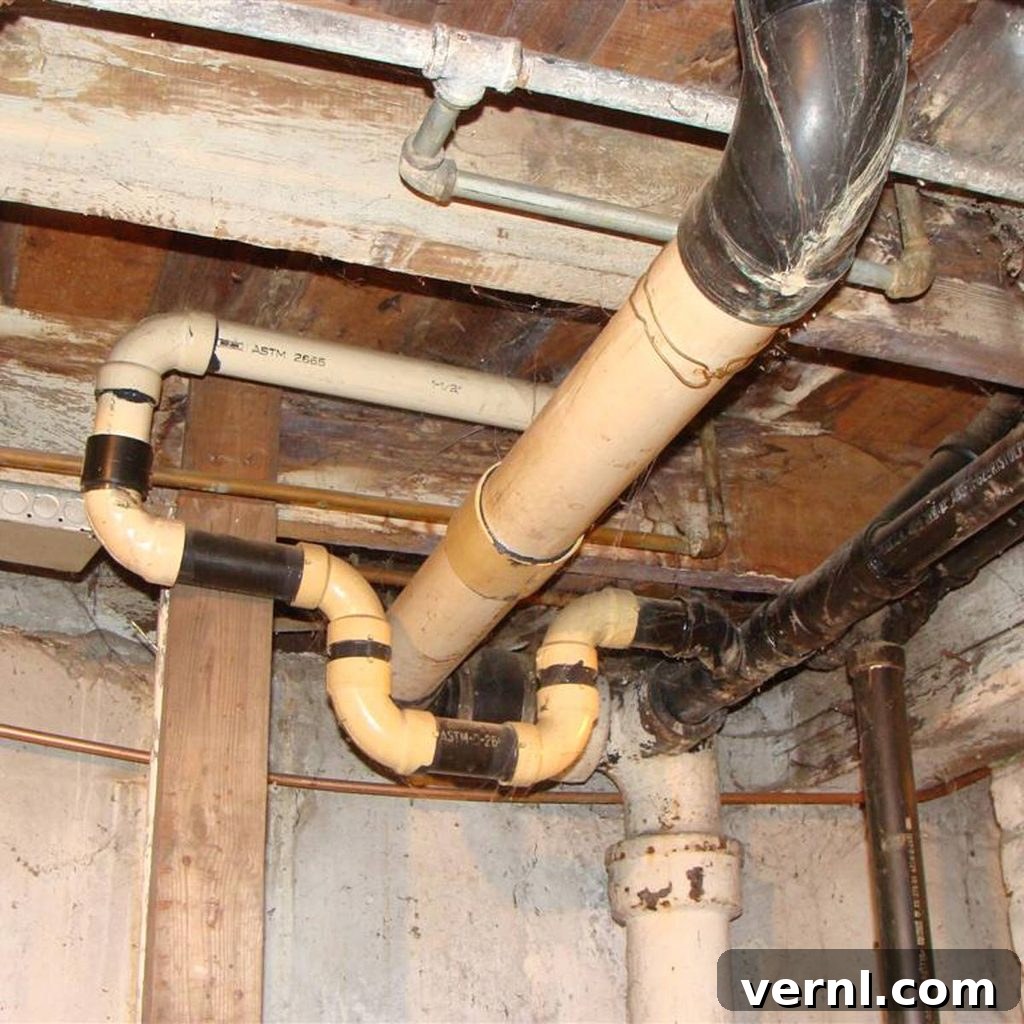
However, what happens when the do-it-yourself enthusiast enters the picture?
ABS vs. PVC: A Plumbing Code Perspective
For the most part, ABS and PVC aren’t meant to be glued together directly. Let’s consult the plumbing code for clarification. (The Minnesota State Plumbing Code is used as a reference here; always consult your local codes.)
What the Minnesota Plumbing Code Says
Looking at chapter 7 of the MN state plumbing code, we find important details about drainage systems. Section 705.1.2, covering ABS Solvent Cement Joints, states:
Where surfaces to be joined are cleaned and free of dirt, moisture, oil, and other foreign material, solvent cement in accordance with ASTM D 2235 shall be applied to all joint surfaces.
This means you can glue ABS using a solvent cement that meets the ASTM D 2235 standard.
Section 705.7.2, covering PVC Solvent Cement Joints, states:
Where surfaces to be joined are cleaned and free of dirt, moisture, oil, and other foreign material, apply primer purple in color in accordance with ASMT F 656. – and – Solvent cements in accordance with ASTM D 2564 shall be applied to all joint surfaces.
With PVC, you need to use the correct purple primer and a solvent cement that meets ASTM D 2564. This prepares the PVC for a strong bond.
So, how can these two materials be connected? Section 705.11.3: Plastic Pipe to Other Materials, provides the answer:
Where connecting plastic pipe to other types of plastic or other types of piping material; approved listed adapter or transition fittings and listed for the specific transition intended shall be used.
The code requires an adapter or fitting when joining ABS and PVC. This ensures a proper and compliant connection.
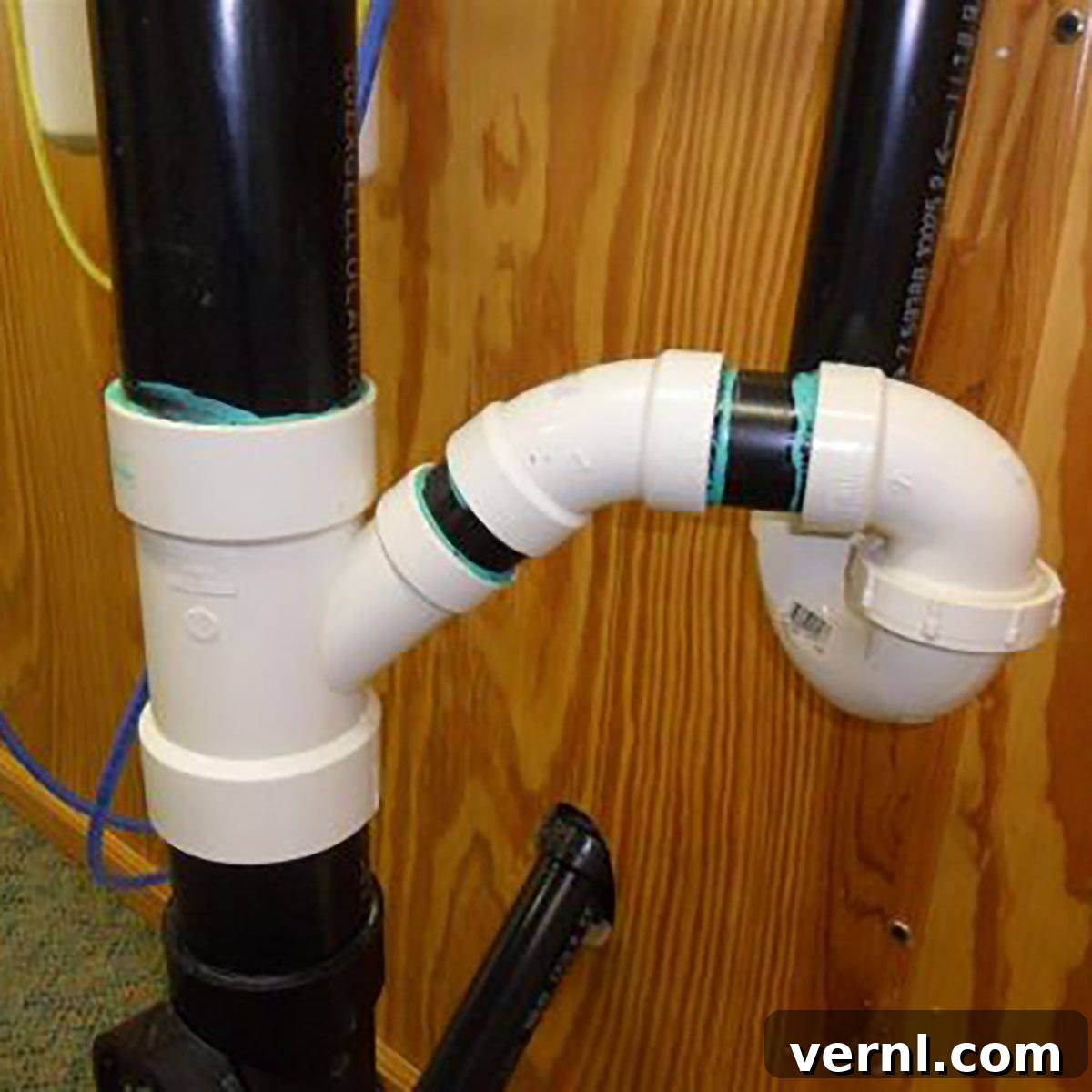
The image below shows one such adapter on the right side. This has a stainless steel band going through the middle for rigidity. The image on the left shows a coupling that lacks a metal band in the middle and also lacks UPC approval.
The Problem with ABS to PVC Cement
You might find green cement at the hardware store labeled for connecting ABS to PVC. It may even have approval stamps, which can be misleading.
The problem lies in the specific application of the cement. Reviewing the technical specifications, you’ll likely find that it adheres to ASTM Standard D 3138. Here’s what the ASTM website says:
1.2 These cements are intended for use in cementing transition joints between ABS and PVC materials in non-pressure applications only (25 psi (170 kPa) or less). Note 1 This specification was developed to provide a means for joining an ABS non-pressure piping system using a solvent-cemented transition joint, for example, joining ABS building drain to a PVC sewer system. The intention was not to create a specification for an all purpose ABS-PVC solvent cement that would be used for mixing of ABS and PVC piping materials nor to specify a cement that could generally be used for either material. Specific cements for ABS or PVC components should be used (see ).
This clarifies that ABS to PVC cement is for connecting an ABS system to a PVC system, such as connecting an ABS drain inside a building to a PVC drain outside. It’s not designed for general mixing of ABS and PVC pipes.
What if ABS and PVC Have Already Been Glued Together?
If you discover a glued ABS-to-PVC connection, it’s not a major cause for alarm. While not technically correct, the risk of failure is relatively low. Many experienced plumbers rarely see failures at these points.
To provide some practical insight, I conducted a simple experiment to demonstrate the strength of various connections using different cements. I prepared several joints using different combinations of ABS and PVC, with and without purple primer. After letting the connections cure, I put them to the test.
I then tried to separate the connections.
The results were interesting. I found that I was able to separate some connections, but not all.
The easiest connections to separate were PVC to PVC without primer, and ABS to PVC without primer. The ABS to PVC connections with primer were as strong as, or even stronger than, the PVC to PVC connections with primer. In some cases, the glue actually pulled the surface of the ABS right off the pipe. The only connection that wouldn’t separate was the ABS to ABS. In fact, the plastic would likely rip before the connection would fail.
In short, while not code-compliant, a glued ABS-to-PVC connection is very unlikely to fail. There’s usually no need to panic over such a connection; it should be strong and reliable.
About the Author
Reuben Saltzman is a seasoned home inspector and the owner of Structure Tech Home Inspections in Minnesota.