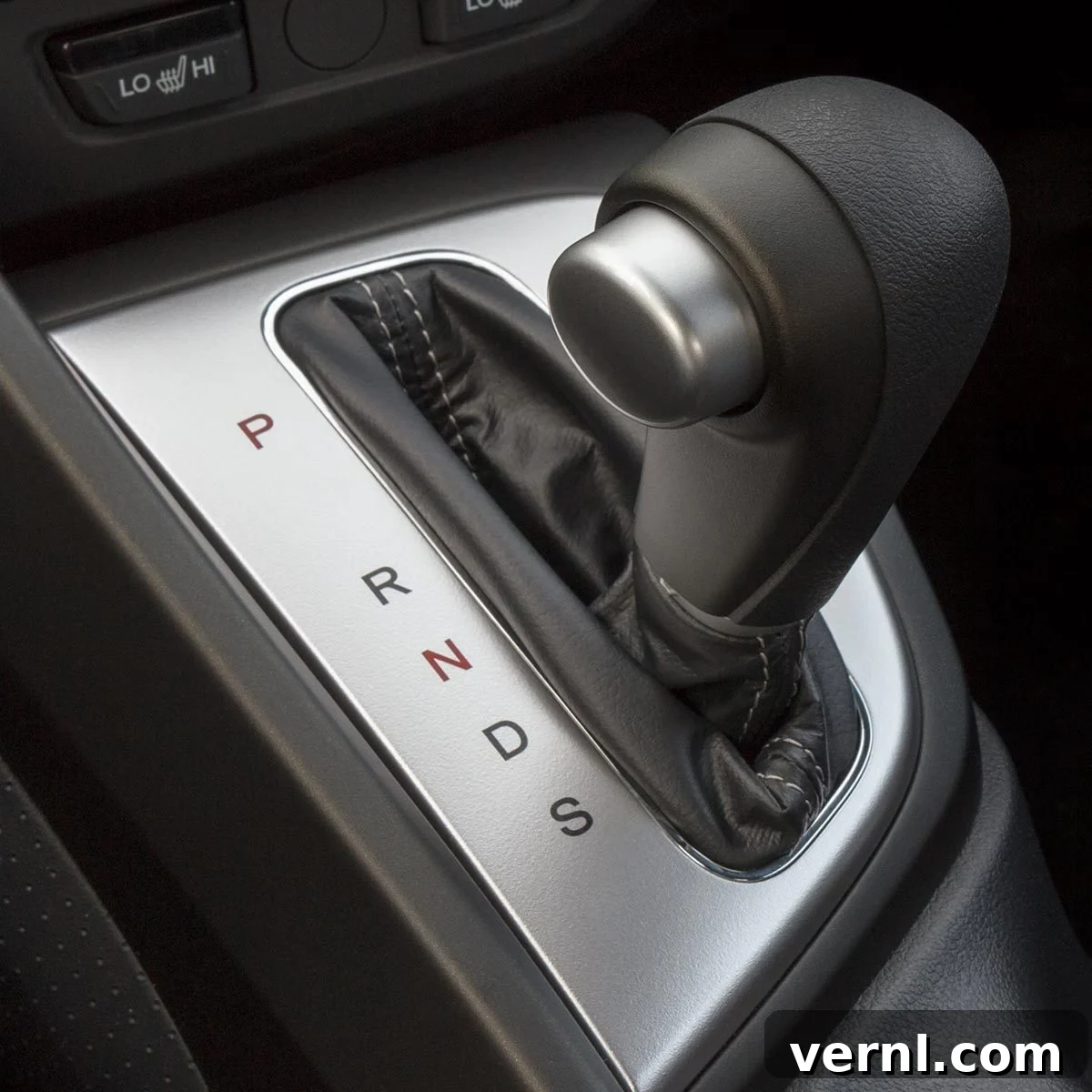
Continuously Variable Transmissions (CVTs) have long been a staple in specialized vehicles like motorcycles and snowmobiles, prized for their ability to deliver smooth, uninterrupted power. However, their journey into mainstream automotive use began to accelerate significantly in the 1980s. This rise in popularity was driven by a confluence of factors: the push for smaller, more efficient vehicles, increasingly stringent emission thresholds set by regulatory bodies like the Environmental Protection Agency (EPA), and a dramatic surge in fuel prices. Manufacturers recognized the inherent advantages of CVTs—their lightweight design, superior fuel efficiency, and remarkable ability to reduce tailpipe emissions—making them an attractive solution for the evolving automotive landscape.
Much like their more traditional counterpart, the automatic transmission (AT), CVTs offer a fully automatic driving experience, sharing several fundamental characteristics. Yet, beneath this shared surface lies a world of innovative engineering that sets CVTs apart. They utilize a distinct mechanism with fewer moving parts, execute gear ratio changes in a fundamentally different manner from a conventional AT, and deliver a unique responsiveness during acceleration, resulting in a distinctive driving sensation. As an ASE and General Motors Master Technician with over five decades of expertise in automatic transmissions, I’ve had a front-row seat to the remarkable evolution of CVT technology, witnessing its transformation into a more durable and long-lasting powertrain solution. To provide a comprehensive understanding, we’ve gathered insights from Subaru and ASE Master Technicians, alongside a firsthand account from a CVT vehicle owner, offering both professional and practical perspectives on the intricate workings of these advanced transmissions.
Understanding Continuously Variable Transmission (CVT) Technology
“Simply put,” explains Eric Maldonado, a seasoned technician at Subaru of Cherry Hill, “an automatic CVT transmission employs a robust, fixed-length steel chain or ‘belt’ that is ingeniously positioned between two movable, or adjustable, conical-shaped pulleys. This innovative arrangement is designed to transmit engine power—originating from the drive pulley—to the driveshaft, via the driven pulley, and ultimately to the vehicle’s wheels.”
The operational brilliance of a CVT lies in how this belt interacts with the pulleys. Unlike fixed gears, the belt in a CVT transmission can sit higher or lower on the surfaces of these conical pulleys. As the pulleys dynamically move closer together or farther apart, their effective diameters change continuously. In essence, they transform into “variable diameter gears,” providing an infinite spectrum of gear ratios, rather than a limited set of fixed speeds. Frank Romano, another expert technician at Subaru of Cherry Hill, elaborates, “As these pulleys adjust their positions, the belt seamlessly transfers power from one pulley to the other. This continuous and fluid power transfer is the key to achieving the exceptionally smooth and uninterrupted acceleration that CVTs are known for.” This constant variability ensures that the engine can always operate at its most efficient RPM, regardless of vehicle speed, optimizing both performance and fuel economy.
How CVTs Differ from Traditional Automatic Transmissions
CVT transmissions represent a significant departure from traditional automatic transmissions (ATs) in both design philosophy and operational mechanics. Their inherent simplicity, with considerably fewer moving parts, stands in stark contrast to the complex internal architecture of an AT. Depending on the number of “speeds” an AT offers, it can incorporate up to four intricate planetary gearsets and as many as six friction clutch packs. These components collectively facilitate up to 10 fixed-ratio forward gears, in addition to the essential reverse gear. The complexity of these systems is designed to provide discrete, stepped gear changes.
In a traditional AT, highly pressurized automatic transmission fluid (ATF) is meticulously routed to these clutch packs. These clutch packs engage and disengage, effectively locking and unlocking various planetary gearsets. The transmission’s gear and corresponding gear ratios are fixed and precisely determined by which specific parts of these gearsets are allowed to freewheel and which are held stationary by the engaged clutch packs. This intricate dance of fluid pressure and mechanical engagement defines the distinct “shifts” felt in an AT. Conversely, in a CVT, pressurized fluid acts directly on the movable halves of the pulleys, precisely altering their effective diameters. “Consequently,” states Maldonado, “a CVT transmission continually and imperceptibly changes gear ratios as its two movable pulley halves slide along a shaft, while the other half of the pulley remains locked in place, ensuring constant power delivery.”
To visualize this, consider accelerating from a standstill. At this point, the two halves of the drive pulley are positioned closely together, effectively increasing the diameter of the drive “gear.” Simultaneously, the two halves of the driven pulley are spread farther apart, resulting in a smaller effective diameter. This precise configuration maximizes the torque and power—akin to a very low “first gear”—needed for robust acceleration from a complete stop. As the vehicle gains speed, the opposite action occurs: the gap between the driven pulleys narrows, and the space between the drive pulleys widens. This continuous adjustment mimics a seamless shift through an infinite number of gears, culminating in a high “overdrive” ratio for efficient cruising.
It is crucial to remember that since the length of the steel belt is fixed, “both movable pulleys must remain perfectly synchronized to maintain constant tension on the belt,” emphasizes ASE technician Tom Diamond. This sophisticated design is paramount in preventing the belt from slipping, as Frank Romano further clarifies. The continuously variable gear ratio is precisely determined by the changing radius relationship between the driven and drive pulleys. A core characteristic of CVTs is their lack of fixed gear changes based on vehicle speed, engine speed, load, or throttle position. Instead, the system dynamically adjusts, resulting in an incredibly smooth and continuous acceleration, devoid of the typical jerks or pauses associated with gear shifts.
“You will quickly notice there’s no shift ‘bump’ when a traditional AT changes gears,” adds Diamond, highlighting a key difference. This unique lack of a tactile shift point, while mechanically efficient, proved to be an unexpected challenge for some drivers. Greg Efie, Service Manager at Subaru of Cherry Hill, explains, “many drivers actually complained about not feeling the transmission shift. This feedback led to Subaru, and other manufacturers, programming ‘fake shift points’ into the vehicle’s computer. This intelligent simulation reintroduces the sensation of gears changing, providing a more familiar and reassuring driving experience for those accustomed to traditional automatic transmissions, bridging the gap between innovation and driver expectation.”
Addressing the “Rubber Band” Effect in CVTs
One common criticism of earlier CVT designs was the “rubber band effect,” where the engine RPM would surge during acceleration without a proportional increase in vehicle speed, giving a sensation of disconnect between the throttle and acceleration. This feeling stemmed from the CVT constantly seeking the optimal engine RPM for power delivery, even if it meant holding a high RPM as the vehicle slowly caught up. Modern CVTs have largely mitigated this issue through advanced computer controls and improved hydraulic systems. Manufacturers now integrate sophisticated algorithms that adjust the pulley ratios more progressively, often mimicking traditional gear shifts to create a more linear and intuitive driving experience, thereby reducing or eliminating the sensation of the engine revving disproportionately to vehicle speed.
Similarities Between CVTs and Traditional Automatic Transmissions
Despite their fundamental differences, CVTs and traditional automatic transmissions share several overarching goals and some key components that contribute to a similar driving experience. “Both transmissions strive to deliver smooth and comfortable driving experiences, provide better fuel economy, and contribute to lower emissions,” states Maldonado, emphasizing their shared objectives in modern vehicle design.
Beyond their automatic shifting capability and sophisticated computer control systems, both traditional ATs and CVTs utilize a torque converter. This vital component acts as a fluid coupling—effectively the hydraulic equivalent of a manual transmission’s clutch—to efficiently transfer the engine’s rotational power to the transmission. The torque converter allows the engine to spin independently of the transmission at idle, preventing the engine from stalling, and then smoothly transmits power as the vehicle accelerates.
Interestingly, while CVTs are famous for their belt-and-pulley system, they still incorporate a single clutch pack and a planetary gear set specifically for reverse gear functionality. This ensures reliable and precise movement when reversing, similar to how an AT handles reverse. A crucial distinction, however, lies in their respective transmission fluids. While both systems rely on specialized fluid, CVT fluid possesses distinct and unique properties compared to standard ATF. This specialized CVT fluid is meticulously engineered to prevent the transmission from overheating by efficiently dissipating the significant heat generated by the constant movement and friction between the belt and pulleys. Furthermore, it is designed to maintain and improve the precise coefficient of friction required by the belt and pulley system, which is essential in reducing belt slippage and ensuring smooth operation, thereby contributing significantly to the longevity and consistent performance of the CVT.
Determining if Your Car Has a CVT Transmission

With the increasing prevalence of CVTs, many drivers often wonder if their vehicle is equipped with this technology. A straightforward indicator is often found in hybrid and plug-in hybrid electric vehicles (PHEVs), most of which come standard with a CVT due to its superior efficiency with electric motors. For other vehicles, identifying a CVT can sometimes be as simple as checking for a badge on the transmission dipstick, although it’s important to note that not all modern CVTs are equipped with a dipstick. Alternatively, Romano mentions that some transmissions may have “markings on the transmission itself” indicating its type.
However, the most definitive and reliable method to determine your vehicle’s transmission type is to consult your owner’s manual. This comprehensive guide will explicitly state whether your car has a CVT, a traditional automatic, or a manual transmission. Furthermore, many contemporary models from leading manufacturers such as Toyota, Nissan, Subaru, Hyundai, Honda, and General Motors have increasingly adopted CVTs as standard equipment across a wide range of their vehicle lineups, making it more likely for newer cars to feature this technology.
Benefits and Drawbacks of CVT Transmissions
Like any complex automotive component, Continuously Variable Transmissions come with their own set of advantages and disadvantages. Understanding these can help drivers appreciate the engineering behind them and make informed decisions.
Benefits:
- Optimized Power Delivery: CVTs are exceptionally good at keeping the engine in its “sweet spot”—the RPM range where it produces maximum power and torque—especially beneficial for smaller four-cylinder engines. This continuous optimization allows for more effective use of available power throughout the acceleration range.
- Enhanced Fuel Economy and Reduced Emissions: By constantly adjusting gear ratios, CVTs ensure the engine always operates at its most efficient RPM for a given speed and load. This inherent efficiency directly translates into significantly improved fuel economy compared to traditional automatics, and consequently, a reduction in harmful exhaust emissions, aligning with modern environmental standards.
- Smooth, Continuous Acceleration: The absence of fixed gear changes means there are no noticeable “shifts” or jerks during acceleration. Power delivery is remarkably seamless and uninterrupted, creating a very refined and comfortable driving experience, particularly in stop-and-go traffic.
- Adaptability to Driving Habits: Modern CVTs are often equipped with intelligent control units that can “learn” and adjust to individual driving habits. Whether you prefer spirited acceleration or a more relaxed, economical style, the CVT can adapt its ratio changes to complement your preferences, further optimizing efficiency and responsiveness.
Drawbacks:
- Lacks Shift Point “Feel”: For drivers accustomed to the distinct feel of gear changes in traditional automatics or manual transmissions, the continuous, seamless acceleration of a CVT can feel unusual or even disconnected. As mentioned, some manufacturers have even programmed “fake” shift points to provide a more familiar sensation.
- Expensive Fluid: The specialized CVT fluid is formulated with unique properties to withstand extreme heat and provide precise friction characteristics. This intricate composition makes it significantly more expensive than standard ATF, impacting maintenance costs.
- Potential for Noisier Operation: Due to their ability to hold the engine at a constant RPM during acceleration, CVTs can sometimes lead to a phenomenon known as “engine drone.” This steady, high-pitched engine sound, while mechanically efficient, can be perceived as noisier or more monotonous by some drivers compared to the varying engine notes of a stepped-gear transmission.
- Historical Perceptions of Lower Life Expectancy and More Mechanical Issues: While modern CVTs have made significant strides in durability, earlier generations often faced criticisms regarding their longevity and susceptibility to mechanical problems like belt slippage or bearing wear. These historical perceptions, though often outdated, contribute to a lingering concern among some consumers.
- Increased Belt Slippage and Wear with Weakening Hybrid Batteries: In hybrid and PHEV vehicles, the electric motor can assist the gasoline engine, reducing the strain on the CVT. However, as high-voltage hybrid batteries age and weaken, they may provide less assistance, placing greater stress on the CVT’s belt and pulleys, which can accelerate wear and increase the likelihood of slippage.
Frequently Asked Questions (FAQ) About CVT Transmissions
How long do CVT transmissions last?
The lifespan of a CVT transmission is a common concern and can vary significantly based on numerous factors. While the steel belts within CVTs are engineered for durability, designed to last the life of the transmission, real-world longevity often differs. Eric Maldonado notes, “a traditional AT should typically last 200,000 miles, but many times earlier CVT designs would often fail and need replacing at around 100,000 miles.” However, it’s crucial to understand that modern CVT technology has advanced considerably, with many units now proving much more robust.
Frank Romano adds a crucial caveat: this longevity “all depends on your personal driving habits, the climate where you live, and where you will be doing the majority of your driving.” Aggressive driving, frequent towing, or operating in extreme temperatures (very hot or very cold) can place additional stress on the transmission, potentially shortening its lifespan. Conversely, consistent gentle driving and adherence to maintenance schedules can significantly extend it. Performing regular maintenance, particularly timely fluid changes, and addressing any minor repairs promptly are paramount to extending the life of any car component. Tom Diamond explains that tell-tale signs of an issue include the car “jerking or [the transmission] slipping on acceleration when a belt overheats,” indicating a need for immediate attention. Greg Efie provides a positive anecdote, reporting 95,000 miles on his Subaru Outback without any transmission problems. He also highlights that “Subaru extended the powertrain warranty of their cars to 100,000 miles,” a strong indication that the manufacturer has confidence in the remedied and improved dependability of their later CVT transmissions.
Do CVT transmissions need more maintenance?
Whether a CVT requires more maintenance than a traditional automatic largely depends on the specific manufacturer’s recommendations and the driving conditions. Maldonado points out that “some CVTs come sealed and, under normal driving conditions, do not require any maintenance for their intended lifespan.” This sealed design aims to minimize owner intervention. However, he also advises, “If you live in climates where extreme hot or cold temperatures are normal, or drive in dusty, dirty conditions, then changing CVT fluid should be done every 50,000 miles.” These severe conditions place greater stress on the fluid’s lubricating and cooling properties.
Other manufacturers may recommend fluid exchanges at intervals of every 60,000 miles or even periodically inspecting the belt (if accessible). The golden rule remains: always refer to your owner’s manual for specific maintenance schedules and recommendations tailored to your vehicle’s make, model, and year. Maldonado notes that most CVTs “come with a drain plug, and you can change [or flush] CVT fluid yourself.” However, he cautions, “Just be sure to use the specified CVT fluid for your make, model, and year,” as using the incorrect fluid can lead to severe transmission damage due to the unique frictional properties required by the belt and pulley system.
What are the common signs of CVT problems?
Recognizing the early signs of a CVT problem can prevent more extensive and costly repairs. Common indicators include: noticeable slipping during acceleration, where the engine revs up but the car doesn’t accelerate proportionally; a shuddering or shaking sensation, especially when starting from a stop; unusual noises such as whining, clunking, or grinding sounds coming from the transmission area; delayed or unresponsive acceleration; and, in some cases, a burning smell which could indicate overheated fluid. If you experience any of these symptoms, it’s crucial to have your vehicle inspected by a qualified technician promptly.
Are CVTs suitable for towing?
While some modern vehicles equipped with CVTs are rated for towing, it’s generally recommended to exercise caution. The continuous stress of towing can generate significant heat within the CVT, which can accelerate wear on the belt and pulleys and degrade the specialized fluid more quickly. If you plan to tow with a CVT-equipped vehicle, always consult your owner’s manual for specific towing capacities and recommendations. Adhering to these limits and potentially more frequent fluid changes can help preserve the transmission’s lifespan, but for heavy or frequent towing, a vehicle with a traditional automatic or manual transmission might be a more robust choice.
The Experts
- Eric Maldonado has been a Senior Subaru Master Technician and transmission expert for the past eight years at Subaru of Cherry Hill, located in Cherry Hill, NJ.
- Frank Roman has been a Senior Subaru Master Technician for 28 years at Subaru of Cherry Hill.
- Greg Eife, was my former apprentice, is an Oldsmobile Master Technician and now servers as Service and Parts Director of Subaru of Cherry Hill.
- Tom Diamond has over 30 years of experience in the automotive repair industry as a technician, certified original equipment manufacturer (Mazda) trainer and shop supervisor. He has been an ASE Master Technician for over 25 years, including ASE L1 advanced automotive engine performance certification and is a PA Department of Transportation certified state safety, emissions and reconstructed vehicle inspector as well as a certified welder. (Interview Feb 18, 2025)
Resources
- Dave Bodzioch has more than 20 years of experience as an ASE Master Technician is a Pennsylvania Department of Education certified Automotive Technology and Outdoor Power Equipment instructor at North Montco Technical Career Center in Lansdale, PA.
- Future Tech, Webinar: “Electrified Vehicle Inspections: What Sets Them Apart from Conventional Cars?”
- Armor Lubricants: “Transmission Fluid for CVT Transmission vs ATF! What is the difference?”