
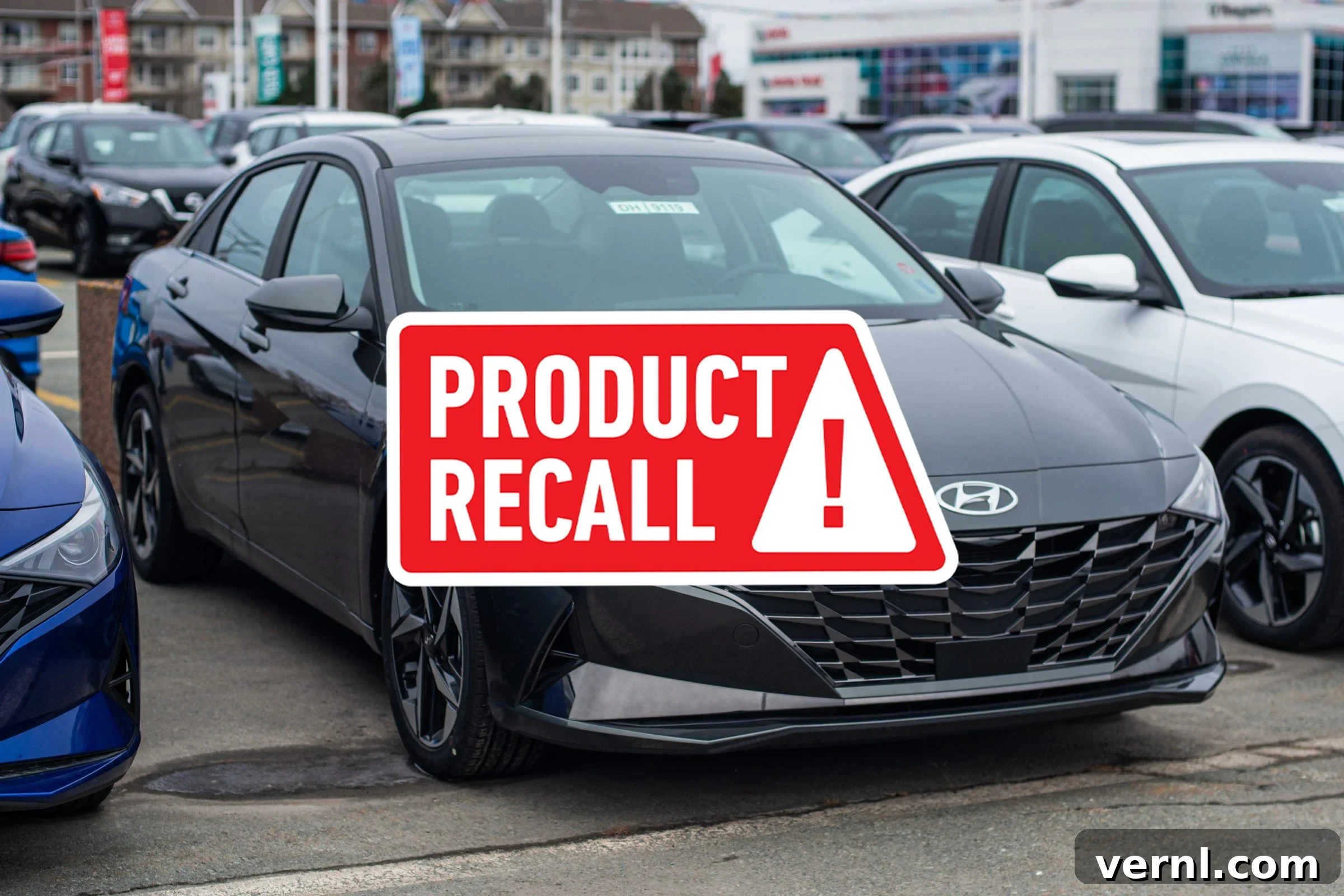
Hyundai Backup Camera Recall: Critical Safety Information for Vehicle Owners
In the evolving landscape of automotive technology, backup cameras have transitioned from a luxury addition to an indispensable safety feature. These systems provide drivers with an essential visual aid, significantly simplifying challenging maneuvers like parallel parking, executing three-point turns, and navigating tight spaces. More importantly, they offer a crucial layer of safety, helping to prevent collisions with unseen obstacles, other vehicles, and even pedestrians or small children behind the vehicle. However, the effectiveness of such a vital system hinges entirely on its reliability. Hyundai Motor America has recently announced a significant recall affecting hundreds of thousands of its vehicles, citing concerns over faulty backup cameras. This comprehensive article aims to equip you with all the necessary details regarding Hyundai’s latest safety campaign, empowering you to stay informed and safe on the road.
Why Are Hyundai Vehicles Being Recalled? Understanding the Underlying Safety Concern
The core reason behind Hyundai’s extensive recall, as thoroughly investigated and reported by the National Highway Traffic Safety Administration (NHTSA), lies in a defect within the backup camera system: specifically, “a damaged printed circuit board.” This critical electronic component is responsible for processing and transmitting the rearview image to the driver’s display. When this circuit board is compromised, it prevents the backup camera footage from displaying correctly, or at all, on the infotainment screen. The immediate consequence is a severe limitation of the driver’s rear visibility, which can turn routine driving tasks into hazardous situations.
This technical malfunction is not merely an inconvenience; it represents a serious safety breach. The NHTSA’s official brief explicitly states that vehicles impacted by this defect fail to “comply with the requirements of Federal Motor Vehicle Safety Standard number 111, ‘Rear Visibility.'” This federal standard is specifically designed to ensure that all new vehicles provide drivers with an adequate view of the area directly behind the vehicle, thereby mitigating blind spots and reducing the risk of ‘backover’ accidents. A non-functional rearview camera directly undermines this critical safety standard, rendering these vehicles less safe than legally mandated. The NHTSA’s warning is unequivocal: “A rearview image that does not display reduces the driver’s visibility and increases the risk of a crash.” This heightened risk is a paramount concern, as it directly translates to an increased probability of striking objects, other vehicles, or vulnerable road users when reversing, making the swift resolution of this recall a top priority for public safety.
Is Your Hyundai Vehicle Affected? Identifying Recalled Models
This substantial recall campaign has identified over 226,000 Hyundai vehicles with the potentially faulty backup camera system. It is absolutely essential for Hyundai owners to determine if their specific model and year are included in this safety action. The recall spans several popular models and includes various powertrain configurations, such as hybrid (HEV) and plug-in hybrid (PHEV) variants. If you own any of the following Hyundai vehicles, your car may be part of this recall, and you should proceed with caution and plan for inspection:
- 2021 Santa Fe: This mid-size SUV, a favorite for families, is among the primary models implicated.
- 2021 Santa Fe HEV: The hybrid variant of the Santa Fe from the 2021 model year also exhibits the potential defect.
- 2021 Elantra: Hyundai’s popular compact sedan for the 2021 model year is also included in the recall.
- 2021 Elantra HEV: The hybrid version of the 2021 Elantra is similarly affected by the camera issue.
- 2022 Santa Fe: The issue regrettably extends to the standard Santa Fe SUV models manufactured in 2022.
- 2022 Santa Fe HEV: The 2022 hybrid Santa Fe models are also part of this widespread safety recall.
- 2022 Elantra: The conventional Elantra sedan from the 2022 model year has been identified.
- 2022 Elantra HEV: Its hybrid counterpart from 2022 is also subject to the same potential defect.
- 2022 Elantra N: Even the performance-oriented Elantra N variant from 2022 is on the recall list, highlighting the broad nature of the component issue.
- 2022 Santa Fe PHEV: The plug-in hybrid electric vehicle version of the Santa Fe from 2022 completes the list of currently impacted models.
Hyundai Motor America has made a commitment to directly notify all affected vehicle owners. Official recall notification letters are slated for distribution starting in mid-January 2025. Therefore, it is highly recommended to monitor your postal mailbox closely for this critical communication. In the interim, if you confirm that your vehicle is indeed among those identified with a faulty backup camera, it is absolutely imperative to exercise increased vigilance and extreme caution every time you drive. Operating a vehicle with compromised rear visibility significantly impairs your ability to safely reverse, and the reduced situational awareness can have far more severe consequences than initially perceived, including preventable accidents and property damage. Your proactive awareness and meticulous driving habits are crucial until this safety defect is professionally rectified.
The Solution: Free Repair for Your Faulty Backup Camera
Navigating a vehicle safety recall can often seem like a complicated and inconvenient process, but Hyundai has established a clear and consumer-friendly procedure to resolve this critical backup camera issue. The most reassuring news for owners of affected vehicles is that all necessary repairs will be performed by authorized Hyundai dealers entirely free of charge. This commitment underscores Hyundai’s dedication to rectifying manufacturing defects and ensuring the safety of its customers without imposing any financial burden on those already impacted by the flaw.
Upon receiving your official recall notification letter from Hyundai – expected to arrive by mid-January 2025 – you will have specific instructions and details pertaining to your individual vehicle. Once this letter is in hand, the crucial next step is to promptly schedule a service appointment with your nearest authorized Hyundai dealership. Trained technicians at the dealership are equipped and prepared to diagnose the defective printed circuit board and replace it, restoring full and proper functionality to your vehicle’s backup camera system, thereby bringing it back into compliance with federal safety standards.
What to Do If You Can’t Wait or Have Further Questions:
While the standard procedure involves waiting for the official notification letter, Hyundai understands that some owners may wish to confirm their vehicle’s recall status sooner, or may have additional questions that arise before or after receiving their letter. Here are the direct channels available for immediate assistance and detailed information:
- Contact Hyundai Customer Service: For any immediate concerns, general inquiries about the recall, or to verify if your specific Vehicle Identification Number (VIN) is included in the campaign, you can contact Hyundai customer service directly. The dedicated number for this recall is 1-855-371-9460. When you call, it will be helpful to reference the specific Hyundai recall number, which is 271, as this will allow the representative to quickly access all relevant information pertinent to this particular safety action.
- Contact the NHTSA: The National Highway Traffic Safety Administration serves as the federal regulatory body overseeing vehicle safety and recalls in the United States. If you have any concerns regarding the recall process, wish to report a safety issue, or require independent verification of your vehicle’s recall status, you can contact the NHTSA directly at 1-888-327-4236. For this specific campaign, please reference NHTSA campaign number 24V879000. Additionally, the NHTSA’s official website offers a user-friendly VIN lookup tool where you can input your vehicle’s VIN to check for any open recalls, including this one.
Taking prompt action once you are aware of the recall is absolutely vital. Even for the most experienced drivers, the absence of a crucial safety feature like a backup camera significantly alters driving dynamics and increases risk, particularly when maneuvering in reverse. Ensuring your vehicle meets all established safety standards is not merely about regulatory compliance; it is fundamentally about protecting yourself, your passengers, and all other individuals on the road. Do not delay in seeking resolution.
The Broader Importance of Rear Visibility Systems and Vehicle Recalls
The situation with Hyundai’s faulty backup cameras powerfully underscores the critical importance of modern safety technologies in preventing preventable accidents. Rear visibility systems, which are federally mandated by the FMVSS 111 standard, are no longer considered mere convenience features or optional upgrades; they are fundamental, essential tools that provide drivers with a comprehensive, unobstructed view of their surroundings. These cameras play a vital role in mitigating the inherent blind spots located directly behind vehicles, which are regrettably a common contributing factor in tragic ‘backover’ accidents, often involving vulnerable pedestrians, small children, or even pets. The prompt and decisive action taken by Hyundai, in close collaboration with the NHTSA, to initiate this recall demonstrates a commendable commitment to public safety and simultaneously highlights the robust regulatory framework in place to ensure that all vehicles operating on our roads meet stringent and uncompromising safety requirements.
While vehicle recalls can sometimes be perceived as an inconvenience, they represent an absolutely vital mechanism for ensuring ongoing automotive safety. They serve as a crucial early warning system, meticulously designed to inform vehicle owners of potential defects that, if left unaddressed, could severely compromise vehicle performance, structural integrity, or occupant safety. Responding to a recall promptly by having the necessary repairs performed – which are always provided free of charge by the manufacturer – is not just a recommendation; it is a fundamental responsibility that contributes significantly to the safety of every individual on the road. This process also reinforces the indispensable importance of manufacturers continuously monitoring the long-term performance and safety of their products, and for consumers to remain thoroughly informed and proactive regarding their vehicle’s maintenance and any active recall statuses.
Conclusion: Staying Safe and Informed on Every Journey
The recent Hyundai backup camera recall, affecting a considerable number of 2021 and 2022 Santa Fe and Elantra models, serves as a powerful and timely reminder of the profound importance of vehicle safety features and the shared responsibility held by both automotive manufacturers and vehicle owners. A malfunctioning backup camera is far more than a simple inconvenience; it poses a significant and undeniable safety hazard that directly impairs a driver’s ability to safely and confidently operate their vehicle, particularly during crucial reversing maneuvers. By thoroughly understanding the specific models affected, the underlying technical issue, and the straightforward, no-cost solution offered by Hyundai, owners are empowered to take proactive and decisive steps to ensure their vehicles consistently comply with all established safety standards.
We strongly urge all Hyundai owners to actively check if their vehicle is part of this critical recall, even if you have not yet received an official notification letter. Utilize the provided contact numbers for Hyundai customer service and the NHTSA, or leverage online VIN lookup tools to ascertain your vehicle’s status. Your proactive engagement not only provides you with invaluable peace of mind but also plays a vital role in contributing to safer roads for everyone. Do not postpone addressing this critical safety concern; your rear visibility, and consequently your safety and the safety of those around you, are directly dependent on it.
Sources & Further Information
- Rearview Image May Not Display/ FMVSS 111, National Highway Traffic Safety Administration, 2024.