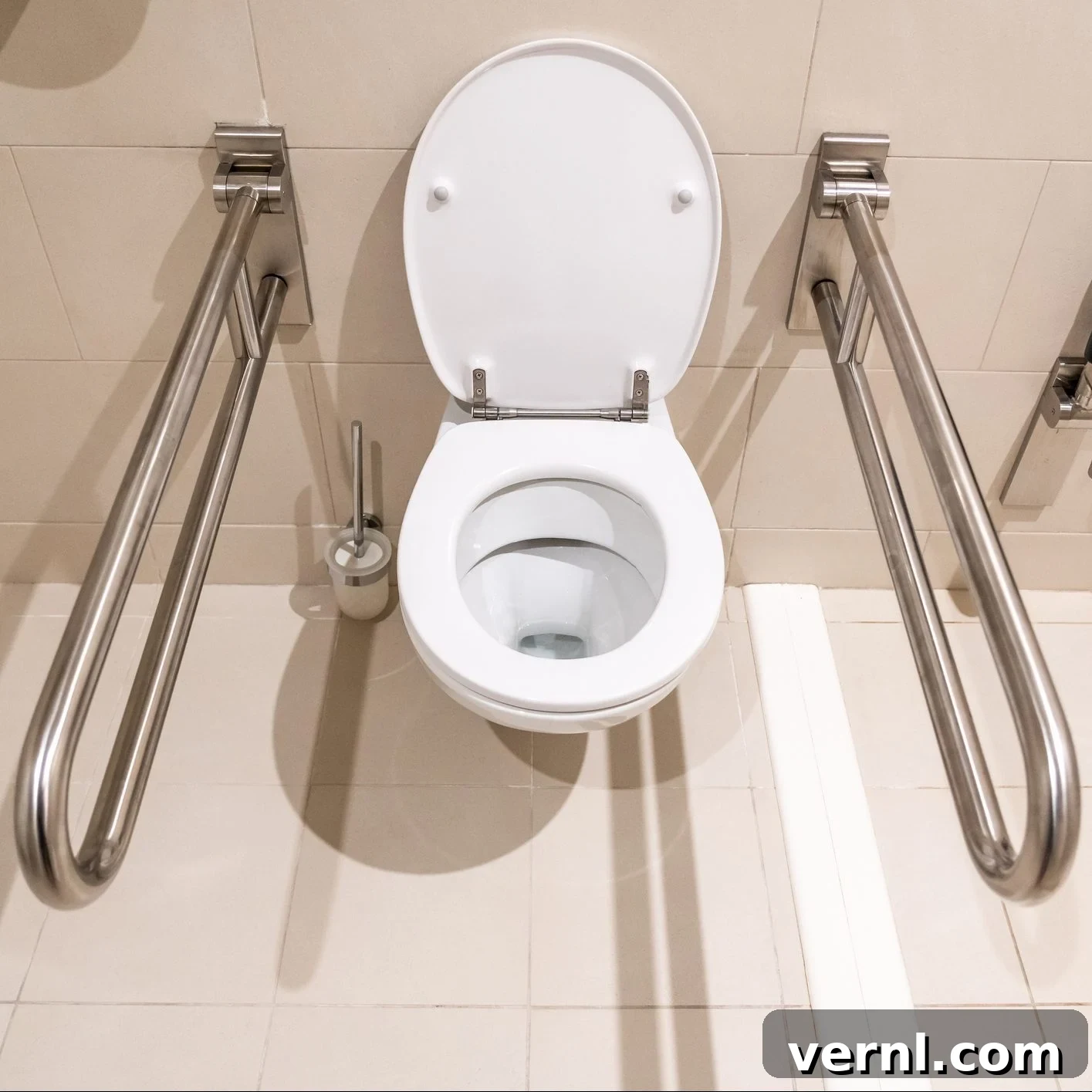
Ensuring your home remains comfortable and safe for every stage of life is a priority for many homeowners. Perhaps a cherished family member is experiencing changing mobility needs, or you’re simply planning ahead to stay in your home gracefully as you age. Whatever the driving force behind your interest in accessible toilets, the good news is that achieving a more accommodating bathroom environment is entirely feasible, with a wide array of excellent options available.
The journey to enhanced bathroom accessibility can range from straightforward adjustments to more comprehensive upgrades. You might opt for the simple yet effective solution of adding a lift seat to your existing toilet. Alternatively, a more impactful change involves a full toilet replacement with a model specifically designed for ease of use by individuals with mobility challenges. While the latter requires a bit more effort, it’s a manageable project that brings significant long-term benefits without causing undue disruption to your home life.
To navigate the nuances of accessible bathroom design, we’ve consulted with Andrea Hysmith, the esteemed founder and owner of ASH Interiors and Design, based in Ellicott City, Maryland. Andrea specializes in creating functional yet beautiful accessible kitchens and bathrooms. Her expert advice offers invaluable insights into selecting and implementing the perfect accessible toilet solutions for your home.
Understanding Accessible Toilet Height: ADA Standards and Practical Applications
When discussing accessibility, the Americans with Disabilities Act (ADA) often serves as the gold standard, particularly for commercial and public buildings. While ADA regulations don’t strictly apply to private residences, they offer an incredibly useful and widely accepted framework for making your home more accessible and functional. For toilets, the ADA mandates that the rim of the toilet bowl must be positioned between 17 and 19 inches above the finished floor. This stands in contrast to the traditional standard toilet height, which typically measures around 14-1/2 inches to the rim.
“A toilet rim height of 16-1/2 inches to 18 inches is instrumental in making daily routines easier,” Hysmith explains. “It significantly simplifies the process for someone to stand up from the toilet, and critically, it facilitates a smoother and safer transfer from a wheelchair to the toilet seat.” This elevated height reduces the strain on knees and hips, providing crucial support for individuals with limited mobility, arthritis, or those recovering from surgery. It enhances independence and reduces the risk of falls, which is a paramount concern in any accessible home design.
However, it’s worth noting a common consideration: while a higher seat offers substantial benefits for those with mobility issues, it can sometimes be less comfortable or even challenging for small children and some able-bodied adults. It’s a design decision that balances specific user needs with universal comfort. When making your choice, consider all current and potential future occupants of your home to find the optimal height that serves everyone best while prioritizing accessibility for those who need it most.
Essential Components for a Truly Accessible Toilet System
Achieving full toilet accessibility goes beyond just height; it involves a thoughtful combination of features designed to enhance safety, comfort, and independence. Here are the key components you’ll need to create an optimal accessible toilet setup:
-
Taller Toilet or Seat Riser
The foundation of an accessible toilet is its height. Many manufacturers now offer “comfort height” or “ADA compliant” toilets specifically designed for residential use. These models meet the elevated rim height requirements while also incorporating stylish designs that seamlessly blend with your bathroom aesthetics. “It absolutely doesn’t have to look like a bathroom in a commercial establishment or hospital,” emphasizes Hysmith, highlighting the modern design options available. For those not ready to replace their entire toilet, a raised toilet seat riser is an excellent and cost-effective alternative. These risers fit securely onto your existing toilet bowl, providing the necessary elevation.
-
Secure Grab Bars
Grab bars are indispensable for providing stability and support, significantly reducing the risk of slips and falls. “Strategic placement of grab bars is crucial,” advises Hysmith. “They should be located to the left or right of the toilet, depending on the specific bathroom layout and the user’s dominant side or transfer method.” Ideally, an L-shaped or loop-style bar should also be affixed to the back wall, providing support from multiple angles. For maximum effectiveness and safety, grab bars should typically be installed about 34 to 38 inches off the ground. It is vital that grab bars are mounted directly into wall studs or with appropriate blocking to ensure they can withstand substantial weight and leverage, providing reliable support.
-
Intuitive Flushing Mechanism
When selecting a new toilet, consider the flushing mechanism carefully, especially for users with limited hand dexterity. A front-mounted lever can be easier to operate than a side-mounted one. Hysmith also notes, “A push button on the top of the tank can often be more accessible and require less fine motor control to activate.” Additionally, some advanced models feature touchless or sensor-activated flushing, which offers ultimate convenience and hygiene by eliminating the need to physically touch any part of the toilet.
-
Integrated Bidet Functionality
For individuals who experience difficulty with self-cleaning after using the toilet, a bidet is an incredibly beneficial addition, promoting hygiene and independence. “If someone has a hard time cleaning themselves after using the toilet, a bidet is truly helpful,” says Hysmith. There are several ways to incorporate this feature: you can purchase a new toilet with a bidet built directly into the fixture, upgrade to a specialized bidet toilet seat that replaces your existing one, or simply add a bidet attachment to your current toilet. Modern bidets offer a range of features, including warm water washes, adjustable water pressure, heated seats, and even air dryers, transforming the toilet experience into one of comfort and complete cleanliness.
Optimizing Floor Space Dimensions for Maximum Accessibility
Beyond the toilet itself, the surrounding bathroom layout is paramount for ensuring true accessibility, especially for individuals using mobility aids. “Standard building code dictates a minimum of 30 inches of clear space from side to side for a toilet,” Hysmith explains. “This means there should be at least 15 inches from the center of the toilet to any adjacent wall or vanity on either side.” This measurement ensures adequate elbow room and prevents users from feeling cramped.
However, for a bathroom to be truly ADA compliant and fully functional for wheelchair users, more generous space is required. While the ADA doesn’t specify side-to-side clearance for the toilet itself in the same way residential codes do, it crucially mandates a 60-inch diameter of clear turning space within the bathroom. This expansive area allows a wheelchair to fully rotate 360 degrees without encountering any obstructions, such as walls, fixtures, or furniture. This critical turning radius not only accommodates wheelchair maneuverability but also significantly simplifies the process of transferring from a wheelchair to the toilet, making the bathroom safer and far more independent for users. Understanding the difference between chair height and standard height toilets is also key to maximizing comfort within these spatial constraints.
Considering the entire bathroom layout, including door widths (ideally 36 inches, but a minimum of 32 inches clear opening is often acceptable), clear pathways, and the placement of sinks and showers, is essential to create a cohesive and barrier-free environment. A well-planned accessible bathroom facilitates greater independence, safety, and dignity for all users.
Top Accessible Toilets to Consider for Your Home
Upgrading your toilet is often one of the most straightforward and impactful home modifications you can make for accessibility. “A toilet is one of the easiest things to switch out,” notes Hysmith. “A skilled plumber can typically complete the installation in under an hour.” For the avid DIY enthusiast, swapping out a toilet can also be a manageable project, particularly with clear instructions and the right tools. When selecting a new model, prioritize those with higher rim heights and other features that enhance ease of use and safety.
Many leading manufacturers now offer an extensive range of toilets with “chair-height” seats, typically standing around two inches taller than the standard 14-1/2-inch rim height. These models bridge the gap between traditional toilets and full ADA compliance, offering a comfortable compromise for many households. Based on expert recommendations, we’ve curated a selection of highly-rated models across different price points, all designed to meet the growing demand for accessible and comfortable bathroom solutions:
-
Value Choice: American Standard Cadet
Price Point: Approximately $383
“The American Standard Cadet series represents exceptional value at a very attractive price point,” Hysmith affirms. These toilets are renowned for their robust flushing performance and reliability, making them a popular choice for homeowners seeking quality without breaking the bank. Beyond functionality, the Cadet line offers a surprising variety of modern designs and finishes, allowing you to find an accessible toilet that not only works well but also complements your bathroom decor. They are designed for efficient water usage, often meeting WaterSense criteria, which helps reduce utility bills and environmental impact. The comfort height options in this series are particularly beneficial for easier sitting and standing.
-
Mid-Range Excellence: Kohler San Raphael
Price Point: Approximately $844
“Kohler is celebrated for its exquisite designs that effortlessly meet ADA guidelines without compromising on aesthetics,” Hysmith explains. The Kohler San Raphael, a sleek one-piece toilet, is a prime example. Its seamless design is not only visually appealing but also makes cleaning significantly easier, an important factor in any bathroom. With its comfort height and elongated bowl, it provides superior comfort and ease of use. This model dispels the myth that accessible toilets must look clinical, offering a sophisticated fixture that elevates the overall design of your bathroom while providing necessary accessibility features. It often incorporates powerful flushing technologies while maintaining excellent water efficiency.
-
Luxury Splurge: Toto Neorest
Price Point: Approximately $5,362
“Toto pioneered the movement towards highly water-efficient toilets, and their Neorest line represents the pinnacle of luxury and innovation in accessible bathroom technology,” states Hysmith. The Toto Neorest is more than just a toilet; it’s an integrated system that offers an unparalleled user experience. These smart toilets come packed with an array of advanced features designed to maximize comfort, hygiene, and independence. Options include multiple ways to flush (often automatic or remote-controlled), a fully integrated bidet with adjustable settings for wash and dry, heated seats for ultimate comfort, and even automatic lid opening/closing. The Neorest models also often feature advanced self-cleaning technologies, ensuring a pristine bowl with minimal effort. While a significant investment, the Toto Neorest offers the highest level of thoughtful design and assistive technology for those seeking the ultimate accessible and luxurious bathroom experience.
Conclusion: Embracing Accessibility for a Future-Proof Home
Investing in an accessible toilet system is more than just a renovation; it’s an investment in the long-term comfort, safety, and independence of everyone who uses your home. Whether you’re proactively planning for aging in place, accommodating a family member with specific needs, or simply seeking to enhance universal design within your living space, the options available today are diverse and sophisticated. From adjusting toilet height and installing secure grab bars to integrating advanced bidet features and optimizing bathroom layouts, each element plays a crucial role in creating a truly barrier-free environment.
By thoughtfully considering ADA guidelines, consulting with design experts like Andrea Hysmith, and exploring the wide range of products on the market, you can transform your bathroom into a sanctuary of accessibility. These upgrades not only improve daily living but also contribute to the overall value and future-proofing of your home, ensuring it remains a comfortable and welcoming space for many years to come.