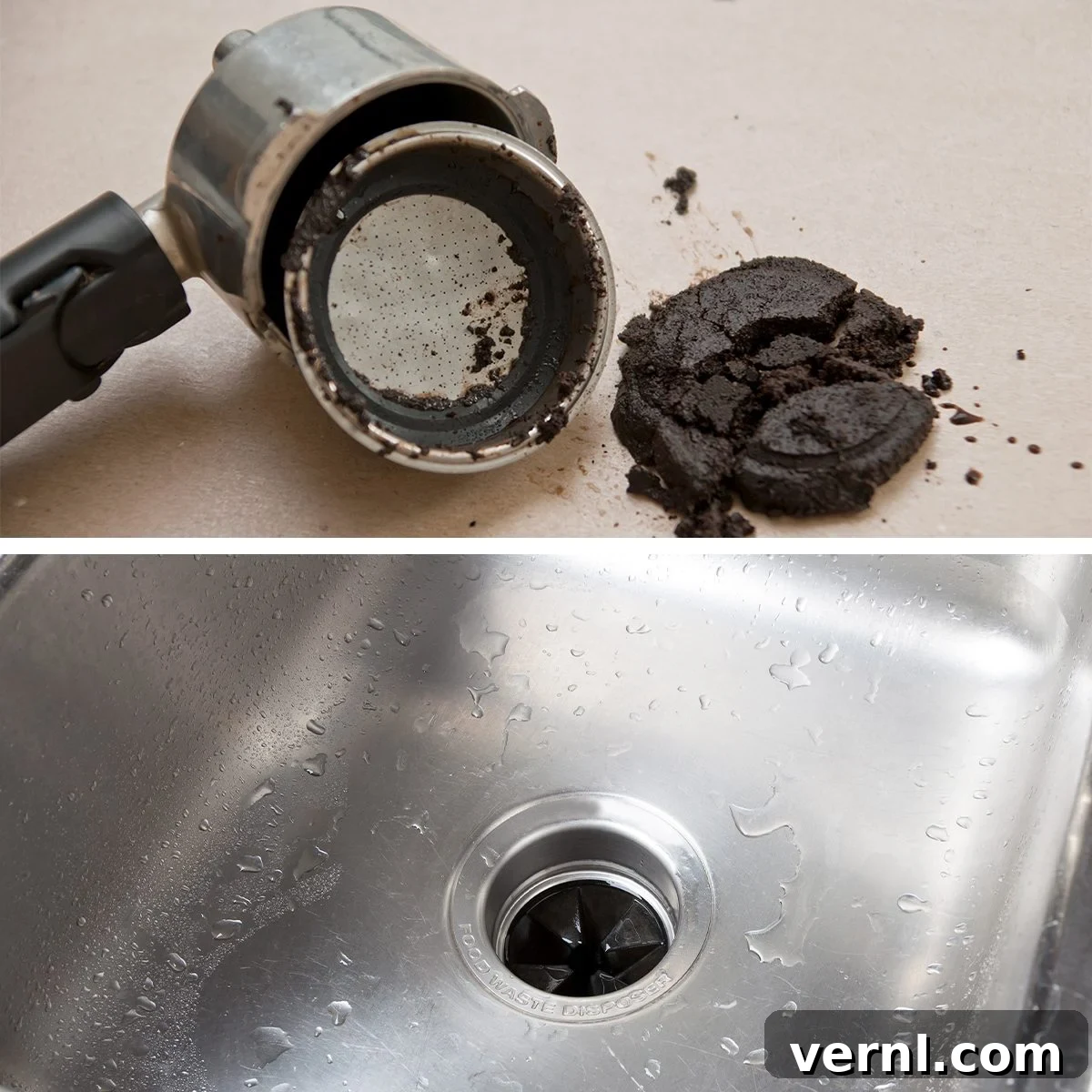
If you’re a devoted coffee enthusiast, the ritual of brewing your daily cup at home is likely a cherished part of your routine. Whether you favor the rich immersion of a French press, the delicate precision of a pour-over setup, or the convenience of a drip machine, one thing remains constant: you’ll inevitably be left with a generous quantity of used coffee grounds. In the rush of a busy morning, it might seem incredibly convenient to simply sweep these grounds into the sink, trusting your garbage disposal to whisk them away into oblivion. But pause for a moment before you do. The critical question isn’t whether coffee grounds *can* fit down the drain, but rather, *should* they? Is this seemingly innocuous act a harmless shortcut or a hidden recipe for a plumbing nightmare?
This is precisely the kind of plumbing query you absolutely do not want to learn the answer to through a costly and inconvenient ordeal. To shed definitive light on this common household dilemma, we consulted two seasoned plumbing professionals: Destry Thompson and Jessie Cannizzaro. Their insights, drawn from years of hands-on experience, offer a clear and resounding answer to whether your coffee grounds belong anywhere near your kitchen drain. Read on to discover their expert advice and safeguard your home’s plumbing system from potential disaster.
The Truth About Coffee Grounds and Your Garbage Disposal
“The real question isn’t ‘can you put coffee grounds down a garbage disposal,’ but rather ‘should you put them down the disposal?'” Jessie Cannizzaro, owner of Milestone Plumbing, quips with a knowing smile. Her humorous opening quickly transitions to a serious explanation about the insidious threat coffee grounds pose to your pipes. She elaborates that a common culprit in plumbing blockages is the accumulation of fats, oils, and greases (FOG). These FOGs, originating from cooking oils, meat drippings, dairy products, and even certain soaps, don’t just flow through your pipes; they cool and cling to the interior surfaces, forming a sticky, often thick coating. Over time, these coatings build up into substantial deposits, narrowing the pipe’s diameter.
It’s within this greasy, viscous environment that coffee grounds become particularly problematic. Cannizzaro explains, “When coffee grounds go down the drain, they can easily get stuck in these fat deposits.” Far from simply flowing past, the fine, abrasive particles of coffee grounds act like miniature bricks, embedding themselves within the soft, sticky grease. This initial adhesion marks the critical beginning of what can quickly escalate into a severe plumbing issue. They don’t dissolve in water; instead, they agglomerate.
Destry Thompson, General Manager with John Stevenson Plumbing, further emphasizes this crucial point. “Coffee grounds don’t dissolve in water, so they can block up your plumbing. This might make your garbage disposal work less effectively and could lead to big problems later on.” Unlike food particles that might break down or dissolve, coffee grounds maintain their granular integrity. As they become trapped in the existing fat and grease, they don’t just sit there; they contribute to the structural integrity of the growing clog. This effectively creates a solid, almost concrete-like barrier that significantly impedes water flow. Initially, you might only notice your disposal struggling or draining more slowly, but these trapped grounds are, in essence, laying the groundwork for a major, costly plumbing issue down the road.
The Insidious Nature of Coffee Ground Clogs: A Deeper Look
Despite their small size, the assumption that coffee grounds are too tiny to create significant clogs is a dangerous misconception. Thompson clarifies why this belief is fundamentally flawed: “When coffee grounds go down the drain, they mix with other stuff like grease and soap scum, creating a big lump that eventually blocks the drain.” This “lump” isn’t just a loose collection of debris; it’s a dense, composite material. Imagine sand mixing with cement – the grounds act as the aggregate, and the grease and soap scum serve as the binder. This combination forms a formidable, impermeable mass that can completely obstruct your plumbing lines. The abrasive nature of the grounds also means they can cling tenaciously to the textured inner surfaces of pipes, especially older ones, further solidifying the clog.
The tenacity of these coffee ground clogs also means they defy many common DIY clearing methods. Unlike the fibrous nature of hair clogs, which a plumber’s snake can often entangle and pull out, coffee ground clogs present a different challenge. Cannizzaro explains the frustrating reality: “The snake will often bore through the fat deposits, creating a bit of a hole that water can drain through. But when you retract it, the loosened pieces will often get pulled back in and keep the sink gummed up.” This temporary relief can be deceptive. While you might experience a momentary improvement in drainage speed, the core of the clog remains intact. The snake merely punches a narrow channel through the softest part of the obstruction, leaving the bulk of the dense, ground-infused blockage firmly in place. This means the problem will quickly return, often worse than before, as the displaced material settles back into position or combines with new debris.
Furthermore, persistent or recurring clogs place undue stress on your entire plumbing system. The constant buildup and pressure from backed-up water can weaken pipe joints, exacerbate existing cracks, and even contribute to leaks over time. In older homes with cast iron pipes, the rough interiors are even more susceptible to collecting and solidifying these ground-based clogs. Attempting to force the clog through with chemical drain cleaners is also ill-advised, as these harsh substances can damage pipes and often fail against such solid obstructions, leaving you with a toxic, stagnant pool.
Beyond the Blockage: The Stench of Stagnation
For many coffee lovers, the lingering aroma of coffee is a source of comfort and warmth. You might even optimistically believe that coffee grounds in your drain could impart a pleasant, comforting scent to your kitchen. However, this is a profound misconception. Thompson offers a stark warning: “As [coffee grounds] build up in the pipes, they can trap other food bits and gunk…which can quickly create bad smells in your sink.” The reality is far from the inviting scent of a freshly brewed cup.
Cannizzaro wholeheartedly agrees, emphasizing the perfect storm created when grounds become trapped in fat deposits. This creates an ideal environment for them to snare additional food particles, grease, and other organic debris that would normally pass through. “And the longer this goes on,” she stresses, “the worse the clog will be, and the more trapped debris will rot.” This isn’t just a simple smell; it’s the stench of decomposition. In the warm, moist, and dark environment of your drain pipes, trapped organic matter begins to ferment and decay. This biological process releases foul-smelling gases like hydrogen sulfide (which smells like rotten eggs), methane, and various volatile organic compounds. The result is a persistent, unpleasant odor that permeates your kitchen, making it far from inviting.
Moreover, these rotting clogs become prime breeding grounds for bacteria and other microorganisms, contributing not only to the noxious odors but also potentially to unhygienic conditions in your kitchen. A continuously smelly drain can attract pests like fruit flies and even rodents, compounding your problems. As previously mentioned, a simple snake often isn’t enough to clear these deeply entrenched, putrid clogs. When faced with such a situation, you’ll most likely have no choice but to call in professional plumbers equipped with specialized tools like hydro-jetting equipment, which uses high-pressure water to blast away even the most stubborn blockages. This professional intervention, while effective, comes with a significant cost, transforming a simple act of convenience into a very smelly and expensive problem.
Responsible Disposal: Simple Solutions to Avoid Plumbing Woes
So, the verdict is clear: just because coffee grounds can fit down a drain does not mean they belong down there. The potential for severe clogs, foul odors, and costly professional repairs far outweighs any fleeting convenience. Fortunately, there are several simple, eco-friendly, and highly effective alternatives for disposing of your used coffee grounds, ensuring your drains remain clear and your plumbing intact.
1. Embrace Composting: A Win for Your Garden and Your Pipes
Composting your used coffee grounds is arguably the best and most environmentally conscious option. Coffee grounds are rich in nitrogen, an essential nutrient for plant growth, and their slightly acidic nature can benefit certain plants. They also help improve soil structure and aeration. To compost them:
- Simply add your used grounds directly to your compost pile or bin.
- Mix them with “brown” materials like dried leaves or cardboard to maintain a good carbon-to-nitrogen ratio.
- They can also be directly worked into garden soil, especially around acid-loving plants like roses, blueberries, and hydrangeas.
- Spread a thin layer around the base of plants; they can even act as a natural pest deterrent for slugs and snails.
2. The Simple Trash Can: The Safest Bet
If composting isn’t an option for you, the simplest and most effective way to protect your plumbing is to scoop your used coffee grounds into the trash can. A small strainer in your sink can catch any stray grounds, which can then be easily emptied into the bin. This straightforward method completely removes any risk of them entering your drainage system.
3. Other Creative Uses for Coffee Grounds
Beyond composting, used coffee grounds have a surprising number of other beneficial uses that can keep them out of your drains:
- Odor Absorber: Place a small bowl of dry used coffee grounds in your fridge or freezer to absorb lingering odors.
- Natural Scrubber: Their abrasive texture makes them excellent for scrubbing stubborn grime off pots, pans, and surfaces (just be careful not to use them on easily scratched materials).
- Exfoliating Body Scrub: Mix with coconut oil or olive oil for a natural, invigorating skin exfoliant.
- Garden Pest Repellent: Some gardeners use coffee grounds to deter ants, slugs, and other pests from certain garden areas.
By adopting any of these alternatives, you’ll save yourself the hassle, the frustration, and the considerable expense of dealing with a professional plumber for a preventable clog. Keep your used coffee grounds far away from your drains, and enjoy the peace of mind that comes with a healthy, free-flowing plumbing system.
About the Experts
- Jessie Cannizzaro is a plumber and the owner of Milestone Plumbing.
- Destry Thompson is a plumber and General Manager with John Stevenson Plumbing.