
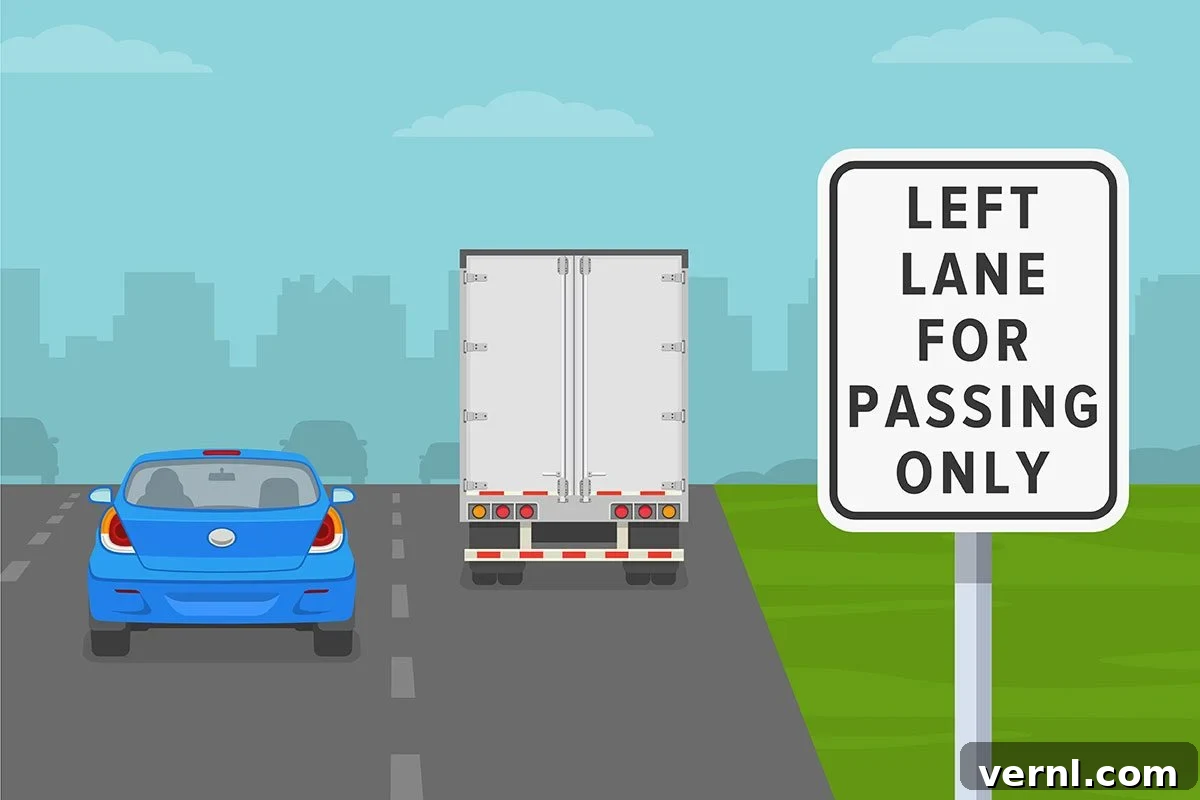
Mastering the Passing Lane: A Comprehensive Guide to Safe and Legal Highway Driving
Have you ever found yourself stuck behind a driver leisurely occupying the left lane, seemingly oblivious to the growing line of cars behind them? It’s a common frustration, and one that passing lane laws are designed to address. These laws aim to maintain a smooth flow of traffic, reduce the temptation for risky maneuvers, and ultimately enhance safety for everyone on the road. Understanding when you can (and, more importantly, when you cannot) use the passing lane is crucial for responsible driving, helping you avoid costly tickets and potentially dangerous situations.
This comprehensive guide delves into the intricacies of passing lane laws, offering clear explanations and practical advice on how to navigate them effectively. We’ll cover everything from the fundamental purpose of the passing lane to specific scenarios like driving in inclement weather and dealing with two-lane roads. We’ll also highlight common mistakes that could land you a hefty fine. By the end of this article, you’ll have a solid understanding of the rules and best practices for using the passing lane, ensuring a safer and more enjoyable driving experience.
Decoding the Passing Lane: Purpose and Function
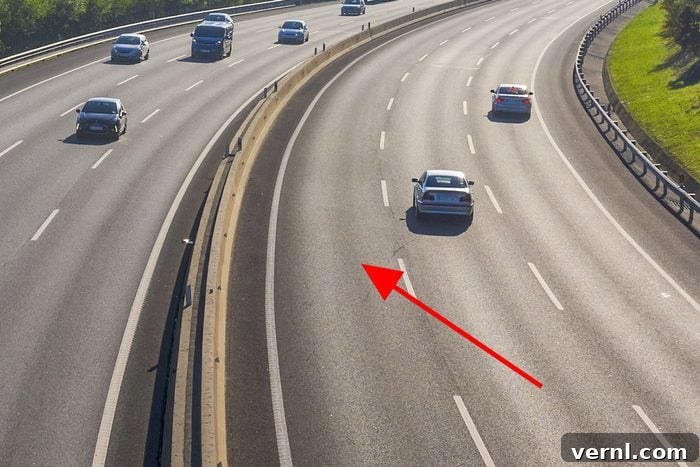
Image illustrating traffic flow on a multi-lane highway.
The passing lane, typically the leftmost lane on a multi-lane highway, serves a specific and vital purpose: to facilitate the safe overtaking of slower-moving vehicles. It’s not intended for leisurely cruising or simply maintaining the speed limit. The National Highway Traffic Safety Administration (NHTSA) succinctly defines its function: “The passing lane is only used during the passing maneuver and the passing vehicle will return to the right-hand traveling lane after passing another vehicle, with sufficient clearance.” This definition underscores the temporary nature of occupying the passing lane.
Think of the passing lane as a tool, not a permanent fixture. It’s a means to an end – a way to safely navigate around a slower vehicle and then return to the primary travel lane. Failing to understand this fundamental principle is where many drivers run into trouble.
Speed Limits and the Passing Lane: Clearing Up the Confusion
A common misconception is that the passing lane somehow grants permission to exceed the posted speed limit. This is unequivocally false. The passing lane’s purpose is to enhance safety during overtaking maneuvers, not to provide a “fast track” for drivers in a hurry. In fact, exceeding the speed limit in the passing lane not only puts you at risk of a speeding ticket but also increases the likelihood of an accident.
The optimal approach is to accelerate just enough to safely pass the slower vehicle without surpassing the legal speed limit. Once you’ve successfully overtaken the other vehicle and have adequate clearance, gradually decelerate and merge back into the right-hand lane. This method ensures both safety and compliance with traffic laws.
Can you drive under the speed limit in the passing lane? The answer is also no, unless specific circumstances dictate otherwise (such as adverse weather conditions or heavy traffic congestion requiring reduced speeds for safety). Cruising in the passing lane at or below the speed limit, when not actively passing another vehicle, can impede the flow of traffic and potentially result in a citation.
Joshua Branch, Founder and Personal Injury Attorney at the Law Offices of Joshua W. Branch, emphasizes this point: “Drivers can receive a ticket if they’re driving in the leftmost or ‘fast’ lane at the posted speed limit. By continuing to remain in it with cars backing up behind you, you’ll be considered failing to yield to the passing lane or impeding the flow of traffic.” In other words, even if you’re technically within the speed limit, you can still be penalized for obstructing the progress of other vehicles.
Furthermore, if your failure to move over contributes to an accident, you could be held partially liable. The key takeaway is that the left lane is intended for passing, not pacing, so it’s best to execute the passing maneuver efficiently and return to the right lane as soon as it’s safe to do so.
When Passing is Prohibited: Recognizing Unsafe Conditions
While the passing lane is designed to facilitate safe overtaking, there are situations where attempting to pass another vehicle is simply too risky and, in many cases, illegal. These conditions typically involve limited visibility or insufficient space to safely complete the maneuver.
“Passing is prohibited in certain circumstances, and usually, you’ll see signage indicating that you’re not permitted to pass in those areas,” notes Branch. These no-passing zones are often located near curves, tunnels, intersections, and the crests of hills, where visibility is significantly reduced. Attempting to pass in these areas can lead to head-on collisions or other serious accidents.
Adverse weather conditions, such as heavy rain, dense fog, or snow, also significantly increase the risks associated with passing. Reduced visibility makes it difficult to accurately assess the distance and speed of oncoming vehicles, making passing extremely hazardous. In these situations, it’s always best to err on the side of caution and refrain from passing until conditions improve.
Two-Lane Roads and Passing: Navigating Designated Zones
While highways typically feature multiple lanes, including a designated passing lane, two-lane roads present a different set of challenges and require a slightly different approach to passing. On two-lane roads, passing is generally permitted in areas marked by dashed yellow lines in the center of the road. These lines indicate that it is safe to pass, provided there is no oncoming traffic and sufficient visibility.
Conversely, solid yellow lines indicate a no-passing zone. These zones are typically located on hills, curves, or other areas where visibility is restricted. It is illegal and extremely dangerous to pass in a no-passing zone.
Some longer two-lane highways incorporate designated passing zones. These zones provide a short section of divided roadway, allowing slower traffic to move to the right while faster vehicles can safely pass on the left. These passing zones are designed to improve safety and reduce congestion on these types of roads.
Dos and Don’ts of Passing Lane Etiquette: A Guide to Courteous and Safe Driving
Using the passing lane correctly is not just about obeying the law; it’s also about practicing courteous and safe driving habits. Here’s a summary of the key dos and don’ts:
Dos:
- **Do** use the passing lane only when you need to overtake a slower vehicle.
- **Do** signal your intention to change lanes before moving into the passing lane.
- **Do** check your mirrors and blind spots before changing lanes.
- **Do** accelerate smoothly and efficiently to pass the slower vehicle.
- **Do** return to the right-hand lane as soon as it is safe to do so.
- **Do** be aware of other drivers around you and adjust your speed accordingly.
- **Do** yield to faster-moving vehicles that are approaching from behind.
Don’ts:
- **Don’t** camp out in the left lane or use it for leisurely cruising.
- **Don’t** exceed the posted speed limit while passing.
- **Don’t** tailgate or follow too closely behind other vehicles.
- **Don’t** attempt to pass on hills, curves, or in areas with limited visibility.
- **Don’t** pass if there is oncoming traffic or if the road conditions are unsafe.
- **Don’t** be aggressive or try to intimidate other drivers.
- **Don’t** forget to signal when returning to the right-hand lane.
By following these simple guidelines, you can contribute to a safer and more pleasant driving experience for everyone on the road.
In Conclusion: Prioritizing Safety and Respecting the Flow of Traffic
Mastering the passing lane is more than just knowing the rules; it’s about understanding the principles of safe and courteous driving. By using the passing lane responsibly, you contribute to a smoother flow of traffic, reduce the risk of accidents, and demonstrate respect for your fellow drivers. Remember that the passing lane is a tool to be used judiciously, not a right to be abused.
By adhering to the guidelines outlined in this article, you can avoid costly tickets, minimize the risk of accidents, and become a more confident and responsible driver. So, the next time you’re on the highway, remember the principles of passing lane etiquette and prioritize safety above all else.
About the Expert
Joshua Branch, Founder and Personal Injury Attorney at the Law Offices of Joshua W. Branch, has dedicated over 20 years to advocating for accident victims throughout Georgia. His commitment to ethical practice and extensive trial experience has earned him an AV® Preeminent™ rating from Martindale-Hubbell®.
Sources
National Highway Traffic Safety Administration (NHTSA): Interpretation of Passing Lane Usage
Related Articles
- Do You Know What That Little Button on Your Seat Belt Is For?
- What Those Lines on Your Backup Camera Really Tell You
- Here’s What The Small Panel On Your Car’s Front Bumper Is For