
Mastering Plywood Storage: Prevent Warping with DIY Spacers & Explore Core Options
In the expansive and rewarding world of woodworking, plywood stands out as an indispensable material, cherished for its versatility, strength, and cost-effectiveness. It’s the foundation for countless projects, from robust cabinetry and elegant furniture to functional shelving and workshop jigs. However, even the finest sheets of plywood can present a common and frustrating challenge: warping. Maintaining the integrity of your sheet goods, ensuring they remain perfectly flat and true, is paramount for the success of your projects and for minimizing material waste. We recently uncovered an ingenious solution to this widespread problem while collaborating with Bruce Keifer, a seasoned master furniture maker whose practical wisdom provided us with invaluable insights.
The Persistent Challenge of Plywood Warping
Any woodworker who has invested in quality plywood only to find it bowing, twisting, or cupping after storage understands the frustration. Plywood, being a wood-based product, inherently reacts to environmental changes, particularly fluctuations in humidity and temperature. When sheets are stored improperly, especially stacked directly on top of each other, moisture can become trapped or distributed unevenly between surfaces. This differential moisture content creates internal stresses within the wood fibers, leading to the dreaded deformation that can render expensive material unusable and complicate construction. As Bruce Keifer succinctly put it, “Plywood or other sheet stock can warp, especially if it’s stored surface to surface.” This fundamental understanding underscores why effective plywood storage solutions are not merely a convenience, but a critical component of professional woodworking practice.
Bruce Keifer’s Elegant Solution: DIY Plywood Spacers
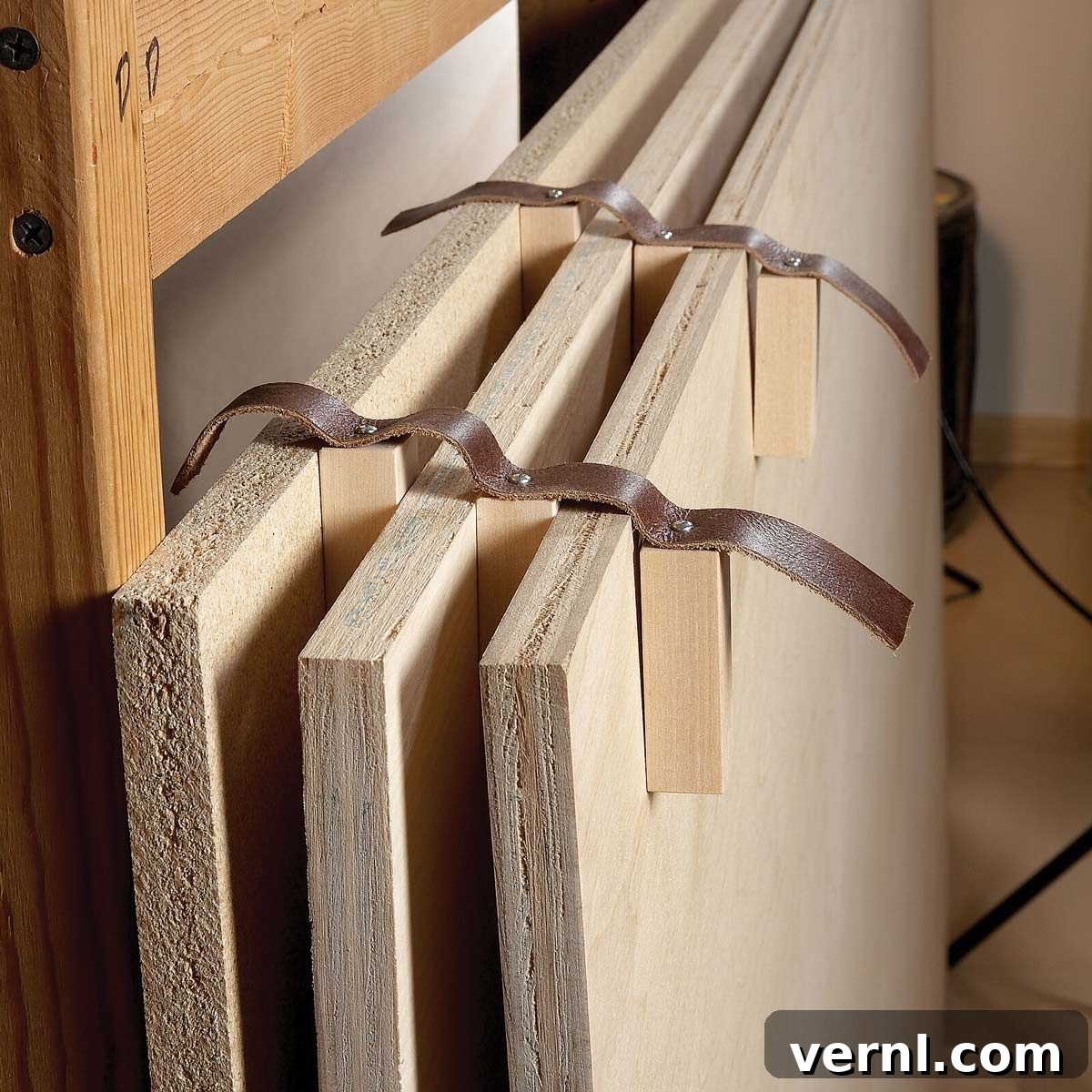
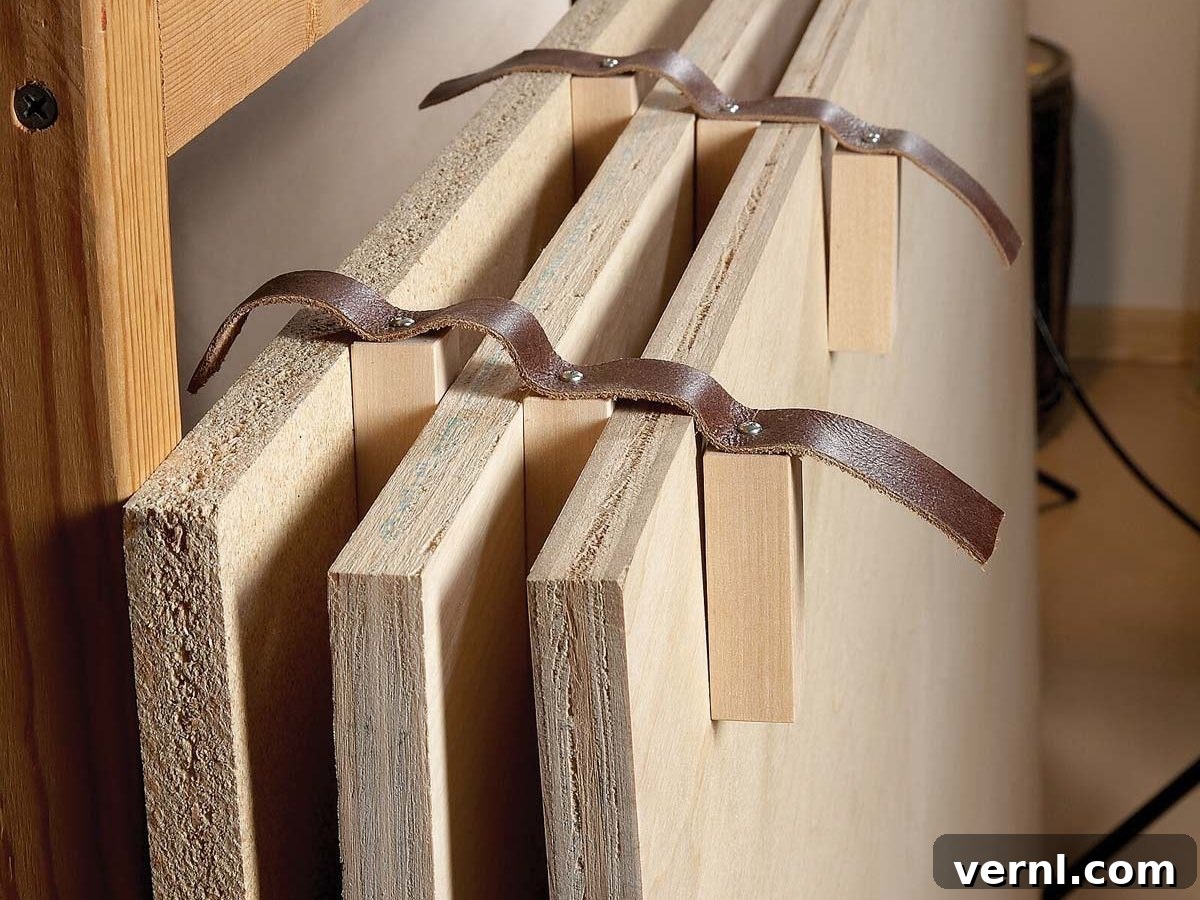
During our visit to Bruce’s workshop, our attention was drawn to a series of unassuming, belted-together wooden blocks strategically placed between stacks of plywood sheets alongside his lumber rack. These simple contraptions, we soon learned, were the secret behind his consistently flat and pristine lumber inventory. Upon asking about them, Bruce generously shared his ingenious method: custom-made plywood spacers. His explanation was remarkably straightforward and impactful: “The blocks separate the sheets so air can circulate on both sides. Flat sheets from the lumberyard stay flat this way, no matter how long they’re stored.”
The principle behind these DIY plywood spacers is brilliantly simple yet highly effective. By creating a consistent air gap between each stacked sheet, they facilitate uniform air circulation around the entire surface of the plywood. This prevents localized moisture accumulation or uneven drying, thereby stabilizing the material and dramatically reducing the likelihood of warping, twisting, or cupping. Beyond preventing structural damage, Bruce highlighted another significant practical benefit: “The air space also keeps them a lot easier to grab when you need to pull one out.” This eliminates the exasperating struggle of separating tightly stacked sheets, improving efficiency and reducing effort in the workshop.
Key Benefits of Incorporating Plywood Spacers in Your Workshop:
- Eliminates Warping: The foremost advantage, ensuring your valuable sheet goods remain dimensionally stable and perfectly flat, ready for accurate cuts and precise joinery.
- Optimizes Airflow: Promotes consistent air circulation around all surfaces of each sheet, allowing for even moisture distribution and mitigating environmental stresses that lead to deformation.
- Enhances Material Handling: The created gaps make it effortless to slide individual sheets out of a stack, saving time and physical strain.
- Extends Material Longevity: Proper ventilation and support protect plywood from moisture-related damage and physical stress, preserving its structural integrity and aesthetic quality for a longer period.
- Highly Cost-Effective: These spacers can be easily fabricated from readily available scrap wood and flexible materials, making them an affordable yet impactful investment in your workshop’s organization.
- Adaptable to Various Materials: The flexible nature of the connecting straps allows these spacers to accommodate a range of sheet goods thicknesses, not limited solely to plywood.
Crafting Your Own Plywood Spacers: A Straightforward DIY Woodworking Guide
Building these essential plywood storage spacers is an incredibly simple, quick, and rewarding DIY woodworking project. Using common scrap materials, you can significantly enhance your workshop’s organization, improve efficiency, and most importantly, safeguard your valuable sheet good investments. Here’s how to make them:
Essential Materials You’ll Need:
- Scrap Wood: Small cut-offs of pine, poplar, or any hardwood scraps you have lying around.
- Flexible Strap Material: Leather, heavy-duty vinyl, or strong canvas webbing. Leather offers superior durability and flexibility.
- Wood Screws: Approximately 1/2-inch to 3/4-inch in length, appropriate for securing wood to the strap without protruding.
Required Tools:
- Saw: A table saw, miter saw, or even a hand saw will work for cutting the wood blocks.
- Measuring Tape or Ruler: For accurate measurements.
- Pencil: For marking cuts and screw positions.
- Drill/Driver: To pre-drill pilot holes and drive screws.
- Utility Knife or Strong Scissors: For cutting the strap material.
Step-by-Step Assembly Instructions:
Step One: Prepare the Flexible Straps
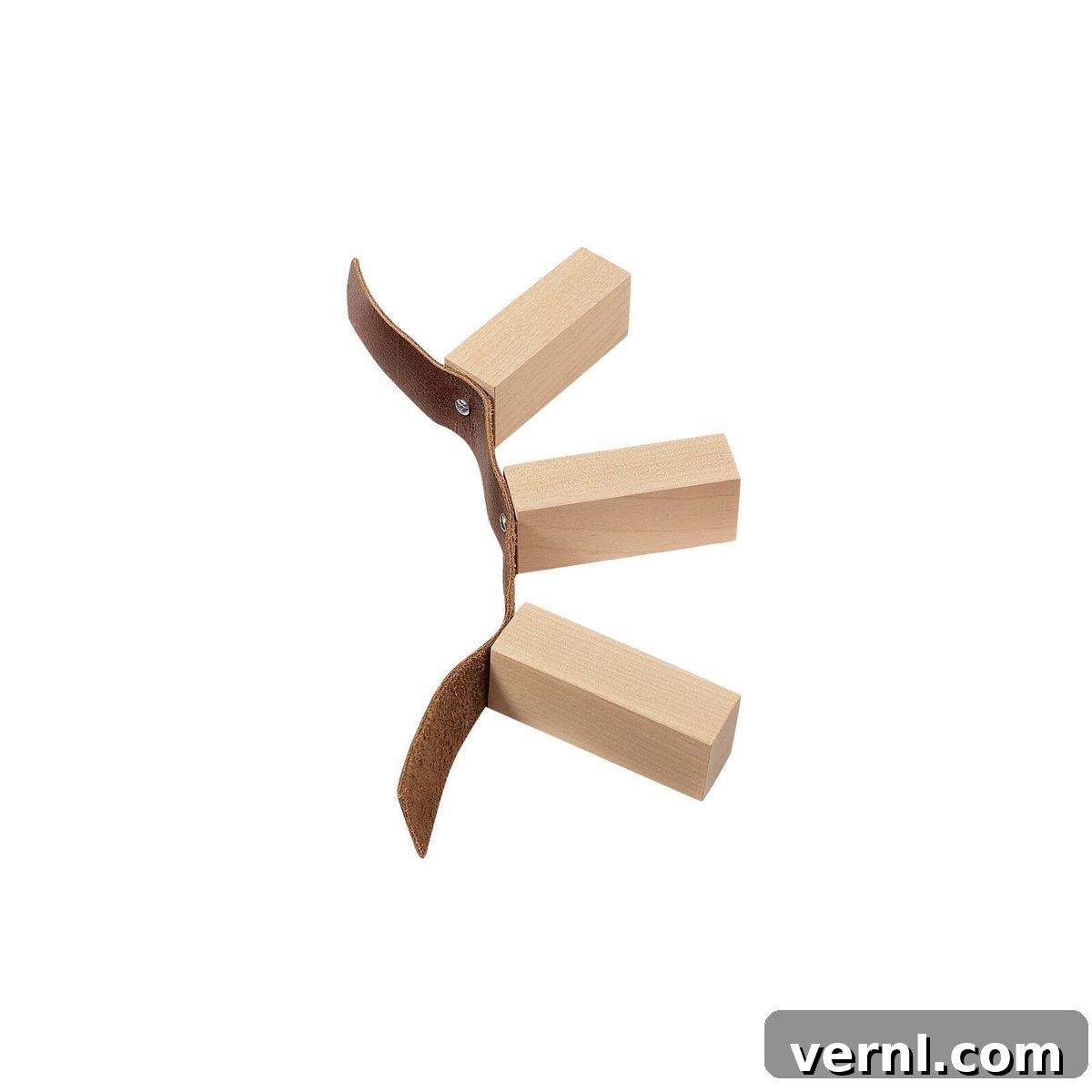
Begin by cutting two strips of your chosen flexible material. Leather is an excellent choice due to its strength and suppleness, but sturdy vinyl or canvas webbing can serve as effective alternatives. Aim for strips that are approximately 1-inch wide. The ideal length of each strap will depend on how many blocks you intend to attach and the desired overall span. For a standard set of two blocks per strap, 12-18 inches per strap is a good starting point. If you plan to create longer spacer sets for full-sized sheets, adjust the length accordingly to accommodate more blocks.
Pro Tip: Look for leather scraps at local craft stores, upholstery supply shops, or even online; they are often available at a very reasonable cost. Ensure the material is robust enough to securely hold the wooden blocks over time.
Step Two: Cut the Wood Blocks
Next, use your scrap wood to cut several small, uniform blocks. Bruce recommends dimensions of approximately 2-inches in length, 3/4-inch in thickness, and 1-inch in width. These specific measurements are optimal, providing sufficient height to ensure adequate air circulation between plywood sheets without making the stack excessively bulky. You will need at least two blocks per strap, which means a minimum of four blocks for a complete pair of spacers. For enhanced stability when storing larger, full-sized sheets, consider using three or more blocks per strap.
Pro Tip: To achieve consistent block sizes, which is crucial for even support, utilize a stop block on your table saw or miter saw for repetitive cuts. Lightly sanding the edges of the blocks can prevent splinters and make them more pleasant to handle.
Step Three: Assemble Blocks onto Straps
Now, it’s time to bring your components together. Lay one of your flexible straps flat. Position your first wooden block near one end of the strap. Using appropriate wood screws (ensure they are short enough not to pierce through the block’s opposite side), securely fasten the block to the strap. For a basic spacer, attach a second block towards the other end of the strap. If you are creating longer straps for full sheets, space additional blocks evenly along the strap, perhaps every 6-8 inches, or as dictated by the dimensions of your sheets and your specific storage needs.
Pro Tip: Pre-drilling small pilot holes through both the strap material and the wood blocks can significantly prevent splitting, especially when working with denser woods or thicker leather. Drive the screws firmly, but avoid overtightening, which could strip the wood or damage the strap.
Effective Deployment of Your Plywood Spacers:
Once your DIY plywood spacers are complete, strategically deploy them within your sheet goods storage area. For smaller off-cuts or half sheets, a single pair of spacers (two straps, each with two blocks) might be sufficient. However, for full-sized sheets, Bruce’s recommendation is clear: “For full sheets, use three sets of spacers, one at each end and one in the middle.” This three-point support system offers maximum stability, prevents sagging, and ensures consistent airflow across the entire surface area of the sheet. Always place the blocks directly beneath the edges and center of the plywood sheets, stacking subsequent sheets directly on top of these blocks to maintain the critical air gap.
Proper plywood storage is an often-underestimated aspect of efficient and successful woodworking. By dedicating a small amount of time and minimal resources to crafting these simple yet highly effective DIY plywood spacers, you will safeguard your materials, streamline your workshop operations, and ensure that every project commences with perfectly flat, ready-to-use stock.
Beyond implementing optimal storage practices, a thorough understanding of the diverse range of plywood types available is absolutely crucial for selecting the ideal material for your specific project. Plywood is not a monolithic product; its performance characteristics, applications, and suitability vary dramatically depending on the construction of its core. Delving into the intricate world of plywood core options will equip you with the knowledge to make informed decisions, ensuring the durability, stability, and desired aesthetic finish for all your woodworking endeavors. Let’s explore this ultimate guide to plywood core options:
Veneer Core Plywood
Veneer core represents the most traditional and widely recognized type of plywood core. It is ingeniously constructed from multiple thin layers, or plies, of hardwood veneers—commonly poplar, birch, or maple—each bonded together with strong adhesives. A defining and critical characteristic of veneer core is the arrangement of these layers: their grain direction alternates in successive plies, a technique known as cross-banding. This cross-banding is fundamental to the material’s exceptional strength, rigidity, and dimensional stability, as it effectively distributes stresses evenly across the entire sheet. Furthermore, veneer core plywood is relatively lightweight, which significantly aids in handling and maneuvering within the workshop.
Advantages: Boasts an outstanding strength-to-weight ratio, exhibits superior screw-holding capability due to the interlocking wood fibers, offers high rigidity, and possesses good resistance to impact. It is frequently the preferred choice for structural applications and fine furniture where inherent strength is a paramount concern.
Disadvantages: Can occasionally feature minor voids or inconsistencies within the internal core layers, which might become visible if the edges are left unfinished or if the material is cut. The surface flatness can also exhibit slightly more variation compared to engineered core types such as MDF.
Best Applications: Ideal for constructing cabinet carcasses, durable drawer boxes, robust furniture frames, subflooring, wall sheathing, and virtually any application demanding high structural integrity combined with reliable fastener retention. Its inherent qualities often make veneer core the foundational choice for many seasoned woodworkers.
MDF Core Plywood
Medium Density Fiberboard (MDF) core plywood utilizes a core meticulously manufactured from wood fibers that are first defibrated, then waxed, and finally bonded together with resin under intense heat and pressure. This process yields a remarkably consistent, homogeneous, and dense panel. High-quality outer face veneers are subsequently applied to this smooth MDF core. This engineered core construction provides a distinct set of advantages, particularly excelling in terms of surface quality and exceptional dimensional stability.
Advantages: MDF core offers unparalleled thickness consistency across the entire sheet and presents an exceptionally smooth, even surface beneath the face veneer. This translates directly to a flawless finished product, which is especially desirable when applying paint or high-gloss finishes. It boasts superior stability and inherent flatness, making it significantly less prone to warping or seasonal movement compared to traditional veneer core. This attribute is invaluable for wide panels, cabinet doors, and intricate millwork.
Disadvantages: A notable drawback is that MDF core is considerably heavier than veneer core, which can make handling and transportation more challenging. It also exhibits poorer screw-holding capability, as its compressed, uniform fibers do not grip fasteners as effectively as the natural grain of solid wood veneers. Furthermore, it is not recommended for applications requiring high structural strength or consistent exposure to moisture.
Best Applications: Perfectly suited for crafting one-piece cabinet doors, painted furniture components, shelving units where uncompromising flatness is essential, and decorative panels. Its incredibly smooth surface makes it an ideal substrate for applying veneers or laminates where a perfectly level foundation is required. For projects such as custom shaker doors or large, stable panels, MDF core is an outstanding choice. Understanding plywood grades is also crucial when selecting materials, as higher grades typically indicate better quality and appearance.
Particleboard Core Plywood
Particleboard core plywood, often positioned as the most budget-friendly option among sheet goods, features a core composed of various wood particles—including sawdust, wood chips, and shavings—which are bonded together under pressure with synthetic resins and heat. Much like MDF, it provides a consistent and flat substrate for the application of face veneers or laminates. It represents an economical choice for projects where cost-effectiveness is the primary driver and extreme structural durability or moisture resistance are not critical requirements.
Advantages: Its most significant advantage is its low cost, making it an attractive option for projects with tight budgets. Similar to MDF core, it offers good flatness and consistent thickness, providing a smooth and uniform base for various finishes. Its homogenous density also makes it relatively easy to cut and machine with standard tools.
Disadvantages: Particleboard core possesses the weakest screw-holding capability among the commonly available plywood types, making it prone to fastener pull-out if not properly reinforced. It is also highly susceptible to swelling and irreparable damage if exposed to moisture or water. Its structural strength is considerably lower than that of veneer core or even MDF, rendering it unsuitable for load-bearing applications or areas experiencing significant stress.
Best Applications: Best suited for applications where economy is paramount, such as hidden shelving, internal cabinet components that will not bear heavy loads, or as a substrate for laminates in low-stress, dry environments. It is important to note that particleboard core is often a special-order product at many lumber yards, whereas MDF core is typically more readily available in stock.
Combination Core Plywood
Combination core plywood is an innovative design that aims to strategically blend the most desirable attributes of both MDF core and veneer core, thereby offering a balanced and versatile performance profile. This construction typically features a central core section composed of traditional cross-banded hardwood veneers, similar to standard veneer core, which contributes significantly to strength and provides excellent screw-holding characteristics. Flanking this central veneer core, the outer layers—positioned directly beneath the decorative face veneers—are crafted from MDF. This unique hybrid construction is engineered to harness the best qualities from both material types.
Advantages: The central veneer component imbues combination core with respectable structural strength, makes it lighter in weight than a solid MDF core panel, and considerably improves screw-holding capability. Concurrently, the outer MDF layers contribute to a flatter and more uniform surface for the application of face veneers, resulting in a smoother overall finish and enhanced dimensional stability compared to pure veneer core.
Disadvantages: As is often the case with compromises, combination core may not truly excel in any single performance category. It typically lacks the absolute screw-holding capacity and inherent rigidity of a pure veneer core, and it may not achieve the ultimate flatness and long-term stability offered by a full MDF core. Furthermore, it can sometimes be more expensive than basic veneer core options.
Best Applications: This makes combination core a versatile choice for a broad spectrum of furniture, cabinetry, and other woodworking projects where a harmonious balance of strength, dimensional stability, and a good surface finish is desired. It is particularly suitable for applications that require decent fastener retention and a relatively flat panel without the extreme weight associated with solid MDF. For any plywood project, knowing how to accurately cut plywood, whether it’s construction grade or finish grade, is an essential skill to master. The Family Handyman DIY expert, Spike Carlsen, provides excellent guidance on achieving precise cuts with a circular saw.
Lumber Core Plywood
Lumber core plywood represents a high-quality, specialized option in the plywood family, often chosen for specific demanding applications. Its distinguishing feature is its core, which is meticulously constructed from solid strips of wood—typically basswood or poplar—that are edge-glued together to form a robust central panel. On both sides of this solid lumber core, a layer of cross-banded veneer is applied, followed by the final decorative face veneer. This multi-layered construction imbues lumber core with characteristics reminiscent of solid wood panels, but with the added dimensional stability inherent to plywood.
Advantages: It boasts exceptional screw-holding capability, superior strength, and remarkable rigidity, frequently surpassing traditional veneer core in these crucial aspects. Its construction also makes it significantly less prone to sagging over long unsupported spans, establishing it as an excellent choice for substantial shelving units. Unlike particleboard or MDF cores, the solid wood core is inherently less susceptible to moisture damage and offers greater resilience.
Disadvantages: Lumber core plywood is considerably more expensive than most other plywood types, reflecting its premium construction and performance. It can also be more challenging to source, often requiring a special order from specialty lumber yards rather than being readily available at standard home improvement stores. While generally stable, the solid wood core can occasionally present minor voids or inconsistencies, though typically less frequently than standard veneer core.
Best Applications: Given its outstanding strength and impressive resistance to sagging, lumber core is an ideal choice for crafting long, heavy-duty shelves, durable table tops, and panels where the appearance and performance of solid wood are desired without the inherent weight or instability often associated with true solid lumber. While it may not be an everyday material for all projects, it truly excels and shines in specific, demanding applications that require uncompromising strength and stability.
Baltic Birch and Appleply: Premium Veneer Cores
Baltic Birch and ApplePly are not distinct core types in the same vein as MDF or particleboard, but rather represent premium, high-performance variations of veneer core plywood. What truly sets them apart is the superior quality, meticulous construction, and higher ply count of their core veneers. Both are renowned for incorporating more numerous and thinner plies (often 1/16-inch thick, in contrast to the standard 1/8-inch veneers found in typical plywood), which results in a significantly higher ply count for a given panel thickness. This dense, virtually void-free core construction is the cornerstone of their exceptional stability, superior strength, and remarkable flatness.
Baltic Birch: Characterized by its pale, uniform birch veneers that extend consistently throughout both the core and the face. The raw, exposed edges of Baltic Birch are often considered highly attractive when finished, making it a popular aesthetic choice where visible edges are an integral part of the design. It offers outstanding dimensional stability, impressive strength, and excellent screw-holding capabilities.
ApplePly: A proprietary brand name for a high-quality hardwood plywood, ApplePly typically features a uniform, high-ply, and virtually void-free core. Similar to Baltic Birch, it is highly prized for its exceptional dimensional stability and the visually appealing finished quality of its exposed edges. ApplePly offers additional versatility, being available in a wider range of thicknesses (from 1/4-inch up to 1-1/2-inch) and with various face veneer species, allowing for greater aesthetic customization.
Advantages: Provides unparalleled stability and strength, boasts minimal to virtually no core voids, offers excellent screw retention, and features aesthetically pleasing finished edges that are frequently utilized as a deliberate design element. The use of thinner plies contributes to a denser, more consistent, and robust panel construction.
Disadvantages: These premium plywoods are considerably more expensive than standard veneer core options. Due to their specialized nature and higher quality, they are typically found only at specialty lumber yards, rather than being widely available at large home improvement chain stores.
Best Applications: Baltic Birch or ApplePly are frequently the top choice for crafting high-end furniture, precision drawer boxes, accurate shop jigs, superior cabinet components, and any project where dimensional stability, inherent strength, and a beautifully exposed edge are absolutely paramount. Their consistent reliability and impeccable finish quality make them a consistent favorite among professional woodworkers and discerning hobbyists alike.
By diligently understanding the nuanced differences among plywood core options and by effectively implementing intelligent storage strategies, such as Bruce Keifer’s ingenious DIY spacers, you can significantly elevate the quality and efficiency of your woodworking projects. Each distinct type of plywood possesses its own ideal applications, and making a well-informed choice ensures that your creations are not only visually appealing but also inherently durable and structurally sound. Embrace these fundamental principles, and enjoy the satisfaction of exceptional woodworking!