
As the vibrant hues of summer fade and autumn’s crisp air begins to sweep in, homeowners instinctively turn their attention to preparing their properties for the impending colder months. While exterior tasks like clearing gutters and securing outdoor furniture are crucial, equally important is readying the interior of your home to ensure warmth, comfort, and energy efficiency when temperatures plummet. Beyond the usual winter checklist—which typically includes furnace inspections and insulation checks—there’s a remarkably simple yet often overlooked trick involving your ceiling fans that can make a significant difference in how cozy and cost-effective your home remains throughout the chilly season. This guide will delve into this clever fan hack and explore a multitude of other proven strategies to help you conquer winter, save on heating bills, and maintain a sanctuary of warmth.
Unlocking the Power of Your Ceiling Fan: The Winter Reverse Trick
Most homeowners associate ceiling fans with summer, using them to create a refreshing breeze and keep rooms cool. However, these versatile fixtures possess a hidden capability that can dramatically enhance your home’s warmth during winter: the reverse function. It’s a remarkably straightforward adjustment that can lead to noticeable improvements in comfort and substantial savings on your energy bill. The principle is simple: by reversing the direction of your ceiling fan, you can effectively redistribute warm air that naturally rises and gets trapped near the ceiling, bringing it back down into your living space. This ingenious trick leverages basic physics to make your heating system more efficient without working it harder.
How the Winter Fan Hack Works: Understanding Thermal Dynamics
To truly appreciate the winter fan hack, it’s essential to understand a fundamental principle of thermodynamics: heat rises. In any heated room, warm air is less dense than cool air, causing it to ascend and accumulate near the ceiling. This stratification means that while your thermostat might register a comfortable temperature, the air at floor level, where you and your family spend most of your time, can be significantly cooler. Your heating system then continues to run, trying to warm the lower parts of the room, even though plenty of heat is already present, just out of reach.
This is where the ceiling fan comes into play. When set to its “forward” or counter-clockwise direction, a ceiling fan pushes air downwards, creating a direct breeze that cools the room—ideal for summer. However, in winter, you want the opposite effect. By engaging the reverse (clockwise) setting and running the fan at a low speed, the blades gently draw air upwards. This action pulls the cooler air from below, pushing the warmer air pooled at the ceiling outward and down along the walls. This creates a subtle updraft that doesn’t generate a cooling breeze but instead effectively circulates and mixes the air, evenly distributing the warm air throughout the entire room. The result is a more consistent temperature from floor to ceiling, making your living space feel warmer and allowing your heating system to work less, ultimately saving you money on those escalating energy bills.
Step-by-Step: Reversing Your Ceiling Fan for Winter
Activating your ceiling fan’s winter mode is typically a quick and easy process, though the exact method can vary slightly depending on your fan model. Here’s how to do it:
- Turn Off the Fan: For safety, always ensure the fan is completely off and the blades have stopped moving before attempting to change its direction. This prevents accidental injury and potential damage to the motor.
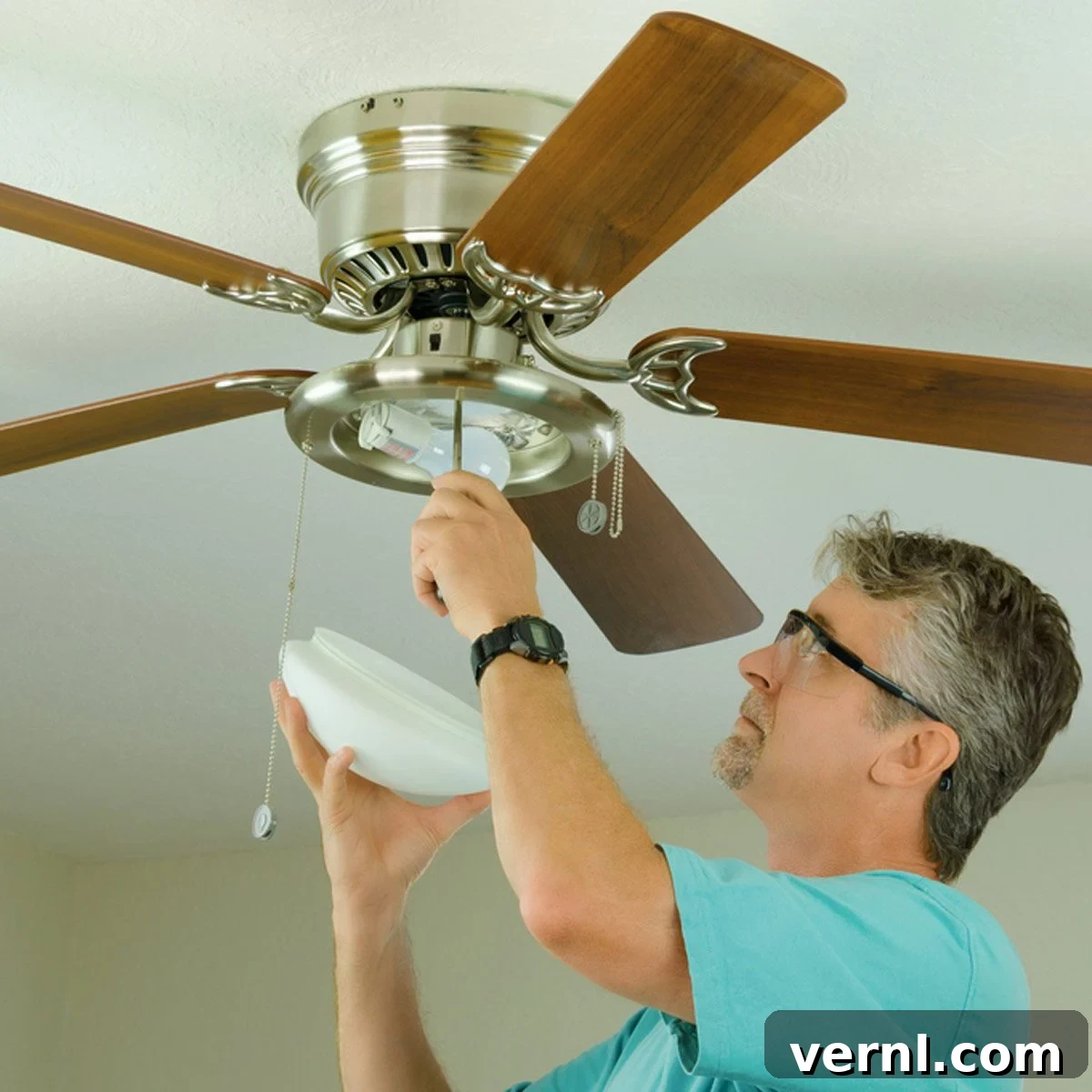
- Locate the Reverse Switch: Most ceiling fans have a small switch on the motor housing itself. This switch is often a small toggle, slide, or button. You might need a step stool to reach it, especially if your ceilings are high. Some newer or smart fans may have a reverse function controlled by a remote, a wall switch, or even a smartphone app. Consult your fan’s user manual if you can’t locate the switch.
- Flip the Switch: Once located, simply flip or slide the switch to change the blade rotation direction. For winter, you want the blades to rotate clockwise. To verify, stand directly under the fan and watch the rotation. If you look up at the fan, the blades should appear to be moving to your right. If you hold a piece of tissue paper under the fan, it should be gently drawn upwards.
- Set to Low Speed: After reversing the direction, turn the fan back on and set it to its lowest speed. You don’t want a strong downdraft, which would create a chilling effect. A gentle, low speed is sufficient to circulate the warm air without creating an uncomfortable breeze. The goal is to gently push down the warm air that has risen, not to generate a wind chill.
By taking a few moments this fall to set all of your ceiling fans to move clockwise, you’ll engage “winter mode,” which will significantly contribute to keeping your rooms warm, conserving energy, and, perhaps most importantly, reducing your monthly heating expenditures.
Beyond the Fan: Comprehensive Strategies for a Warm and Energy-Efficient Winter Home
While the ceiling fan hack is an excellent starting point, optimizing your home for winter warmth and energy savings involves a multi-faceted approach. Whether you’re grappling with rising heating costs or simply seeking sustainable ways to stay snug, integrating these additional tips will help you create a cozy haven without breaking the bank.
Sealing Your Home Against the Cold
One of the most significant sources of heat loss in any home is air leakage. Identifying and sealing these gaps is paramount to retaining warmth.
- Windows and Doors: These are notorious culprits for drafts. Apply weatherstripping around door and window frames to create a tighter seal. Use caulk to fill any cracks or gaps in window sills and door jambs. For an extra layer of insulation, consider installing heavy, thermal-lined curtains or drapes. Keep them open during sunny days to allow natural sunlight to warm the room, and close them at dusk to trap heat inside.
- Attic and Walls: Proper insulation in your attic and walls acts as a crucial barrier against heat transfer. Ensure your attic has adequate insulation (R-value appropriate for your climate zone). Consider professional air sealing for walls if you suspect significant leaks.
- Identifying Drafts: You can easily locate drafts by holding a lit candle or an incense stick near windows, doors, electrical outlets, light fixtures, and plumbing penetrations on cold, windy days. If the flame flickers or smoke wavers, you’ve found a leak that needs sealing.
Optimizing Your Heating System
Your furnace or heating system is the heart of your winter warmth, so ensuring its efficiency is key.
- Thermostat Management: Install a programmable or smart thermostat. These devices allow you to set schedules for temperature adjustments, ensuring you’re not heating an empty house. Aim for a comfortable temperature (e.g., 68°F during the day, slightly lower at night or when away) and resist the urge to crank it up too high, as even a small change can impact energy consumption. Learn more about ways to cut your heating bills.
- Furnace Maintenance: Schedule an annual professional furnace tune-up before winter begins. A well-maintained system runs more efficiently and is less likely to break down. Regularly replace or clean your furnace filters (monthly during peak heating season) to ensure optimal airflow and system performance.
- Ductwork: Inspect your ductwork for any leaks or disconnected sections. Leaky ducts can lose a significant amount of heat before it even reaches your rooms. Seal them with mastic sealant or metallic tape (not duct tape, which degrades over time).
Smart Room Management and Lifestyle Choices
Beyond structural improvements, daily habits can significantly impact your home’s warmth and energy use.
- Zoning Your Home: If you have rooms that are rarely used, consider closing the doors and closing the heating vents in those areas. This directs more warm air to the frequently used parts of your home, reducing wasted heat. However, be cautious not to close too many vents if you have a central forced-air system, as this can create pressure imbalances that may strain your HVAC unit. Always consult an HVAC professional if you’re unsure. You might be surprised by unexpected ways to keep your house warm.
- Passive Solar Heating: Utilize the sun’s natural warmth. During the day, open blinds and curtains on south-facing windows to allow sunlight to stream in and naturally heat your home. Close them as soon as the sun sets to trap that warmth inside.
- Embrace Layers and Warm Comforts: Dress in layers, use cozy blankets, and enjoy warm beverages. These simple comforts can make a room feel warmer and allow you to keep your thermostat a degree or two lower. Explore ways to warm up a cold room that actually work.
- Humidifiers: Dry air feels colder. Running a humidifier can add moisture to the air, making your home feel warmer and more comfortable, often allowing you to set your thermostat a bit lower without sacrificing comfort.
Additional Energy-Saving Measures
- Water Heater Efficiency: Insulate your hot water tank and pipes to prevent heat loss. Lower your water heater’s thermostat to 120°F (49°C) – it’s still hot enough for most needs and saves energy.
- Appliance Use: Maximize the heat generated by household appliances. For instance, use your oven to bake or roast meals during colder parts of the day, leaving the oven door ajar after use (once cool enough) to let residual heat dissipate into the kitchen. Run your clothes dryer during colder hours; the heat it produces contributes to warming your home.
- Energy Audits: Consider having a professional energy audit performed on your home. Auditors use specialized equipment to pinpoint exact areas of heat loss and recommend tailored solutions for significant energy savings.
Your Go-To Resources for a Warmer, More Affordable Winter
Preparing your home for winter is an investment in comfort, energy efficiency, and cost savings. By combining the simple ceiling fan trick with comprehensive home sealing, heating system optimization, and smart lifestyle choices, you can create a truly warm and inviting environment even on the coldest days. Don’t let winter catch you off guard; empower yourself with knowledge and proactive measures to enjoy a cozy, budget-friendly season.
For more in-depth information and specific solutions, explore these valuable resources:
- Why Are Heating Bills Increasing This Winter?
- Ways to Cut Your Heating Bills
- Simple Tricks to Keep Your House Warm All Winter
- Unexpected Ways to Keep Your House Warm This Winter
- DIY Projects to Keep Your House Warm This Winter
- Ways to Warm Up a Cold Room That Actually Work
- How to Keep Your House Warm During a Power Outage
- Best Ways to Heat a Garage In the Winter
- How to Save on Heating Costs In an Apartment
- Heating Myths You Need to Stop Believing
- Simple Heating and Air Conditioning Fixes
- Does Closing Heat Registers Save Energy?
- Why You Shouldn’t Close Off Vents to Save Money in the Winter