
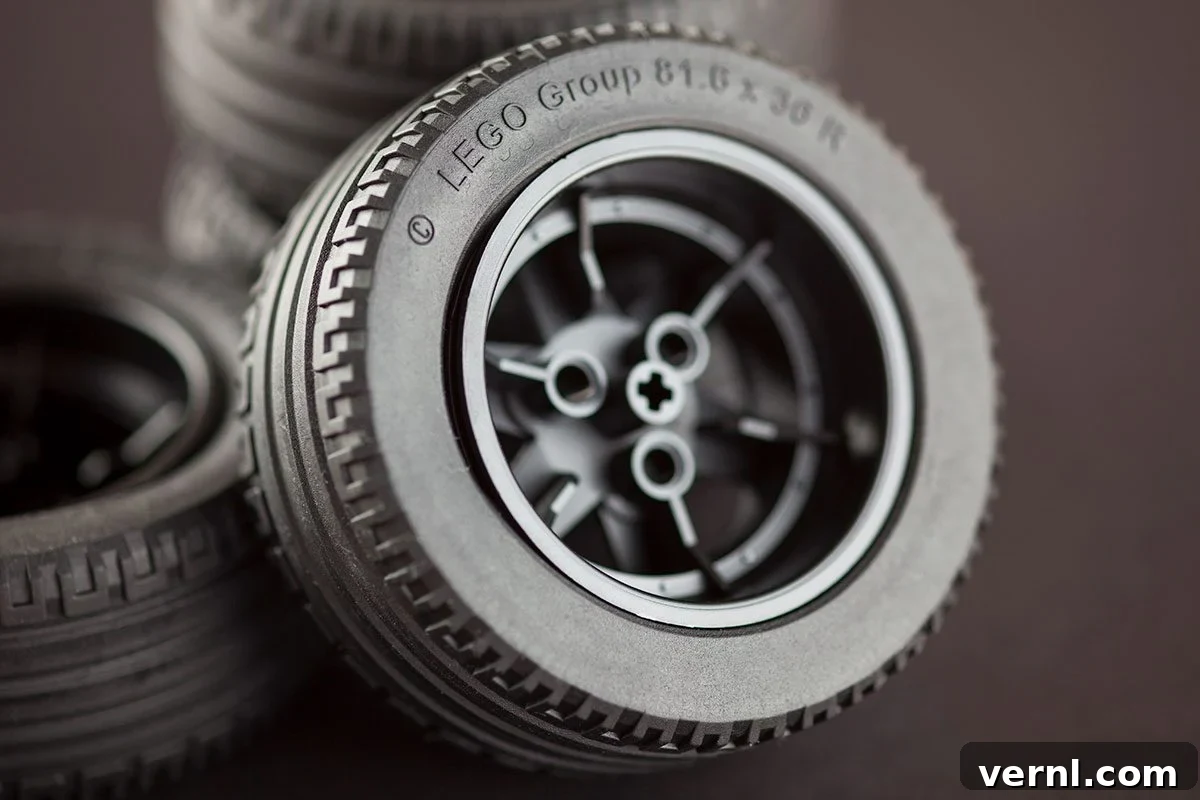
LEGO’s Unexpected Role in Sustainable Tire Manufacturing
Every year, the global tire industry churns out over two billion tires. This staggering level of production demands an immense quantity of raw materials, including silica, polyester, and the cornerstone ingredient: rubber. In fact, the industry consumes up to 12 million tons of rubber annually. This raises a critical question: Can we create tires without relying so heavily on this vast quantity of rubber? It’s a challenging predicament. Tires are indispensable to modern life, permeating almost every aspect of transportation and industry. Eliminating them entirely is simply not an option. And for over a century, rubber has been the go-to material for tire manufacturing. Any departure from this established practice would require a radical rethinking of the traditional tire composition and a substantial commitment from the leading players in the industry. Finding sustainable alternatives to rubber is now more crucial than ever before.
The Pursuit of More Sustainable Tires
Fortunately, some of the world’s most influential tire manufacturers are actively confronting this challenge head-on. A prominent company based in Denmark, responsible for producing over 300 million tires each year, recently unveiled a groundbreaking new formula designed to reduce its dependence on traditional rubber. This innovative approach marks a significant step towards a more sustainable future for the tire industry. The use of sustainable materials will greatly reduce the carbon footprint in tire production.
Which industry leader is pioneering this journey toward tire sustainability? You’ve almost certainly encountered this company before, but you likely associate it more with colorful building blocks than with tires.
That’s right! The company responsible for a substantial portion of the world’s tire production is none other than LEGO. LEGO’s remarkable tire production output was officially recognized by the Guinness Book of World Records back in 2006. The record noted that “Even though LEGO® products are unlikely to fit an everyday car, they do fit all descriptions of a standard tyre, albeit of the solid rubber variety. Even the rubber compound used for the LEGO® products would not be out of place on a domestic car.”
Let’s delve deeper into LEGO’s surprising identity as a tire company and explore its revolutionary approach to manufacturing and sustainability. Their innovative strides towards greener tire production set a new standard for other large-scale manufacturers.
LEGO: A Tire Company in Disguise?

It’s clear that manufacturing tires for toy cars differs considerably from producing tires for real automobiles. LEGO tires have traditionally been crafted from 100% rubber, while standard automobile tires typically comprise about 45% rubber. Despite being designed for toys, LEGO tires still require considerable resources to produce. This realization has motivated the company to develop a more sustainable manufacturing process.
Earlier in 2025, LEGO revealed its innovative solution: a tire made from recycled ocean materials, including discarded ropes and fishing nets. This represents a major step towards reducing environmental impact and developing more eco-friendly products. The use of ocean waste in tire production provides a practical way to recycle discarded materials.
“Over the last five years, we have invested significant time in developing and testing this new recycled material to ensure it meets our high standards for quality, safety, and durability,” said LEGO’s Chief Sustainability Officer Annette Stube. “The tires are just one of many options we’re working on to make our products more sustainable, and it’s encouraging to see something this innovative making it into our sets.” This demonstrates a dedication to both the environment and product quality.
Initially, this new recycled formula will be incorporated into seven different LEGO tire pieces, each containing at least 30% recycled materials. While it’s unlikely that tires made from recycled ocean waste will be road-worthy anytime soon, the critical conversation about increased sustainability in tire production has officially begun—and LEGO is a major driving force. This is an important step towards ensuring a greener future for the tire industry.
The Importance of Sustainable Tire Production
The shift towards sustainable tire production is not just an environmental responsibility; it’s becoming an economic necessity. As consumer awareness of environmental issues grows, demand for eco-friendly products is increasing. Companies that embrace sustainability are likely to gain a competitive edge. Furthermore, the depletion of natural resources like rubber necessitates the exploration of alternative materials and manufacturing processes. LEGO’s pioneering efforts in using recycled ocean materials represent a model for other manufacturers to follow.
By investing in research and development, companies can identify innovative solutions that reduce their environmental footprint. This includes not only the use of recycled materials but also the development of more durable and energy-efficient tires. A longer tire lifespan means fewer tires need to be produced, reducing overall resource consumption. Additionally, improving the fuel efficiency of tires can significantly reduce greenhouse gas emissions from vehicles. The combination of these improvements will benefit the planet in the long run.
The Future of Tire Manufacturing
The future of tire manufacturing hinges on innovation and sustainability. While LEGO’s use of recycled ocean materials is a remarkable achievement, ongoing research is crucial to finding additional sustainable alternatives to traditional rubber. Scientists and engineers are exploring a range of possibilities, including the use of plant-based materials, such as dandelion rubber and guayule. These renewable resources offer the potential to reduce reliance on fossil fuels and promote biodiversity.
Moreover, advances in nanotechnology are enabling the development of tires with enhanced performance and durability. By incorporating nanomaterials into tire compounds, manufacturers can improve grip, reduce rolling resistance, and extend tire lifespan. These technological advancements not only enhance the sustainability of tires but also improve safety and fuel efficiency. The integration of sustainable materials and innovative technologies will shape the future of the tire industry.
The Role of Consumers
Consumers also play a vital role in promoting sustainable tire practices. By making informed purchasing decisions, consumers can support companies that prioritize environmental responsibility. This includes choosing tires made from recycled materials or those designed for extended lifespan and fuel efficiency. Additionally, proper tire maintenance is crucial for maximizing tire lifespan and reducing environmental impact. Regular tire pressure checks and proper alignment can prevent premature wear and tear, ensuring that tires last longer and perform optimally.
Furthermore, responsible disposal of used tires is essential for preventing environmental pollution. Many tire retailers offer recycling programs that ensure old tires are properly processed and repurposed. These programs transform discarded tires into valuable materials for various applications, such as playground surfaces, road construction, and new tire manufacturing. By participating in these recycling initiatives, consumers can contribute to a circular economy and reduce waste.
Conclusion: A New Era for Tire Sustainability
LEGO’s innovative approach to tire manufacturing, using recycled ocean materials, marks the beginning of a new era for tire sustainability. While there are still challenges to overcome, the industry is moving in the right direction. With ongoing research, technological advancements, and the support of informed consumers, the future of tire manufacturing will be greener, more efficient, and more environmentally responsible. LEGO has proven that even the most unexpected companies can make a significant contribution to sustainability, setting an example for others to follow. The collaborative effort between manufacturers, researchers, and consumers will ultimately lead to a more sustainable future for the tire industry.
Sources
- Plastics Today, “LEGO Introduces Sustainable Tires Made From Recycled Ocean Materials,” 2025
- Guinness Book of World Records, “Largest annual volume toy tyre manufacturer ever,” 2006
Related Articles
- Do You Know What That Little Button on Your Seat Belt Is For?
- What Those Lines on Your Backup Camera Really Tell You
- Here’s What The Small Panel On Your Car’s Front Bumper Is For