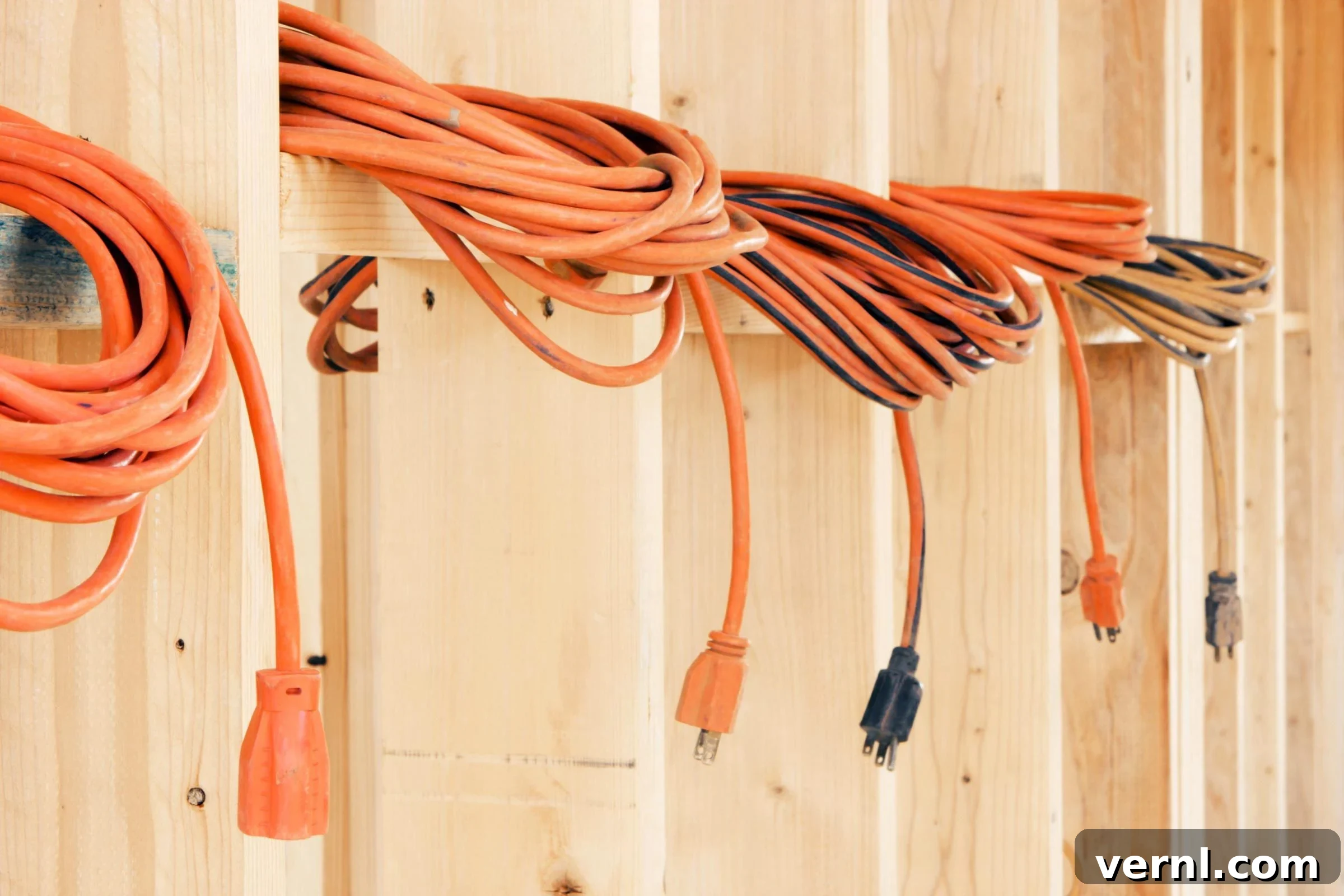
Extension cords are incredibly versatile tools that bring essential electrical power to devices located away from wall outlets. However, with a diverse range of options available, selecting the correct extension cord is paramount for both optimal performance and, more importantly, safety. This comprehensive guide will demystify the world of extension cords, helping you understand their types, technical specifications, and critical safety guidelines, ensuring you power your tools and appliances efficiently and securely for any task, whether indoors or out.
Essential Electrical Terms for Extension Cords
To make an informed decision when purchasing an extension cord, it’s crucial to understand the fundamental electrical terminology associated with these devices. Familiarizing yourself with these terms will empower you to choose the safest and most effective cord for your specific needs:
- Conductors: These are the insulated metal wires, typically copper, that run through the core of an extension cord. Conductors are the pathways through which electricity flows from the power source to your appliance or tool. The material and thickness of these wires directly impact the cord’s capacity and efficiency.
- Amperage (Amps): Amperage measures the volume or flow rate of electrical current. Every extension cord has a maximum amperage rating, indicating the highest amount of current it can safely carry. Using a cord with an amperage rating lower than what your device requires can lead to dangerous overheating, potential damage to both the cord and the connected appliance, and significantly increase the risk of electrical fires. Always verify the amp rating of both your device and the extension cord.
- Voltage (Volts): Voltage represents the electrical pressure or force that pushes the current through the conductors. In the United States, standard household voltage is typically 120V. Extension cords are generally rated at 125V or higher to comfortably handle minor, temporary fluctuations in voltage, ensuring a consistent and stable power supply to your equipment without undue strain.
- Watts: Watts measure the total power output or consumption of an electrical tool or appliance. It’s calculated by multiplying amperage by voltage (Watts = Amps × Volts). When selecting an extension cord, you should always check its label for the maximum wattage capacity. This ensures the cord can safely accommodate the power demands of your intended device, preventing overloads and potential hazards.
- Wire Gauge (AWG): Wire gauge refers to the physical diameter or thickness of the conductive wires inside the cord. It is standardized using the American Wire Gauge (AWG) system. Common extension cord sizes include 16 AWG, 14 AWG, 12 AWG, and 10 AWG. A key principle of AWG is its inverse relationship: *the smaller the AWG number, the larger the wire diameter*. Larger wires have lower electrical resistance, allowing them to safely carry more current over longer distances with less heat generation and voltage drop. This makes lower AWG numbers (e.g., 10 AWG) ideal for heavy-duty, high-power applications.
Understanding Different Types of Extension Cords
Before you grab the nearest extension cord, it’s crucial to understand that not all cords are created equal. Different extension cord types are specifically engineered for varying environments and power demands. Using the wrong type can severely compromise both performance and safety.
- Indoor Extension Cords: As their name implies, these cords are exclusively designed for indoor use in dry conditions. They typically feature thinner insulation and often come in shorter lengths, making them suitable for powering light-duty household electronics like lamps, radios, and small fans. Many indoor cords feature a two-prong plug, indicating they lack a grounding wire and are therefore unsuitable for devices requiring a grounded connection, particularly power tools.
- Outdoor Extension Cords: Built for resilience, outdoor extension cords are characterized by a thick, rugged outer jacket that provides superior protection against moisture, abrasion, and extreme temperatures. They almost always include a three-prong plug, which provides a critical grounding path for safety when operating power tools or other grounded appliances outdoors. Look for the letter “W” (for weather-resistant) printed on the cord’s jacket, signifying its suitability for outdoor environments, whether you’re decorating with outdoor Christmas lights or tackling yard work.
- Indoor/Outdoor Extension Cords: These versatile cords offer the best of both worlds, constructed to safely and effectively operate in both indoor and outdoor environments. They combine the durable construction and weather resistance of outdoor cords with the flexibility suitable for a wide range of indoor applications, providing a practical all-around solution for many users.
- Light-Duty Extension Cords: These cords are designed for devices that draw minimal amperage and wattage. They are typically thinner (e.g., 16 or 18 AWG) and are ideal for items such as portable fans, clocks, table lamps, and small electronic chargers. They are not intended for high-power tools or appliances.
- Medium-Duty Extension Cords: Representing a common general-purpose category, medium-duty cords are robust enough for many everyday household appliances. These usually fall into the 14 AWG range and are a good choice for items like computers, vacuum cleaners, and microwaves, provided their wattage requirements align with the cord’s rating.
- Heavy-Duty Extension Cords: Often referred to as “contractor-grade” or “industrial-grade,” heavy-duty cords are engineered for the most demanding tasks. They feature exceptionally thick insulation, rugged outer jackets, and utilize larger conductors (typically 12 AWG or 10 AWG). These cords are indispensable for high-amp, high-watt tools and machinery, especially when working outdoors, on construction sites, or over long distances. Examples include power saws, air compressors, electric pressure washers, and large shop vacuums.
Key Considerations When Buying an Extension Cord
Whether you’re purchasing an extension cord for a specific, immediate project or to have a versatile option readily available, several critical factors should influence your choice. Prioritizing these considerations will ensure you select a safe, efficient, and durable cord that meets your needs without compromise.
- Wire Size (Gauge): This is arguably the most crucial factor. An undersized cord (one with an AWG number too high for the electrical load) is significantly more dangerous than an oversized one. A cord with wires that are too thin will experience greater electrical resistance, leading to excessive heat buildup, severe voltage drop, and potential damage to both the cord and the connected appliance. For general household use at shorter distances (up to 25 feet), a 14 AWG extension cord often provides a good balance of capacity and flexibility. However, always meticulously check the amperage and wattage requirements of your specific tool or appliance. When in doubt, always opt for a heavier gauge (a smaller AWG number) to ensure safety and optimal performance.
- Durability and Jacket Material: The outer jacket of an extension cord provides vital protection for the internal conductors. Cords rated for outdoor use offer superior durability and resistance to harsh environmental factors, thanks to robust insulation materials like vinyl, rubber, or thermoplastic. An outdoor-rated cord can safely be used indoors, providing greater versatility and longevity. Conversely, an indoor-only cord should *never* be used outdoors, as its inadequate insulation offers insufficient protection against moisture, UV radiation, extreme temperatures, and physical abrasion. Always look for safety certifications such as UL (Underwriters Laboratories) to guarantee the cord meets stringent quality and safety standards.
- Length: Choose an extension cord length that is practical for your needs without being excessively long. While a longer cord provides greater reach, it also exacerbates the issue of voltage drop, especially with thinner gauges and higher power demands. Critically, you must *never* “daisy-chain” multiple extension cords together to achieve a desired length. This dangerous practice significantly increases electrical resistance, creates potential fire hazards due to overloading, and violates most safety guidelines. Always use a single, appropriately sized cord for one job. If you need more length, buy a longer, heavier-gauge cord.
- Cost vs. Quality: Naturally, longer, heavy-duty extension cords with thicker gauges and superior insulation will be more expensive than shorter, light-duty options. While it’s understandable to consider your budget, never compromise on quality for the sake of a lower price. An inexpensive, poorly constructed cord can be a significant safety liability. Investing in a reputable brand that meets industry safety standards ensures reliability, durability, and most importantly, your protection from electrical hazards.
Selecting the Right Extension Cord: A Practical Guide
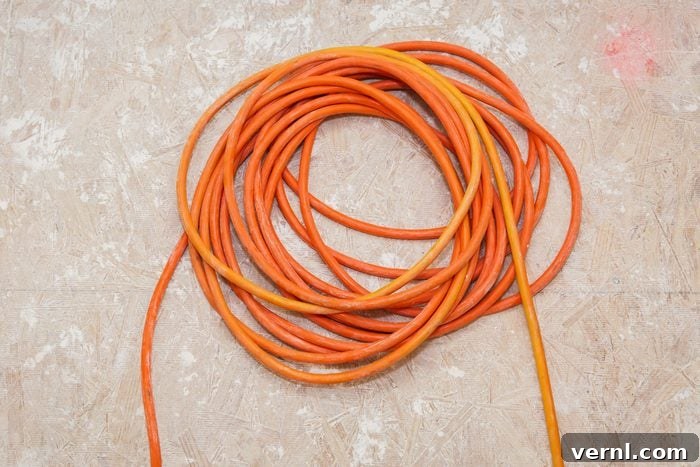
Most homes and workshops accumulate a variety of extension cords of varying lengths and wire gauges over time. The challenge often lies in knowing which one to select for a particular task. To ensure both optimal performance and uncompromising safety, ask yourself these crucial questions before plugging in your device:
1. How many amps does the tool or appliance draw?
Every electrical device, from a common computer charger to a powerful miter saw, has specific amperage requirements. This vital information is typically printed directly on the tool itself, its product label, or detailed within its user manual. If you can only locate the wattage (W) listed, you can easily calculate the required amperage (A) by dividing the wattage by the standard voltage (V), which is typically 120V in the US (Formula: Amps = Watts / Volts). For example, an 1800-watt appliance would draw 15 amps (1800W / 120V = 15A). It is absolutely imperative that the extension cord’s maximum amp rating meets or exceeds the amperage requirement of your device to prevent dangerous overheating and potential circuit overloads. For common power tools like a miter saw, which typically draws around 15 amps, an extension cord with 14 AWG conductors can generally carry 15 amps safely over shorter distances. However, a significant consideration, explained below, pertains to the operating distance.
2. How far away is the job from the power source?
While extension cords are designed to extend your reach, distance has a profound impact on electrical performance. As electricity travels through a conductor, it encounters resistance, leading to a phenomenon known as “voltage drop.” The longer the cord and the thinner its wire gauge, the more significant the voltage drop will be. Excessive voltage drop can have serious consequences: your tools may underperform, motors can overheat and burn out prematurely due to insufficient power, and the extension cord itself can generate dangerous levels of heat, posing a substantial fire risk. Always consult your tool’s manual (like those from reputable brands such as Ryobi or Ridgid) for recommended cord specifications, particularly when working over longer distances. These manuals often provide detailed charts or guidelines for selecting the appropriate wire gauge based on both amperage and the required length. As a golden rule, always use the shortest possible extension cord that can comfortably reach your workstation and safely handle the electrical load. If there is any doubt about the appropriate gauge, always err on the side of caution and opt for a heavier extension cord gauge (a smaller AWG number) to minimize voltage drop and ensure optimal safety and device longevity.
3. Is the job indoors or outdoors?
The environment in which you’ll be using the extension cord is a critical factor in selection. Plugging in a small LED reading lamp inside your home presents vastly different requirements than operating a high-powered pressure washer to clean your driveway outdoors. As previously discussed, indoor-only cords (especially light-duty, two-prong varieties) lack the necessary robust insulation, durable outer jacket, and crucial grounding conductor required to safely withstand outdoor elements such like moisture, direct sunlight, extreme temperatures, or physical abrasion. Using an indoor cord outside is a significant safety hazard, dramatically increasing the risk of electrical shock, short circuits, and fire. Conversely, an outdoor-rated cord, with its superior durability and grounding prong, is perfectly safe for indoor use, offering enhanced protection and greater versatility across various tasks. Always match the cord’s environmental rating to your specific task to guarantee safety.
Crucial Extension Cord Safety: When NOT to Use an Extension Cord
While extension cords offer incredible convenience, they are inherently temporary power solutions and must be used with extreme caution. Misusing an extension cord can lead to severe hazards, including devastating electrical shocks and fires. If you find yourself in any of the following situations, it’s a clear indication that an extension cord is not the appropriate solution. Instead, you should consider investing in a long-term, permanent wiring alternative or relocating your power source to ensure absolute safety. Never use an extension cord:
- Under carpets or rugs: Extension cords generate heat, particularly when under load or powering high-wattage devices. Running a cord underneath carpets, rugs, or any other floor covering traps this heat, preventing its dissipation and creating a significant fire hazard. Additionally, constant foot traffic or the pressure from furniture can easily damage the cord’s insulation, increasing the risk of electrical shock or a short circuit without visible warning.
- As a substitute for permanent wiring: Extension cords are explicitly designed for temporary use only. They should never be employed as a long-term or permanent power solution for any household appliance, lamp, or piece of equipment. Over time, the cord’s insulation can degrade, it can become a persistent tripping hazard, or it can suffer unseen damage, leading to dangerous electrical failures. If you consistently require power in a specific location, the safest and most compliant solution is to install a permanent electrical outlet.
- Concealed within or run through walls, ceilings, or floors: Hiding extension cords behind drywall, suspended ceilings, or underneath floorboards is extremely dangerous and strictly prohibited by electrical codes. Such concealment makes it impossible to visually inspect the cord for damage, allows hazardous heat to build up undetected, and makes the cord susceptible to accidental piercing by nails or screws during future renovations. This practice dramatically escalates both fire and electrical shock risks.
- Where subject to physical damage: While many extension cords are built to be robust, they are not indestructible. Never allow an extension cord to be run through doorways where it can be pinched, across driveways or pathways where vehicles or heavy equipment can run over it, or in any area where it might be cut, frayed, or otherwise physically damaged by tools, sharp objects, or heavy foot traffic. Always position cords in protected locations where they will not be exposed to potential abuse or wear.
- With space heaters or other high-amperage appliances: Space heaters are notorious for drawing a very large amount of electricity, often pushing the limits of typical household circuits and extension cords. Plugging a space heater into an extension cord can easily overload the cord, causing it to overheat severely, melt, and potentially ignite a fire. Always plug space heaters directly into a dedicated wall outlet. This critical rule also applies to other high-amperage devices such as air conditioners, refrigerators, washing machines, or large power tools, unless the appliance manufacturer explicitly states that extension cord use is permissible and the chosen extension cord is specifically rated for such high-power applications.
Additional Safety Tips for Extension Cord Use:
- Inspect Before Use: Always thoroughly examine your extension cord for any signs of fraying, cuts, exposed wires, cracked insulation, or damaged plugs before each use. Immediately discard any cord that shows signs of damage.
- Never Remove Grounding Prong: The third (round) prong on a three-prong plug is a crucial safety feature that provides a path for fault current to safely dissipate. Never remove it or use an adapter that defeats this essential safety mechanism.
- Avoid Overloading: Do not plug multiple power strips or surge protectors into a single extension cord. This is a common way to overload the cord and potentially trip circuit breakers or create a fire hazard.
- Keep Dry: Never use an extension cord in wet conditions or near standing water unless it is specifically rated and designed for wet outdoor use and has appropriate weather protection features.
- Unplug When Not in Use: Always unplug extension cords from the wall when they are not in use to prevent accidental damage, reduce energy waste, and eliminate potential electrical hazards.
- Store Properly: Coil cords loosely for storage to prevent kinks, twists, and damage to the internal wiring and outer jacket. Avoid wrapping them tightly around objects, which can cause internal wire breakage.
Frequently Asked Questions About Extension Cords
What happens if I use the wrong extension cord?
Using an incorrect extension cord, especially one that is undersized for the electrical load or not adequately rated for the operating environment, can lead to severe consequences. The dangers range from minor inefficiencies such as significant voltage drops, which can damage tool motors and diminish their performance, to much more critical hazards including the cord overheating, its insulation melting, short circuits, and even catastrophic electrical fires. Prioritize safety by meticulously matching the extension cord’s amperage, wattage, and environmental ratings to the precise requirements of your appliance or tool.
What is the difference between two-prong and three-prong extension cords?
Beyond their obvious physical distinction, the fundamental difference between two-prong and three-prong extension cords lies in their grounding capability. Two-prong cords lack a grounding wire and are typically suitable only for basic, light-duty indoor appliances that do not require a grounded connection for safe operation. In contrast, three-prong cords incorporate a crucial grounding wire (the third, round prong) which provides an essential safety path for fault current to dissipate harmlessly to the ground. This grounding feature makes them mandatory for outdoor use, with power tools, and for any appliance designed with a three-prong plug, significantly reducing the risk of electrical shock in the event of an internal fault or short circuit.
Can I use an indoor extension cord outside?
No, absolutely not, and doing so is extremely dangerous. Indoor extension cords are not manufactured with the robust insulation, durable outer jackets, or weather-resistant properties required to safely withstand harsh outdoor elements. Exposure to moisture, direct sunlight, extreme temperatures, or physical abrasion can quickly degrade the cord’s integrity, leading to exposed wires, short circuits, and a dangerously high risk of electrical shock or fire. Outdoor-rated cords are specifically designed with thicker, more resilient materials and almost always include a grounding wire to ensure safety in challenging exterior conditions.
Sources:
- Lowe’s: “Choose the Best Extension Cord: Gauge Guides and More.”