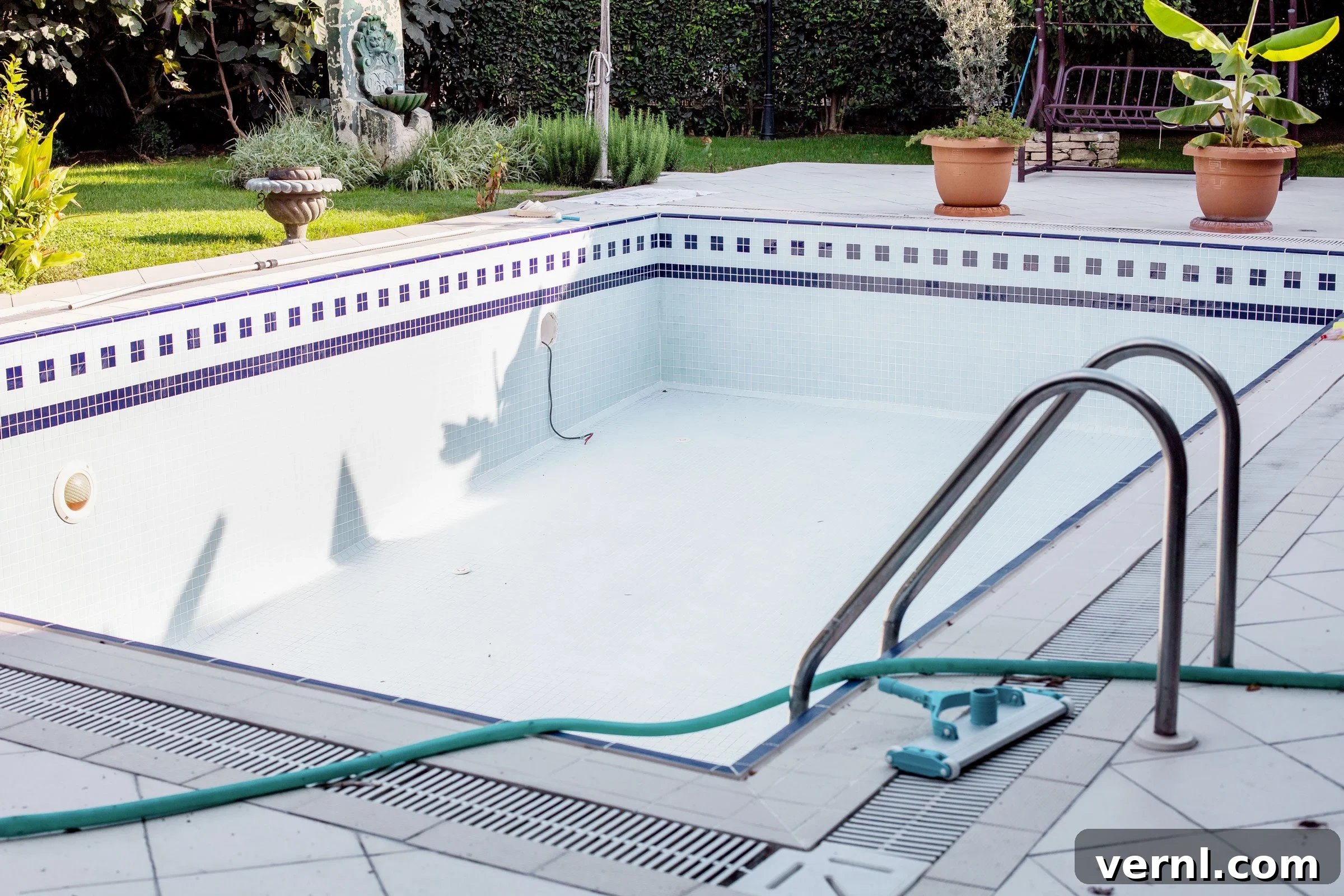
The thought of completely draining your in-ground pool might seem like a simple solution for maintenance or seasonal closure. However, for most pool owners, this extensive measure is rarely necessary and often comes with significant risks and potential costs. While completely emptying an in-ground pool is almost always discouraged, understanding the specific scenarios where partial draining becomes essential, particularly for winterization in colder climates, is crucial for preserving your pool’s longevity and structural integrity. This comprehensive guide will delve into the nuances of pool draining, outlining when it’s appropriate to lower your pool’s water level, the proper techniques to ensure safety, and important considerations for environmental responsibility.
Understanding Pool Draining: When to Drain, When Not To
The vast majority of pool professionals strongly advise against completely draining an in-ground swimming pool unless under very specific circumstances and direct professional guidance. The risks associated with a full drain often outweigh any perceived benefits, potentially leading to costly and extensive damage that could compromise the entire structure.
The Dangers and Risks of a Full Pool Drain
Imagine your pool as a massive, submerged vessel. Its immense weight, when filled with thousands of gallons of water, plays a critical role in stabilizing its structure against external forces. When that weight is removed, several hazardous situations can arise, regardless of your pool’s construction material (concrete, fiberglass, or vinyl liner):
- Hydrostatic Pressure: This is perhaps the most significant danger. Groundwater pressure in the surrounding soil can exert an upward force on the empty pool shell. Without the counteracting weight of the water inside, the pool can literally “pop” out of the ground, shifting its position, cracking its shell, or even completely dislodging. This phenomenon is particularly prevalent in areas with high water tables or after heavy rainfall, where saturated soil significantly increases external pressure. The repair costs for such an event can be astronomical, often equivalent to replacing the entire pool.
- Structural Collapse or Cracking: The walls of an in-ground pool are meticulously engineered to withstand the outward pressure of the water it contains. When the pool is empty, these walls become highly vulnerable to inward pressure from the surrounding soil. This pressure, especially if the ground is saturated or unstable, can lead to severe cracking, buckling, or even catastrophic collapse of the pool walls. This risk applies to all pool types, as the structural integrity is compromised without the internal support of the water.
- Liner Damage: For pools with vinyl liners, a full drain can be a death sentence for the liner itself. As the water is removed, the liner, which is designed to be stretched taut and held in place by the water’s weight, can shrink significantly, wrinkle, or become brittle when exposed to air and direct sunlight. Once it shrinks, it often cannot be repositioned correctly when the pool is refilled, leading to permanent creases, tears, and a compromised, leaky seal. Replacing a vinyl liner is a significant and unavoidable expense.
- Equipment Damage: While less dramatic than structural issues, running pool equipment (pumps, heaters, filters) without sufficient water flow can cause severe damage. Components like pump seals, impellers, and heater elements rely on water for lubrication, cooling, and proper operation. Operating them dry can lead to overheating, motor burnout, and component failure, necessitating expensive repairs or replacements.
John Bodden, an operations support advisor for America’s Swimming Pool Company (ASP), strongly advises against full draining: “I never recommend a full drain of any swimming pool unless you are being advised by a pool professional. Totally draining a pool should be done only for repairs and only a last option.” He further emphasizes that without the stabilizing weight of the water, the pool walls could collapse, or the pool could pop out of the ground due to external forces.
Therefore, a complete pool drain should only be considered for very specific, major repairs, such as addressing significant structural cracks, replacing extensive plumbing embedded in the shell, or installing a brand-new vinyl liner. Even in these rare instances, it must be performed under the direct supervision and advice of an experienced pool professional who can accurately assess the specific risks and implement necessary precautions, such as installing dewatering wells to manage hydrostatic pressure.
The Necessity of Partial Draining: Essential Winterization
While a full drain is generally ill-advised, partial draining is a necessary and standard practice for in-ground pool owners in cold climates where temperatures consistently drop below 41 degrees Fahrenheit (5 degrees Celsius) and routinely fall below freezing. This process, often referred to as passive winterization, is absolutely critical for protecting the pool’s intricate plumbing systems and equipment from severe freeze damage.
When water freezes, it expands with immense, unstoppable force. If pool water is left stagnant in pipes, skimmers, return jets, or certain equipment components during freezing temperatures, this expansion can easily crack PVC pipes, damage skimmer bodies, burst filter tanks, and destroy sensitive components within pumps and heaters. The resulting damage is often extensive and the cost of repairing or replacing such freeze-damaged equipment far outweighs the effort and minor expense of proper winterization.
The primary goal of partial draining for winterization is to strategically lower the water level below the skimmer openings and return jets. This crucial step allows you to then blow out or drain any remaining water from the plumbing lines and install specialized winterizing plugs, effectively isolating these critical components from any potential freezing water. This preventative measure ensures that the water expanding within the pool itself won’t put undue stress on the pool walls or coping, and more importantly, protects the vulnerable internal plumbing from catastrophic bursts. Typically, the water level is reduced to approximately 4-6 inches below the bottom of the lowest skimmer opening.
This process not only safeguards the pool structure, pipes, and equipment but also prevents the potential for overflow should the pool water freeze and expand significantly over the winter, especially if the pool cover isn’t perfectly sealed or maintained, or if heavy snow loads accumulate and melt.
Step-by-Step Guide: How to Partially Drain Your In-Ground Pool for Winterization
Properly executing a partial drain for winterization is a critical part of effectively closing your pool for the season. It’s a relatively straightforward process, but meticulous attention to detail is paramount to preventing damage. Before you begin, ensure your pool has been thoroughly cleaned, vacuumed, and that the water chemistry is balanced. This will help prevent algae growth and staining during the long winter months, making spring opening significantly easier.
John Bodden outlines the following essential steps for safely and effectively lowering your pool’s water level:
- Power Down the System Completely: This is an absolutely crucial first step for safety and equipment protection. Before you touch any valves, lines, or equipment, turn off all power to your pool pump, heater, lights, automatic cleaners, and any other electrical equipment directly at the main breaker box. This prevents any accidental activation of components running dry, which can cause severe damage, and eliminates potential electrical hazards during the draining process.
- Prepare for Drainage by Selecting Your Method: Identify the most suitable draining mechanism for your pool. Many modern in-ground pools are equipped with a multi-port backwash valve on the filter, which includes a “waste” or “drain” setting. If your system has a dedicated drain line with its own valve, utilize that. For pools without a backwash valve or an integrated self-draining system, you will need a portable submersible pump attached to a sturdy garden hose, which you can place directly into the pool’s deep end.
- Isolate Suction Lines to Focus Drainage: The objective is to draw water exclusively from the main drain at the very bottom of the pool. To achieve this, you must close off all skimmer lines. This can be accomplished either by plugging the skimmer inlets directly with appropriate winterizing plugs or, more commonly, by adjusting the valve(s) on the suction side of your pump to close the skimmer lines while ensuring the main drain line remains fully open. This prevents air from being drawn into the system prematurely, ensures efficient water removal from the deepest part of the pool, and helps prevent debris from clogging the skimmers during the draining process.
- Initiate the Draining Process:
- Using a Backwash Valve: If you are utilizing your filter’s backwash valve, rotate the handle to the “waste” or “drain” position. Ensure the waste line is securely directed to an appropriate and permissible disposal area (refer to the water disposal section for critical guidelines).
- Using a Dedicated Drain Line: Simply open the valve specifically designated for your dedicated drain line.
- Using a Submersible Pump: If employing a submersible pump, carefully place it in the deep end of your pool, ensuring it rests on a stable surface. Connect it to a robust discharge hose, directing the expelled water to a safe and approved drainage location. Once positioned, plug in the pump to initiate water removal.
- Continuously Monitor Water Level: Turn on your pool pump (if using the filter’s waste setting or a dedicated drain line) or plug in your submersible pump. It is crucial to continuously monitor the descending water level. The precise goal is to lower the water to just below the lowest skimmer inlet and any return jets. This typically means reducing the water level by approximately 4 to 6 inches below the bottom of the skimmer opening. Avoid draining too much water, as this could inadvertently expose the vinyl liner to shrinking or increase the risk of hydrostatic pressure issues.
- Shut Down and Disconnect Equipment: Once the desired, safe water level has been reached, immediately shut down the pool pump and any other active equipment. If you used a submersible pump, unplug it promptly and carefully remove it from the pool.
- Final Power Disconnection for Safety: As a final and non-negotiable step, double-check that all pool equipment and light breakers are definitively and securely shut off at the main electrical panel. This crucial safety measure prevents any accidental startup of equipment during the dormant season and eliminates potential electrical hazards that could arise from low water levels or contact with moisture.
Beyond Draining: Essential Winterization Steps for Comprehensive Protection
After successfully lowering the water level, the winterization process continues with several critical steps to ensure comprehensive protection for your entire pool system throughout the harsh winter months:
- Blow Out and Plug Lines: This is arguably the most vital step in preventing freeze damage. Using a powerful air compressor (this step is often best handled by professionals due to the specialized equipment required), blow all remaining water out of the skimmer lines, return lines, and the main drain line until no water is seen exiting. Once all lines are completely clear, immediately install appropriately sized rubber expansion plugs or threaded winterizing plugs in all jets, skimmers, and the main drain line to prevent any water from re-entering and subsequently freezing.
- Remove and Store Removable Equipment: Disconnect and properly store any removable equipment that can be damaged by freezing or left out in the elements. This includes pool ladders, diving boards, skimmer baskets, automatic cleaners, solar blankets, and any poolside furniture. Drain any water from them and store delicate components indoors if possible, or cover them with protective tarps in a shed or garage.
- Drain and Store Main Equipment: Ensure that all water is completely drained from your pool pump, filter, and heater. Follow manufacturer instructions for specific winterization procedures for each piece of equipment. For example, sand filters may need partial draining, while cartridge filters might need cartridge removal and cleaning. Store delicate or expensive components indoors if possible, or protect them with specialized covers.
- Add Winterizing Chemicals: Despite the partial drain, adding a carefully calculated dose of winterizing chemicals is vital. These typically include a robust algaecide to prevent stubborn algae blooms, a stain preventative to combat mineral and metal deposits, and often a non-chlorine shock treatment. These chemicals work synergistically to maintain water quality and prevent unsightly issues over the long winter months, making spring opening much easier and less costly.
- Install Your Pool Cover: This is a critical physical barrier that protects your pool from debris, sunlight, and helps maintain water quality. Most cold-climate pool owners will then securely cover their pool for the winter. This could be a ready-made winter cover designed to fit your specific pool, often secured with water tubes or heavy-duty anchors. Alternatively, a heavy-duty tarp held in place with water bags or sandbags can be used. Safety covers, which anchor securely into the pool deck, offer superior protection, safety, and aesthetic appeal.
- Consider an Air Pillow: For solid pool covers, installing a durable pool air pillow under the cover, typically in the center of the pool, is highly recommended. This inflatable device creates a dome shape, allowing snow and rain to drain off the cover more effectively. This prevents heavy accumulation of water and ice, thereby minimizing the risk of the cover collapsing or stretching excessively under the weight.
- Manage Cover Water and Snow Throughout Winter: Even with an air pillow, it’s crucial to prevent excessive snow and ice accumulation, as well as standing water, on top of your pool cover throughout the winter. Heavy loads can severely damage the cover, compromise its integrity, or even cause it to fall into the pool. Remove fresh snow with a leaf blower or a long-handled, wide push broom. For standing water (from rain or melted snow), a reliable pool cover pump is an invaluable tool. These pumps activate automatically when water is detected, efficiently removing it from the cover surface, thus preserving the cover and protecting the pool below.
Responsible Water Disposal: Environmental and Legal Considerations
One often-overlooked yet critically important aspect of draining pool water, even partially, is its proper disposal. Pool water is not just ordinary tap water; it frequently contains various chemicals like chlorine, salt, algaecides, clarifiers, and other dissolved solids that can be harmful to the environment if discharged irresponsibly.
Before you even begin the draining process, it is absolutely imperative to check with your local municipality, homeowners’ association (HOA), or regional environmental agencies about their specific regulations regarding pool water disposal. Many municipalities have strict ordinances regarding where and how pool water, especially chlorinated or salt pool water, can be discharged. They may explicitly prohibit it from being directed into storm drains, street drains, or directly into natural waterways, as these can lead to severe contamination of local ecosystems, harming aquatic life, plant species, and potentially impacting drinking water sources.
Furthermore, draining directly into your own yard isn’t necessarily a safe or permissible option either. Highly chlorinated or salty water can severely damage your lawn, landscaping plants, and even mature trees, potentially killing them or stunting their growth. Beyond plant life, such water can be detrimental to beneficial insects, earthworms, small animals, and birds that frequent your garden, disrupting the local mini-ecosystem. The sudden influx of a large volume of water can also cause significant soil erosion, create standing water hazards, or lead to flooding on your property or a neighbor’s property.
To ensure responsible and compliant pool water disposal, consider these guidelines:
- Dechlorinate Your Water: If your pool water contains high levels of chlorine, it is highly advisable to let the chlorine dissipate naturally for several days (typically 24-48 hours after the last chlorine addition) before draining. This allows the chlorine to break down into harmless compounds. Alternatively, you can use a dechlorination agent, such as sodium thiosulfate, available at most pool supply stores, to neutralize the chlorine more quickly.
- pH Neutralization: Ensure the pH of your pool water is close to neutral (ideally between 6.5 and 8.5) before discharge. Extremely acidic or alkaline water can harm plants and soil.
- Slow and Controlled Release: If allowed to drain into your yard, do so slowly and over a wide area to allow for natural absorption and filtration by the soil. Avoid concentrated flows that can cause erosion or overwhelm drainage systems.
- Check Local Regulations Diligently: This point cannot be stressed enough. Some areas may allow discharge into sanitary sewers (which lead to a wastewater treatment plant), while others may require specific permits or specialized disposal methods, especially for saltwater pools. Non-compliance can result in hefty fines and legal penalties. Always confirm the most current local regulations.
- Consider Professional Advice for Complex Situations: If you are unsure about the best disposal method in your specific area, or if you have a saltwater pool (which presents unique challenges due to its salinity and potential impact on soil and waterways), consulting with a pool professional is highly recommended. As John Bodden notes, “A pool professional can advise you on these questions.” They are familiar with local regulations and can offer solutions that are both compliant and environmentally sound.
The Cost of Draining Your Pool: DIY vs. Professional Service
Understanding the financial implications associated with draining your in-ground pool, whether partially for routine winterization or for rare, full repairs, is crucial for effective planning and budgeting for responsible pool ownership.
DIY Partial Draining Costs
If you choose to perform the partial drain for winterization yourself, the costs are generally minimal, assuming your pool system is already equipped with the necessary components. Most modern in-ground pools have a backwash valve on their filter or a dedicated drain line that allows for relatively easy water removal. In this common scenario, your primary “cost” is your time and effort, usually requiring an hour or two of work.
However, if your in-ground pool lacks a built-in system for backwash or an integrated self-draining mechanism, you’ll need to invest in a portable submersible pump. These pumps vary in price based on their horsepower, pumping capacity, and brand reputation, typically ranging from $50 for basic models to $200 or more for higher-end, more efficient units. You’ll also need a suitable garden hose or discharge hose to effectively direct the expelled water, which might be an additional $20-$50 if you don’t already own one. These are generally one-time investments that will serve you reliably for many winterization seasons.
Additional potential DIY costs for a complete winterization might include:
- Winterizing Chemicals: (e.g., algaecide, stain preventative, winter shock) – These typically cost in the range of $30-$100 annually, depending on your pool size and specific product choices.
- Winterizing Plugs: Essential for sealing lines, these cost approximately $5-$15 per plug, depending on their size and material (rubber expansion vs. threaded).
- Air Compressor Rental (if you plan to blow out lines yourself): A powerful air compressor suitable for blowing out pool lines can be rented for $50-$100 for a day, or you might consider purchasing one if you have other uses for it.
The main takeaway for DIY pool draining and winterization is that the initial equipment cost for a submersible pump, if needed, is often the largest single expense, but this is a long-term investment that significantly reduces annual operational costs.
Professional Draining and Winterization Costs
Hiring a pool professional to handle your pool’s partial drain and full winterization process offers significant convenience and invaluable peace of mind, especially if you’re uncomfortable with the technical aspects of the process, are short on time, or simply prefer expert service. Professionals come equipped with the right tools (powerful pumps, specialized air compressors for blowing lines, commercial-grade chemicals) and possess the expertise to ensure the job is done correctly, safely, and efficiently, thereby mitigating the risk of costly errors or damage.
The cost for a comprehensive professional service to drain your pool for winterization typically includes lowering the water level to the appropriate point, thoroughly blowing out and plugging all plumbing lines, adding professional-grade winterizing chemicals, and often securing the pool cover properly. Expect to pay in the range of $250 to $600 for a complete winterization package, though this can vary based on several factors: the size and complexity of your pool, the presence of additional features (e.g., attached spa, waterfalls, complex automation systems), your specific geographical location, and the exact scope of services included in the package.
If you only need a professional for the draining portion, rather than a full winterization, the cost will naturally be lower, often around $115 per hour for what usually amounts to a couple of hours of work, as suggested by Bodden. However, many reputable pool companies prefer to offer full, bundled winterization packages to ensure all critical steps are covered, guaranteeing your pool’s protection through the winter.
While the upfront cost for professional service is higher than a purely DIY approach, it represents a sound investment in protecting your valuable pool from severe damage that could cost thousands to repair. It also ensures strict compliance with local regulations for water disposal and guarantees that your pool is correctly and robustly prepared for the harsh winter months, ultimately making spring opening a much smoother, less problematic, and more enjoyable experience.
Conclusion: Prioritizing Pool Health and Safety for Lasting Enjoyment
Draining an in-ground pool, whether fully or partially, is not a task to be undertaken lightly or without careful consideration. While a complete drain is a rare, complex, and risky endeavor best left exclusively to seasoned professionals for specific, major repairs, partial draining stands as an indispensable and routine ritual for pool owners residing in colder climates. It serves as the frontline defense against the destructive and expansive forces of freezing water, safeguarding your significant investment from potential structural damage, catastrophic plumbing bursts, and equipment failure that could otherwise lead to immense repair costs.
By diligently understanding the critical differences between full and partial drains, by meticulously following the recommended step-by-step procedures for winterization, and by strictly adhering to environmental guidelines and local regulations for responsible water disposal, you can ensure your pool remains a pristine and reliable source of joy and relaxation for many seasons to come. Whether you choose the hands-on DIY route armed with the right tools and knowledge or opt for the invaluable expertise and peace of mind offered by a seasoned pool professional, prioritizing the long-term health, safety, and structural integrity of your in-ground pool through proper draining and comprehensive winterization practices is paramount for a worry-free off-season and a seamlessly smooth, problem-free spring opening.