
Mastering Tire Tread: Your Ultimate Guide to Automotive Safety and Longevity
Tires are the sole point of contact between your vehicle and the road, making their condition paramount to your safety, driving performance, and overall vehicle efficiency. Among the most critical aspects of tire health is the tread depth. Understanding how to measure and interpret tire tread can empower you to make informed decisions about tire replacement, preventing potentially dangerous situations and costly repairs.
In this comprehensive guide, we’ll delve into the nuances of tire tread, offering practical advice and expert insights to help you keep your vehicle running safely and smoothly. We’ll explore various methods for checking tire tread, discuss the legal and recommended standards, identify common signs of wear, and highlight factors that influence tire longevity.
Watch the Expert: How to Measure Tire Tread
Join The Family Handyman automotive expert, Rick Muscoplat, as he demonstrates the proper technique for measuring tire tread on your vehicle. This visual guide provides clear, step-by-step instructions to help you determine when it’s time to replace your tires for optimal safety.
The Critical Role of Tire Tread in Vehicle Safety
Tire tread is not merely a design element; it’s a meticulously engineered system designed to maximize grip and performance under diverse driving conditions. The grooves and sipes (small slits) within the tread pattern play several vital roles:
- Water Dispersion: In wet conditions, tread channels water away from the tire’s contact patch, preventing hydroplaning and maintaining traction. Reduced tread depth severely compromises this ability, increasing the risk of losing control.
- Grip and Traction: The tread blocks dig into the road surface, providing the necessary grip for acceleration, braking, and cornering. Worn tread reduces this grip, extending stopping distances and impairing handling.
- Temperature Regulation: Tread patterns help dissipate heat generated by friction, preventing overheating and premature tire degradation.
- Comfort and Noise Reduction: While often overlooked, tread patterns contribute to a smoother, quieter ride by absorbing road imperfections and dampening noise.
Maintaining adequate tread depth is not just about avoiding accidents; it’s often a legal requirement. Most regions have minimum tread depth laws, and driving with tires below this threshold can result in fines and points on your license, not to mention increased insurance risks.
Essential Methods for Measuring Tire Tread Depth
Checking your tire tread regularly is a simple yet crucial maintenance task. There are several effective methods you can use, ranging from quick visual checks to more precise measurements.
1. The Classic Penny Test
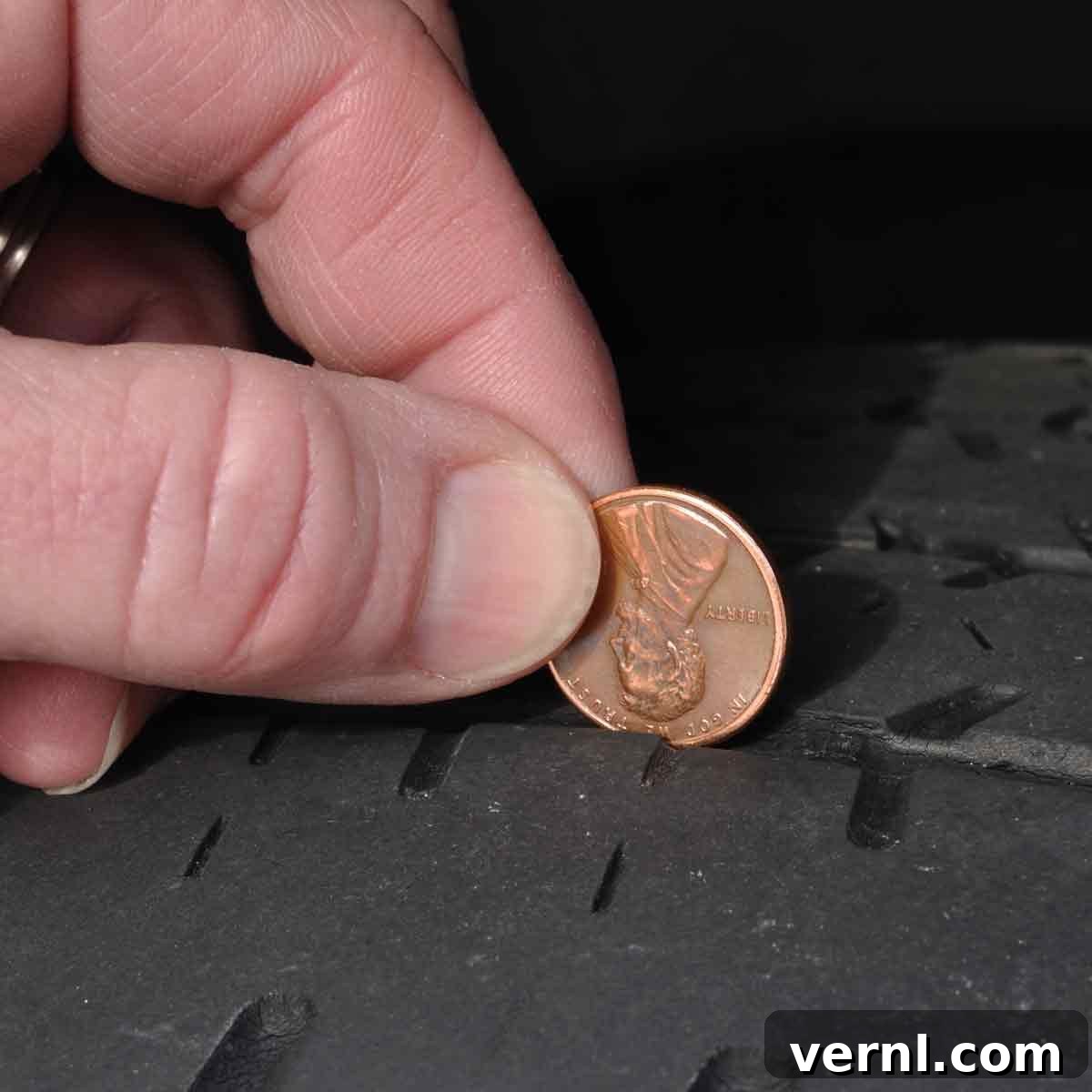
The penny test is a widely known and convenient method for a quick assessment of your tire tread. It doesn’t require any special tools and can be performed in minutes.
- Find a Penny: Grab a U.S. penny.
- Position Lincoln’s Head: Insert the penny into a tread groove with Abraham Lincoln’s head upside down and facing you.
- Observe Lincoln’s Head:
- If you can see the very top of Lincoln’s head: Your tread depth is approximately 2/32 of an inch or less. This indicates that your tires are likely worn to the legal limit and should be replaced immediately.
- If Lincoln’s head is partially obscured: Your tread is likely above 2/32 of an inch but might be approaching the replacement zone. It’s a good time to start planning for new tires and monitor them more closely.
- If Lincoln’s head is fully covered: Your tires still have a good amount of tread, typically above 4/32 of an inch, suggesting they are in a safe condition for now.
- Check Multiple Spots: Repeat this test in several different tread grooves across each tire, especially if you suspect uneven wear.
While practical, the penny test serves as a basic indicator. For more precise results, especially as tires wear down, a dedicated tool is recommended.
2. Using a Tread Depth Gauge (The Most Accurate Method)
A tire tread depth gauge provides the most accurate measurement and is highly recommended for anyone serious about vehicle maintenance. These inexpensive tools are readily available at automotive stores.
- Park on a Flat Surface: Ensure your vehicle is parked on a level surface with the parking brake engaged.
- Locate a Tread Groove: Choose a main tread groove, avoiding the smaller sipes or wear bars.
- Insert the Gauge: Press the top of the gauge firmly against the tire surface and insert the probe into the deepest part of the tread groove until it bottoms out.
- Read the Measurement: Withdraw the gauge and read the measurement displayed, typically in 32nds of an inch or millimeters.
- Check Multiple Points: Repeat this process at various points around the tire’s circumference and across its width (inner, middle, outer sections) to detect any uneven wear. It’s crucial to check all four tires.
For most vehicles, new tires typically have a tread depth of 10/32 or 11/32 of an inch. While the legal minimum is often 2/32 of an inch, many experts recommend replacing tires when they reach 4/32 of an inch, especially if you frequently drive in wet conditions.
3. Visual Inspection and Tread Wear Indicators
Beyond measuring, a thorough visual inspection can reveal critical information about your tires’ condition.
- Tread Wear Indicator Bars: Modern tires are manufactured with small, raised bars molded into the tread grooves at various points around the tire. When your tread wears down to the same level as these wear bars, it indicates that your tire tread is at or below 2/32 of an inch, signifying that replacement is due.
- Uneven Wear Patterns: Look for areas where the tread is significantly more worn than others.
- Wear on both edges: Often indicates underinflation.
- Wear in the center: Often indicates overinflation.
- Wear on one side (inner or outer): May point to alignment issues, worn suspension components, or improper camber.
- Feathering or scalloping: Irregular wear that feels like saw teeth, often a sign of alignment or balancing problems.
- Cracks, Bulges, or Punctures: Any visible damage to the sidewall or tread area, such as cracks, bulges, or embedded objects, warrants immediate professional inspection.
Understanding Tread Depth Standards: Legal vs. Recommended
While 2/32 of an inch is the widely accepted legal minimum tread depth in many places, it’s crucial to understand that this is the absolute minimum for safety, particularly in dry conditions. Performance, especially in adverse weather, significantly degrades as tread approaches this limit.
- Legal Minimum (2/32 inch): At this depth, a tire’s ability to channel water and provide grip in wet conditions is severely compromised. Driving on tires at this level increases the risk of hydroplaning and extends braking distances significantly.
- Recommended Replacement (4/32 inch): Many automotive experts and tire manufacturers suggest replacing tires when they reach 4/32 of an inch. At this depth, tires still offer reasonable performance in dry conditions but begin to lose effectiveness on wet or snowy roads. Proactive replacement at 4/32 inches ensures better safety margins.
Consider your driving environment: If you frequently encounter rain, snow, or drive at high speeds, replacing tires closer to the 4/32-inch mark is a wise decision for enhanced safety.
Other Signs Your Tires Need Replacement
Tread depth isn’t the only indicator of a tire nearing the end of its service life. Keep an eye out for these other warning signs:
- Age: Tires degrade over time, even if they aren’t frequently driven. Most manufacturers recommend replacing tires that are 6 years old or older, regardless of visible tread wear. Check the DOT code on the sidewall for the manufacturing date.
- Cracks in the Sidewall: Small cracks or “crazing” in the sidewall indicate the rubber is drying out and losing its integrity. Deep cracks are a serious safety concern.
- Bulges or Blisters: A bulge on the tire sidewall signifies that the internal structure of the tire has been damaged, often due to impact with a pothole or curb. This creates a weak spot that could lead to a sudden blowout.
- Excessive Vibrations: While vibrations can be caused by various issues (like unbalanced wheels or worn suspension), tires with internal damage can also cause noticeable shaking, especially at higher speeds.
- Punctures that Can’t Be Repaired: Some punctures, especially those close to the sidewall or larger than ¼ inch, cannot be safely repaired and necessitate tire replacement.
Factors Influencing Tire Wear and Longevity
The rate at which your tires wear down is influenced by a combination of factors. Understanding these can help you extend their lifespan and maintain safety.
- Driving Habits: Aggressive driving, including rapid acceleration, hard braking, and fast cornering, significantly increases tire wear. Smooth, deliberate driving helps preserve tread.
- Tire Pressure: Improper tire inflation is one of the leading causes of premature and uneven tire wear.
- Underinflation: Causes excessive wear on the outer edges of the tread and increases rolling resistance, leading to reduced fuel efficiency.
- Overinflation: Leads to excessive wear in the center of the tread and can make the ride harsher.
Always refer to your vehicle’s owner’s manual or the sticker on the driver’s side door jamb for the recommended tire pressure.
- Wheel Alignment: Misaligned wheels can cause tires to drag or scrub, leading to rapid and uneven wear (e.g., feathering, wear on one side). Regular alignment checks are crucial.
- Tire Rotation: Rotating your tires according to your vehicle manufacturer’s recommendations (typically every 5,000 to 7,500 miles) helps distribute wear evenly across all four tires, maximizing their lifespan.
- Wheel Balancing: Unbalanced wheels can cause vibrations and contribute to uneven tire wear. Balancing should be done when new tires are installed or when you notice vibrations.
- Suspension Components: Worn shocks, struts, or other suspension parts can negatively impact tire contact with the road, leading to irregular wear patterns.
- Road Conditions: Frequently driving on rough roads, gravel, or through construction zones can accelerate wear and increase the risk of damage.
- Climate: Extreme temperatures, especially prolonged exposure to heat and UV rays, can cause rubber to degrade more quickly.
The Benefits of Proactive Tire Maintenance
Regularly checking your tire tread and addressing wear issues promptly offers numerous advantages:
- Enhanced Safety: Properly maintained tires provide optimal grip for braking, steering, and acceleration, significantly reducing the risk of accidents, especially in adverse weather.
- Improved Fuel Efficiency: Correctly inflated tires with adequate tread reduce rolling resistance, meaning your engine doesn’t have to work as hard, leading to better gas mileage.
- Extended Tire Lifespan: Proactive maintenance, including proper inflation, rotation, and alignment, ensures even wear and maximizes the usable life of your tires, saving you money in the long run.
- Better Driving Performance: Tires in good condition contribute to a smoother, more comfortable ride and more responsive handling.
- Compliance with Laws: Avoiding fines and penalties for driving with illegally worn tires.
Conclusion: Drive Confidently with Proper Tire Care
Your vehicle’s tires are a fundamental safety component that demands attention and regular inspection. By understanding how to measure tire tread, recognizing the signs of wear, and adopting good maintenance habits, you take an active role in ensuring your safety and the longevity of your vehicle.
Whether you use a simple penny test or a precise tread depth gauge, making tire checks a routine part of your automotive care will pay dividends in peace of mind, performance, and ultimately, your safety on the road. Don’t wait until it’s too late – give your tires the attention they deserve and drive with confidence.
For more detailed information and expert advice on how to inspect your tires, visit The Family Handyman’s comprehensive guide:
How to Check Tire Tread