
Master Your Dishwasher: A Comprehensive Guide to Efficient and Sparkling Clean Dishes
Do you own a dishwasher but rarely use it? You’re not alone. The U.S. Energy Information Administration reports a surprising statistic: nearly 20% of American households equipped with a dishwasher choose not to utilize it. This revelation can be perplexing, especially for those who have spent years washing dishes by hand, understanding the time and effort involved.
Perhaps you’ve adopted the habit of washing dishes immediately after use, never accumulating enough to warrant a full load. Or perhaps you hold a common misconception that dishwashers are excessive water guzzlers. The truth, however, might surprise you.
“Studies consistently demonstrate that modern dishwashers use significantly less water and energy compared to traditional handwashing methods,” explains Haven Polich, a seasoned product manager at Asko Appliances. Polich highlights the remarkable efficiency of contemporary models, noting that Asko’s dishwashers, for instance, consume a mere three gallons per cycle. In stark contrast, newer kitchen faucets can pour out up to two gallons of water every minute during handwashing, making the dishwasher a surprisingly eco-friendly choice.
Another prevalent reason for under-utilization might stem from a lack of confidence or knowledge regarding proper operation. With numerous buttons, cycles, and loading configurations, understanding how to maximize your dishwasher’s potential can seem daunting. To demystify the process and help you achieve impeccably clean dishes every time, we’ve consulted with experts like Polich and Alicia Sokolowski, President and co-CEO of AspenClean, to walk you through the essential steps.
While specific recommendations may exhibit slight variations based on your dishwasher’s particular model and its cutting-edge features, the fundamental principles of effective dishwasher use remain largely consistent across various brands. This guide aims to provide universal best practices to help you get the most out of your appliance.
Step 1: Scrape Your Dishes, Don’t Pre-Rinse
One of the most common myths surrounding dishwasher use is the necessity of pre-rinsing dishes. Contrary to popular belief, extensive pre-rinsing is often unnecessary and can even be counterproductive. “The key is to simply scrape off any excess food particles into the trash, ensuring that larger pieces don’t obstruct the dishwasher’s drain filter,” advises Polich.
Sokolowski further elaborates on why pre-rinsing can hinder performance: modern dishwasher detergents are formulated with powerful enzymes specifically designed to break down food residue. “If your dishes are already thoroughly cleaned by hand, these enzymes have nothing left to act upon, diminishing the detergent’s effectiveness,” she states. This can lead to inefficient cleaning and wasted detergent.
Most dishwashers manufactured in the 2000s and beyond are equipped with advanced sensors that intelligently detect the level of residue on your dishes, automatically adjusting the wash cycle for optimal cleaning. However, if you possess an older model, or if you consistently find your dishes aren’t as spotless as desired, a light rinse might still be beneficial. Regardless of your dishwasher’s age, investing in a reputable, high-quality dishwasher detergent can make a significant difference in cleaning performance. Moreover, remember the crucial step of periodically cleaning your dishwasher’s filter to maintain peak efficiency and prevent blockages.
Step 2: Load Your Dishwasher Strategically
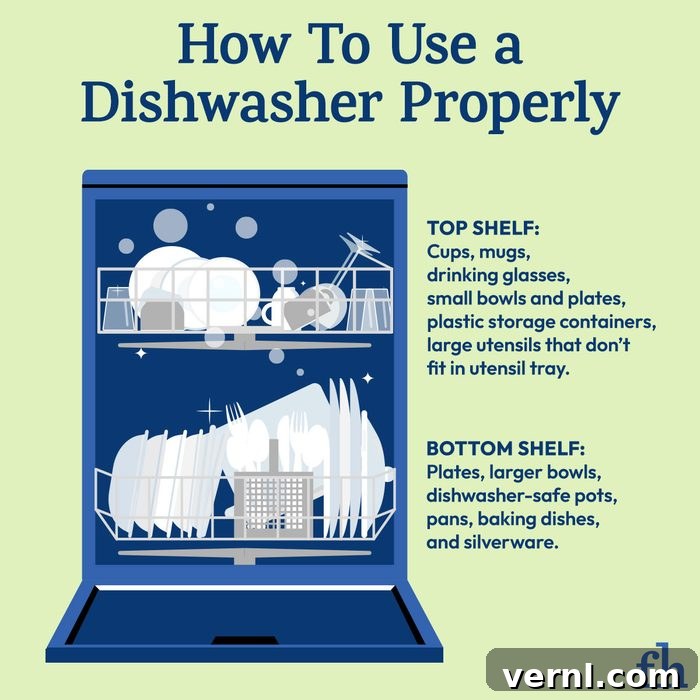
Loading a dishwasher isn’t a chaotic free-for-all; there’s a definite art to it. Improper loading can not only lead to poorly cleaned dishes but also potential damage to your dishware. The first and most important step is always to consult your dishwasher’s use and care guide. This manual often includes detailed diagrams showcasing optimal loading configurations tailored to your specific model. Nevertheless, here are some general guidelines that apply to most dishwashers:
What Goes in the Top Rack of the Dishwasher?
The top rack is typically reserved for more delicate and smaller items, away from the intense heat of the heating element often located at the bottom. This includes cups, mugs, various drinking glasses, small bowls, saucers, and smaller plates. Additionally, plastic storage containers and larger cooking utensils that don’t fit securely in the silverware basket should be placed here. When arranging glasses and cups, position them between the tines rather than directly over them. This maximizes space utilization and, as Sokolowski points out, “prevents them from flipping over during the wash cycle and collecting dirty water.”
Many modern dishwashers feature adjustable tines on the top rack, allowing you to lay them flat to accommodate larger, oddly shaped items such as serving bowls or colanders. Before loading any plastic items, always verify they are labeled “dishwasher-safe” to prevent warping or melting. Even if deemed safe, it’s best practice to keep plastic items on the top rack, safely distant from the bottom heating element.
What Goes in the Bottom Rack?
The bottom rack is designed for your heavier, more robust items that require a more intense wash. This includes dinner plates, larger bowls, and dishwasher-safe pots, pans, and baking dishes. Ensure these items are angled slightly downward with their dirtiest surfaces facing the middle of the dishwasher to allow direct access for the spray arms. It’s critical to avoid overcrowding and positioning items in a way that blocks the sprayer arms. “These arms contain the powerful jets of water responsible for washing and rinsing your dishes thoroughly,” Polich reminds us.
Silverware generally occupies a dedicated basket on the bottom rack. However, an increasing number of newer dishwashers now feature a convenient “third rack” specifically for flatware, located at the very top. If your dishwasher includes a third rack, be sure to consult your manual for its specific loading instructions. When loading silverware into a basket, mix up the placement of forks, spoons, and knives to prevent “nesting,” where items stick together and aren’t properly cleaned. Polich suggests loading forks and spoons with handles up, which is considered more hygienic as you handle the clean, non-eating surface when unloading. For safety, knives should always be loaded with their handles up, minimizing the risk of accidental cuts from upward-facing blades.
Step 3: Add the Correct Dishwasher Detergent
Choosing and adding the right detergent is fundamental to achieving sparkling clean dishes. Dishwasher detergents come in various forms: liquid, powder, gel, and pods. It is crucial to use a product specifically formulated for dishwashers; never substitute with hand dish soap, as the excessive suds will overflow your machine and create a soapy mess in your kitchen.
The amount of detergent needed can vary based on several factors, including the level of food soil on your dishes and the hardness of your water. Always refer to the directions on the detergent packaging for precise guidance. Pods have become incredibly popular due to their convenience and pre-measured, guesswork-free application. However, Sokolowski encourages consumers to consider the environmental impact of single-use packaging associated with some pods, which can contribute to plastic waste. “Opt for an eco-friendly brand that has earned reputable certifications for sustainability,” Sokolowski advises, highlighting brands like AspenClean, whose multi-certified pods are free from plastics and petroleum.
Most dishwasher detergent compartments are conveniently located on the inside of the door. They typically feature a main detergent cup, a smaller divot or pre-wash compartment designed for adding extra detergent for heavily soiled loads or in areas with hard water, and a dedicated reservoir for rinse aid.
If you frequently notice water spots, streaks, or a cloudy film on your dishes after a wash cycle, consider using a rinse aid. “Rinse aid works by reducing the surface tension of water, encouraging it to sheet off dishes smoothly instead of forming droplets that can leave behind mineral spots as they dry,” Polich explains. This results in faster drying and a noticeably shinier finish.
Step 4: Select the Appropriate Cycle
Modern dishwashers offer a variety of wash cycles, each tailored for different cleaning needs. Selecting the correct cycle ensures optimal cleaning and energy efficiency:
- Heavy Duty or Pots & Pans: Ideal for tackling stubbornly baked-on food, heavily soiled pots, pans, and casserole dishes, perfect for after a big holiday dinner.
- Normal or Auto Sense: This is your go-to cycle for everyday loads with typical food soil. Many modern dishwashers feature “Auto Sense” or “Sensor Wash” cycles that automatically detect soil levels and adjust water temperature and wash time accordingly, offering smart and efficient cleaning.
- Quick Wash or Express: Designed for lightly soiled dishes that need a speedy refresh, such as glasses from a wine party or dishes used for snacks. This cycle uses less water and heat.
- Energy Saver or Eco: This cycle typically uses lower wash temperatures and longer wash times to conserve energy while still effectively cleaning dishes. It’s an excellent choice for environmental consciousness.
- Delicate or Glasses: Specifically designed for fragile items like crystal stemware, using gentler spray pressure and lower temperatures to prevent damage.
- Sanitize or Hygiene: Found on some dishwashers, like Asko’s, this cycle uses extremely high temperatures to kill bacteria, making it suitable for sanitizing baby bottles, cutting boards, or for individuals with specific hygiene concerns.
If your dishwasher features top-mounted controls, you will typically select your desired cycle and press the start button before firmly closing the door. For models with controls on the front face of the door, the selection is usually made after the door is closed. Should you encounter issues with your dishwasher door seal, a guide for replacing the dishwasher seal is readily available to ensure proper operation.
Step 5: Start the Dishwasher
Once your dishes are loaded, detergent added, and cycle selected, it’s time to initiate the wash. For top-control dishwashers, after pressing start, you’ll need to firmly shut the door to begin the cycle. If your controls are on the front panel, simply press the start button. Ensure the door latches securely, as most dishwashers will not operate if the door is not fully closed.
We’ve all been there – realizing you forgot to add a crucial item just after starting the cycle. The good news is that most modern dishwashers are designed with this in mind. Polich confirms that “most dishwashers will pause the cycle when the door is opened and resume when it’s closed again.” However, exercise caution: avoid opening the door too far into the cycle, as the added item may not receive adequate cleaning time. Newer models often feature a convenient indicator light or display message, signaling when it’s safe to open the door and add a forgotten dish without disrupting the wash significantly.
Common Dishwasher Mistakes to Avoid
Even with the best intentions, users can fall into common traps that hinder their dishwasher’s performance and longevity. Avoiding these pitfalls will ensure your machine runs efficiently and your dishes emerge impeccably clean:
- Leaving Dirty Dishes Overnight: While it might seem convenient, allowing heavily soiled dishes to sit in the dishwasher overnight can lead to dried-on food particles that are harder to remove and can result in a stinky kitchen come morning. Running the cycle before bed is often the best approach.
- Improper Loading and Overcrowding: “Ensure there is ample space between each item to allow water and detergent to reach all surfaces effectively,” advises Sokolowski. Overloading blocks spray arms and prevents thorough cleaning, leaving you with dirty dishes.
- Closing the Door When Not in Use: It’s a common habit to shut the dishwasher door completely when empty. However, “it’s best to keep the door slightly ajar after unloading to promote air circulation and help the interior dry out,” Polich recommends. This prevents the buildup of moisture, which can lead to mildew and unpleasant odors.
- Not Scraping Off Excess Food: While pre-rinsing isn’t necessary, failing to scrape off large food chunks can lead to blockages in the dishwasher drain and filter, severely impacting performance and potentially requiring manual intervention.
- Using the Wrong Detergent: As mentioned, never use hand dish soap. Always opt for detergents specifically designed for dishwashers to prevent excessive sudsing and potential damage to your appliance.
- Neglecting Filter Cleaning: A dirty filter is a primary culprit for poor cleaning performance and odors. Regularly cleaning your dishwasher’s filter, as per manufacturer instructions, is essential for optimal operation.
Frequently Asked Questions About Dishwasher Use
What kind of dishes should not go in a dishwasher?
While dishwashers are incredibly convenient, certain items are best washed by hand to preserve their integrity and longevity:
- Cast Iron: Dishwashers strip away the seasoning on cast iron, leading to rust and diminished non-stick properties.
- Wooden Cutting Boards and Utensils: High heat and prolonged exposure to water can cause wood to warp, crack, and lose its finish.
- Crystal Stemware: Unless your dishwasher features a specific delicate or crystal cycle with appropriate racking, the high temperatures and strong water jets can etch, chip, or break fragile crystal.
- Non-Stick Cookware: The abrasive detergents and high heat can degrade non-stick coatings over time, reducing their effectiveness and lifespan.
- Quality Kitchen Knives: The harsh detergents and jostling in the dishwasher can dull knife blades much faster than handwashing, requiring more frequent sharpening.
- Pewter, Copper, and Brass Items: These metals can tarnish or discolor in the dishwasher.
- Hand-Painted or Gold-Rimmed Dishes: The detergents and heat can cause decorations to fade or peel off.
- Aluminum Cookware (unless anodized): Unanodized aluminum can oxidize and discolor in the dishwasher, leaving unsightly stains.
About Our Experts
- Haven Polich is a distinguished product manager at Asko Appliances, a renowned manufacturer of Scandinavian-inspired luxury kitchen and laundry appliances.
- Alicia Sokolowski serves as the president and co-CEO of AspenClean, a company dedicated to producing environmentally-conscious and cruelty-free cleaning products.
Sources
- U.S. Energy Information Administration, Residential Energy Consumption Survey, 2020.
- U.S. Geological Survey, How Much Water Do You Use at Home