
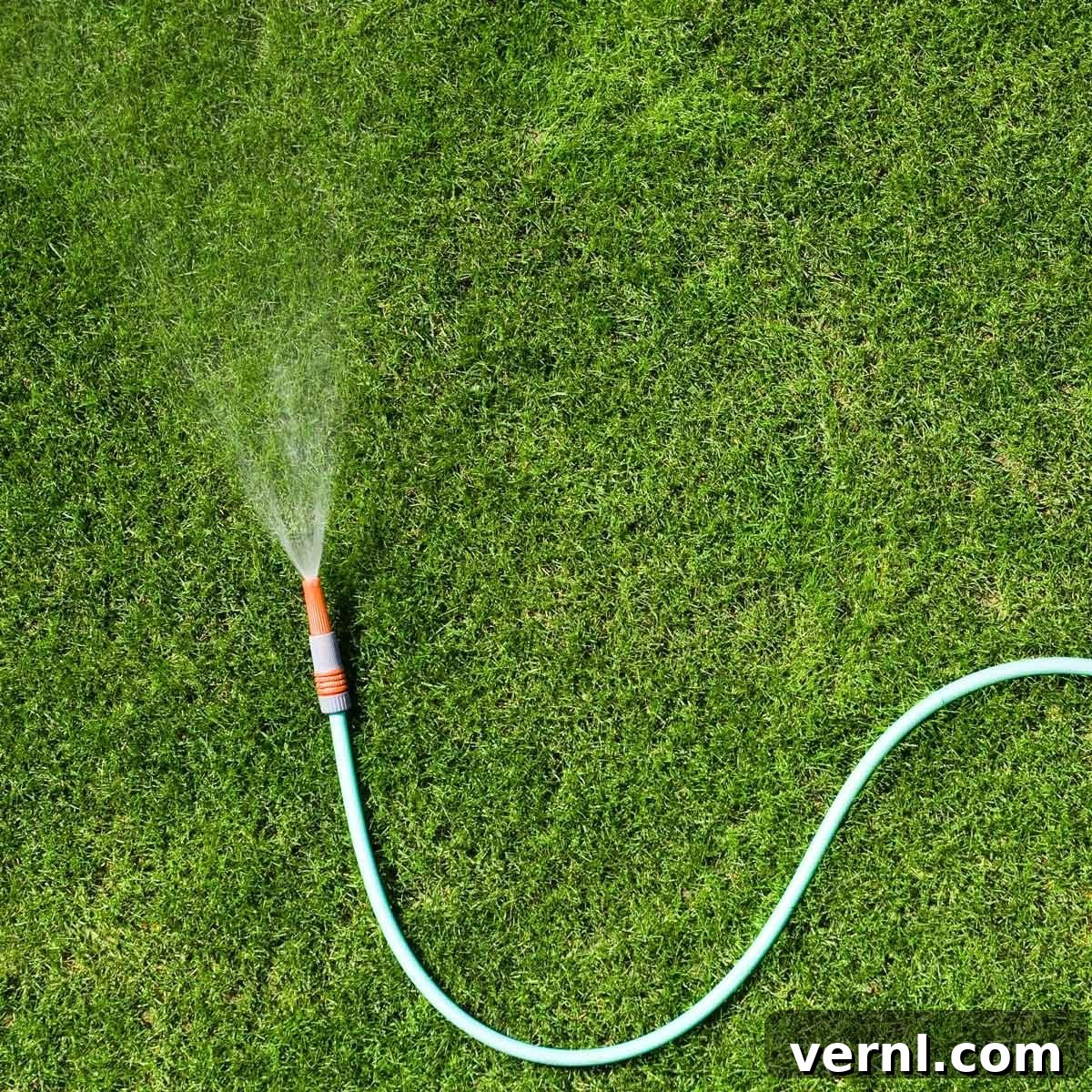
Achieving a lush, green lawn is a goal for many homeowners, and effective watering is undeniably at the heart of this pursuit. However, the exact amount of water your lawn truly needs is not a one-size-fits-all answer. It’s a delicate balance influenced by a multitude of environmental and horticultural factors. Understanding these variables is key to cultivating a resilient and visually appealing turf while also conserving precious resources.
Several critical elements dictate your lawn’s hydration requirements. These include your specific grass type, whether it’s a cool-season variety like fescue or a warm-season grass such as Bermuda. The prevailing sun and shade conditions across your property also play a significant role; areas with more direct sunlight will naturally dry out faster. Furthermore, your soil composition—whether it’s sandy, clay-rich, or loamy—directly impacts water retention and drainage. Finally, the time of year and local climate conditions necessitate adjustments to your watering regimen. By taking these unique considerations of your yard into account, you can strike the perfect balance for your personal green space, ensuring optimal health and vibrancy without wasting water or encouraging common lawn problems.
When is the Optimal Time to Water Your Grass?
Timing isn’t just important; it’s absolutely crucial when it comes to watering your lawn. Proper timing can significantly impact water efficiency, the overall health and appearance of your grass, and even your utility bills. Knowing the best moments to hydrate your lawn can help you save water, reduce costs, and cultivate a significantly healthier, more attractive turf that resists disease and drought.
Best Time of Day for Watering
According to lawn and landscape experts, including those from the National Association of Landscape Professionals (NALP), the ideal window for watering your grass and other garden plants is early in the morning. This period, typically between 4 AM and 9 AM, is when you’ll get the most “bang for your watering buck.” The reasons behind this recommendation are scientifically sound and focus on maximizing absorption while minimizing negative outcomes.
- Reduced Evaporation: Watering in the cool, calm hours of the morning significantly reduces water loss due to evaporation. As the sun rises and temperatures climb later in the day, a substantial portion of the water applied to your lawn can evaporate into the atmosphere before it has a chance to penetrate the soil and reach the grass roots. This not only wastes water but also deprives your lawn of the hydration it needs.
- Deep Penetration: Morning watering allows the water ample time to soak deeply into the soil before the heat of the day intensifies. This encourages deeper root growth, making your lawn more resilient to dry spells and requiring less frequent watering overall.
- Disease Prevention: Watering in the evening or overnight, conversely, can encourage the growth of harmful fungi and diseases. When grass blades remain wet for extended periods, especially through cool night temperatures, they create an ideal environment for various fungal pathogens to thrive. By watering in the morning, the grass has the entire day to dry off naturally under the sun, greatly reducing the risk of fungal infections like brown patch or dollar spot.
Therefore, scheduling your irrigation systems to run before sunrise ensures that your lawn receives the maximum benefit from every drop of water, promoting a healthier turf and minimizing potential problems.
Seasonal Watering Adjustments
The optimal time to water your grass also refers to the seasons, as your lawn’s needs fluctuate dramatically throughout the year. Understanding these seasonal demands is crucial for maintaining a vibrant landscape. Generally, grasses require consistent watering during the warmer seasons, primarily spring and summer months, when they are actively growing and experiencing more heat stress.
- Spring: As grass emerges from dormancy, it begins to actively grow. Watering should gradually increase as temperatures rise, preparing the lawn for the intense summer ahead.
- Summer: This is the peak growing season for most grass types and often the hottest, driest period. Lawns will require the most attention during these months, adhering to the weekly 1 to 1.5 inches of water guideline. Extreme heatwaves or prolonged dry spells might necessitate slight increases in frequency or duration.
- Fall: As temperatures begin to cool, grass growth slows down. Watering should be gradually reduced, allowing the lawn to transition into dormancy naturally. However, it’s important to provide enough moisture to support root development, which continues even as top growth slows.
- Winter: In most regions, grass enters a dormant state during winter and generally doesn’t require watering. The natural rainfall and snowmelt are typically sufficient to sustain the dormant roots. Overwatering dormant grass can lead to root rot or create an environment conducive to winter diseases. If your lawn has been properly maintained with adequate watering, mowing, aerating, and fertilizing during the active growing seasons, it should be robust enough to withstand the winter chill and return vigorously in the spring.
How Much Water Does My Grass Really Need?
Determining the correct amount of water for your lawn is paramount for its health and appearance. While many factors contribute, a general guideline serves as an excellent starting point: most grass types typically require between one and 1-1/2 inches (approximately 2.5 to 3.8 cm) of water each week. This measurement includes all sources of moisture, whether it’s natural rainfall or supplemental irrigation from your sprinklers. This amount is crucial for encouraging deep root growth, which in turn makes your lawn more resilient to drought and heat stress.
However, this is a general rule that needs to be adapted to specific conditions. For instance, during periods of extremely hot, dry weather, your lawn’s water requirements can increase. Higher temperatures lead to increased evapotranspiration—where water evaporates from the soil and transpires from the plant leaves at a faster rate. Conversely, when the temperature is cooler, or during times of increased humidity or cloud cover, the need for water decreases. It’s important to observe your lawn and local weather conditions to make these adjustments, ensuring your grass receives adequate moisture without being overwatered, which can lead to shallow roots and disease.
How Long and How Often Should You Water Your Grass?
The key to efficient and effective lawn watering lies in the principle of “deep and infrequent.” Rather than daily shallow watering, which encourages weak, shallow root systems susceptible to drought, professionals advocate for providing a thorough soaking at less frequent intervals. This method promotes deep root development, making your lawn more robust and self-sufficient.
Deep and Infrequent Watering: The Gold Standard
Aim to water your grass until it receives one to 1-1/2 inches of water, measured accurately. A simple and effective way to gauge this is by placing a rain gauge or even a few empty tuna cans in different areas of your lawn where your sprinklers are operating. Once the gauge or cans collect the target amount of water, you know you’ve applied enough. Most lawns, when watered deeply, are capable of sustaining themselves for five to seven days between waterings. Therefore, deeply watering on a weekly basis, rather than daily, is often sufficient to help your grass thrive, encouraging its roots to grow deeper in search of moisture.
This approach trains your grass to develop extensive root systems, which can access water from deeper in the soil profile. Shallow, frequent watering, on the other hand, keeps moisture near the surface, leading to shallow roots that are more vulnerable to heat, drought, and stress. It also compacts the topsoil and encourages weed growth, which often have shallower root systems.
Understanding Hydrozones for Tailored Watering
Not all areas of your lawn have the same watering needs. Professionals often use the concept of “hydrozones” to divide a landscape into areas with similar watering requirements, allowing for more precise and water-efficient irrigation. Understanding these zones within your own yard can significantly optimize your watering strategy:
- Principal Hydrozones (High Activity/High Exposure): These are typically areas of your lawn that experience the most activity or are exposed to the most sun, such as your backyard where children or pets play, or open areas receiving full sun exposure. Due to increased traffic and higher rates of evaporation, these zones will naturally require more water. These high-traffic, high-visibility areas should receive routine weekly watering, ensuring they get the full 1 to 1.5 inches of water.
- Reduced Irrigation Hydrozones (Visually Important, Less Activity): These are parts of your lawn that are important for aesthetics but don’t see as much foot traffic or might receive some shade. Examples include front yard borders or areas under trees. While still requiring irrigation, these areas can often thrive on reduced watering schedules or amounts compared to principal hydrozones, potentially needing watering only every 10-14 days, or slightly less than the full weekly quota.
- Minimal Hydrozones (Low Use/Natural Rainfall): These are areas of the yard that receive little to no human use, are often in significant shade, or are naturally adapted to local rainfall patterns. These zones should generally be watered only if they show distinct signs of dryness or stress. For the most part, natural rainfall should be enough to sustain them. Overwatering these areas is not only wasteful but can also promote unhealthy conditions.
Managing Runoff and Soil Absorption
During the watering process, it’s crucial to observe how your soil absorbs water. If you notice that water is puddling on the surface or runoff occurs, it’s a clear sign that the soil cannot absorb water as quickly as it’s being applied. In such cases, turn the sprinkler off for a few minutes. This allows the water to soak into the ground before resuming irrigation. This technique, often called “cycle and soak,” is particularly effective on compacted soils or sloped areas. Allowing the grass and soil to completely dry out between watering sessions is also vital, as it prevents anaerobic conditions and encourages roots to grow deeper, seeking out available moisture. This drying period helps prevent root rot and other moisture-related diseases.
How to Know When Your Grass Needs Water
While maintaining a consistent watering schedule of one to 1-1/2 inches per week is generally effective, it’s also important to be able to read your lawn for signs of thirst. Your grass will communicate its needs through visual cues and simple tests. Relying solely on a schedule without observation can lead to either overwatering or underwatering, both of which are detrimental to lawn health. Here are two surefire methods to determine if your grass needs more water:
1. The Soil Probe Test
This is one of the most reliable methods for assessing soil moisture levels at the root zone. As recommended by The Lawn Institute, if a probe—such as an old screwdriver, a large metal spike, or even a garden trowel—can be easily pushed into the soil to a depth of 4 to 6 inches (about 10-15 cm), then the soil is still moist enough, and your grass likely doesn’t need watering. The ease of penetration indicates sufficient moisture. Conversely, if the probe is difficult to push into the ground, or you can feel that the soil is dry and hard at a depth of four to six inches, it’s a strong indication that your lawn is thirsty and requires immediate watering. This test directly tells you if moisture has reached the crucial root zone where grass absorbs water.
2. Visual Cues: Grass Color and Footprint Test
Your grass itself provides clear visual signals when it’s under stress from lack of water:
- Grass Color: A well-hydrated lawn typically exhibits a vibrant, rich green color. However, grass that is in need of water will often develop a distinct gray-blue cast to it. This subtle change in hue is an early warning sign, indicating that the grass blades are beginning to lose their turgor (internal water pressure) and are becoming dehydrated. As dehydration progresses, the color will transition to dull green, then eventually to straw-like brown if left unwatered.
- The Footprint Test: This is a simple yet highly effective way to assess your lawn’s hydration. On an adequately-watered, healthy lawn, grass blades are plump and springy. If you walk across it, your footprints will quickly disappear within minutes as the resilient blades bounce back into place. However, if your lawn is dehydrated, the blades will be limp and lack their normal elasticity. If your footprints remain visible for 30 minutes or more after you’ve walked across the grass, it’s a clear indication that your lawn needs water. The blades are too stressed to spring back, signaling thirst.
By regularly performing these tests, you can fine-tune your watering schedule to precisely meet your lawn’s needs, preventing both drought stress and the problems associated with overwatering.
The Numerous Benefits of a Well-Watered Lawn
Beyond the obvious aesthetic appeal, maintaining a consistently well-watered and healthy lawn offers a wealth of benefits, transforming your property into a more functional, environmentally friendly, and enjoyable space. A vibrant lawn is more than just a pretty picture; it’s an investment in your home and the environment.
- Enhanced Beauty and Curb Appeal: The most immediate and striking benefit is undoubtedly the visual transformation. A lush, green lawn significantly enhances your property’s curb appeal, making it look well-maintained and inviting. This contrasts sharply with a dry, brown lawn, which can detract from the overall beauty of your home and neighborhood. A healthy lawn can even boost property value, making it a wise investment.
- Natural Pest and Weed Control: A dense, vigorously growing lawn is your first line of defense against common garden invaders. Healthy turf naturally outcompetes weeds for water, nutrients, and sunlight, making it harder for them to establish. Similarly, a strong, healthy lawn is more resistant to insect infestations and various diseases, reducing the need for chemical treatments and making your yard safer for families and pets.
- Environmental Contributions: Healthy lawns play a vital role in local ecosystems and air quality. They act as natural coolants through evapotranspiration, where water vapor is released into the atmosphere, helping to lower ambient temperatures—often several degrees cooler than paved surfaces. Lawns also significantly contribute to cleaning the air by absorbing carbon dioxide and other pollutants, converting them into oxygen, and trapping dust particles. Furthermore, a well-maintained lawn reduces soil erosion, especially on sloped areas, and acts as a natural filter, helping to purify rainwater as it percolates into the ground, replenishing groundwater supplies.
- Noise Minimization: The dense blades and underlying soil of a healthy lawn can actually absorb sound waves, acting as natural noise minimizers. This can contribute to a quieter, more peaceful outdoor environment, particularly beneficial in urban or suburban settings.
- Recreational and Wellness Space: A green, soft lawn provides an ideal surface for recreation, whether it’s for children to play, pets to roam, or simply a comfortable spot for outdoor relaxation. Access to a beautiful green space has also been linked to reduced stress and improved mental well-being, offering a tranquil escape right outside your door.
By ensuring your lawn receives the right amount of water at the right time, you’re not just growing grass; you’re cultivating a resilient, beautiful, and beneficial living system that enhances your home and the environment.