
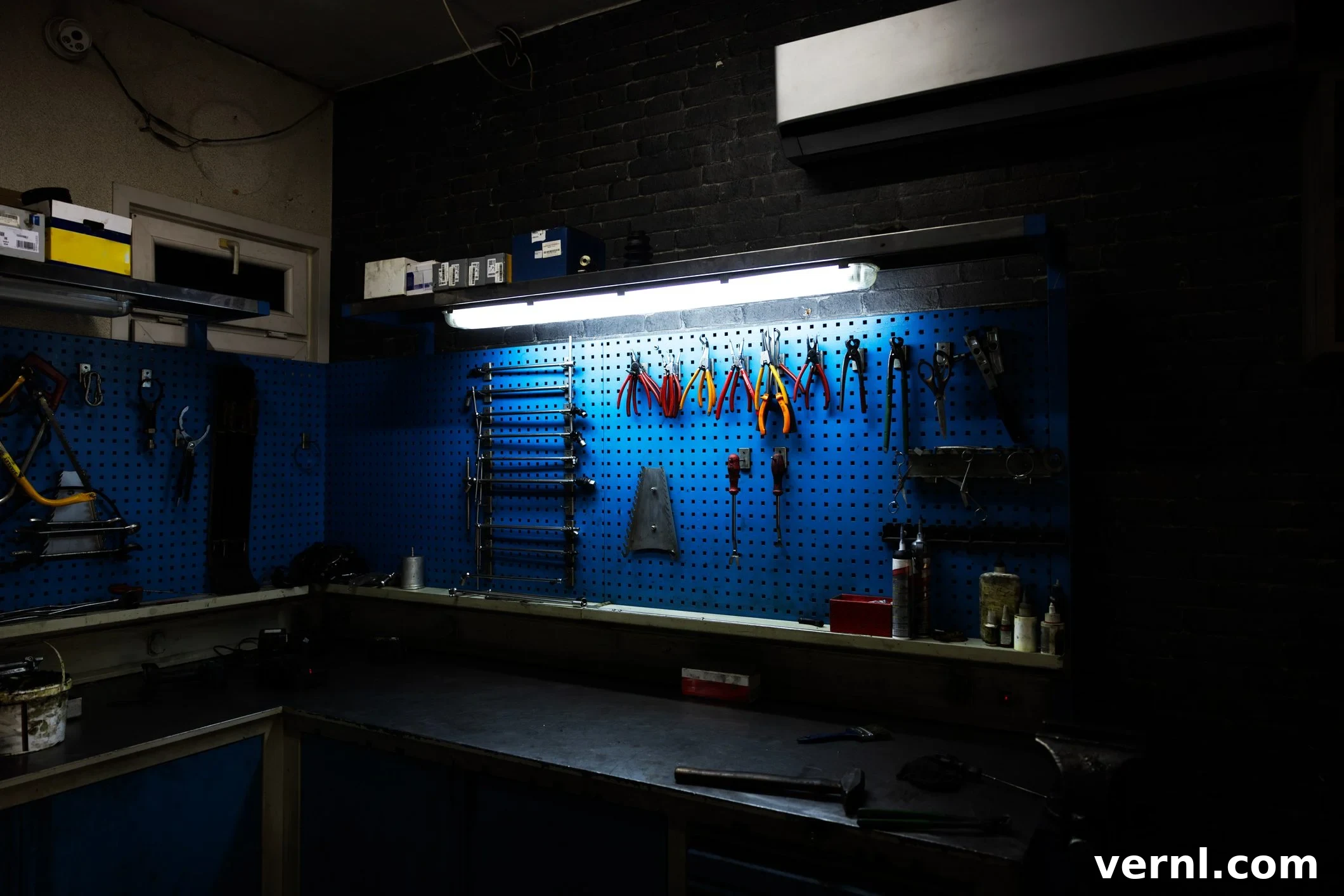
Illuminate Your DIY Projects: The Ultimate Guide to Task Lighting
When embarking on detailed projects or working with items that are hard to see, the right task lighting isn’t just a luxury—it’s a necessity. Unlike ambient light, which broadly illuminates an entire room with overhead fixtures, task lighting is specifically designed to focus concentrated illumination on your immediate workspace. This targeted approach can dramatically transform a challenging project into a quick success, saving you from frustrating squinting and potential errors.
To help DIY enthusiasts make the most of their workspaces, we’ve gathered insights from a panel of experienced interior designers, lighting consultants, and retailers. Their expertise sheds light on how to choose, use, and optimize task lighting for any project.
Why Is Task Lighting Indispensable for DIYers?
Understanding the fundamental differences between various lighting types is the first step, as explained by interior designer and Color Caravan founder Nicole Cullum. She distinguishes task lighting from its counterparts, ambient and accent lighting.
“Those standard can lights your builder installed everywhere? That’s ambient lighting—designed for general illumination,” Cullum elaborates. “Accent lighting, on the other hand, includes decorative fixtures like your table lamps, sconces, pendants, and chandeliers, meant to highlight specific features or add atmosphere.”
While ambient light offers general visibility, it often falls short when precision is required. As you shift your posture, lean in for a closer look, or need to view your work from different angles, ambient light often fails to provide consistent, adequate illumination. This is particularly true in naturally dim areas where DIY projects frequently occur. Dara Greaney, CEO of LEDLightExpert.com, highlights a common scenario: “You almost always need dedicated task lighting when working underneath a car or inside a cramped cabinet.”
Investing in quality task lighting offers several critical benefits for DIYers:
- Reduces Eye Strain and Fatigue: Adequate, focused light minimizes the effort your eyes exert, preventing headaches and fatigue during prolonged work sessions.
- Enhances Precision and Accuracy: Clear visibility allows you to make more accurate cuts, secure tighter connections, and perform intricate tasks with greater confidence.
- Improves Safety: Seeing exactly what you’re doing, especially when operating power tools or handling sharp objects, drastically reduces the risk of accidents.
- Boosts Productivity: When you can see clearly, you work more efficiently, make fewer mistakes, and complete projects faster.
- Optimizes Color Perception: The right color temperature in task lighting ensures that you perceive colors accurately, which is crucial for painting, staining, or electrical wiring.
Optimal Locations for Task Lighting in Your Home and Workshop
Task lighting is essential anywhere detailed work is performed. “No one wants to struggle to see what they’re chopping in the kitchen, or squint over important papers at your desk,” emphasizes Cullum. For most homeowners, the kitchen and home office are prime candidates. However, DIYers often find task lighting invaluable in a variety of other spaces:
- In the Garage: This often dimly lit space benefits immensely from task lighting. Whether you’re performing automotive repairs, maintaining large equipment, or organizing tools, bright, directed light significantly eases the process and enhances safety. Consider portable work lights that can be moved around or magnetic lights that attach to metal surfaces.
- On or Beside the Workbench: The workbench is the heart of many DIY projects. An adjustable task light, mounted directly to the bench, clamped to its edge, or positioned nearby, ensures that intricate assembly, fine woodworking, soldering, or electronic repairs are performed under optimal conditions, reducing eyestrain and improving precision.
- Mounted on Power Tools: Many modern power tools, such as drills, saws, and sanders, come with built-in LED lights. For those that don’t, magnetic or clamp-on lights can be attached directly to the tool or the workpiece, providing immediate illumination right where the action is.
- On Your Head: Headlamps are a versatile and often overlooked solution for hands-free task lighting. They are perfect for working in tight spaces, under sinks, in attics, during nighttime outdoor projects, or when you need both hands free for holding tools or materials.
- The Craft Room or Hobby Area: For intricate hobbies like model building, sewing, jewelry making, or detailed painting, precise illumination is critical for seeing small components and fine details.
- Laundry Room: While often overlooked, good task lighting over the washing machine or ironing board can help spot stains, read care labels, and ensure clothes are perfectly pressed.
- Reading Nooks and Study Areas: Beyond the home office, dedicated task lighting for reading or studying ensures comfort and reduces eye fatigue.
Key Considerations When Choosing DIY Task Lighting
DIY workspaces are incredibly diverse, varying in size, existing ambient light, and the nature of the work performed. Joe Barone, a lighting consultant for Farrey’s, underscores the importance of a tailored approach. “Consider the specific tasks performed in the space,” he advises, “and choose lighting with the appropriate brightness and color temperature to enhance visibility and reduce eye strain.”
Here are crucial features to look for when selecting the ideal task lighting for your DIY projects:
LED vs. Incandescent: The Modern Choice
For robust workshop task lights, LED bulbs are overwhelmingly superior to traditional incandescents. Incandescent bulbs generate light by heating a fragile filament, making them susceptible to vibrations common in a workshop environment. Activities like hammering, drilling, and sawing can easily snap an incandescent filament, leading to frequent bulb replacements. While LEDs can fail prematurely, they offer significantly greater durability, energy efficiency, and a longer lifespan, making them a much better overall fit for demanding work environments. LEDs also produce less heat, a welcome feature in a workspace, and their instant-on capability is a practical advantage.
Adjustability: Directing the Light Precisely
The ability to direct light exactly where you need it is non-negotiable for task lighting. Joel Worthington, president of Mr. Electric, recommends swing-arm lamps or clamp lights for their versatility. Greaney suggests LED strip lights mounted on adjustable arms for flexible illumination. “Tripod lighting is also very popular for larger projects,” Greaney notes, adding that some task lighting solutions can even be equipped with wheels for easy repositioning across larger workshops or garages. Look for features like flexible goosenecks, multi-jointed arms, swivel heads, and height adjustment mechanisms to ensure maximum control over light placement.
Dimmable Functionality: Tailoring Brightness
The ability to adjust the brightness of your task light is incredibly valuable. Dimmable features allow you to reduce glare on reflective surfaces, prevent eye fatigue during long sessions, or boost illumination for ultra-fine details. This feature becomes even more critical in workspaces where ambient light levels fluctuate throughout the day. A dimmer switch provides the flexibility to adapt your lighting to specific tasks, materials, and changing environmental conditions, optimizing comfort and visibility.
Rugged Construction: Built to Last
DIY environments can be tough on equipment. Opt for task lights with durable construction. Models featuring a metal frame (aluminum or steel) can withstand impacts and vibrations, lasting for many years. While durable plastic can also work, be mindful that in garages or workshops that aren’t temperature-controlled, some plastics can become brittle over time, increasing their susceptibility to damage. Look for features like reinforced cables, sturdy bases, and impact-resistant lenses. Some premium models even offer IP (Ingress Protection) ratings, indicating their resistance to dust and water, which can be beneficial in certain workshop settings.
Bench Dog Friendly: Integrated Workbench Solutions
Bench dogs are essential accessories for many workbenches, sliding into pre-drilled holes to provide quick and secure clamping points for work materials. If your task light can be attached to a bench dog, it offers unparalleled flexibility, allowing you to position the light almost anywhere on your workbench surface. This integration provides highly localized and adaptable illumination for specific tasks. For a clever DIY solution, if your task light has a magnetic base, simply screw a metal washer to a wooden bench dog for an instant dog-friendly mounting option.
Bolts, Not Rivets: Durability and Maintainability
For adjustable lights, models assembled with nuts and bolts are far superior to those using rivets. Bolted joints allow for easy adjustment—a simple loosening or tightening of the nuts can restore stability or change the tension of the joints over time. Even better, consider replacing one nut on each joint with a wingnut. This modification allows you to quickly move your light to the perfect angle, then hand-tighten the wingnut to lock it securely into place. This combines the convenience of an adjustable light with the steadfast stability of a fixed frame, making your lighting solution more reliable and long-lasting.
Color Temperature: The Right Hue for the Task
Color temperature describes the perceived “warmth” or “coolness” of the light, measured in degrees Kelvin (K). Yellow-tinged “soft white” light typically falls around 2,500K, while blue-tinged “cool light” can be around 5,500K. GE Lighting recommends that task lighting for detailed work should be in the range of 3,500K to 4,500K.
“For detailed, up-close work, you absolutely want a bright, clear colored bulb,” says Cullum. “Think of ‘daylight’ bulbs that emit a crisp, brilliant light, minimizing yellow tones that can obscure fine details and helping you see exactly what you’re working on with optimal clarity.” This temperature range mimics natural daylight, which is ideal for accurate color rendition and minimizing eye fatigue during precision tasks.
Brightness (Lumens): How Much Light Do You Need?
Beyond color temperature, the sheer amount of light, measured in lumens, is crucial. For general workbench tasks, a light producing 800-1500 lumens might suffice. However, for extremely detailed work like fine soldering, jewelry making, or intricate electronics, you might need 2000 lumens or more, especially if the light source is further away. Consider the size of your workspace and the specific needs of your most common projects. More lumens generally mean more flexibility, especially if combined with dimmable features.
Portability and Power Source: Freedom to Move
For DIYers, the ability to move light where it’s needed is key. Consider whether you need a corded light for continuous power or a battery-powered option for ultimate portability, especially for projects without easy access to outlets. Many modern task lights offer rechargeable batteries, providing a balance of power and flexibility. Some smaller lights can even be USB-powered, making them convenient for specific applications. Evaluate your typical project locations and power access before making a decision.
Beam Angle and Spread: Focused or Broad Illumination?
The way light spreads from its source, known as the beam angle, also impacts its effectiveness. A narrow beam angle (spotlight) concentrates light intensely on a small area, ideal for very fine detail work. A wider beam angle (floodlight) disperses light over a larger area, suitable for illuminating an entire workbench or larger section of a project. Some task lights offer adjustable beam angles, or you might find that combining a focused spot light with a broader flood light provides the best overall illumination for complex tasks.
Common Mistakes to Avoid with Task Lighting
As a final piece of practical advice, Worthington highlights several common errors DIYers make when setting up their task lighting:
- Not Enough Light: A frequent mistake is underestimating the amount of light needed for a task. Insufficient illumination forces your eyes to work harder, leading to rapid fatigue, reduced accuracy, and increased safety risks. Always ensure your task light provides ample brightness for the job at hand. If one light isn’t enough, consider adding a second or choosing a higher lumen output fixture.
- Excessive Glare: Too much light, especially on a reflective surface (like polished metal, glossy paint, or a computer screen), can be counterproductive, creating blinding glare that obscures your work rather than illuminating it. Glare is not just annoying; it causes significant eye strain. Solutions include using dimmable lights, repositioning the light source to avoid direct reflection, or employing diffusers (like frosted covers) to soften the light.
- Creating Unwanted Shadows: Poorly positioned task lighting can cast distracting shadows from your hands, head, or tools onto your work area, effectively blocking the light where you need it most. The goal is to position the light to shine directly on the work from an angle that minimizes shadows. Often, this means positioning the light to your side, or even using multiple light sources from different angles to eliminate shadows completely.
- Using the Wrong Fixture for the Job: While an elegant table lamp with a decorative shade might look appealing in your home office, it likely won’t provide the focused, intense illumination required for detailed tasks. Decorative lamps are designed for ambient or accent lighting, not for the demanding needs of precision work. Always opt for dedicated task lighting fixtures that are specifically designed to direct light effectively, offering features like adjustability, appropriate brightness, and durable construction. Prioritize functionality over aesthetics for your primary task lighting needs.
About the Experts
- Joel Worthington has served as the president of Mr. Electric since 2014. He brings a unique blend of leadership, operational expertise, and a deep dedication to improving the electrical service industry.
- Dara Greaney is the visionary CEO and founder of LEDLightExpert.com, a prominent e-commerce lighting retailer. As a nine-time INC5000 CEO, he possesses extensive expertise in developing products and brands that deeply resonate with customers.
- Joe Barone is a renowned lighting consultant whose commercial and residential projects exemplify luxury and style throughout South Florida. He is a valued consultant with Farrey’s Lighting, a leader in decorative hardware and lighting.
- Nicole Cullum is an accomplished interior designer and professional organizer based in the artistic community of Taos, New Mexico, known for her functional and aesthetically pleasing design solutions.
By carefully considering these expert insights and applying the principles of effective task lighting, you can transform your DIY experience, making it safer, more enjoyable, and significantly more productive. Good lighting isn’t just about seeing; it’s about seeing clearly, accurately, and comfortably.