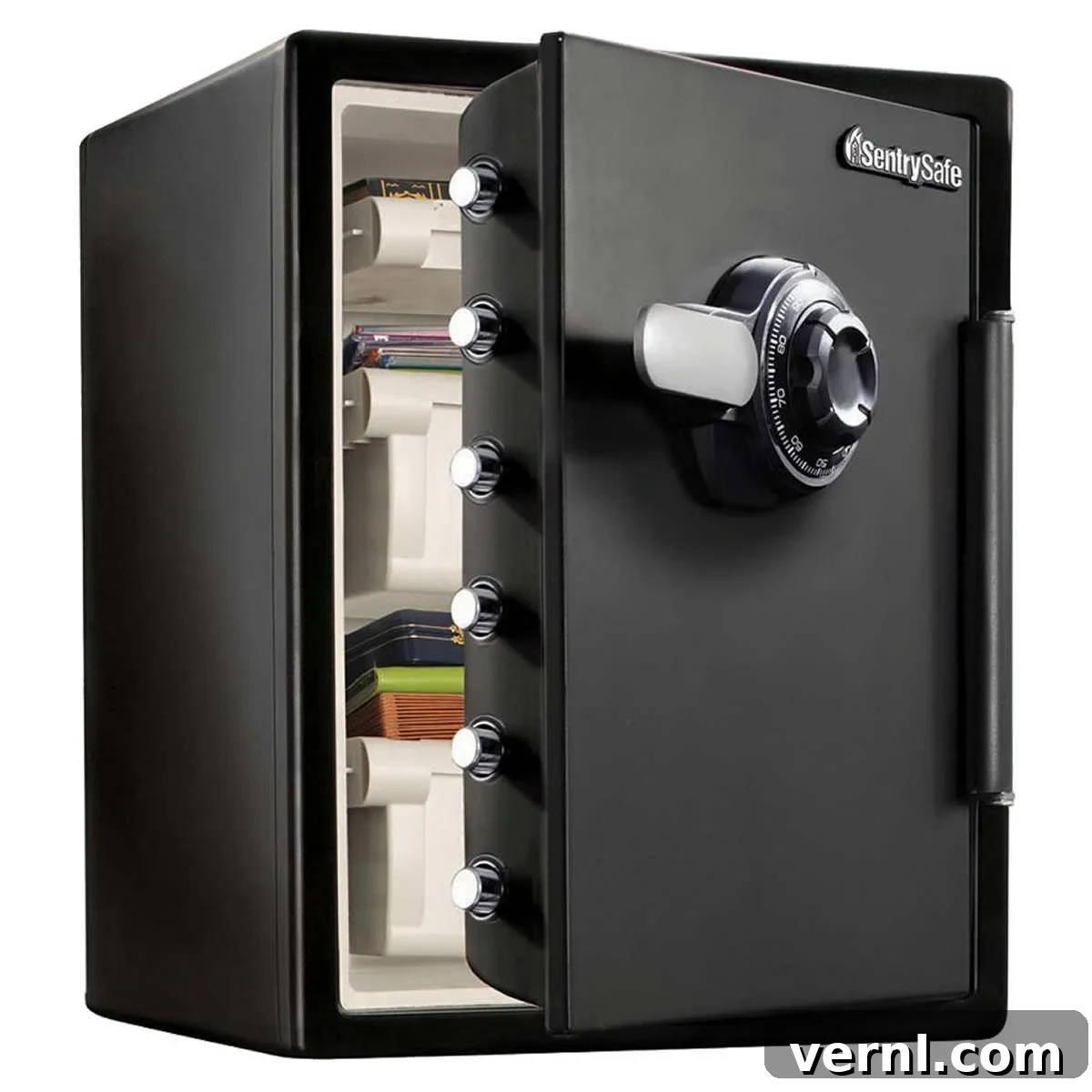
A home safe is an indispensable asset, providing unparalleled security for your treasured belongings and fostering invaluable peace of mind for you and your family. While no safe is entirely impregnable, even the most advanced models, a well-chosen home safe serves as an exceptionally effective deterrent against all but the most sophisticated and determined thieves. More commonly, it effortlessly foils opportunistic hands and deters curious prying eyes, keeping your sensitive documents and precious items confidential and secure.
The journey to acquiring the ideal home safe begins with a crucial decision: precisely what do you intend to protect? Safes designed for truly irreplaceable valuables, such as family heirlooms, rare collectibles, or significant amounts of cash, often boast advanced security features and superior construction, naturally commanding a higher price point. In contrast, a simpler, fire-resistant document safe might suffice for essential paperwork like birth certificates, passports, and tax records. Understanding your primary security needs will guide you toward the right investment. This comprehensive guide will illuminate the key factors to consider when selecting a home safe, ensuring your valuables are protected against a range of potential threats.
Choosing the Right Size for Your Home Safe
The physical dimensions and internal features of your safe will be directly dictated by the volume and nature of its contents. A small collection of family heirloom jewels or a handful of rare coins may require minimal space. However, once you introduce a diverse array of items—such as important legal documents, sensitive financial records, digital backups, or even small firearms—you’ll quickly appreciate the necessity of extra storage real estate. Experts from Safe and Vault Store universally recommend purchasing a safe that is slightly larger than your current perceived needs. This foresight accounts for future additions, as most individuals find more items they wish to secure over time, making the inconvenience and cost of replacing an undersized safe in just a few years a regrettable prospect.
When assessing a safe’s capacity, it’s imperative to understand that its exterior dimensions are not an accurate reflection of its usable storage space. The thickness of the door and walls, which are often heavily insulated for fire protection or fortified with steel for burglary resistance, significantly reduces the internal volume. Therefore, always prioritize the interior size, typically measured in cubic feet, to determine if your items will fit comfortably. Conversely, the exterior dimensions are crucial for planning the safe’s placement within your home, ensuring it can be maneuvered into its intended spot and that there is adequate clearance for the door to open fully.
Consider the types of items you plan to store. If it’s primarily documents, you’ll want to ensure they can lie flat without being folded or crumpled. For firearms, proper internal configurations and gun racks are essential. Jewelry or small valuable items might benefit from internal drawers or compartmentalized storage. Thinking about future acquisitions – such as additional important papers, digital media, or other small valuables – will help you select a size that remains functional for years to come, avoiding the common pitfall of quickly outgrowing your initial purchase. A common mistake is underestimating the volume of items that accumulate over time, making a slightly larger initial investment a wise long-term decision for comprehensive security.
Combination Lock or Digital Keypad: Which is Right for You?
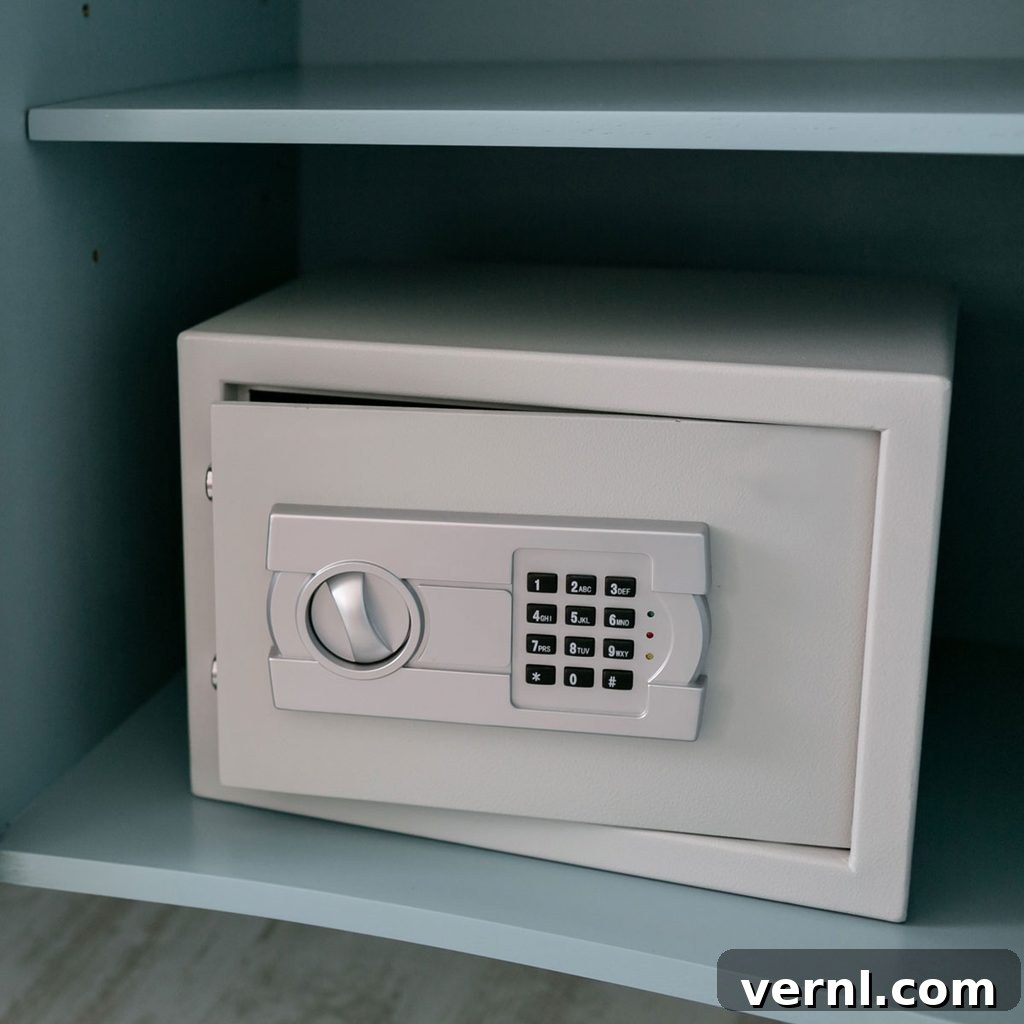
The choice between a traditional dial combination lock and a modern digital keypad for your home safe largely comes down to individual preference, ease of use, and security priorities. For some, the tactile feedback and reliability of a mechanical dial are reassuring. However, if you find the small numbers on a dial challenging to read or struggle with the fine motor skills required for precise dialing, a digital keypad might offer a more accessible and user-friendly experience.
Both locking mechanisms present distinct advantages and disadvantages. Traditional combination locks are generally less expensive upfront and do not require batteries, offering a truly self-sufficient operation that is impervious to power outages. However, changing the combination on a mechanical dial often necessitates the expertise of a professional locksmith, which can incur additional costs. Furthermore, as noted, they can be particularly difficult and time-consuming for individuals with poor eyesight, arthritis, or shaky hands, potentially hindering quick access in an emergency.
Digital keypad locks, conversely, offer rapid access with the simple entry of a PIN. Many models incorporate advanced security features such as lockout modes after multiple incorrect attempts, silent alarm options, or even multiple user codes for different family members. Their convenience is undeniable, but this comes at a slightly higher initial cost and the ongoing requirement for batteries. While battery life is often extensive, typically lasting several years, a dead battery can render the safe inaccessible unless an external power source or a manual override key is available, which are common features in higher-end models. Some modern digital locks also offer biometric scanners (fingerprint recognition) for an even quicker and more personalized entry, eliminating the need to remember codes altogether.
Essential Home Safe Security Features
Beyond the fundamental considerations of size and lock style, the market offers a wide array of specialized security features designed to protect your valuables from various threats. Diligent research into these specifications before making a purchase is crucial for ensuring your chosen safe meets your specific security requirements and provides robust protection against potential dangers.
Understanding Product Certifications
Product certifications serve as critical indicators of a safe’s performance and reliability. Underwriters Laboratories (UL), a renowned independent product safety testing and certification organization, rigorously evaluates numerous products, from household appliances to sophisticated security equipment, including safes. UL certifications provide an objective, third-party assessment of a safe’s ability to withstand specific threats, such as fire, impact, or burglary attempts. While Safe and Vault Store acknowledges that some safe manufacturers may opt for private laboratories to reduce costs, often leading to proprietary ratings, UL certifications remain the industry benchmark for transparency and trustworthiness.
You may also encounter safes bearing the ETL mark, which signifies that the product has been tested by Intertek Laboratories, another reputable independent testing firm. Like UL, ETL testing verifies that a product complies with applicable safety and performance standards. While safes without an official UL or ETL label are not inherently inferior, these certifications offer concrete proof that the safe model has been independently verified to meet stringent industry standards for resistance against specific threats. This assurance of quality and performance is often reflected in the safe’s price, with certified safes typically representing a more reliable, albeit potentially higher-cost, investment.
For burglary resistance, UL ratings range from Residential Security Containers (RSC), which protect against common tools for five minutes, to increasingly robust ratings like TL-15, TL-30, and TL-30×6, signifying resistance against expert manipulation and sophisticated tools for 15, 30, and 30 minutes on all six sides, respectively. For fire protection, UL ratings specify the maximum internal temperature the safe maintains when exposed to external heat for a given duration (e.g., UL Class 350-1 Hour means the internal temperature will not exceed 350°F when exposed to external temperatures of 1700°F for one hour).
Waterproof and Fireproof Safes: Dual Protection
If the primary concern is safeguarding vital paper documents—such as birth certificates, marriage licenses, passports, deeds, or sensitive tax records—from catastrophic events, then a fire resistant safe is an absolute necessity. American Security Products Co. provides excellent insights into how home safe fire ratings are determined and what they signify. These ratings indicate the length of time the safe can maintain a sufficiently low internal temperature (typically below 350°F, the charring point of paper) when subjected to external temperatures characteristic of a house fire (often around 1700°F).
The construction of fire safes varies significantly with their protective capabilities. Good fire safes typically incorporate one or two layers of gypsum board, a fire-resistant material, within their body and door. Better fire safes elevate this protection with two to four layers of gypsum board. The most robust fire safes utilize a sophisticated design that sandwiches specialized fire insulating material between sturdy steel plates, creating an exceptionally effective thermal barrier. These better and best-in-class fire safes are more likely to undergo and pass the rigorous testing protocols of independent laboratories like Underwriters Laboratories or Intertek, providing verifiable proof of their performance.
Any reliable fire safe should clearly list its fire rating, detailing the amount of time it can maintain a safe internal temperature when exposed to specific external temperatures during a typical house fire. If your safe possesses a UL or ETL label, you can consult the specifics of its rating, which will explain the testing conditions, duration, and temperature thresholds it endured, offering complete transparency about its protective capabilities.
Beyond fire, water poses another significant threat. Water-resistant safes are specifically engineered to protect your possessions in the event of a flood, burst pipes, or the activation of fire sprinklers. These safes are typically rated for a certain depth of water and duration (e.g., able to withstand submersion in 2 feet of water for 24 hours). While highly effective, it’s important to note that bolting down some water-resistant safes through pre-drilled holes in the bottom can, in some cases, compromise their waterproofing integrity if not properly sealed during installation. Always check the manufacturer’s instructions regarding installation and its impact on water resistance.
Enhanced Damage Resistance Specifications for Burglary Protection
While fire and water are formidable threats, many home safes are also specifically designed to resist more aggressive forms of damage, particularly those inflicted by attempted burglaries. These safes are constructed to thwart thieves employing various tools and are engineered to withstand higher impacts, such as falls from elevated positions during a break-in.
Underwriters Laboratories conducts comprehensive burglary testing and classifies safes according to rigorous standards based on the tools used, the time taken, and the level of expertise of the “attackers.” These UL ratings, such as RSC (Residential Security Container), TL-15, and TL-30, signify increasing levels of resistance to physical attacks using defined sets of tools. However, you can also find highly damage-resistant safes that, while not carrying an official UL sticker, offer robust protection. Garrett Lovejoy, Product Manager at longtime safe and smart lock manufacturer Yale Home, advises prospective buyers to look for specific descriptive terms such as “anti-drill,” which indicates protection against drilling attempts to access the lock mechanism; “anti-saw,” suggesting materials and construction that resist cutting tools; “anti-bump,” referring to locks designed to resist lock bumping techniques; and “pry resistant,” indicating reinforced doors and frames that deter attempts to pry open the safe with leverage tools.
Another crucial feature to consider for enhanced security is a tamper alarm. These sophisticated alarms activate if the safe is subjected to unauthorized manipulation. For instance, the Yale Alarmed Value Safe, as highlighted by Lovejoy, provides several distinct alarm types: a lockout alarm that triggers after multiple incorrect code entries, a tampering alarm that detects physical attacks or unauthorized movement, and a low battery alarm, ensuring you are always aware of the safe’s operational status. Such alarms can deter criminals or alert homeowners and neighbors to a security breach, significantly enhancing the overall protection offered by the safe.
Critical Installation Considerations for Optimal Security
The security of your home safe extends beyond its inherent features; its placement and installation are equally vital. The first and most fundamental question is: where will you put your safe? A safe, no matter how robust, cannot be breached if a thief cannot locate it. Conventional wisdom often suggests concealing safes, but balance is key. While the bedroom is unfortunately the first place burglars typically look for valuables, placing your safe somewhere so inconvenient that you avoid using it regularly defeats its primary purpose. The optimal strategy is to conduct a thorough assessment of your home to identify a space that is both easily accessible for you and your family but remains out of sight and unexpected for casual visitors or potential intruders.
A critical consideration during installation is the safe’s portability: can a burglar simply pick it up and carry it away? If you invest in a substantially large and heavy safe, the answer is likely no, making it a formidable obstacle to theft. However, Consumer Reports indicates that a common home safe size for personal use ranges from 1.2 to 1.3 cubic feet. These safes typically weigh around 100 pounds and fall within a price range of $150 to $300. While 100 pounds might seem heavy to a single individual, a group of determined thieves equipped with the right tools (e.g., a hand truck or furniture dolly) can still steal such a safe. This vulnerability is precisely why many home safes come equipped with pre-drilled anchor holes, allowing them to be securely bolted to the floor or a wall stud.
Fastening the safe to a permanent structure provides a significant layer of theft protection, making it exceedingly difficult for burglars to remove it from your property. Beyond enhanced physical security, anchoring your safe may offer tangible financial benefits. Many insurance providers offer discounts on homeowner’s or renter’s insurance policies when valuables are stored in a securely bolted safe, recognizing the reduced risk of loss. Always check with your insurance agent about potential premium reductions.
The process of correctly placing and securely bolting down a heavy safe can be an arduous and complex undertaking, often requiring specialized tools and expertise. For larger, heavier safes, it might be well worth the investment to hire a professional for the installation. Professionals ensure the safe is properly anchored, maximizing its security effectiveness and minimizing any potential damage to your home during the process. Before committing to a purchase, always inquire with the retailer if they offer professional installation services or can recommend certified installers in your area. This small additional cost can guarantee your safe is installed correctly, providing the maximum possible security and peace of mind.