
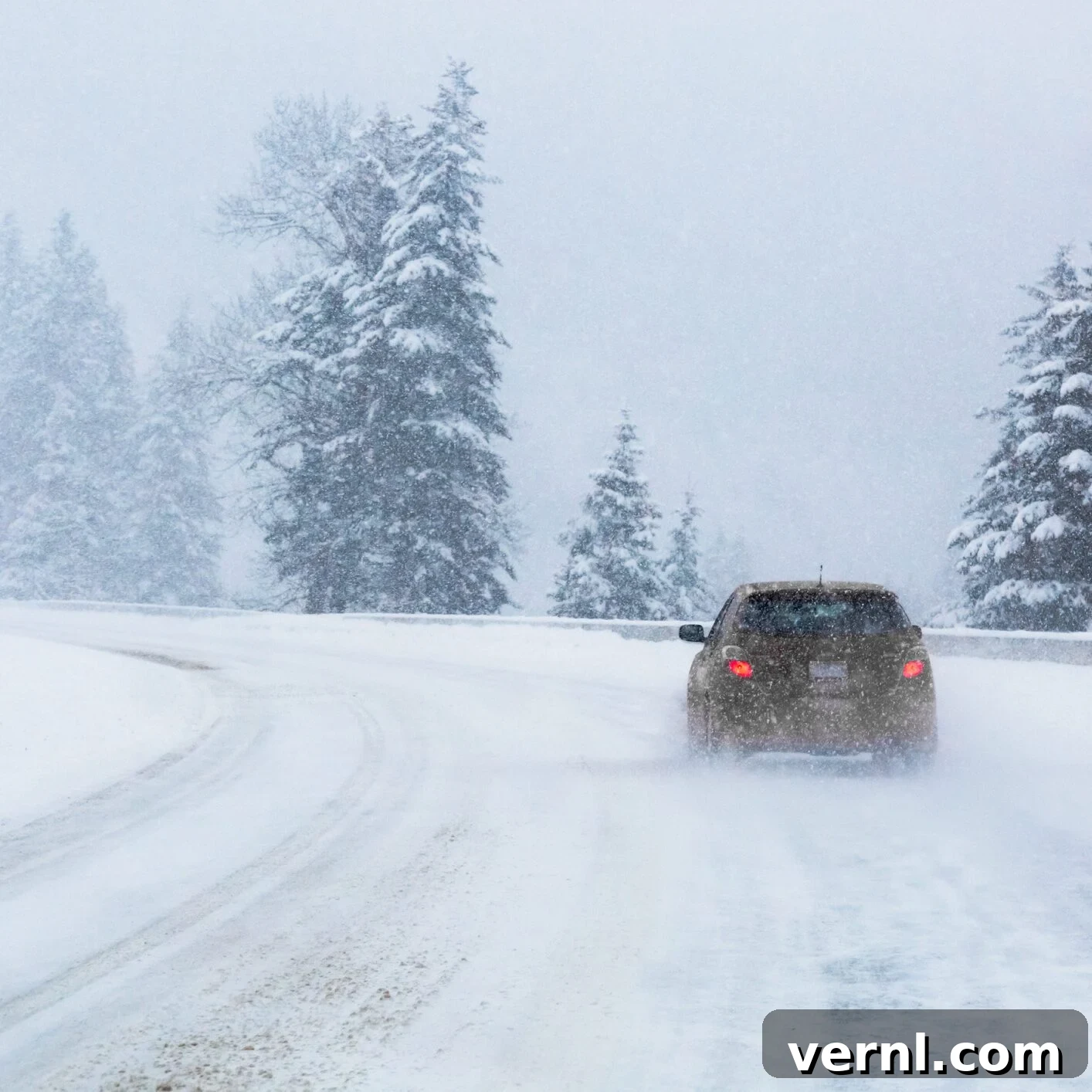
Mastering Winter Roads: Your Ultimate Guide to Driving Safely on Ice
Navigating the roads during winter can be one of the most challenging aspects of car ownership, especially when ice becomes a factor. From the bustling cities of the northern U.S. and Canada to unexpected cold snaps in more southerly states, icy conditions are a universal concern for drivers. Understanding how to handle your vehicle on slippery surfaces isn’t just a recommendation; it’s a critical life skill that can prevent serious accidents and ensure your safety.
Many drivers, myself included, have harrowing tales of unexpected encounters with ice. I vividly recall approaching a gentle curve on a two-lane highway one winter morning. Without warning, my car lost all traction, sending me sliding uncontrollably towards a snowbank on the opposite side, narrowly missing an oncoming truck. In that terrifying moment, the reality of my hurried pace became brutally clear. A simple reduction in speed as I entered the curve could have averted the entire near-catastrophe. I was fortunate to walk away from that experience, having learned a profound lesson through trial and error – a lesson I hope to spare others from.
While some lessons are learned the hard way, understanding how to drive on ice doesn’t have to be one of them. This comprehensive guide is designed to equip you with the knowledge and techniques needed to confidently and safely navigate icy roads. Drawing on valuable insights from Ana Zakharova, the PR and Communications Director for the online driver’s education site Zutobi.com, we’ll cover everything from preparing your car to mastering advanced driving skills, ensuring you’re ready for whatever winter throws your way.
Understanding the Dangers: What Causes Icy Roads?
The presence of ice on roads is a direct consequence of a delicate balance between temperature and moisture. While intuitively we might associate icy roads with heavy snow or freezing rain, the reality is far more nuanced. Understanding the various scenarios that lead to slick conditions is the first step towards safe winter driving.
Common Culprits Behind Icy Conditions:
- Freezing Rain and Sleet: These are perhaps the most obvious causes. Rain that freezes on contact with surfaces below freezing, or sleet (ice pellets) that accumulates, quickly turns roads into treacherous skating rinks.
- Melting and Refreezing Snow: A common cycle where snow melts during warmer daylight hours, only to refreeze as temperatures drop overnight, creating a layer of slick ice, often hidden under a dusting of fresh snow.
- Frost: Even without visible precipitation, clear, cold nights can lead to frost formation on road surfaces, especially when humidity is high. This thin, often invisible layer can significantly reduce traction.
- Black Ice: This particularly insidious form of ice is transparent and blends seamlessly with the road surface, making it nearly impossible to spot. It forms when light rain or melted snow refreezes on cold pavement, or when moisture from fog or vehicle exhaust freezes.
Unexpected Scenarios Where Ice Forms:
Icy conditions aren’t always accompanied by dramatic winter storms. Sometimes, the most dangerous situations arise unexpectedly:
- Early Morning Dew or Fog: Even in relatively mild weather, early morning dew or fog can settle on the roadway and freeze if temperatures dip below freezing just before dawn. What appears to be a wet road can actually be slick with ice.
- Shaded Areas: Parts of the road that don’t receive direct sunlight – such as those under bridges, overpasses, in tunnels, or along tree-lined stretches and mountain passes – tend to remain colder longer. This means ice can persist or form here even when the rest of the road appears perfectly dry. Always exercise extreme caution in these areas.
- Bridges and Overpasses: These structures are exposed to cold air both from above and below, causing them to freeze faster and remain icy longer than adjacent road surfaces. The phrase “Bridge Freezes Before Road” is a critical winter driving mantra.
The key takeaway is that icy roads can exist even when you don’t visibly see snow or ice. Vigilance and awareness of changing conditions are your best defenses against unforeseen hazards.
Comprehensive Car Preparation for Icy Conditions
Before you even think about hitting the road on a wintry day, ensuring your vehicle is adequately prepared is paramount. A well-maintained car designed for cold weather can dramatically improve your safety and confidence when faced with challenging icy conditions.
Tires: Your Primary Point of Contact
Your tires are the only part of your car that touches the road, making them absolutely critical for traction. As Ana Zakharova emphasizes, “Bald or worn tires reduce traction and are especially dangerous in icy or snowy conditions.”
- Tread Depth: Regularly check your tire tread depth. A quick and easy method is the penny test: insert a penny into a tire tread groove with Lincoln’s head upside down and facing you. If you can see all of Lincoln’s head, your treads are too shallow, and your tires need to be replaced. For optimal winter performance, a minimum of 4/32 inch (about a third of Lincoln’s head covered) is often recommended.
- Winter Tires: For areas that regularly experience severe winter weather, investing in dedicated winter tires (often marked with a mountain and snowflake symbol) is highly advisable. These tires are made with a softer rubber compound that remains flexible in cold temperatures and feature unique tread patterns designed to grip snow and ice far better than all-season tires.
- Tire Pressure: Cold weather causes tire pressure to drop. Check your tire pressure frequently (at least once a month, or more often in fluctuating temperatures) and inflate them to the manufacturer’s recommended levels. Properly inflated tires provide better contact with the road and improve handling.
Ensuring Maximum Visibility
Beyond slick roads, winter driving often brings reduced visibility due to fog, snow, sleet, or freezing rain. Clear vision is non-negotiable for safe driving.
- Thorough Snow and Ice Removal: “Fully remove snow and ice from your vehicle, including all windows, mirrors, and lights, to ensure clear visibility for you and others on the road,” advises Zakharova. This isn’t just about your windshield; clear your side mirrors, rear window, headlights, taillights, and even the roof of your car. Snow left on the roof can slide onto your windshield or fly off onto other vehicles, creating hazards.
- Clean Windshield and Wipers: Ensure your windshield is clean inside and out. Replace old or worn wiper blades before winter sets in, as they won’t effectively clear snow and ice. Use winter-specific wiper fluid that has a lower freezing point.
- Defrosters and Heaters: Verify that your defrosters (front and rear) and heating system are in good working order to keep windows clear and the cabin warm.
The Essential Winter Emergency Kit
Getting stranded in winter can quickly become dangerous. An emergency kit is a small investment that can provide immense peace of mind and crucial assistance if you get stuck.
Zakharova recommends packing an emergency kit that includes essentials like blankets, a small shovel, tire chains, snacks, and a flashlight. Here’s an expanded list of vital items:
- Warmth: Blankets, extra hats, gloves, and warm clothing.
- Traction Aids: A small shovel, bag of sand, cat litter, or non-clumping salt to help with traction if stuck. Tire chains (know how to install them!).
- Visibility/Signaling: Flashlight with extra batteries, reflective triangles or flares, brightly colored cloth.
- Food and Water: Non-perishable snacks (energy bars, nuts) and bottled water.
- Communication/Power: Fully charged cell phone and a portable charger/power bank.
- Vehicle Maintenance: Jumper cables, basic tool kit, first-aid kit, extra windshield washer fluid, small fuel canister (empty, to be filled only if needed).
- Personal Items: Any necessary medications.
Additional Pre-Winter Checks:
- Battery Health: Cold weather puts a significant strain on car batteries. Have your battery tested to ensure it’s in good condition.
- Antifreeze Levels: Check your coolant/antifreeze levels and ensure it’s rated for the expected lowest temperatures in your area.
- Brakes: Have your brakes inspected to ensure they are in optimal working order.
By taking these proactive steps, you significantly increase your readiness and safety for winter driving challenges.
Mastering the Art of Braking on Ice
Braking on ice requires a nuanced approach that differs significantly from braking on dry pavement. One of the most crucial skills to develop for winter driving is understanding how to slow down and stop safely without losing control. As Zakharova advises, “Gently pump your brakes to prevent skidding, particularly on slick surfaces.”
Techniques for Braking on Icy Surfaces:
- Gentle and Gradual Pressure: The cardinal rule is to apply brakes very gently and gradually. Sudden, forceful braking is almost guaranteed to cause your wheels to lock up and your car to skid, sending you sliding off the road or into another vehicle. Think of it as feathering the pedal rather than stomping on it.
- “Pumping” Brakes (for non-ABS cars): If your car does NOT have an Anti-lock Braking System (ABS), gently and rapidly pump the brake pedal. This technique helps you maintain some steering control while gradually slowing down.
- Understanding ABS Brakes: Most modern vehicles are equipped with ABS. If your car has ABS, resist the temptation to pump the brakes. When you brake hard on a slippery surface, the ABS system automatically senses when a wheel is about to lock up and rapidly pulses the brakes for you. This allows you to maintain steering control while braking. If you feel a pulsating sensation or hear a grinding noise, that’s your ABS working – keep firm, steady pressure on the pedal and steer in the desired direction. If the ABS warning light illuminates, indicating a malfunction, have it checked immediately before driving in wintry conditions.
- Engine Braking: On very slippery downhill slopes or when approaching a stop, consider using engine braking. This involves downshifting to a lower gear, which uses the resistance of the engine to slow the vehicle down without relying solely on the friction brakes. This can be a smoother and safer way to reduce speed on ice.
- Anticipation is Key: The best way to brake on ice is to avoid needing to brake hard in the first place. Look far ahead, anticipate stops, turns, and potential hazards, and start slowing down much earlier than you would on dry roads. Increase your following distance significantly to give yourself ample time and space to react.
Remember, the goal is always to maintain control. Smooth, deliberate inputs are far more effective than abrupt actions when driving on ice.
What To Do When Your Car Starts Sliding
One of the most terrifying experiences for any driver is when their car suddenly loses traction and begins to slide. Panic is a natural reaction, but it’s precisely at this moment that calm, corrective action is most crucial. The instinct might be to steer sharply in the opposite direction or slam on the brakes, but these actions will almost always make the situation worse.
The Counter-Intuitive Art of Skid Recovery:
- Foot Off the Accelerator: The very first step is to gently and completely lift your foot off the accelerator. Adding power will only make the wheels spin further and exacerbate the loss of control.
- Steer Into the Skid: This is the most critical and often counter-intuitive piece of advice. If the rear of your car is sliding to the right, steer gently to the right. If it’s sliding to the left, steer gently to the left. The goal is to point your front wheels in the direction you want the front of the car to go, effectively allowing the front wheels to catch up with the rear. Avoid overcorrecting, as this can lead to a “fishtail” effect, where the car swings violently from side to side.
- Gentle Braking (If Necessary and Appropriate): Once you’ve steered into the skid and feel a slight regain of control, you can gently and smoothly apply the brakes. If your car has ABS, maintain steady pressure. If not, gentle pumping can help. The primary focus initially should be on steering, not braking.
- Look Where You Want To Go: Your car tends to follow your gaze. If you’re looking at the ditch, you’re more likely to end up in it. Instead, focus your eyes on the clear path ahead, where you want your car to go.
- Smoothness is Key: All inputs – steering, braking, and accelerating – should be incredibly smooth and gradual. Abrupt movements will upset the car’s balance and prolong the skid.
- Regaining Traction: As your tires regain traction, gently straighten the steering wheel. Continue to apply slight pressure in the direction you want the car to travel, adjusting as needed until full control is restored.
Practicing these techniques in a safe, open, and empty snow-covered lot (if legal and safe to do so) can be invaluable for building muscle memory and confidence before you face a real-world scenario.
What To Do If Your Car Gets Stuck on Ice or Snow
Despite all precautions, sometimes your car might still find itself stuck in a snowbank or on a patch of ice. The severity of being stuck will dictate your next steps. In some extreme situations, calling for roadside assistance may be your only option. However, often, with a bit of effort and the right techniques, you can free your vehicle yourself or with the help of a few good Samaritans.
Strategies for Getting Unstuck:
- Clear the Obstruction: If you’re stuck in snow, use the small shovel from your emergency kit to clear snow away from all four tires, especially the drive wheels (front for FWD, rear for RWD, all for AWD/4WD). Also, clear snow from underneath the vehicle, particularly around the frame and exhaust pipe, to prevent dangerous carbon monoxide buildup if you need to run the engine for warmth.
- Rocking the Car Back and Forth: This technique is highly effective when your wheels are spinning in mud, snow, or on ice, and you need to build momentum.
- Engage the lowest possible gear (first gear or “D” for automatic, or “L” if available).
- Drive forward slowly as far as you can until the tires begin to spin.
- Immediately shift into reverse and back up slowly until the tires begin to spin again.
- Repeat this process, creating a rocking motion. The goal is to gradually lengthen the arc of the rock, building enough momentum to eventually get back onto solid ground. Be gentle with the accelerator to avoid excessive wheel spin.
- If you have helpers, they can push the car while you execute the rocking motion, significantly increasing your chances of success.
- Using Traction Aids: If your tires are simply spinning on ice, you need to create more friction.
- Sand or Cat Litter: Sprinkle a generous amount of sand, non-clumping cat litter, or even road salt in front of and behind your drive wheels. This provides an abrasive surface for your tires to grip.
- Floor Mats: As a last resort, you can place your car’s floor mats under the drive wheels. Position them carefully to provide a surface for the tires to grab onto. Be aware that the mats might get damaged or thrown out from under the car, so ensure no one is standing nearby.
- Tire Chains: In extremely icy or snowy conditions, if you have tire chains and know how to install them, they can provide unparalleled traction. Always follow the manufacturer’s instructions for installation and driving with chains, and remove them as soon as you are on clear pavement to prevent damage to your vehicle and the road.
When to Call for Roadside Assistance:
If you’ve exhausted all options, are in a dangerous location, or simply cannot free your vehicle, it’s time to call for help. Contact your roadside assistance provider, emergency services (if in distress), or a local towing company. While waiting:
- Stay in your vehicle for warmth and safety.
- Ensure your exhaust pipe is clear of snow to prevent carbon monoxide poisoning.
- Run the engine intermittently to conserve fuel and charge your phone.
- Turn on your hazard lights to make your vehicle visible to others.
Being prepared with an emergency kit and knowing these techniques can turn a stressful situation into a manageable one.
Other Essential Tips to Drive On Ice Safely
Beyond specific maneuvers, adopting a mindful and cautious approach to winter driving is perhaps the most effective strategy. Ana Zakharova of Zutobi.com offers additional invaluable advice for navigating icy conditions:
- Reduce Your Speed Significantly: This is arguably the most critical tip. On icy roads, your stopping distance can increase tenfold or more. Driving slowly provides more time to react, reduces the force of potential impacts, and increases your chances of maintaining control. Think of your speed as inversely proportional to the slipperiness of the road.
- Slow Down for Curves and Shaded Areas: As discussed, shaded areas and bridges freeze first and thaw last. Always anticipate these hazards. Approach curves at a significantly reduced speed, gently accelerate out of them once you’re straightened, and avoid any sudden steering inputs while in the turn.
- Leave More Space Between Your Car and the One in Front of You: On dry roads, a three-second following distance is recommended. On icy roads, extend this to eight, ten, or even fifteen seconds. This ample space gives you crucial extra time to react to sudden stops or skids from the vehicle ahead.
- Carry a Bag of Sand or Cat Litter: Beyond an emergency kit, keeping a small bag of sand or non-clumping cat litter in your trunk can serve two purposes. First, it adds extra weight over your drive wheels (especially beneficial for rear-wheel-drive vehicles), which can improve traction. Second, it’s an excellent aid for sprinkling under spinning tires if you get stuck, providing immediate grip.
- Avoid Cruise Control: Never use cruise control on icy, wet, or snowy roads. If your car begins to skid while cruise control is active, the system will attempt to maintain speed, which can cause the wheels to spin and lead to further loss of control. You need to be in direct control of the throttle at all times.
- Look Far Ahead: Develop the habit of scanning the road well in front of you – not just the car ahead. This allows you to spot potential hazards like icy patches, stopped traffic, or disabled vehicles much earlier, giving you more time to react safely and smoothly.
- Be Gentle with Steering: Just like with braking and acceleration, all steering inputs should be smooth and gradual. Abrupt turns can cause your tires to lose grip, leading to a skid.
- Understand Your Vehicle’s Weight Distribution: Be aware that heavy loads, especially in the trunk of a rear-wheel-drive car, can improve traction. However, for front-wheel-drive vehicles, too much weight in the rear might slightly reduce front wheel traction.
By integrating these practices into your winter driving routine, you elevate your safety and preparedness, transforming the daunting prospect of icy roads into a navigable challenge.
Frequently Asked Questions About Driving on Ice
Should you use 4-wheel drive on ice?
Four-wheel drive (4WD) or All-Wheel Drive (AWD) systems engage all four wheels with the engine, distributing power more effectively and providing significantly better traction overall for acceleration. This is a definite advantage when starting from a stop or driving through moderate snow. Therefore, if your car is equipped with 4WD or AWD, you should absolutely engage it on icy or snowy roads to improve initial traction. However, it’s crucial to remember that while 4WD/AWD helps you accelerate and maintain momentum, it does NOT improve your braking or steering capabilities on ice. All cars, regardless of their drive system, have the same amount of traction available for braking and turning. So, even with 4WD, you must still reduce speed, increase following distance, and employ all other safe winter driving techniques.
How do I get more traction on ice?
Improving traction on ice is a multi-faceted approach. Jacqueline, a driving instructor at Zutobi, explains, “Good tires are your first defense against losing traction.” Dedicated snow tires are unequivocally the best option, designed with specific rubber compounds and tread patterns for cold weather and ice. However, a good set of all-weather tires with deep, healthy treads can also provide a significant improvement over worn tires. Beyond tires, other effective ways to enhance traction include: putting heavy weights (like sandbags) in the trunk, especially beneficial for rear-wheel-drive vehicles to increase pressure over the drive wheels; spreading sand, salt, or cat litter on the roadway directly in front of and behind your drive wheels if you are stuck; and installing tire chains in extreme conditions where legal and necessary.
How can you tell when the road gets icy?
Recognizing icy roads requires a combination of vigilance and understanding environmental cues. A primary indication is when snow falls on the roadway and doesn’t melt, suggesting the surface temperature is at or below freezing. You should also be highly alert for icy conditions when snow or sleet is actively falling, when the air is foggy, or when the outside temperature gauge registers below freezing (32°F or 0°C). Visual cues on your vehicle, such as frost on your windshield, mirrors, or other exterior parts, are strong indicators that road surfaces may also be frozen. Additionally, be extra wary of bridges, overpasses, and shaded areas, which tend to freeze before other parts of the road.
What’s the difference between black ice and other kinds of ice?
Black ice is notoriously dangerous precisely because it’s invisible. It’s called “black ice” because it’s a thin, transparent layer of ice that allows the dark color of the pavement underneath to show through, making it indistinguishable from a wet road. This invisibility makes it far more hazardous than other forms of ice, which are typically opaque and visible. Black ice often forms when moisture from fog, vehicle exhaust, or light precipitation freezes on cold, dark pavement, particularly on bridges, overpasses, and in heavily shaded areas where the temperature drops rapidly. Always watch for warning signs on sections of the road known to be susceptible to black ice, and be extra cautious when temperatures hover around freezing, even if the road looks merely wet.
About the Expert
- Ana Zakharova is the PR and Communications Director for Zutobi, an online driver’s education resource dedicated to making driver education accessible, engaging, and effective for aspiring and experienced drivers alike.