
Essential Window Maintenance: The Critical Role of Weep Holes and How to Keep Them Clean
Often overlooked and incredibly tiny, weep holes are a crucial yet understated feature present in many modern window systems, including sliding windows and vinyl replacement windows. While their size might suggest insignificance, their function is paramount: they serve as the primary drainage mechanism for water that inevitably penetrates the outer layer of your window frames. Located discreetly on the exterior bottom of the frame, these small apertures are designed to channel rainwater safely away from your home, preventing potential water damage, mold growth, and structural issues. Unfortunately, due to their modest size and location, weep holes are highly susceptible to becoming clogged with various debris, compromising their vital role in protecting your property.
Understanding the design and purpose of weep holes is the first step towards appreciating their importance. Modern windows are engineered with a sophisticated drainage system. The outer layers of a window frame are not perfectly hermetic; small amounts of water, primarily from rain or condensation, can and will seep into the frame’s internal chambers. This is not a defect but rather an anticipated event in window design. Weep holes act as the final exit point for this water, allowing it to drain out harmlessly. Without properly functioning weep holes, this trapped water would accumulate inside the window frame, leading to a cascade of problems that can undermine the integrity and longevity of your windows and the surrounding structure.
Why Weep Holes Are Indispensable for Your Home’s Health
The consequences of neglecting your weep holes extend far beyond minor inconvenience. Their proper functioning is central to preventing costly repairs and maintaining a healthy indoor environment. Here’s why these small openings play such a big role:
- Preventing Water Intrusion and Damage: When weep holes are clogged, water has nowhere to go. It pools within the window frame and sills, increasing the risk of water seeping into your wall cavities. This can lead to unsightly water stains on interior walls, softened drywall, and ultimately, structural damage to the window frame and the home itself. Over time, prolonged exposure to trapped moisture can cause wooden components to rot and metal parts to corrode.
- Mitigating Mold and Mildew Growth: Stagnant water creates an ideal breeding ground for mold and mildew. These fungi can proliferate rapidly in damp, dark environments within your window frames and walls. Beyond being unsightly and causing a musty odor, mold spores can trigger allergic reactions, respiratory problems, and other health issues for your family. Keeping weep holes clear is a proactive step in maintaining good indoor air quality.
- Extending Window Lifespan: Windows are a significant investment. By ensuring proper drainage, weep holes protect the internal components of your windows from premature wear and deterioration caused by water exposure. This includes hardware, insulation, and the frame material itself, thereby extending the overall lifespan of your windows and delaying the need for expensive replacements.
- Maintaining Energy Efficiency: Waterlogged window frames can compromise the insulating properties of your windows. When insulation materials within the frame become damp, their ability to regulate temperature transfer is diminished, leading to increased energy consumption for heating and cooling your home. Clean weep holes help keep the window frame dry, allowing it to perform optimally in terms of energy efficiency.
- Preserving Home Value: Unaddressed water damage, mold issues, and deteriorating windows can significantly detract from your home’s aesthetic appeal and market value. Regular maintenance, including keeping weep holes clear, is a small effort that contributes significantly to preserving your home’s condition and ensuring it remains an attractive asset.
Common Culprits: What Clogs Your Weep Holes?
Weep holes, by their very nature, are susceptible to blockages. A variety of environmental factors and everyday occurrences can lead to their obstruction:
- Dirt and Dust Accumulation: Over time, airborne dirt, dust, and grime settle into these small openings, especially on lower levels where splash-back from rain or watering can deposit soil particles.
- Leaves and Organic Debris: Small pieces of leaves, twigs, pollen, and other organic matter can easily get caught in the weep holes, particularly during windy seasons or if trees are close to your home.
- Insect Nests: Spiders, ants, and other small insects often find weep holes to be convenient sheltered spots for building nests. Mud daubers are notorious for packing mud into small crevices, including weep holes.
- Paint and Sealant: During painting projects or when resealing around windows, it’s easy for paint drips or excess caulk to accidentally plug weep holes. This is a common and often overlooked cause of blockages.
- Construction Debris: If your windows were recently installed or if there’s ongoing construction nearby, small pieces of construction material, dust, or fragments can become lodged in the weep holes.
Step-by-Step Guide: How to Clean Your Window Weep Holes
Cleaning your weep holes is a straightforward task that requires minimal tools and effort, but yields significant benefits. Dedicate some time now to complete these simple fall maintenance tasks or any time of year when you notice issues, so you can rest easy, knowing your windows are prepared.
Tools You’ll Need:
- Garden hose with a spray nozzle
- Stiff wire (e.g., straightened coat hanger, thin floral wire)
- Can of compressed air (often used for electronics cleaning)
- Small, soft brush (e.g., an old toothbrush)
- Safety glasses and gloves (recommended for eye and skin protection)
Cleaning Process:
- Initial Inspection and Test:
Before you begin any physical cleaning, it’s wise to test the current drainage. Spray the outside bottom of the window frame where the weep holes are located with a steady, gentle stream from your garden hose. Apply water for about 30 seconds to allow it to accumulate in the drainage channel. Observe the weep holes. If they are working correctly, you should see a steady stream or trickle of clean water exiting from them. If no water emerges, or if it dribbles out slowly, you have a blockage.
- Surface Cleaning:
Using a small, soft brush or even a toothpick, gently clear away any visible dirt, spiderwebs, or loose debris from the exterior opening of the weep holes. Sometimes, this simple step is enough to dislodge minor obstructions.
- Mechanical Unclogging with Wire:
For more stubborn blockages, a thin piece of wire is highly effective. Straighten out a wire coat hanger or use a piece of thin floral wire. Carefully insert the end of the wire into each weep hole. Gently push and prod the wire inward, feeling for resistance. Move the wire back and forth, twisting it slightly to break up any compacted dirt, insect nests, or other debris. Be gentle but firm. Avoid using excessive force, as you could potentially damage the internal components of the window frame. Once you feel the blockage clear, retract the wire and remove any debris that comes out with it. Repeat for all weep holes on the window.
- Air Pressure Method:
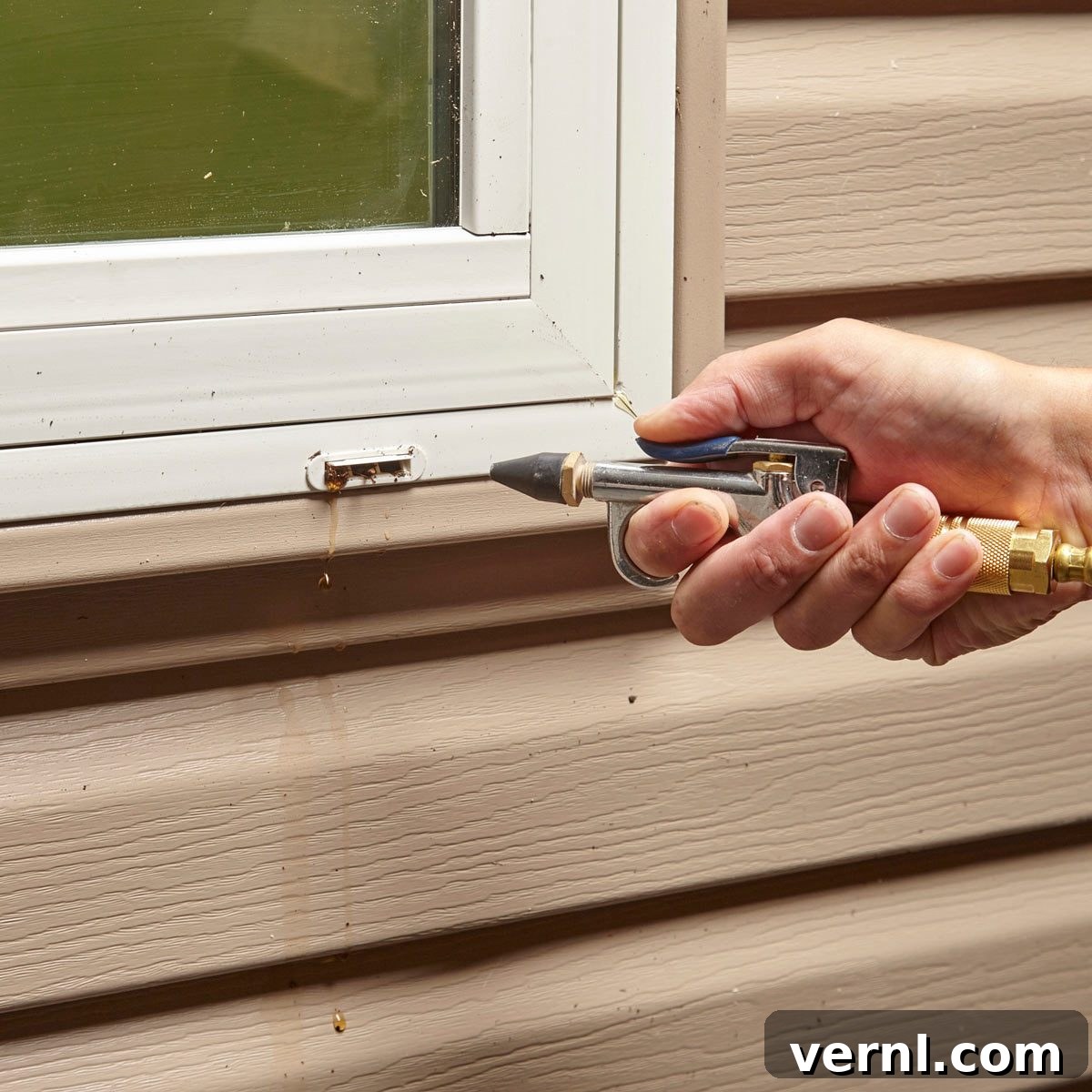
As an alternative or follow-up to the wire method, compressed air can be very effective, especially for flushing out finer particles or debris that the wire might have missed. Hold the can of compressed air a few inches from the weep hole and aim the nozzle directly into the opening. Give short, controlled bursts of air. The high-pressure air will force blockages out from the inside. Wear safety glasses to protect your eyes from any debris that might shoot out. If you have an air compressor, ensure you use a low-pressure nozzle suitable for delicate work.
- Final Flush and Re-test:
After you’ve used the wire and/or compressed air, it’s crucial to perform another water test. Spray the window frame again with your garden hose, mimicking rainfall. A healthy, unobstructed flow of water should now exit freely from all the weep holes. If water still pools or drains slowly, repeat the cleaning process until drainage is completely restored.
Winterizing Your Windows: A Pre-Winter Weep Hole Check
When we talk about “winterizing” weep holes, it’s not about sealing them up—which would be counterproductive and damaging. Instead, it means ensuring they are impeccably clean and fully functional *before* freezing temperatures arrive. This pre-winter check is vital for several reasons:
- Preventing Ice Formation and Expansion: If weep holes are clogged when winter sets in, water can become trapped within the window frame. When this water freezes, it expands. This expansion can exert immense pressure on the window components, leading to cracks in the frame, seals, and even the glass. Repeated freeze-thaw cycles can cause significant, irreparable damage to your windows.
- Avoiding Structural Strain: Ice buildup inside the frame can also put undue stress on the window’s structural integrity, potentially leading to warped frames or compromised joints, which can then allow drafts and further water intrusion.
- Maintaining Insulation Effectiveness: As mentioned, damp insulation is less effective. Ensuring weep holes are clear prevents internal condensation or melted snow from soaking the frame’s insulation, helping your windows maintain optimal thermal performance throughout the cold months.
Therefore, as part of your comprehensive fall home maintenance routine, make a point to thoroughly clean and test your weep holes. This proactive measure will protect your windows from winter’s harsh elements and help maintain your home’s warmth and energy efficiency.
Beyond Weep Holes: A Holistic Approach to Window Care
While clean weep holes are fundamental, they are just one component of overall window health. For robust protection and longevity, consider incorporating these additional maintenance tasks:
- Clean Window Glass and Frames: Regularly clean the glass with a suitable window cleaner and wipe down the frames to remove dirt, grime, and environmental pollutants. This not only improves aesthetics but also prevents corrosive substances from degrading frame materials.
- Inspect and Seal Gaps: Periodically check the caulking and weatherstripping around your windows. Over time, these seals can crack, shrink, or become brittle, creating gaps that allow air and moisture to penetrate. Reapply caulk or replace weatherstripping as needed to maintain an airtight and watertight seal.
- Lubricate Moving Parts: For sliding or casement windows, lubricate the tracks, hinges, and operating mechanisms with a silicone-based spray or dry lubricant. This ensures smooth operation and reduces wear and tear on the hardware.
- Check for Drafts: On a windy day, or using an incense stick, check for drafts around the window sashes and frames. Drafts indicate air leaks that can lead to energy loss. Addressing these can involve weatherstripping, caulk, or adjusting window sashes.
- Inspect Screens: Repair or replace damaged window screens to keep insects out and protect the window glass from larger debris.
By integrating these practices with your weep hole maintenance, you’ll be giving your windows the comprehensive care they need to perform their best for years to come. Remember, these vital home maintenance tasks are often overlooked, but neglecting them can lead to significant regrets.
In conclusion, the diminutive weep hole holds disproportionate importance in the scheme of home maintenance. A few minutes spent ensuring these tiny drainage points are clear can save you from significant expenses and discomfort down the line. Make it a regular part of your home care routine, and your windows, and home, will thank you for it.