
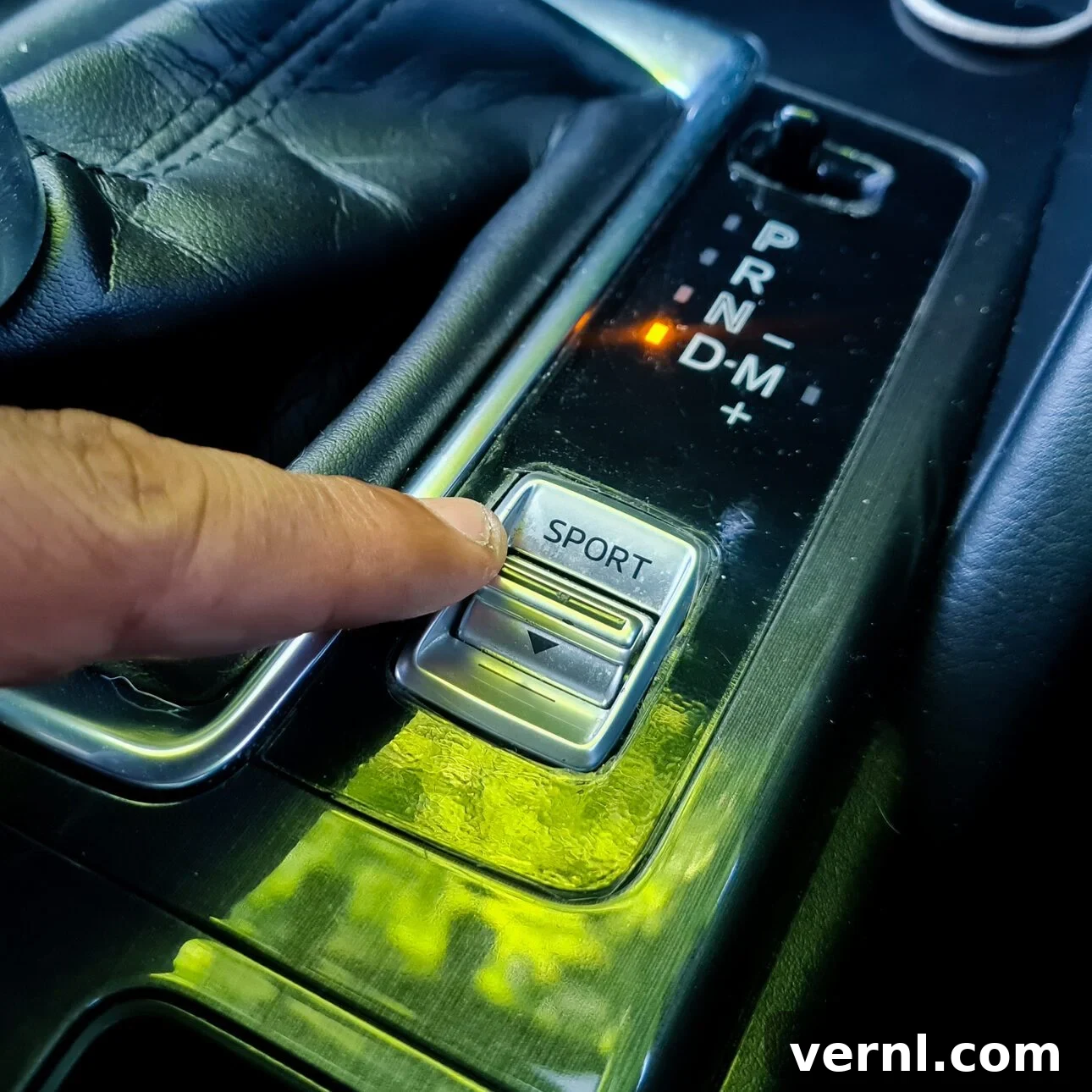
If you’ve ever found yourself behind the wheel, perhaps glancing at your car’s center console or a modern dashboard, you might have noticed a button adorned with the label “Sport” or an “S” indicator near your gear shifter. For many drivers, this small button sparks a natural curiosity: what exactly does it do? Is it merely a cosmetic touch, a marketing gimmick designed to make your car seem sportier than it is, or does it genuinely alter the driving dynamics? The answer, for those seeking a more engaging experience, is a resounding ‘no’ to the gimmick theory. Sport mode is far more than just a label; it’s a meticulously engineered feature designed to transform your car’s character, making it feel notably more responsive, agile, and overall more dynamic on the road.
Understanding the intricacies of sport mode can unlock a new dimension of your vehicle’s capabilities. But the crucial questions remain: how does this technological marvel operate beneath the hood and within the car’s sophisticated electronic brain, and perhaps more importantly, should you engage it constantly, or are there specific scenarios where its benefits truly shine?
Unlocking Performance: How Sport Mode Works Its Magic
At its core, sport mode is a specialized performance-enhancing setting that orchestrates a series of precise adjustments across various critical components of your vehicle. These often include the engine’s power delivery, the transmission’s shift points, and in more advanced or performance-oriented models, even the suspension and steering systems. When you press that ‘Sport’ button, your car doesn’t just change its attitude; it undergoes a complex recalibration designed to prioritize performance and driver engagement. Let’s delve into the specific ways sport mode fundamentally alters your driving experience:
- Sharper and More Immediate Throttle Response: One of the most noticeable changes when engaging sport mode is the heightened sensitivity of the accelerator pedal. Your car becomes significantly more eager to accelerate. This isn’t achieved by magically adding horsepower, but rather by adjusting the engine’s electronic control unit (ECU) to interpret your input on the gas pedal with greater urgency. Essentially, a small press on the accelerator in sport mode will command a larger opening of the throttle body compared to standard drive modes, leading to less delay between your foot’s action and the engine’s reaction. The result is a more immediate burst of power, making the car feel much livelier and more connected to your intentions. This quicker response is particularly valuable for spirited driving or when quick maneuvers are required.
- Optimized Transmission Behavior with Higher RPMs Before Shifting: For vehicles equipped with automatic transmissions, sport mode dramatically reconfigures the gear-shifting logic. Instead of prioritizing fuel efficiency and smooth, early shifts, sport mode instructs the transmission to hold gears for longer periods before upshifting. This deliberate delay ensures that the engine’s RPMs (revolutions per minute) remain consistently higher, keeping the engine within its optimal power band. By doing so, the car is always poised to deliver maximum power on demand, without the lag associated with downshifting from a lower RPM. This characteristic is exceptionally beneficial for quick overtakes on the highway, maintaining momentum through a series of corners, or simply experiencing the full power delivery of your engine. Some advanced transmissions may also offer quicker downshifts and more aggressive shift patterns to keep the driver engaged.
- Tighter, More Responsive Steering Feel: In many modern vehicles, especially those designed with a focus on dynamic performance, sport mode extends its influence to the steering system. This often translates into increased steering weight or firmness. The electronic power steering (EPS) system is adjusted to provide less assist, creating a sensation of greater connection between the driver and the road. This firmer steering can improve feedback, making it easier to feel what the front wheels are doing and allowing for more precise control, particularly during sharp turns or high-speed maneuvers. The car feels more planted and agile, enhancing confidence and contributing significantly to a sportier driving sensation.
- Enhanced Suspension Stiffening for Improved Handling: For higher-end vehicles equipped with adaptive or active suspension systems, sport mode takes handling to another level. It can instruct the dampers to stiffen, thereby reducing body roll and dive during cornering, acceleration, and braking. This stiffening of the suspension minimizes the car’s lean through bends, keeping the tires flatter against the road surface and maximizing grip. The result is a car that feels more composed, stable, and “planted” during aggressive driving, allowing for higher cornering speeds and a more controlled, exhilarating ride. It transforms the vehicle from a comfortable cruiser into a more focused performance machine.
- Augmented and Enhanced Exhaust Sound: A key part of the emotional connection to a performance car is its sound. Many vehicles, particularly those with a performance pedigree, utilize sport mode to enhance the exhaust note. This can be achieved through various methods:
- Mechanical Adjustments: Some cars feature active exhaust systems with bypass valves that open in sport mode, allowing exhaust gases to flow through a less restrictive path, resulting in a louder, more aggressive roar.
- Engine Tuning: The engine’s mapping in sport mode can sometimes introduce subtle changes in ignition timing or fuel delivery that contribute to a more resonant or crackling exhaust sound, especially on overrun.
- Artificial Sound Enhancement: In other cases, especially for vehicles prioritizing cabin quietness in standard modes, manufacturers might use the car’s speakers to artificially enhance or amplify the engine and exhaust sounds within the cabin, creating a more dramatic auditory experience for the driver without necessarily making the car louder externally.
This acoustic enhancement adds another layer to the immersive and thrilling experience of driving in sport mode.
It’s important to acknowledge that the depth and breadth of sport mode features vary significantly across different car models and manufacturers. A basic entry-level sedan might only offer tweaked throttle response and modified shift timing, whereas a high-performance sports car or luxury performance vehicle could fine-tune a multitude of driving dynamics, including differential settings, all-wheel-drive bias, and even active aerodynamic elements.
When to Engage: The Optimal Scenarios for Sport Mode
Given its performance-oriented nature, the question naturally arises: should sport mode be your default setting? Not necessarily. While it undeniably makes your car more exciting and engaging to drive, it’s not always the most practical or efficient choice for every driving situation. Sport mode truly excels in specific scenarios where enhanced performance, heightened responsiveness, and a more direct connection to the road are genuinely beneficial.
Consider these ideal situations for activating sport mode:
- Merging onto Highways and Freeways: This is arguably one of the most practical applications for sport mode. When joining high-speed traffic, the quicker throttle response and the transmission’s tendency to hold gears longer provide a significant advantage. It allows for smoother, more confident, and crucially, safer acceleration to match the flow of traffic, reducing the time spent in potentially vulnerable merging lanes. The immediate surge of power ensures you can quickly get up to speed without feeling sluggish.
- Navigating Twisty Roads and Scenic Routes: If you find yourself on a winding backroad or a challenging mountain pass, sport mode transforms the driving experience. The tighter steering, stiffer suspension (if applicable), and more responsive engine work in concert to enhance cornering control and overall vehicle agility. The car feels more planted and eager to turn, allowing you to carry speed through bends with greater confidence and precision. This makes spirited driving considerably more enjoyable and dynamic, enabling you to extract more pleasure from the road.
- Executing Overtakes and Passing Maneuvers: When the need arises to pass another vehicle, particularly on a two-lane road, the increased responsiveness offered by sport mode is invaluable. The immediate power delivery and the transmission’s quick downshifts mean you can accelerate decisively and confidently, minimizing the time spent in the opposing lane and completing the maneuver safely and efficiently. There’s less hesitation, just immediate power on tap.
- General Spirited Driving and Driver Engagement: Beyond specific scenarios, sport mode is perfect for those times when you simply want to feel more connected to your car and the driving experience. Whether it’s a weekend drive, a spirited commute, or just the desire to feel the full potential of your engine, activating sport mode can make even routine journeys feel more exciting and visceral. It appeals to the enthusiast in all of us, transforming a utilitarian chore into an enjoyable activity. The heightened senses – the firmer steering, the more immediate acceleration, the richer exhaust note – all contribute to a more immersive and thrilling ride.
- Driving Uphill with a Load: When tackling steep inclines, especially if your vehicle is carrying passengers or cargo, sport mode can be very helpful. By keeping the engine at higher RPMs and preventing premature upshifts, it ensures that ample power and torque are readily available to maintain speed and momentum without straining the engine.
Understanding the Trade-offs: When to Avoid Sport Mode
While sport mode undeniably offers a more exhilarating drive, it’s not a panacea for all driving conditions. There are specific situations where engaging sport mode can be counterproductive, leading to discomfort, reduced efficiency, or even compromised safety. Understanding these trade-offs is key to being a smart and adaptable driver.
Here are the times when it’s generally best to switch off sport mode:
- Everyday City Driving and Stop-and-Go Traffic: In urban environments characterized by frequent stops, slow speeds, and constant acceleration-braking cycles, sport mode can quickly become a nuisance. The sharper throttle response, designed for spirited driving, can make the car feel jerky, abrupt, and uncomfortable in heavy traffic. Slight inputs on the accelerator might result in sudden lurches, making smooth progression challenging for both the driver and passengers. The aggressive transmission behavior, holding gears longer, will also lead to unnecessary engine revving and a less relaxed driving experience. For city commutes, a standard or “comfort” mode is usually much more suitable.
- Prioritizing Fuel Economy: If maximizing your car’s fuel efficiency is a primary concern, then sport mode should be avoided. Its fundamental design promotes higher engine RPMs and quicker acceleration, both of which inherently consume more fuel. By keeping the engine revving higher, especially with automatic transmissions holding gears longer, the engine is constantly working harder, leading to increased fuel consumption. For economical driving, sticking to standard or “eco” modes, which prioritize early upshifts and smoother power delivery, is always the better choice. Over a long period, consistently using sport mode can noticeably impact your wallet at the fuel pump.
- Adverse Weather Conditions (Wet, Snowy, or Icy Roads): Safety should always be the paramount concern, and in challenging weather conditions, sport mode can actually be detrimental. The sharper throttle response and increased sensitivity can make it significantly easier to inadvertently lose traction on slippery surfaces. A sudden surge of power in wet, snowy, or icy conditions can cause the wheels to spin, leading to a loss of control. In such situations, a smoother, more predictable power delivery (as offered by standard or “eco” modes) is crucial for maintaining grip and stability. Some vehicles even have dedicated “winter” or “snow” modes that specifically dampen throttle response for maximum control.
- Long Highway Drives at Steady Speeds: When you’re cruising at a consistent speed on a long stretch of highway, sport mode offers very little, if any, practical benefit. There’s no need for rapid acceleration or aggressive gear changes when maintaining a constant velocity. In fact, keeping the car in sport mode during these times will likely only increase fuel consumption unnecessarily, without contributing to a more enjoyable or efficient journey. Standard drive modes are designed for optimal efficiency during cruising.
- When You Desire a Relaxed and Smooth Ride: Sometimes, you simply want to enjoy a calm, smooth, and quiet journey. Sport mode, with its heightened senses and aggressive nature, is the antithesis of this. For passengers, especially those prone to motion sickness, the sharper responses and firmer ride (if adaptive suspension is engaged) can be uncomfortable. For a truly relaxed experience, a comfort-oriented driving mode is always preferable.
Is Sport Mode Truly Worth Using? A Driver’s Perspective
Ultimately, whether sport mode is “worth it” largely depends on your individual driving preferences and the specific context of your journey. If you are a driver who genuinely enjoys a more responsive, engaging, and dynamic driving experience, then sport mode is absolutely worth exploring and integrating into your driving habits when appropriate. It won’t magically transform a comfortable family sedan into a track-ready race car, but it can unquestionably imbue your vehicle with a heightened sense of urgency, agility, and fun, making it feel more lively and connected to your commands.
The beauty of sport mode lies in its ability to offer duality. It gives your car a split personality, allowing it to be a comfortable, efficient cruiser for daily errands and long trips, and then, at the flick of a button, transform into a more spirited machine ready to tackle a winding road or execute a confident overtake. It’s about providing options and empowering the driver to tailor the vehicle’s behavior to the demands of the road and their personal desires.
However, it’s vital to remember that sport mode is a tool, and like any tool, it has its optimal applications and its limitations. It’s not the best option for every single situation, particularly if your primary goal is to maximize fuel efficiency, navigate stop-and-go traffic smoothly, or drive safely in adverse weather. The intelligent driver understands how and when to deploy this feature, leveraging its benefits for an enhanced driving experience while avoiding its potential drawbacks. So, go ahead, experiment with your car’s sport mode, understand how it changes your specific vehicle, and discover a more exciting side to your daily drive!