
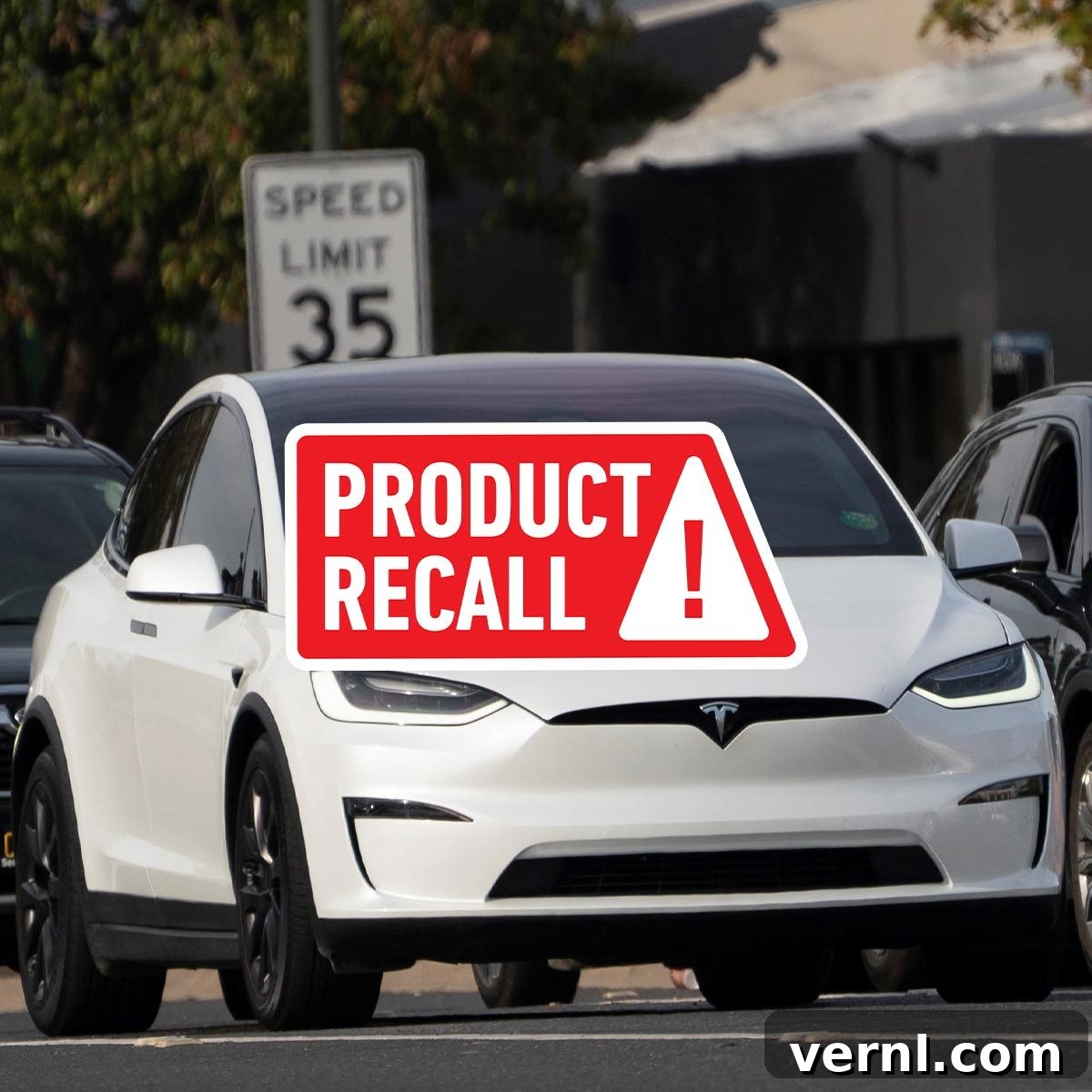
In a continuous effort to uphold stringent safety standards on American roads, the National Highway Traffic Safety Administration (NHTSA) has recently announced a significant auto recall, once again bringing vehicle safety to the forefront of public discussion. This time, the spotlight is on electric vehicle pioneer Tesla, impacting hundreds of thousands of its popular models. The core issue revolves around a critical defect in the rearview camera system, which poses considerable safety risks to drivers and others on the road.
For any vehicle owner, understanding and acting upon recall notices is paramount. While some defects might seem minor or easily circumvented, official safety guidelines and regulations are invariably established in response to documented patterns of problems and potential hazards. Ignoring a recall, even for an issue that appears trivial, can have serious consequences, ranging from increased accident risk to legal liabilities. This comprehensive guide aims to distill all essential information from the official announcements, enabling you to swiftly determine if your Tesla is affected and, crucially, what steps you need to take to ensure your safety and compliance.
Modern vehicles are complex machines, and the integration of advanced technology, while enhancing convenience and performance, also introduces new areas for potential defects. When a critical safety system like a rearview camera is compromised, it directly impacts a driver’s ability to operate the vehicle safely, particularly during common maneuvers such as reversing, parking, or navigating tight spaces. The NHTSA’s proactive role in identifying and addressing these issues underscores the collective commitment to maintaining the highest possible safety benchmarks across the automotive industry.
Understanding the Tesla Rearview Camera Recall: A Critical Safety Concern
The recent NHTSA brief explicitly details the technical fault prompting this widespread Tesla recall. According to the federal agency, the affected Tesla vehicles possess a “computer circuit board that may short, resulting in the loss of the rearview camera image.” This technical malfunction is far more than a mere inconvenience; it represents a significant safety hazard that compromises a driver’s essential rear visibility.
The rearview camera has evolved from a luxury feature to a standard safety requirement in modern vehicles. It provides a crucial visual aid, especially when reversing, helping drivers detect obstacles, pedestrians, and other vehicles in their blind spots that might not be visible through traditional mirrors. The sudden or intermittent loss of this image means drivers are deprived of vital information, drastically increasing the risk of collisions during low-speed maneuvers, parking, or exiting driveways. Such incidents can lead to property damage, injuries, or even fatalities, highlighting the severe implications of this defect.
Furthermore, the NHTSA emphasizes that this defect causes the impacted Teslas to “fail to comply with the requirements of Federal Motor Vehicle Safety Standard (FMVSS) number 111, ‘Rear Visibility.'” FMVSS 111 is a critical regulation that mandates specific performance standards for rearview mirrors and other rear visibility systems in passenger cars, multi-purpose passenger vehicles, trucks, and buses. Its purpose is to ensure that drivers have an adequate and clear view of the area directly behind their vehicles. Non-compliance with such a fundamental safety standard is a serious matter, prompting immediate action from manufacturers and regulatory bodies to rectify the issue and restore vehicles to a safe operational state.
The integrity of a vehicle’s safety features is non-negotiable. When a component as vital as the rearview camera system fails, it undermines the trust consumers place in their vehicles and the rigorous safety testing they are presumed to undergo. Tesla, like all automakers, is obligated to ensure its vehicles meet or exceed federal safety mandates, and this recall serves as a clear reminder of that critical responsibility. The potential for a computer circuit board to fail and lead to the loss of a rearview camera image illustrates the complex interplay of hardware and software in contemporary automotive design, where even a minor electronic fault can have profound safety implications.
Identifying Affected Tesla Models: Is Your Vehicle Included?
This substantial recall encompasses nearly 250,000 Tesla vehicles, spanning multiple popular models and production years. It is imperative for owners of the following vehicles to pay close attention to this recall:
- 2024 Model S
- 2025 Model S
- 2024 Model 3
- 2025 Model 3
- 2023 Model X
- 2024 Model X
- 2025 Model X
- 2023 Model Y
- 2024 Model Y
- 2025 Model Y
While the list provides a clear indication of the potentially affected models and years, it’s crucial to understand that not every single vehicle within these ranges might be impacted. Recalls are often specific to certain production batches, component suppliers, or software versions that correspond to the period when the defective part or software was integrated. Therefore, while owning one of these models and years should prompt immediate investigation, the definitive way to confirm if your specific vehicle is part of the recall is by checking its Vehicle Identification Number (VIN).
The NHTSA and Tesla strongly advise against operating an affected vehicle until the necessary repair or software update has been implemented. As the NHTSA explicitly cautions, “a rearview camera that does not display an image reduces the driver’s rear view, increasing the risk of a crash.” This warning is not to be taken lightly. Driving a vehicle with a compromised rearview system can lead to serious accidents, particularly in environments with high pedestrian traffic, crowded parking lots, or during adverse weather conditions where visibility is already reduced. The potential for severe injury or property damage far outweighs the convenience of delaying the repair.
Owners of the listed models should prioritize verifying their vehicle’s status and taking immediate action. This proactive approach not only ensures personal safety but also contributes to the overall safety of roads and communities. The sheer volume of vehicles involved in this recall underscores the broad impact of this specific hardware and software issue across Tesla’s product line, highlighting the importance of robust quality control and rigorous testing in the development of advanced automotive technology.
Resolving the Defect: Tesla’s Comprehensive Solution
Tesla, Inc. has outlined a comprehensive, twofold approach to address this critical rearview camera defect, ensuring that affected owners can have their vehicles remedied free of charge. This strategy leverages both modern software capabilities and, where necessary, traditional hardware replacement.
Firstly, Tesla has “released an over-the-air (OTA) software update, free of charge.” OTA updates are a hallmark of modern electric vehicles, allowing manufacturers to deploy software fixes, improvements, and new features remotely, without the need for owners to visit a service center. For this recall, the software update is designed to address the underlying issue causing the computer circuit board to short or to mitigate its effects, restoring the functionality of the rearview camera image. Owners should ensure their vehicles are connected to Wi-Fi to receive and install these updates promptly. It’s often a simple process, typically initiated through the vehicle’s touchscreen interface, and can usually be performed conveniently at home.
However, recognizing that some vehicles may have experienced actual hardware degradation or failure, Tesla has also stated that it “will identify any vehicles that experienced a circuit board failure, or stress that may lead to a circuit board failure, and replace the affected computers, free of charge.” This aspect of the repair addresses the root physical cause in instances where the software update alone may not suffice. Tesla will likely use diagnostic data collected from the vehicles to identify those with confirmed hardware failures or those exhibiting signs of impending failure. For these specific vehicles, a visit to a Tesla service center will be necessary to replace the compromised computer circuit board. This ensures a durable and permanent fix, restoring the vehicle’s rearview system to full, reliable operation.
The commitment to provide both a software solution and a hardware replacement, free of charge, reflects Tesla’s responsibility to its customers and its dedication to rectifying safety issues promptly. Owners should be aware that while the OTA update might resolve the issue for many, some vehicles may still require the physical replacement if diagnostics indicate a persistent hardware problem. Both components of this solution are vital to fully addressing the defect and ensuring the long-term safety and compliance of the affected vehicles.
Action Guide for Affected Tesla Owners
If your Tesla model and year are on the recall list, or if you suspect your vehicle might be affected, it’s crucial to take prompt action. Here’s a clear guide on what you need to do:
1. Verify Your Vehicle’s Status: The most accurate way to determine if your specific Tesla is part of the recall is by entering its 17-digit Vehicle Identification Number (VIN) into the NHTSA’s recall search tool on their official website (NHTSA.gov/recalls). This will provide definitive information regarding any open recalls pertaining to your car.
2. Check for Over-the-Air (OTA) Software Updates: For many affected vehicles, the initial fix is an OTA software update. Ensure your Tesla is connected to a stable Wi-Fi network and check your vehicle’s software settings for available updates. Follow the on-screen prompts to download and install the update. This process is often seamless but might require the vehicle to be parked for a period.
3. Schedule a Service Appointment if Necessary: If after the OTA update, you continue to experience issues with your rearview camera, or if you are notified that your vehicle requires a physical hardware replacement, you will need to schedule a service appointment. You can do this through the Tesla mobile app or by contacting Tesla Customer Service. Clearly explain that you are calling about recall SB-25-00-001 and provide your VIN to expedite the process. The replacement of the affected computer circuit board will be performed at no cost to you.
4. Await Official Notification: Tesla will mail out official recall letters to impacted owners in early March of 2025. While you can take proactive steps as outlined above, this letter will provide formal documentation and specific instructions. If you’ve already had the issue resolved, you can keep this letter for your records.
5. Contact Information for Assistance:
- Tesla Customer Service: If you have further questions, need to schedule a service appointment, or wish to clarify any details, you can reach Tesla customer service at 1-877-798-3752. When calling, be sure to clarify that you are inquiring about Tesla recall SB-25-00-001 to ensure you are directed to the correct department.
- NHTSA Vehicle Safety Hotline: For general recall information, to report safety concerns, or if you feel your issue has not been adequately addressed, you can contact the NHTSA Vehicle Safety Hotline directly at 1-888-327-4236. The specific recall number for this issue with the NHTSA is 25V002000.
Important Note on Driving: The NHTSA’s warning about reduced rear visibility and increased crash risk should be taken very seriously. If your rearview camera is not functioning, consider limiting driving until the issue is resolved, especially avoiding situations where reversing is unavoidable or where visibility is already compromised. Your safety and the safety of others depend on the full functionality of your vehicle’s safety features.
Taking swift action is not just about compliance; it’s about prioritizing safety. Modern vehicles, with their intricate systems, require proactive engagement from owners when recalls are issued. By following these steps, Tesla owners can ensure their vehicles are safely and correctly repaired, mitigating potential risks and maintaining peace of mind.
The Broader Significance of Auto Recalls and Consumer Safety
This Tesla rearview camera recall, like all auto recalls, serves as a crucial reminder of the continuous commitment required to ensure vehicle safety. The National Highway Traffic Safety Administration (NHTSA) plays an indispensable role in this ecosystem, acting as the primary federal agency responsible for vehicle safety. Their mission is to save lives, prevent injuries, and reduce economic costs due to road traffic crashes, primarily through setting and enforcing safety standards, investigating defects, and facilitating recalls.
Auto recalls are not a sign of manufacturing failure but rather an integral part of the safety framework. They demonstrate that detection systems are working and that manufacturers, under regulatory oversight, are taking responsibility for identified defects. The process typically begins with either consumer complaints, manufacturer’s internal investigations, or NHTSA-initiated probes. Once a safety-related defect is confirmed, the manufacturer is legally obligated to notify owners and provide a remedy, free of charge. This system is designed to be proactive, aiming to prevent accidents before they occur.
The evolution of vehicle technology, particularly the integration of advanced driver-assistance systems (ADAS) like rearview cameras, blind-spot monitors, and automatic emergency braking, has significantly enhanced safety. However, it also introduces new complexities. Software glitches, electronic component failures, or faulty sensor integration can compromise these systems. The ability to deploy over-the-air (OTA) updates, as seen in this Tesla recall, represents a paradigm shift in how quickly and efficiently safety fixes can be delivered, minimizing inconvenience for owners and accelerating the resolution of widespread issues.
Ultimately, consumer responsibility remains a cornerstone of vehicle safety. Owners are encouraged to regularly check for recalls using their VIN on the NHTSA website, pay attention to official notices, and act promptly on any directives. Staying informed about vehicle safety is not just about protecting one’s investment; it’s about safeguarding lives. Recalls, while sometimes an inconvenience, are a vital mechanism that underscores the industry’s and government’s dedication to ensuring every vehicle on the road meets the highest possible safety standards.