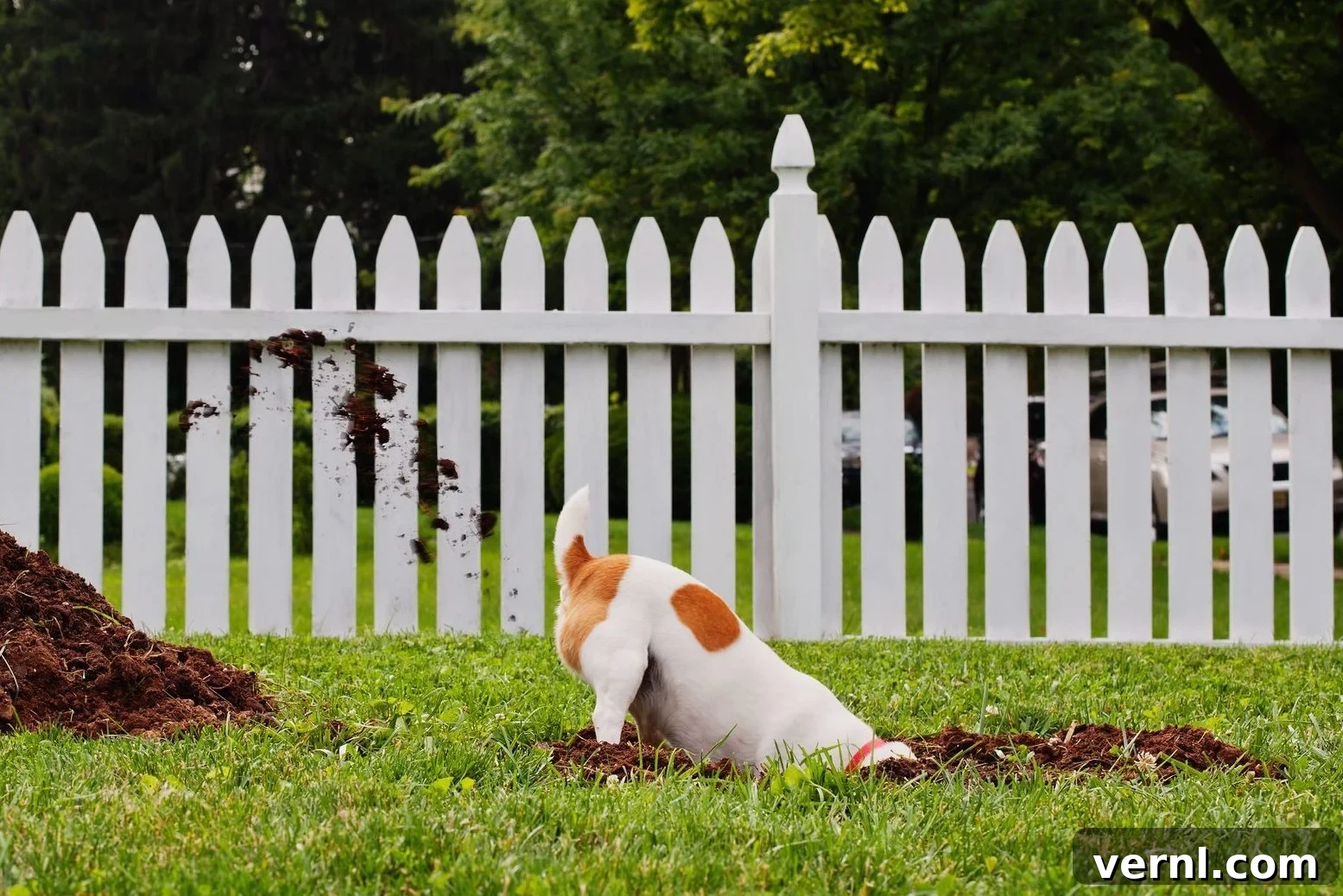
Is your once pristine backyard starting to resemble a lunar landscape, riddled with craters and tunnels? Do you frequently find your furry friend joyfully adding another pothole to your lawn, strategically digging under the fence, or meticulously excavating your prized flower beds? If you share your home with an expert canine excavator, you’re undoubtedly familiar with the frustration and significant damage this instinctual behavior can inflict on your property. Beyond the aesthetic woes, digging can pose serious dangers to your beloved pet, from unearthing toxic bulbs and hidden wires to creating perilous escape routes under fences that could lead to injury or getting lost. For countless dog owners, the cycle of repeatedly filling in holes dug by pets and tirelessly cleaning up muddy paw prints tracked through the house is a constant battle. But take heart – you are not alone, and there is hope! This comprehensive guide delves into the fascinating reasons behind why dogs dig holes and, more importantly, provides seven actionable, expert-backed strategies you can employ to curb this destructive habit and foster a more harmonious outdoor environment for both you and your canine companion.
Understanding Why Dogs Dig Holes: Unearthing the Canine Instinct
While a freshly dug crater in your manicured lawn might ignite feelings of exasperation, it’s crucial to understand that your dog isn’t intentionally trying to cause mischief. Digging is a deeply ingrained, instinctual behavior for dogs, a relic from their wild ancestors. This primal urge can be particularly strong in certain breeds, such as terriers, hounds, and northern breeds like Huskies and Malamutes, which were selectively bred for tasks involving digging or living in harsh, cold climates. To effectively manage or positively channel this behavior, we must first understand its underlying motivations.
Ferdie Yau, MA, CPDT-KA (Certified Professional Dog Trainer-Knowledge Assessed) and a respected canine behavior consultant, illuminates the multifaceted nature of this natural behavior. According to Yau, dogs dig for a variety of reasons, each rooted in their innate drives and environmental interactions. These reasons often include:
- Prey Drive and Hunting Instincts: Many dogs dig instinctively to pursue or investigate potential prey. With their incredibly keen sense of smell, dogs can detect the presence of moles, voles, gophers, or other small critters tunneling beneath the surface of your yard. The thrill of the chase, even if it’s just the scent, can be a powerful motivator for excavation.
- Caching Food and Valuables: This behavior is a direct link to their wild heritage, where ancestors would bury leftover food or valuable items to secure them from scavengers or to save for later. Your dog might be burying a favorite toy, a bone, or even a piece of kibble, driven by this ancient caching instinct.
- Investigating Interesting Smells: A dog’s nose is an incredibly powerful tool, far surpassing human capabilities. An intriguing scent—be it a remnant of another animal, a patch of unusual soil, or even a buried root—can compel a dog to dig deeper, following the olfactory trail to its source.
- Creating a Cool Place: On a hot day, especially for dogs with thick coats or those in warmer climates, digging can be a self-cooling mechanism. The earth just a few inches below the surface is significantly cooler than the ambient air temperature, providing a refreshing spot to lie down and regulate body temperature.
- Alleviating Boredom: A lack of sufficient physical exercise, mental stimulation, or social interaction can lead to boredom and pent-up energy. For many dogs, digging becomes an engaging activity, a way to release this excess energy and entertain themselves when left unsupervised.
- Social Facilitation: Just like humans, dogs can be influenced by their peers. If a dog sees other dogs digging, or even smells where another dog has dug, they might be more inclined to join in, seeing it as an acceptable or interesting activity.
Beyond these common motivations, Yau also points out less frequent but equally significant reasons. These may involve “digging to get underneath a barrier like a fence,” driven by a desire to explore beyond their confines or to reach another dog in heat, or “reproductive behavior as when a female digs to create a den for her pups,” an instinctual nesting behavior to provide a safe, secure birthing and rearing environment.
Dr. Amy L. Pike, a highly respected board-certified veterinary behaviorist, adds another crucial dimension to this behavior: anxiety. Anxious dogs often resort to digging as a self-soothing mechanism, a way to relieve stress and express their distress. Understanding these diverse drivers is the first and most critical step in effectively managing your dog’s digging habits, allowing you to address the root cause rather than just the symptom. Now, let’s explore practical and positive strategies to transform your canine excavator into a well-behaved yard dweller.
7 Effective Strategies to Stop Your Dog from Digging Holes in Your Yard
1. Supervise Yard Time Consistently
One of the most straightforward and effective methods to manage unwanted digging is through consistent supervision during your dog’s outdoor time. Instead of simply letting your dog out into the yard unsupervised, make an effort to be present and actively engage with them. By setting your dog up for success, you can catch them in the act of starting to dig and immediately redirect their attention to more rewarding and less destructive activities. This active supervision allows for immediate intervention and teaches your dog what behaviors are acceptable. For instance, if you see them sniffing intensely at a spot, call their name, offer a toy, or initiate a game of fetch. This early redirection prevents the digging behavior from becoming a deeply ingrained habit and reinforces positive interactions in the yard. Over time, your dog will learn that yard time is for engaging with you or their toys, not for excavation projects.
2. Offer Abundant Exercise and Enrichment
Many instances of destructive digging stem directly from a dog’s unmet needs for physical exercise and mental stimulation. Dogs, especially high-energy breeds, will often dig out of sheer boredom or to burn off pent-up energy. Simply leaving your dog alone in the garden is rarely sufficient to meet these needs. Instead, actively incorporate more exercise and engaging enrichment into their daily routine. Consider longer, more vigorous walks or runs, which allow them to explore new scents and terrain. Dog sports like agility, flyball, or canicross can provide excellent physical and mental outlets. For mental stimulation, invest in interactive puzzle toys that challenge their problem-solving skills, or engage them in scent work activities. As Yau suggests, “I may suggest nosework [a sport where dogs seek out different scents, similar to what professional detection dogs do] or taking the dog on a hike where they’re allowed to sniff and explore as much as they want.” Additionally, items like snuffle mats and snuffle balls are fantastic tools for encouraging natural foraging behavior in a controlled and stimulating way, effectively redirecting their exploratory drive away from your lawn.
3. Designate a Specific Digging Zone
Completely eliminating a dog’s natural urge to dig can be counterproductive and frustrating for both of you. As Yau wisely notes, “Some dogs may simply try to find other places to dig if you attempt to stop them, and it becomes a game of whack-a-mole.” A more effective approach is to redirect this instinctual behavior to an appropriate, designated area. “I think you’re better off redirecting the dog to an appropriate space where they’re allowed to dig to their hearts’ delight.” To create a successful digging zone, consider setting up a sandbox or a clearly defined area of soft soil in a less visible part of your yard. To encourage your dog to use this new space, bury high-value items like their favorite toys, durable chews, or irresistible treats within it. When they start digging in this designated spot, offer praise and positive reinforcement. Simultaneously, Dr. Pike recommends opting for dog-friendly landscaping techniques that make previously favored digging spots unattractive. For example, “Plant a tree there or bury chicken wire about one to two inches below the surface,” she suggests. The chicken wire provides a harmless, uncomfortable barrier that discourages digging without causing harm. You can also strategically fence off sensitive flower beds to keep your dogs out, guiding them towards their approved digging haven.
4. Set Up Ample Shady Spots and Cooling Options
Dogs can overheat quite easily, especially during warmer months, and their instinct often leads them to dig holes as a way to create a cooler resting place. This behavior is particularly prevalent in cold-weather breeds like Huskies, Malamutes, and Samoyeds, who naturally seek out cool earth. To mitigate this, ensure your dog has abundant backyard shady spots where they can retreat from the sun. This could include strategically placed trees, large umbrellas, shade sails, or even a well-ventilated dog house. Beyond shade, provide access to plenty of fresh, cool water at all times. Janet Cutler, a certified applied animal behaviorist, further suggests that you “provide a kiddie pool for dogs that like to dig in wet earth or are digging to keep cool.” A shallow kiddie pool can be a delightful and safe alternative, allowing them to cool off without destroying your landscaping. On extremely hot days, the safest course of action is always to bring your dog indoors where temperatures are regulated, protecting them from heatstroke.
5. Help Your Anxious Dog Relax
As Dr. Pike highlighted, anxiety is a significant underlying cause for digging in many dogs. If you suspect your dog’s digging is a stress outlet, Janet Cutler advises observing their body language for crucial clues. “If their body, ears and tail are nice and relaxed beforehand, then it’s less likely they’re anxious,” she explains. However, if you notice behaviors such as “pacing and whining, with their ears back and their body lowered or stiff,” these are strong indicators that anxiety might be the culprit. Cutler further elaborates, “Different types of anxiety could be causing the behavior, including separation anxiety, noise phobias and fear, due to things they smell, see or hear outside.”
Addressing anxiety-driven digging requires identifying and managing the triggers. This might involve gradually desensitizing your dog to specific sounds, creating a safe and comforting “den” indoors for when you leave, or providing calming aids. If you find yourself unable to pinpoint the cause of the anxiety or struggling to help your dog relax around their triggers, it’s highly recommended to consult a certified veterinary behaviorist or a professional dog trainer experienced in behavior modification. These experts can conduct a thorough assessment, develop a tailored behavior modification plan, and help build your dog’s confidence, ultimately changing their emotional response to stressors and reducing the need to dig as an anxiety outlet.
6. Rid Your Yard of Uninvited Critters
For many dogs, particularly breeds like terriers that were bred for vermin control, the drive to hunt and dig up prey is incredibly strong. “Terriers are more likely to try and get to rodents,” Dr. Pike states. However, any breed with a strong prey drive can be motivated to chase after moles, voles, gophers, or other subterranean pests that have made your yard their home. Their keen sense of smell can easily detect these critters, turning your lawn into a hunting ground. The most effective way to eliminate this type of digging is to remove the incentive: the pests themselves. Focus on humanely ridding your yard of rodents using dog-safe solutions. Avoid harsh chemicals or traps that could pose a danger to your pet. Consulting with a professional pest control service that specializes in pet-friendly methods can ensure both the effectiveness of the pest removal and the safety of your dog.
7. Work Out Why Houdini Hounds Are Trying to Escape
Perhaps the most concerning type of digging behavior is when your dog consistently excavates under your fence in an attempt to escape the yard. This “Houdini hound” behavior can be driven by a number of factors: a thirst for adventure and exploration, fear and anxiety within the yard (e.g., loud noises, loneliness), a compelling scent from a neighboring dog, or simply the desire to seek companionship. Addressing this habit quickly is paramount for your dog’s safety.
Cutler notes that “Neutering could possibly help remove some of the motivation if a dog is digging to escape and reach another dog.” However, she quickly adds a crucial caveat: “if your dog has learned how to dig and escape, it’s very unlikely that neutering alone will keep them from doing so again since they’ve already learned the behavior.” This emphasizes that while managing hormonal drives can help, behavioral modification and physical barriers are often necessary for established escape artists. Dog-proofing your fence is essential. This can involve burying chicken wire or concrete an “L-footing” fashion along the base of the fence, placing large, heavy rocks, or pouring a concrete footer to create an insurmountable barrier. However, even with reinforcements, consistent supervision of your escape-prone pet in the backyard is non-negotiable. An unsupervised Houdini will always find a way if the motivation is strong enough.
What Not To Do To Stop Your Dog From Digging
While there are many sensible, positive, and effective strategies to discourage inappropriate digging, it’s equally important to know which methods to avoid. Certain punitive or aversive techniques can be highly detrimental to your dog’s well-being and your relationship with them.
“I definitely would avoid the use of remote e-collars or the use of water sprays, loud noises or other aversives,” states Ferdie Yau. The reasoning behind this is profound: “The owner may risk damaging the human-canine relationship or increase problem behaviors related to anxiety and aggression.” Punishing your dog for an instinctual behavior doesn’t teach them what *to* do; instead, it teaches them to fear you or the situation. This can lead to increased anxiety, fear-based aggression, or a suppression of the behavior in your presence, only for it to resurface when you’re not around. Such methods erode trust, create stress, and fail to address the underlying cause of the digging. Positive reinforcement, patience, and understanding are always the most humane and effective approaches to modifying your dog’s behavior.
Ultimately, addressing your dog’s digging requires a blend of patience, consistency, and an understanding of their natural instincts and individual needs. By identifying the root cause of the behavior, whether it’s boredom, anxiety, prey drive, or a simple need to cool down, you can implement targeted and positive strategies. Providing ample exercise, mental enrichment, a designated digging zone, and a secure, comfortable environment will not only protect your yard but also strengthen the bond you share with your beloved canine companion, fostering a happier, healthier life for both of you.