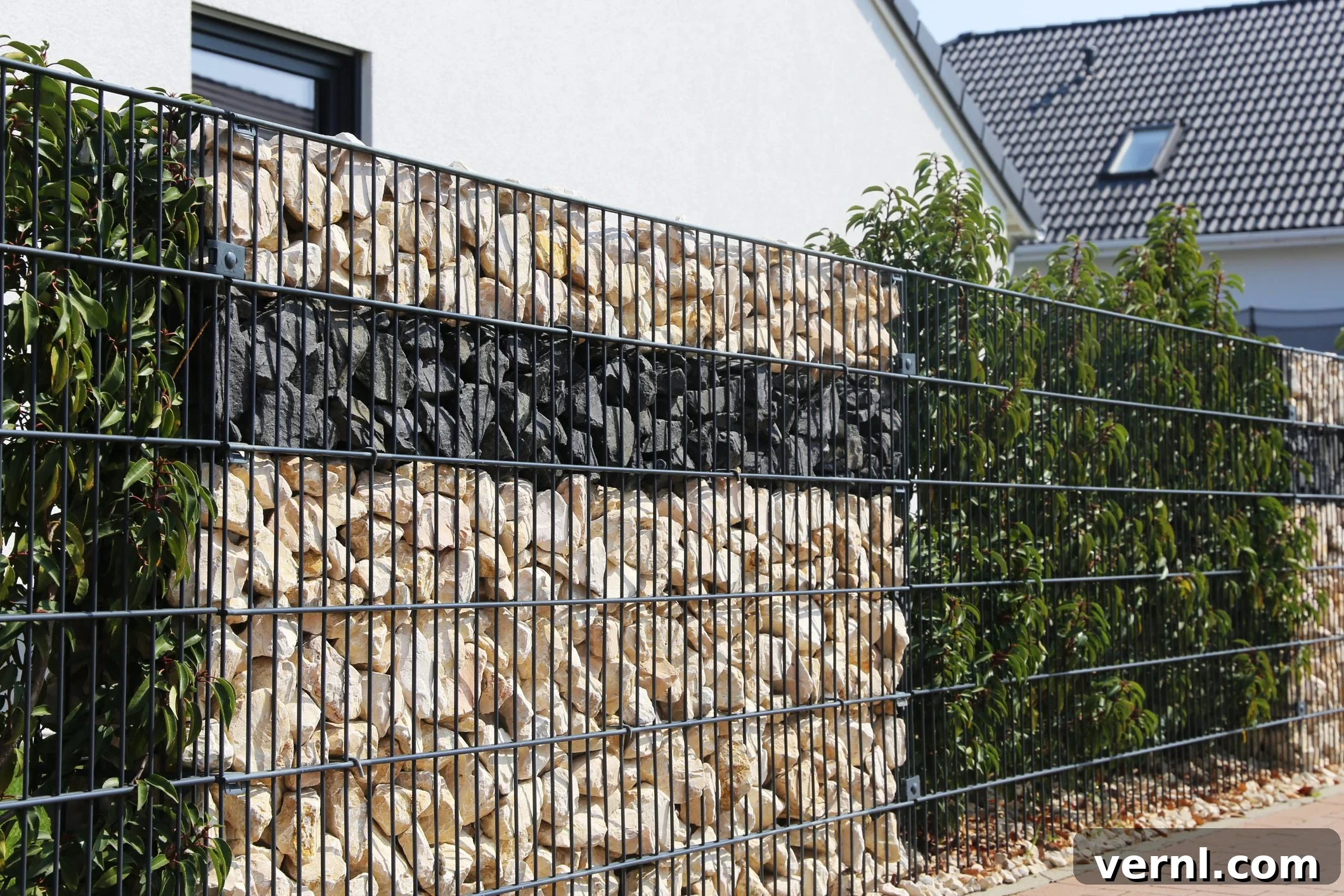
Even if you’ve never encountered the term, chances are you’ve seen a gabion wall in action. The word “gabion” originates from the Italian gabbione, meaning “big cage,” and this accurately describes these versatile structures. Gabion walls are essentially robust wire mesh cages meticulously filled with loose stone, gravel, or other suitable masonry materials, often referred to as riprap. Their distinctive appearance and functional benefits make them a popular choice for a wide range of applications, from heavy-duty engineering projects to elegant residential garden features.
For many, the realization of what these structures are called often comes with a lightbulb moment: “So that’s what they’re called!” This comprehensive guide aims to illuminate every aspect of gabion walls, exploring their definition, historical context, myriad uses, and the detailed considerations involved in their implementation.
Understanding Gabion Walls: Definition, Uses, and History
At its core, a gabion wall is a modular structure designed for stability and permeability. It consists of interconnected wire mesh baskets, typically made from galvanized or PVC-coated steel, which are then filled with locally sourced natural stones or recycled concrete. This simple yet ingenious construction technique creates a weighty, flexible, and robust unit capable of withstanding significant pressures.
While often seen as modern landscaping solutions, gabion walls boast a rich history dating back centuries. Early forms of gabions, made from wicker baskets filled with earth, were used as far back as ancient Egypt for riverbank protection. Leonardo da Vinci himself designed a type of gabion for the foundations of the San Marco Castle in Milan. Their widespread use in civil engineering truly blossomed in the 19th and 20th centuries, particularly after World War II, for military fortifications, erosion control, and large-scale infrastructure projects. Alcide Trincia, a retired construction worker, fondly recalls building gabion walls with his father, often after devastating floods or landslides, highlighting their crucial role in disaster recovery and prevention.
Where Are Gabion Walls Most Frequently Used?
Gabion walls are incredibly versatile, finding applications across diverse sectors due to their inherent strength and adaptability. Their primary function often revolves around earth retention and stabilization.
- Industrial and Civil Engineering Settings: Gabion walls are most frequently employed as retaining walls or as tall, vertical barriers in demanding industrial environments. They are indispensable for foundational support in bridges, stabilizing railway embankments, and constructing durable seawalls to protect coastlines from erosion. Their design often incorporates a stepped or slanted profile, which enhances their ability to effectively retain the soil mass behind them. In coastal or riverine areas, gabion walls are a go-to solution for controlling erosion, stabilizing banks, and even artfully diverting the flow of water bodies.
- Residential and Landscaping Applications: In residential settings, the aesthetic and functional appeal of gabion walls has grown significantly. They appear as robust yet attractive retaining walls for garden terraces, effective privacy fences that offer both security and style, or as unique decorative landscaping elements. From creating raised garden beds to constructing outdoor seating, water features, or even noise barriers, gabions provide a distinctive blend of raw natural beauty and modern design. Their ability to integrate seamlessly with natural surroundings makes them a sustainable choice for homeowners seeking both utility and visual appeal in their yards and gardens.
The Distinct Advantages of Gabion Walls
Gabion walls offer a compelling array of benefits that make them a preferred choice for many projects. Paolo Marchetti, who operates a prominent construction company in central Italy, emphasizes their efficiency: “Gabion walls are made of inexpensive materials and can be built quickly with the right equipment. That’s part of the reason you see them used so often in industrial settings, like roads and areas prone to flooding.” According to Marchetti, the most significant advantages include:
- Exceptional Cost-Effectiveness: One of the most attractive features of gabion walls is their affordability. The primary materials—wire mesh and fill matter—are generally inexpensive. Fill materials can range from readily available rocks and crushed concrete to leftover construction materials like broken bricks and tiles, which can be sourced locally, significantly reducing transportation costs. For a more refined look while maintaining cost efficiency, Marchetti suggests, “you can use cast-off construction material in the middle of the wall, and better quality material, like tumbled stones, on the outside.” This strategic layering allows for aesthetic customization without breaking the bank.
- Superior Drainage Capabilities: Unlike solid concrete or masonry walls, gabion walls are inherently porous. This characteristic makes them exceptionally well-suited for retaining soil or terrain that requires efficient drainage. Marchetti recounts installing a gabion wall to mitigate erosion on land routinely waterlogged during the rainy season. “Because water can flow right through the wall,” he explains, “the gabion system was the best solution.” This natural drainage prevents hydrostatic pressure buildup, a common cause of failure in traditional retaining walls.
- Inherent Flexibility and Durability: Conventional retaining walls, even the sturdiest designs, can eventually succumb to the relentless forces of erosion from wind and water, seismic activity, and the immense weight of the earth they hold back. Gabion walls, however, are built with flexible yet remarkably resistant wire mesh and lack a solid surface. This design allows them to adapt to minor ground movements and settlements without cracking, ensuring their structural integrity remains intact unless the wire cage itself fails. Alcide Trincia notes that the gabion walls he built with his father lasted up to 30 years. With modern advancements in materials like galvanized and PVC-coated wire and mesh, he confidently states that a gabion wall today can endure for “40, 50 or 60 years,” offering exceptional longevity.
- Environmentally Friendly Solution: This aspect is arguably one of the most compelling advantages of gabion walls in today’s eco-conscious world. By eliminating the need for cement (a high-carbon footprint material) and often utilizing otherwise discarded materials such as reclaimed concrete or local stones, gabion walls boast a significantly smaller carbon footprint compared to many other retaining wall solutions. They promote natural drainage, minimize disruption to local ecosystems, and can even become integrated habitats for small plants and animals over time, fostering biodiversity. This makes them an excellent choice for sustainable landscaping and green building initiatives.
- Sound Attenuation: The mass and porous nature of gabion walls allow them to effectively absorb and dissipate sound waves. This makes them an excellent choice for noise barriers along busy roads, railway lines, or even within residential areas to create quieter outdoor spaces.
- Aesthetic Versatility: While often associated with an industrial look, gabion walls offer significant aesthetic potential. By carefully selecting fill materials (e.g., colorful river stones, uniformly cut blocks, or even glass cullet) and integrating planting, they can be transformed into striking architectural or garden features. Discover more inspiration with these gabion garden ideas.
Considering the Drawbacks of Gabion Walls
Before enthusiastically planning a backyard transformation involving rolls of wire and a truckload of rocks, it’s crucial to understand that gabion walls are not without their challenges. While they offer numerous benefits, certain aspects might make them less suitable for every project or homeowner. As Paolo Marchetti advises, “Gabion walls aren’t complicated to build from a technical standpoint, but they’re also just a lot of work physically.” Here are the main considerations:
- Highly Labor-Intensive: The construction of gabion walls, particularly for larger projects, demands significant physical effort. Assembling the wire cages, whether custom-built or ready-made, is relatively straightforward. However, the arduous task lies in filling them with stones, gravel, or busted-up cement. This back-breaking labor intensifies if you’re relying on manual tools like shovels, buckets, and wheelbarrows. Marchetti warns, “The higher the wall gets, the harder it is to do the job with just manual labor,” underscoring the immense physical toll of manual filling.
- Potential Requirement for Heavy Equipment: For gabion wall projects involving considerable length, significant height, or multiple steps with elevation changes, manual labor alone becomes impractical. In such scenarios, professional assistance and heavy machinery become essential. “It’s a lot easier to dump the fill material into the wall with a backhoe than it is with a shovel,” Marchetti notes. Alcide Trincia, recalling a sizable gabion wall he built by hand with his father, strongly advises against it for large-scale endeavors, asserting, “You’d never build a large gabion wall without a backhoe.” This necessity for heavy equipment can add considerably to the overall project cost and complexity.
- Aesthetics May Not Suit All Styles: Let’s be candid: while functional and cost-effective, the raw, industrial aesthetic of gabion walls may not universally appeal. Their rugged appearance might not seamlessly integrate with every existing yard or garden design, potentially clashing with more formal or delicate landscaping. However, with thoughtful planning and creative design choices—such as selecting specific stone types, integrating lighting, or planting greenery within or around the gabions—these walls can be transformed into distinctive focal points that complement various styles.
- Space Requirements: Gabion walls tend to be wider at their base than traditional concrete or block walls due to their design principles and stability requirements, especially for taller structures. This can be a significant consideration in smaller gardens or properties where space is at a premium, as they might occupy more footprint than anticipated.
- Settlement Over Time: While durable, the fill material within gabion cages can settle over many years, particularly if the stones are not densely packed during construction. This can lead to minor deformations or a less uniform appearance, potentially requiring periodic topping up of the fill material.
How to Construct a Gabion Wall: A Step-by-Step Guide
Building a gabion wall can be a rewarding DIY project for smaller applications, or a significant construction endeavor requiring professional expertise for larger ones. A key advantage of gabion walls is their relatively quicker installation compared to other types of retaining walls, often because they do not universally require a poured concrete footer.
1. Site Preparation and Foundation Laying
Proper site preparation is crucial for the longevity and stability of your gabion wall. Begin by clearing the area, removing any vegetation, loose soil, or debris. Mark out the precise location and dimensions of your wall. For the foundation, Marchetti advises, “If you’re building on flat ground that’s not composed of clay, which will settle under the weight of the wall, you can get by without a foundation.” In such cases, a simple leveled and compacted earth base may suffice. However, if the ground is soft, unstable, or predominantly clay, which can shift under the wall’s substantial weight, it’s imperative to dig down until you reach more compact, stable earth. The excavated space should then be filled with a layer of compacted gravel (typically 6-12 inches deep) to provide a stable, free-draining base. For very tall or heavily loaded walls, a reinforced concrete strip foundation might be necessary to ensure maximum stability and prevent differential settlement.
2. Assembling and Positioning the Gabion Cages
The core of a gabion wall is its wire mesh cage. These cages are typically fabricated from heavy-duty galvanized steel wire or PVC-coated steel wire, chosen for its corrosion resistance and strength. Individual mesh sheets are connected using galvanized lacing wire, spiral binders, or C-rings to form a rectangular or custom-shaped basket. For smaller, less ambitious projects, you have the convenient option to purchase ready-made gabion cages, which arrive flat-packed and require simple assembly. Once assembled, the cages are carefully positioned on the prepared foundation, ensuring they are level and aligned according to your design. For taller walls or those subjected to significant pressure, internal diaphragms (cross-braces) are installed at regular intervals within the cages to maintain their shape and prevent bulging once filled.
3. Filling the Gabion Cages
This is arguably the most labor-intensive part of the process. The cages are filled with suitable masonry material, which could include river rock, quarry stone, crushed concrete, or recycled brick. For aesthetic appeal, many choose to place higher-quality, visually appealing stones on the visible faces of the gabions, while using more varied or less uniform material for the interior. The fill material should be carefully placed to minimize voids and ensure a dense, stable mass. For smaller walls, this can be done manually with shovels and buckets. However, for larger or taller walls, heavy equipment like a backhoe or mini-excavator can significantly expedite the filling process. After filling to the desired level, the top lid of the cage is securely wired into place, sealing the contents.
4. Constructing More Complex Walls (Tall and Stepped Designs)
More elaborate designs, such as tall, multi-tiered walls or complex stepped gabion structures, demand meticulous planning and often professional intervention. Marchetti explains that “Stepped walls usually mean a lot of excavation beforehand to carve out the area the wall will occupy.” This ensures proper terracing and foundational support for each step. Tall walls, he adds, are constructed by stacking cages precisely on top of one another. To enhance the structural integrity of these taller and longer walls, additional support elements may be required. This can include embedding reinforcing rebar rods into a concrete base and extending them vertically through the gabion layers, or incorporating internal wire cross-braces between the front and back faces of the cages at various heights. These measures are crucial for helping the wall maintain its intended shape and withstand external pressures over its long lifespan.
Understanding Gabion Wall Costs
When it comes to retaining wall solutions, gabion walls are often among the most economical options, with installed costs typically ranging from $5 to $40 per square foot. This broad range accounts for several key variables:
- Type of Fill Material: The cost of the fill material is a major determinant. Locally sourced, readily available crushed rock or recycled concrete will be significantly cheaper than specialty stones, large river boulders, or architectural-grade glass cullet. Utilizing recycled materials can substantially drive down costs.
- Gabion Cage Type and Size: The cost of the wire mesh cages themselves varies based on material (galvanized vs. PVC-coated), wire gauge, mesh opening size, and whether you’re buying ready-made baskets or fabricating them on-site. Larger or custom-sized cages will naturally cost more.
- Labor: This is often the most variable cost. While doable as a DIY project, Marchetti recommends that if you’re tackling it yourself, stick to less-ambitious projects, such as lower walls and those with fewer running feet. He emphasizes, “It’s not so much a question of skill as it is labor. It takes a long time to fill a gabion wall by hand and it’s exhausting work.” Your energy and enthusiasm for the project might run out well before that wall is filled, leading to potential delays or the need to hire help. Professional installation, while more expensive upfront, ensures efficiency, proper construction, and a professional finish, especially for complex or large-scale walls.
- Heavy Equipment: For larger projects, the rental or use of heavy machinery like backhoes for excavation and filling will add to the overall expense.
- Site Accessibility and Preparation: Difficult site access can increase labor and equipment costs. Extensive foundation preparation for unstable ground will also add to the budget.
- Geographic Location: Material and labor costs can vary significantly by region.
Despite these variables, gabion walls generally offer an excellent return on investment due to their durability, low maintenance requirements, and the ability to utilize cost-effective local resources.
Maintaining Your Gabion Wall
One of the appealing aspects of gabion walls is their relatively low maintenance. Once properly constructed, they require minimal upkeep. Periodic checks are recommended to ensure the integrity of the wire mesh, especially after extreme weather events. Look for any signs of corrosion, bulging, or broken wires. If minor settling of the fill material occurs over time, particularly in older installations, additional stones can be easily added to top up the cages. This simple maintenance ensures the wall continues to perform its function effectively and maintains its aesthetic appeal for decades.
Conclusion: Why Choose Gabion Walls?
Gabion walls present a compelling solution for a myriad of construction and landscaping needs. Their robust engineering, combined with their aesthetic adaptability and environmental benefits, makes them an increasingly popular choice. From providing essential erosion control and structural support in demanding industrial applications to adding unique character and retaining soil in residential gardens, gabion walls offer a durable, cost-effective, and sustainable alternative to traditional walling systems. Understanding their advantages, potential challenges, and proper construction techniques empowers homeowners and professionals alike to harness the full potential of these “big cages” to create resilient and visually striking landscapes that stand the test of time.