
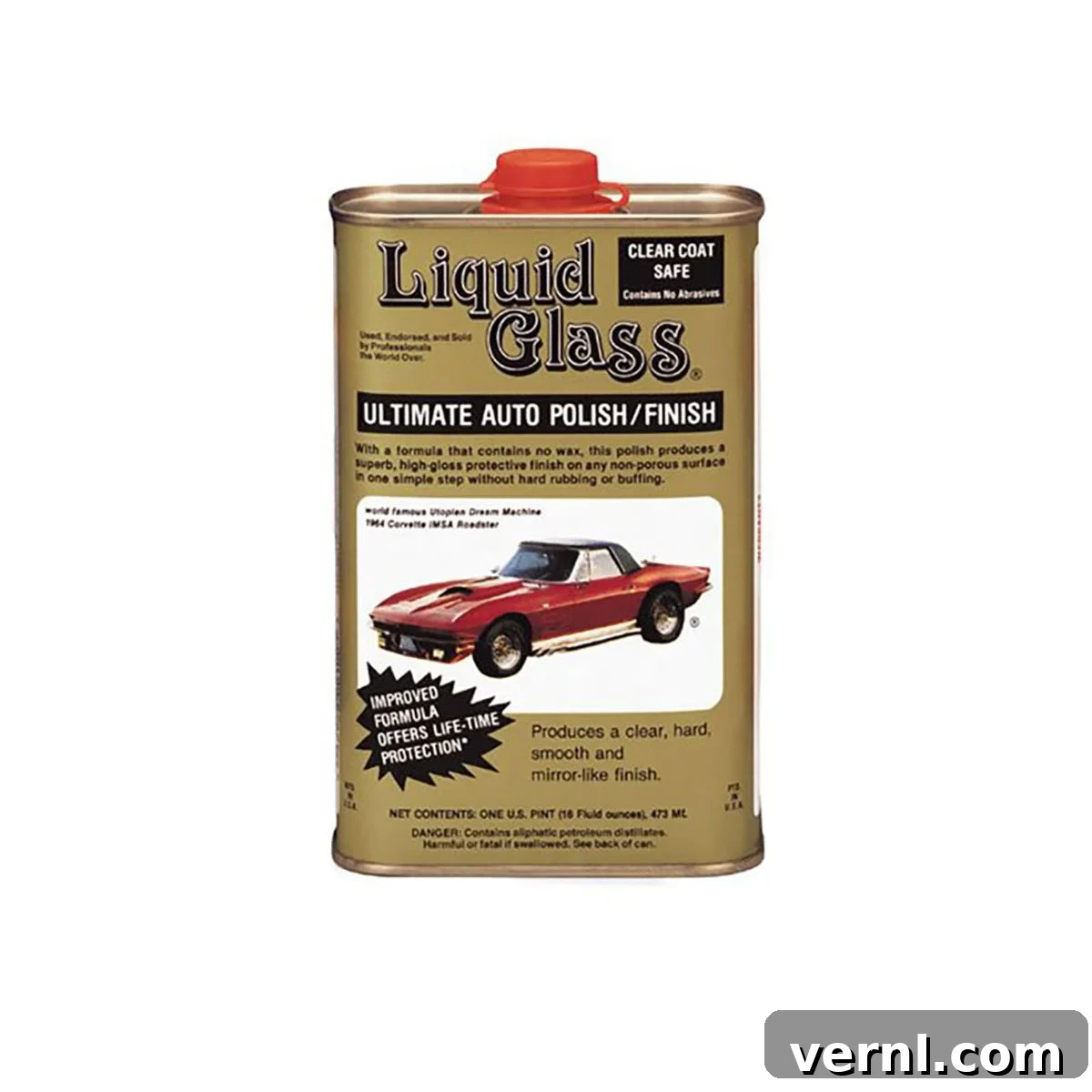
The Enduring Legacy of Liquid Glass: A Deep Dive into Automotive Paint Protection
For decades, car enthusiasts, professional detailers, and everyday drivers alike have sought the perfect finish for their vehicles. Among the pantheon of acclaimed automotive care products, one name stood out with an almost legendary status: Liquid Glass. More than just a simple car wax, Liquid Glass carved a niche for itself as a proprietary polish and finish that delivered an unparalleled, long-lasting shine and robust protection for automotive paint. Its unique formula and distinctive application method set it apart, cultivating a loyal following that cherished its ability to transform an ordinary car into a showroom-quality masterpiece.
This comprehensive guide delves into the mystique of Liquid Glass, exploring what made it so beloved, the reasons behind its eventual disappearance from the market, and the top-tier alternatives that continue to uphold its legacy. Whether you’re a seasoned detailing veteran mourning its absence or a newcomer curious about its enduring appeal, prepare to uncover the secrets behind one of the most revered names in car care history.
What Exactly Was Liquid Glass? A Revolutionary Automotive Finish
At its core, Liquid Glass was a highly advanced automotive polish and finish, specifically formulated to provide superior protection and a brilliant, deep gloss to vehicle paintwork. It was crucial to understand that Liquid Glass was fundamentally different from a traditional car wax. While car waxes typically rely on natural carnauba or synthetic polymers to create a sacrificial layer of protection, Liquid Glass utilized a proprietary blend of advanced resins and polymers. This unique chemical composition allowed it to bond more effectively with the paint surface, creating a harder, more durable, and more reflective layer than conventional waxes could achieve.
Unlike waxes that merely sit on top of the paint, Liquid Glass was designed to fill in microscopic pores and imperfections, creating an incredibly smooth, glass-like surface. This characteristic smoothness not only enhanced the paint’s reflectivity, producing that coveted “wet look,” but also significantly improved its protective qualities. It acted as a formidable barrier against environmental aggressors such as UV radiation, acid rain, road grime, bird droppings, and industrial fallout, which are notorious for dulling and damaging automotive finishes over time. The result was a finish that not only looked spectacular but also offered exceptional resilience and longevity, reducing the frequency of re-application and saving enthusiasts valuable time and effort.
The Unparalleled Appeal: Why Car Enthusiasts Swore by Liquid Glass
The devotion Liquid Glass commanded from its users wasn’t accidental; it was earned through years of consistent, outstanding performance and a user experience that genuinely set it apart. Its reputation grew organically, particularly among communities like classic car enthusiasts, who are often among the most discerning when it comes to preserving their prized possessions. Several key factors contributed to its widespread adoration:
Effortless Application: A Game-Changer in Car Detailing
One of the most celebrated attributes of Liquid Glass was its remarkably user-friendly application process. Traditional automotive waxes and sealants often demand a meticulous, section-by-section approach. Users typically apply a small amount of product to a specific area, allow it to haze for a short period, and then immediately buff it off before moving to the next section. This method, while effective, can be time-consuming and labor-intensive, particularly on larger vehicles or intricate bodywork.
Liquid Glass, however, revolutionized this process. Its unique formulation allowed users to apply the polish to the entire car’s paintwork in one continuous step. Once applied evenly across all surfaces, the polish would gradually transform into a distinctive haze. Only then, after the entire vehicle was coated and the product had properly cured, would the buffing process begin. This “apply all, then buff all” methodology was a revelation for many. It eliminated the pressure of working in small, hurried segments, significantly reduced the overall application time, and ensured a more consistent, streak-free finish across the entire vehicle. Even seasoned experts at publications like Hemmings Motor News enthusiastically praised the sheer ease and efficiency of its application, solidifying its reputation as a true time-saver for detailers of all skill levels.
Unrivaled Shine and Protection: Beyond the Surface
Beyond its easy application, the results delivered by Liquid Glass were nothing short of spectacular. The polish consistently produced a deep, almost three-dimensional shine that often garnered comparisons to a freshly applied clear coat or a perfectly maintained showroom finish. This “wet look” was a hallmark of Liquid Glass, giving vehicles an exceptional luster and depth that was hard to replicate with other products.
Moreover, the protection offered by Liquid Glass was legendary. Its durable, resin-based barrier provided formidable resistance against common environmental threats. Users reported excellent protection against harmful UV rays, which can cause paint fading and oxidation, as well as against corrosive elements like acid rain, bird droppings, and tree sap. The slick surface created by Liquid Glass also made future cleaning easier, as dirt and grime struggled to adhere to the smooth finish. Many enthusiasts reported that a single application could provide robust protection and a dazzling shine that lasted for many months, often up to a year or even longer with proper maintenance, far exceeding the lifespan of most conventional waxes.
A Legacy of Trust: Decades of Proven Performance
Ultimately, Liquid Glass earned its place in automotive folklore because it was a trusted product that consistently delivered exceptional results for years. This long-standing reputation was built on countless positive experiences shared by car owners who witnessed its transformative power firsthand. From daily drivers to meticulously restored show cars, Liquid Glass proved its mettle across a wide spectrum of vehicles and conditions.
The anecdotal evidence abounds, with many loyalists boasting about the incredible longevity and showroom quality their vehicles maintained thanks to Liquid Glass. As one satisfied reviewer at Advance Auto Parts once proudly stated, “I have about ten coats [of Liquid Glass] on my 1985 Cutlass Supreme and it still looks like it just came out of the showroom!” Such testimonials are a testament to the product’s ability to not only protect but also preserve the aesthetic integrity of a vehicle’s finish over extended periods. The author of this article, too, recalls using Liquid Glass years ago with consistently impressive results, solidifying its status as a product that truly stood the test of time.
The Vanishing Act: Is Liquid Glass Still Available?
Despite its storied history and widespread acclaim, the availability of Liquid Glass began to dwindle, leading to growing concerns and speculation within the automotive detailing community. Enthusiasts started to notice its scarcity on store shelves and online, prompting many to question the future of their beloved polish.
Unraveling the Mystery: The Disappearance from Shelves
Unfortunately, for long-time devotees, it appears that Liquid Glass is no longer readily available under its original brand name. Retailers and consumers alike have reported increasing difficulty in acquiring the product, signaling a potential cessation of its production. Online auto accessory retailer Auto Barn, for instance, explicitly stated on their Liquid Glass web page, “We are currently out of stock on all Liquid Glass Products. We have been unable to contact the Liquid Glass Company.” This statement, alongside the apparent offline status of the official Liquid Glass website (the Internet Archive last captured it online in February 2020), strongly suggests that the original Liquid Glass company may have ceased operations or production. Internet commenters have been speculating about its spotty availability for several years prior to its full disappearance, creating a void that many struggled to fill.
The precise reasons behind Liquid Glass’s discontinuation remain somewhat shrouded in mystery, leading to various theories among the detailing community. Some speculate about changes in ownership, manufacturing challenges, or perhaps difficulties in adapting to an increasingly competitive market. Regardless of the underlying cause, the absence of Liquid Glass left many car care aficionados searching for a suitable replacement that could deliver the same level of performance and aesthetic brilliance they had come to expect.
The Phoenix Rises: MPT Classic Polish/Finish – The Spiritual Successor
Amidst the disappointment of Liquid Glass’s disappearance, a beacon of hope emerged for its loyal fanbase. The good news for Liquid Glass devotees is that a very closely related product is still available, widely regarded as its direct descendant and virtual twin. MPT Industries, a company that was once intricately involved with Liquid Glass, now manufactures and distributes MPT Classic Polish/Finish. This product is championed by MPT and enthusiastically confirmed by countless users as being virtually identical to the classic Liquid Glass.
MPT Industries has a long-standing history in the chemical and automotive care sector, with deep ties to the original formulation and manufacturing processes of Liquid Glass. Their MPT Classic Polish/Finish leverages this heritage, offering the same proprietary blend of resins and polymers that made Liquid Glass so effective. This means enthusiasts can still achieve the same ease of application, the iconic “wet look” shine, and the durable, long-lasting protection that characterized the original. For those who considered Liquid Glass indispensable, MPT Classic Polish/Finish offers a genuine continuation of its legacy, providing the same high-quality results and peace of mind.
Exploring Alternatives: Top-Tier Substitutes for Liquid Glass
Even with the reliable alternative in MPT Classic Polish/Finish, the competitive landscape of automotive detailing offers a plethora of excellent products that can stand in for Liquid Glass, each with its own unique benefits. While the original Liquid Glass devotees will likely gravitate towards MPT Classic Polish/Finish to get as close to the original as possible, the internet community, lamenting the apparent disappearance of Liquid Glass from store shelves, has suggested several other polishing products that perform similarly and offer outstanding results.
The Closest Contender: MPT Classic Polish/Finish Revisited
As previously mentioned, for anyone seeking the most direct replacement for Liquid Glass, MPT Classic Polish/Finish is unequivocally the top recommendation. Its direct lineage and shared formulation ensure that it delivers the same distinctive characteristics: the ease of application that allows for whole-car coating before buffing, the deep and radiant “wet look” shine, and the robust, long-lasting protective barrier against environmental contaminants. Users consistently report that MPT Classic recreates the classic Liquid Glass experience, making it the go-to choice for those unwilling to compromise on performance or familiarity. It’s the ideal option for maintaining the showroom-quality finish and protection that made the original so revered.
RejeX: A High-Gloss Protective Barrier
Another product frequently mentioned in discussions about Liquid Glass alternatives is RejeX. This advanced polymer coating is celebrated for its ability to deliver an exceptionally slick, high-gloss protective finish that rivals the visual depth and protective qualities of Liquid Glass. RejeX creates a durable, non-stick barrier that effectively repels contaminants, making it particularly popular among owners of aircraft, RVs, and marine vessels, in addition to automobiles. Its hydrophobic properties are excellent, causing water to bead and sheet off the surface, which simplifies cleaning and helps prevent water spots.
However, application might be somewhat more involved than Liquid Glass, as RejeX typically requires a longer cure time for each coat to bond effectively with the paint. While this might add a bit more time to the detailing process, the superior protection and brilliant finish it provides are often cited as well worth the extra effort. For those prioritizing extreme protection and a glass-like smoothness, RejeX stands as a formidable substitute.
Finish First: Echoing a Classic Formula
Adding to the list of worthy contenders is Finish First Auto Polish. What makes this product particularly noteworthy for Liquid Glass fans is not just its performance, but also its uncanny resemblance in packaging – it often comes in a metal tin adorned with a red Corvette on the label, strikingly similar to the classic Liquid Glass presentation. This visual homage hints at a product designed to capture the essence of its predecessor.
Beyond the nostalgic packaging, Finish First delivers a high-quality, long-lasting shine and protection. It is formulated to be a durable sealant, offering robust defense against UV rays, oxidation, and various environmental pollutants. Users report a relatively straightforward application process, though it may not share the exact “apply to whole car, then buff” characteristic of Liquid Glass. Nevertheless, its ability to produce a deep, lustrous finish and its proven durability make it a strong candidate for those seeking a trusted alternative that evokes the spirit of Liquid Glass.
Broader Horizons: Modern Paint Protection Solutions
For those willing to explore beyond direct polish/finish comparisons, the modern automotive detailing market offers even more advanced paint protection solutions that can provide similar or even superior levels of shine and durability. Ceramic coatings, for example, represent the pinnacle of current paint protection technology. These liquid polymer coatings bond directly with the vehicle’s factory paint, creating a semi-permanent, exceptionally hard, and highly hydrophobic layer. Ceramic coatings offer unparalleled gloss, resistance to chemical etching, UV damage, and minor scratches, lasting for years rather than months. While their application is more complex and often requires professional installation, they provide the ultimate in long-term paint preservation.
Synthetic paint sealants, a more advanced evolution of traditional waxes, also offer excellent alternatives. These products use advanced polymers to create a durable protective layer that can last significantly longer than carnauba waxes, often providing months of protection and a brilliant shine. While perhaps not achieving the exact “glass-like” appearance of Liquid Glass, many modern sealants offer incredible depth, clarity, and ease of use, making them excellent choices for regular maintenance and protection. Exploring these broader categories can open up new avenues for achieving and maintaining automotive paint perfection, pushing the boundaries of what was once possible with products like Liquid Glass.
Mastering the Application: Tips for Achieving a Flawless Finish
Regardless of whether you are applying MPT Classic Polish/Finish, RejeX, Finish First, or any other premium automotive polish or sealant, the key to achieving a truly flawless, long-lasting finish lies in meticulous application techniques. Even the best products can underperform without proper preparation and careful execution. These tips will help you maximize the potential of your chosen product and ensure your vehicle’s paintwork shines brilliantly.
Preparation is Key: The Foundation for Perfection
The quality of your final finish is directly proportional to the quality of your paint preparation. Start by thoroughly washing your vehicle to remove all loose dirt and grime. Follow this with a decontamination step, using a clay bar or a chemical decontaminant, to remove embedded contaminants like rail dust, industrial fallout, and tar spots that regular washing cannot eliminate. This step is crucial because polishing over a contaminated surface will yield subpar results and can even introduce new scratches. For optimal results, especially on older or neglected paint, consider a light paint correction step using a mild abrasive polish to remove swirl marks, light scratches, and oxidation. This creates a perfectly smooth, blemish-free surface for your protective coating to bond to.
The Application Process: Evenness and Patience
Once your paint is clean, smooth, and dry, you are ready to apply your chosen polish or finish. Always read the manufacturer’s instructions carefully, as specific cure times and application methods can vary. Generally, apply a thin, even coat of the product using a clean foam applicator pad. Work in manageable sections if the product requires it, or cover the entire vehicle if it’s designed for whole-car application (like MPT Classic). Ensure complete coverage without over-applying, as too much product can lead to hazing and streaks that are difficult to buff away. Allow the product to cure for the recommended time – this is where the protective polymers bond with your paint. Patience during this stage is vital for durability and shine.
Buffing for Brilliance: The Final Touch
After the product has properly hazed or cured, it’s time for buffing. Use a clean, high-quality microfiber towel, preferably one with a high GSM (grams per square meter) count, which ensures softness and absorbency. Fold your towel into quarters to give you multiple clean surfaces. Buff off the haze using light, even pressure, turning your towel frequently to expose a fresh side. For stubborn haze or streaks, a second, lighter buff with a fresh towel might be necessary. The goal is to reveal a crystal-clear, deep, and brilliant shine without any residue or streaks. Work meticulously to ensure every panel is perfectly buffed to a flawless finish.
Maintenance for Longevity: Sustaining the Shine
To ensure the longevity of your newly applied polish or finish, proper maintenance is essential. Wash your vehicle regularly using a pH-neutral car shampoo and a soft wash mitt to avoid stripping the protective layer. Avoid abrasive washing methods or harsh chemicals. Between washes, a high-quality quick detailer can be used to remove light dust, enhance shine, and boost the hydrophobicity of the coating. Periodically, you might consider reapplying a fresh coat of your chosen polish or finish, following the manufacturer’s recommendations, to replenish the protective layer and maintain that showroom-quality luster. Consistent care will ensure your vehicle continues to look its best, reflecting the enduring legacy of products designed for automotive perfection.
The Enduring Quest for Automotive Perfection
The story of Liquid Glass is a testament to the pursuit of automotive perfection. Its rise, reign, and eventual transformation highlight the dynamic nature of car care technology and the unwavering passion of car enthusiasts. While the original Liquid Glass may no longer grace store shelves under its classic name, its spirit lives on through worthy successors like MPT Classic Polish/Finish and excellent alternatives such as RejeX and Finish First.
For those who experienced the magic of Liquid Glass, the quest for that unparalleled shine and protection continues. The market today offers an impressive array of sophisticated products, from advanced synthetic sealants to cutting-edge ceramic coatings, all designed to deliver varying levels of gloss, durability, and ease of use. By understanding the legacy of products like Liquid Glass and embracing modern innovations, car owners can continue to achieve and maintain breathtaking finishes, ensuring their vehicles not only turn heads but are also protected for the long haul. The pursuit of automotive perfection is a journey, and with the right products and techniques, every car can tell a story of meticulous care and enduring beauty.