
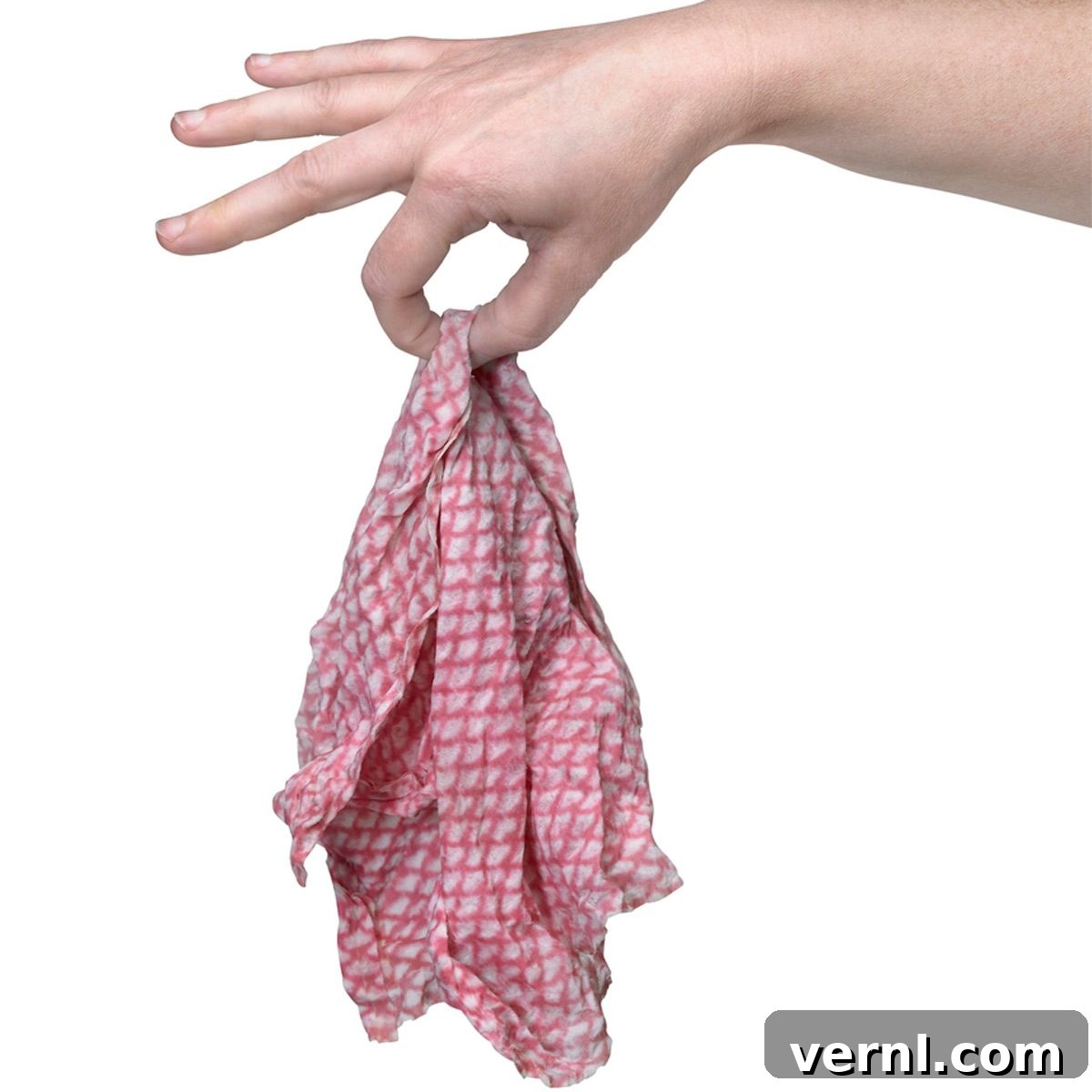
When you picture the most unsanitary spot in your home, where does your mind go? Most people would instinctively point to the bathroom. However, numerous studies reveal a surprising truth: the kitchen often harbors more bacteria and harmful microorganisms than any other room, including your toilet bowl. This bustling hub of culinary activity, while central to our daily lives, can quickly become a breeding ground for invisible threats if proper hygiene practices are overlooked.
Consider your kitchen sink, for instance. Research has consistently shown that your sink and the humble sponge you use can contain more E. coli bacteria than a typical toilet. While these high-traffic areas can be regularly scrubbed and sponges can be replaced, there’s one ubiquitous item that often flies under the radar, silently contributing to the spread of germs: your everyday dishcloth. This seemingly innocuous piece of fabric, used repeatedly to dry dishes and wipe down countertops, is a hidden culprit in the battle for a truly clean kitchen.
The Unseen Dangers Lurking in Your Kitchen
The numbers are startling. A groundbreaking 2011 international survey conducted by the National Sanitation Foundation (NSF) delivered some sobering insights into household germ hotspots. The study revealed that a staggering 86 percent of dishcloths tested were contaminated with yeast and mold. Even more concerning, 77 percent harbored E. coli, a notorious bacterium associated with foodborne illnesses, and a shocking 18 percent contained Staph bacteria, known to cause a range of infections. These statistics paint a clear picture: your dishcloth is not just moving dirt around; it’s potentially spreading harmful pathogens throughout your kitchen, posing a significant risk of cross-contamination and illness for you and your family.
The consistent dampness, warmth, and residual food particles on dishcloths create an ideal environment for bacteria, yeast, and mold to thrive and multiply at an alarming rate. Each time you wipe down a surface, you could be depositing millions of microorganisms, inadvertently turning a simple cleaning task into a germ-spreading mission. This highlights the critical need for an effective, regular sterilization method that goes beyond a simple rinse or even a machine wash.
The Simple Secret to a Germ-Free Kitchen: Boiling Your Dishcloths
Fortunately, maintaining truly sanitary dishcloths doesn’t require complex chemicals or expensive gadgets. The solution is remarkably simple, cost-effective, and incredibly powerful: boiling. This age-old technique, often overlooked in modern homes, is a highly effective way to eliminate harmful bacteria and dramatically improve your kitchen hygiene. In fact, scientific research has underscored its efficacy; one particular study found that boiling cloths was demonstrably more effective at reducing bacterial counts than merely soaking them in bleach, offering a powerful, chemical-free alternative for deep cleaning.
Why Boiling is the Superior Sterilization Method
Boiling works by exposing microorganisms to extremely high temperatures, denaturing their proteins and destroying their cellular structures. At 212 degrees Fahrenheit (100 degrees Celsius), the boiling point of water, most common household bacteria, viruses, yeast, and mold cannot survive. The sustained heat penetrates the fabric of the dishcloths, ensuring that pathogens are eradicated not just from the surface but deep within the fibers, where they often hide. This method offers several compelling advantages:
- Highly Effective: Proven to kill a wide spectrum of bacteria and other microorganisms.
- Chemical-Free: Eliminates the need for harsh chemicals like bleach, making it safer for your family, pets, and the environment.
- Cost-Effective: Uses only water and a pot, requiring no special cleaning agents.
- Environmentally Friendly: Reduces reliance on disposable wipes and harsh cleaning products.
- Odor Elimination: High temperatures help break down odor-causing bacteria and residues.
Step-by-Step Guide: How to Effectively Boil Your Dishcloths
Ready to transform your dishcloths from germ magnets to sanitization heroes? Follow these straightforward steps to ensure your kitchen linens are hygienically clean and safe for use:
- Gather Your Supplies: You’ll need a large saucepan or pot, your dirty dishcloths, water, and optionally, baking soda. Make sure the pot is clean and large enough to fully submerge your cloths without overcrowding.
- Fill the Pot with Water: Place your dishcloths in the pot and then fill it with enough water to completely cover them. Ensure there’s ample room for the water to boil without overflowing once the cloths are added and submerged.
- Bring to a Rolling Boil: Place the pot on your stovetop over high heat. Bring the water to a vigorous, rolling boil. It’s crucial that the water reaches and maintains this temperature to effectively kill bacteria.
- Add Dishcloths (If Not Already In): Carefully add the dirty dishcloths to the actively boiling water. Use tongs to avoid scalding yourself with the hot water or steam. Ensure they are fully submerged.
- Introduce Baking Soda (Optional, for Odors): To enhance the cleaning process and effectively eliminate lingering odors, consider adding approximately 1/8 cup (about 2 tablespoons) of baking soda to the boiling water. Baking soda is a natural deodorizer and can help lift stains and residues.
- Boil for 15 Minutes: Allow the dishcloths to boil continuously for at least 15 minutes. This duration is sufficient for the high temperature to penetrate the fabric and destroy most common microorganisms. For heavily soiled or particularly germy cloths, you might extend this to 20 minutes.
- Carefully Remove and Dry: After 15-20 minutes, turn off the heat. Using tongs, carefully remove the hot dishcloths from the pot. They will be extremely hot, so exercise caution. Hang them immediately to air dry thoroughly, or if preferred, you can place them in a clothes dryer. Ensure they are completely dry before storing to prevent mildew growth.
Pro Tips for Maximizing Your Dishcloth Sterilization
To make the boiling process even more effective and convenient, keep these expert tips in mind:
- Separate Colors: Just as you would with laundry, avoid combining dark- and light-colored dishcloths in the same pot to prevent dye transfer and discoloration.
- Monitor Frothing: If you’ve added baking soda, keep a close eye on the pot, especially during the initial boiling phase. Baking soda can react with certain residues and cause the water to froth vigorously, potentially boiling over. Reduce heat slightly if necessary.
- Regular Routine: Integrate this boiling process into your regular cleaning routine. Aim to boil your most-used dishcloths at least once a week, or more frequently if they see heavy use or come into contact with raw meats.
- Prolong Life: Regular sterilization not only keeps your dishcloths hygienic but also helps to break down residues and refresh the fibers, effectively prolonging their lifespan. This means you won’t have to replace them as often, making it an easy and cost-effective household hack.
- Consider a Dedicated Pot: If you’re sensitive about using your cooking pots for cleaning, you might consider designating an inexpensive pot solely for boiling dishcloths and other cleaning rags.
Beyond Boiling: Comprehensive Kitchen Hygiene
While boiling your dishcloths is a monumental step towards a healthier kitchen, comprehensive hygiene involves looking at other areas too. Reducing the reliance on dishcloths for drying can also make a significant difference. Investing in a high-quality dish drying rack is an excellent way to allow dishes to air dry naturally, minimizing the need for cloths and reducing the potential for germ transfer. Many modern drying racks are designed for efficiency and aesthetics, offering a practical solution for air-drying your dishware.
For those looking for excellent options, we’ve curated a selection of top-rated dish drying racks that combine functionality with style, ensuring your dishes dry efficiently without needing a germy cloth. Explore our top 10 favorite dish drying racks here to find the perfect fit for your kitchen.
Remember, a truly hygienic kitchen extends to all its tools and surfaces. Regularly sanitize your sponges (by microwaving a damp sponge for 1-2 minutes or running it through the dishwasher on a hot cycle), clean your countertops with appropriate disinfectants, and pay attention to cutting boards, especially after preparing raw meats. By combining effective dishcloth sterilization with other sound cleaning practices, you can create a safer, healthier environment for your family.
FAQs: Your Questions About Dishcloth Sterilization Answered
What temperature is best for sterilizing dishcloths?
The key to effective sterilization is sustained high heat. According to the Centers for Disease Control and Prevention (CDC), a hot water temperature of at least 160 degrees Fahrenheit (approximately 71 degrees Celsius) for a minimum of 25 minutes is commonly recommended for destroying most microorganisms in laundry. However, for boiling, the water reaches 212 degrees Fahrenheit (100 degrees Celsius). This significantly higher temperature allows for a shorter, yet equally effective, sterilization period. Boiling your dishcloths for just 15 minutes at this temperature is highly effective at sanitizing them and eradicating the majority of harmful bacteria, viruses, yeast, and mold.
How many times can you sterilize a dishcloth before it should be replaced?
With proper care, including regular boiling or washing at high temperatures, your dishcloths can last a surprisingly long time. If you make it a habit to boil or machine-wash your dishcloths at least once a week, they can remain hygienic and functional for many months, even up to a year or two. The primary indicators for replacement are visible wear and tear, such as frayed edges, holes, or stubborn stains that persist even after boiling. If your dishcloths start to feel thin, lose their absorbency, or have a lingering smell despite thorough cleaning, it’s a good sign they are past their prime. As a general guideline, consider replacing your kitchen dishcloths about every one to two years, or more frequently if they are used heavily or show signs of deterioration. Regular sterilization helps to maximize their useful life, ensuring you get the most out of your investment while maintaining optimal kitchen hygiene.
Can I sterilize dishcloths in the microwave?
While microwaving a damp sponge can effectively kill germs due to the steam generated, it’s generally not recommended for dishcloths, especially dry ones. Dishcloths are often thicker and larger, making it difficult to ensure even heating throughout the fabric, which is crucial for killing all bacteria. Dry spots can also pose a fire hazard. Boiling offers a more consistent and thorough sterilization method for dishcloths.
What are the signs of a dirty dishcloth?
Beyond visible stains, a dirty dishcloth often emits a stale, sour, or mildewy odor. This smell is a strong indicator of bacterial growth. If the cloth feels slimy or greasy, even after a rinse, it’s definitely time for sterilization or replacement. A dishcloth that spreads streaks or leaves residues on surfaces instead of cleaning them is also a sign of heavy contamination.
Does washing machine alone sanitize dishcloths?
While washing machines can clean dishcloths, their effectiveness in full sanitization depends heavily on the water temperature and the cycle used. A hot water cycle (at least 140°F/60°C) with a strong detergent and optional bleach (if safe for the fabric) can significantly reduce bacteria. However, studies have shown that boiling can be more effective at bacterial reduction, especially for stubborn pathogens. For optimal hygiene, combining machine washing with periodic boiling is an excellent strategy.