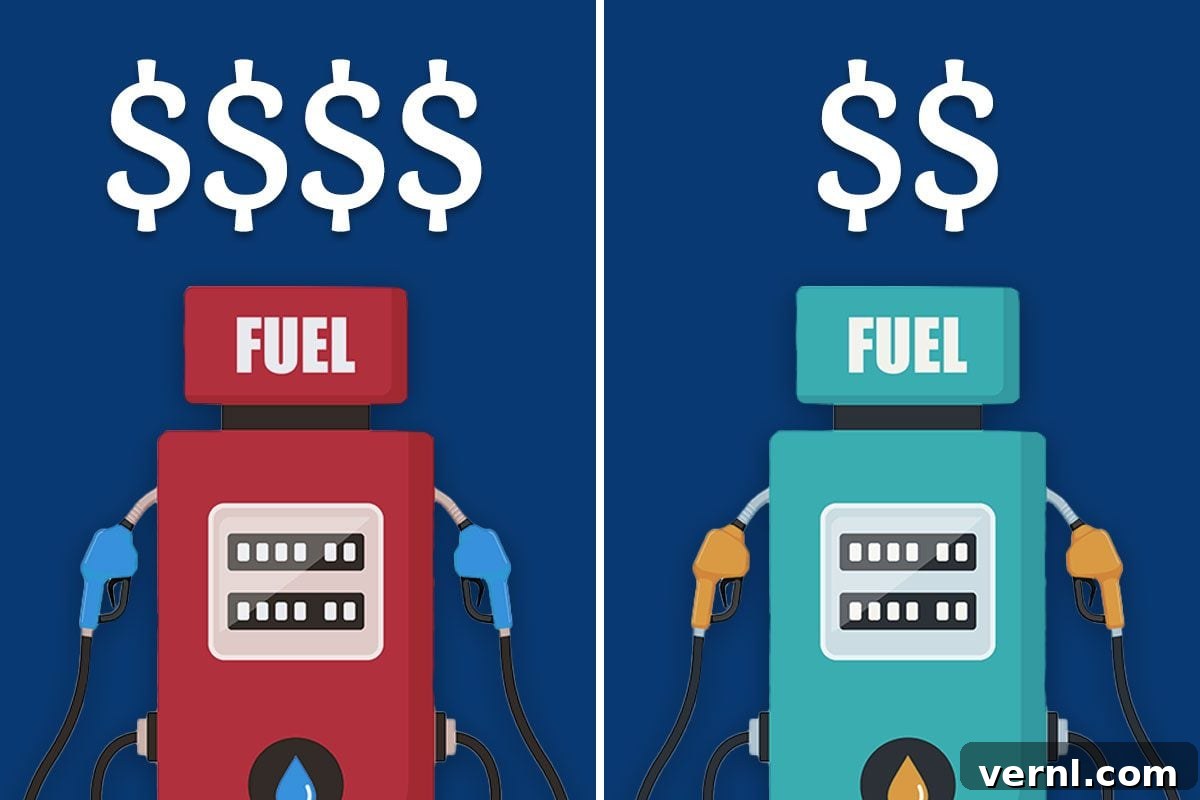
As I journey into town each day from my serene home nestled in the Central California hills, I frequently pass a particular intersection. At this corner, two prominent gas stations stand directly across the street from each other, yet their prices for a gallon of fuel are strikingly different. Currently, the Chevron station on one side advertises a price of $6.29 per gallon, while the Great Gas station (a company known for its North Carolina roots) directly opposite, offers gas for $5.49. Both figures are considerably high for most consumers, but the stark $0.80 difference between them is undeniably significant and raises immediate questions about the underlying economics.
This localized disparity is just the tip of the iceberg. Venturing further afield reveals even greater variations. For instance, a 400-mile drive north to Oregon would present an average gas price of merely $5.00 per gallon (as of this article’s publication date). Travel east, and prices tend to drop even further. In fact, according to the American Automobile Association (AAA), the national average price for gasoline at the time of writing stood at an astonishingly lower $4.16. This national average implies that many regions across the United States are enjoying gas prices well below the $4.00 per gallon mark. Such vast differences, from street corners to states apart, naturally lead to a fundamental question: What exactly causes these significant fluctuations in gasoline prices?
Understanding the Complex Factors That Determine Gas Prices
When gasoline prices experience sharp increases, it’s common for public sentiment to point fingers at the current presidential administration. However, as numerous economic analyses, including those from NPR’s Business Desk, consistently demonstrate, a president’s direct control over gas prices is remarkably limited. While government policies can and do exert a certain, albeit constrained, influence on the energy market, the primary determinants of what consumers pay at the pump are far more intricate and multi-faceted. The U.S. Energy Information Administration (EIA) identifies four key components that collectively shape the final price of gasoline:
- The inherent cost of crude oil
- Expenses and profits associated with refining processes
- Costs related to distribution and marketing
- Various federal, state, and local taxes
The cost of crude oil typically accounts for the largest portion, often representing about half of the total price consumers pay at the pump. Global events and supply dynamics profoundly impact this component. For example, recent geopolitical tensions or supply disruptions, such as the temporary closure of a vital shipping lane like the Strait of Hormuz, can cause crude oil prices to surge, easily topping $100 a barrel. Such spikes inevitably trigger a ripple effect, leading to higher gasoline prices not just domestically but across the globe. The remaining three factors, however, tend to be much more susceptible to regional and local influences, contributing to the distinct price differences observed within a country.
Refining costs, for instance, typically make up about 15 percent of the current gas price. These costs can fluctuate significantly based on several factors. States that mandate specific “boutique” fuel blends, such as those required during different seasons (e.g., summer-grade gasoline designed to reduce smog), often incur higher refining expenses due to the specialized processes involved. Additionally, periods following natural disasters, which can disrupt refinery operations or strain existing supplies, invariably lead to increased refining costs. Distribution costs, encompassing the transportation of gasoline from refineries to gas stations, add another 16 to 18 percent to the total price. These costs are naturally higher in remote geographical areas or regions situated a considerable distance from major oil sources and refinery hubs, necessitating more extensive and expensive logistical chains.
Finally, various state, federal, and local taxes constitute approximately 16 percent of the overall price. These taxes play a crucial role in funding public services and infrastructure, but their varying rates across different jurisdictions are a significant contributor to the price disparities seen nationwide.
The Impact of State Gas Taxes on Fuel Prices
The federal government imposes a standardized excise tax of 18 cents per gallon on gasoline. However, state-level taxes introduce substantial variation. On average, states levy an additional 33.55 cents per gallon, but this figure can range widely. It’s also important to note that many localities impose their own additional taxes, further complicating the pricing structure. The Institute on Taxation and Economic Policy (ITEP) highlights that the approach to state gas taxes differs significantly: 24 states maintain a fixed tax rate per gallon, ensuring consistency regardless of the wholesale price of fuel. In contrast, 26 states employ a variable tax rate, which is often calculated as a percentage of fuel prices. Among these, 18 states also factor in the cost of transportation when determining their variable tax rates. Beyond direct levies, state taxes can also incorporate surcharges specifically allocated for inflation adjustments, vital infrastructure projects, and initiatives aimed at reducing vehicle emissions and improving overall fuel efficiency. These diverse tax structures are a major reason why the price at the pump can differ so much from one state to another, even when other factors are relatively constant.
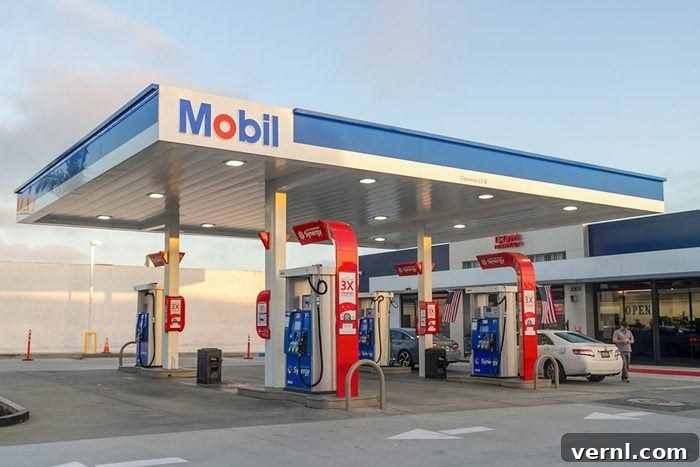
States with the Highest Gasoline Prices: A Deep Dive
According to data compiled by World Population Review, the states consistently experiencing the highest gasoline prices in 2026 were California, Hawaii, Washington, and Oregon. Notably, all of these are Western states, with Nevada and Alaska following closely behind on the list. This geographical clustering suggests that regional factors play a dominant role in these elevated prices.
Why is Gasoline So Expensive in My State? The California Example
As a resident of California, I can attest to the often-staggering cost of gasoline, which in some parts of the state currently reaches or even exceeds $7 per gallon. California undeniably holds the unenviable distinction of having the highest gas prices in the entire country. Journalist Michael Satterfield offers insightful explanations for this phenomenon. “There are several reasons why California consistently experiences higher gas prices,” he explains. “The most straightforward factor to identify is their substantially higher gasoline taxes. Consumers often pay over $1.50 per gallon solely in state and local taxes, a figure far surpassing most other states.”
Beyond taxes, California’s unique environmental regulations play a pivotal role. Satterfield elaborates, “This is coupled with stringent special fuel requirements mandated by the California Air Resources Board (CARB). These regulations dictate that only a select number of refineries within California are equipped to produce this specific, cleaner-burning gasoline.” The scarcity of these specialized facilities has become a growing concern; the number of such refineries has drastically fallen from approximately 50 in the year 2000 to around 20 today. This reduction in refining capacity for a niche product inevitably drives up costs due to limited supply and specialized production processes.
The complexity doesn’t end there. “Within the state itself, pricing can further vary due to differing local sales tax rates and additional local environmental fees,” Satterfield continues. “Not only that, but Californians are also subject to a statewide excise sales tax that can reach as high as 10.75%, depending on the specific county or city within California where you purchase fuel.” This layering of federal, state, and local taxes, combined with specialized fuel requirements and a dwindling number of compliant refineries, creates a perfect storm for exceptionally high gas prices in the Golden State.
States with the Lowest Gasoline Prices: Where Fuel is More Affordable
In stark contrast to the high-cost Western states, the four states that consistently boasted the lowest gas prices in 2026 were Alabama, Tennessee, Louisiana, and Mississippi. This pattern again highlights the significance of geographical and logistical factors in fuel pricing.
Why is Gasoline So Cheap in My State?
A crucial factor contributing to lower gas prices in these states is their proximity to major oil supply sources and refining centers. As the U.S. Energy Information Administration (EIA) explains, Gulf Coast states—including Alabama, Arkansas, Louisiana, Mississippi, New Mexico, and Texas—benefit immensely from their geographical location. Being situated close to substantial crude oil reserves and possessing a high concentration of refineries, these states consequently enjoy some of the cheapest gas in the country. This proximity significantly reduces transportation costs, which are a major component of the final price. Furthermore, many of these states typically operate under fixed tax plans, often with fewer additional surcharges for inflation, infrastructure development, or environmental initiatives. This combination of lower logistical costs and a less complex, often lower, tax burden works synergistically to keep prices at the pump considerably more affordable for residents in these regions.
Frequently Asked Questions About Gas Prices
Do Gas Prices Vary Within the Same State? Why?
Absolutely, yes. Gasoline prices can vary dramatically not only within the same state but even within the same city, or even between two gas stations located directly across the street from each other. Several factors contribute to these hyper-local price differences. Brand recognition plays a significant role; well-known national brands like Chevron and Shell often command higher prices, frequently citing superior fuel quality or specialized additives as the reason for their premium. While these higher-tier fuels might offer certain benefits, the extent to which they justify such significant price differences is often debated. Competition among local stations is another key element; stations in highly competitive areas or those near major highways might adjust prices more frequently to attract customers. Traffic volume also plays a part; stations in high-traffic areas can afford to price competitively, relying on sheer sales volume, whereas those in quieter areas might need to charge more per gallon to achieve sufficient profit margins. Finally, communities within a state have the authority to levy their own local taxes, which can add further variations to the price per gallon within those specific areas.
Are City Gas Prices Higher Than Rural Areas?
Counterintuitively, the opposite is often true. Gas prices in rural areas are generally higher than in urban centers. This primarily stems from the increased cost of transporting gasoline to remote locations, which are typically farther from refineries and major distribution hubs. The logistics of delivering fuel to sparsely populated regions involve longer hauls, smaller delivery volumes, and less efficient routes, all of which contribute to higher distribution expenses. Additionally, gas stations in rural areas typically experience a lower volume of traffic and fewer daily sales compared to their urban counterparts. To remain profitable and cover their operational costs, these stations are often compelled to charge higher prices per gallon, thereby increasing their profit margin on each sale.
What is the impact of global events on gas prices?
Global events have a profound and immediate impact on gas prices because the price of crude oil, which makes up about half the cost of gasoline, is determined by global supply and demand. Geopolitical conflicts (like wars in oil-producing regions), natural disasters (hurricanes hitting Gulf Coast refineries), and decisions by major oil-producing cartels (like OPEC+) to increase or decrease output can all cause rapid shifts in crude oil prices. Economic downturns or booms also influence demand, with recessions typically leading to lower demand and thus lower prices, and robust economic growth driving higher demand and prices. The interconnectedness of the global energy market means that an event anywhere in the world can ripple through supply chains and affect prices at your local pump.
Do different brands of gas matter?
While all gasoline sold in the U.S. must meet certain minimum quality standards set by the EPA, “top-tier” gas brands (like Chevron, Shell, Exxon, Mobil, etc.) often include additional detergent additives. These additives are designed to keep engine fuel systems cleaner, prevent carbon deposits on intake valves, and potentially improve engine performance and longevity. For most modern vehicles, especially those recommended to use regular unleaded, the difference in everyday performance might not be dramatically noticeable. However, for vehicles with direct injection engines or those with higher mileage, using top-tier gasoline consistently can help maintain engine cleanliness and potentially extend engine life. Ultimately, while all gas gets you from point A to point B, premium brands claim to offer an added layer of engine protection and efficiency through their proprietary additive packages.
About the Expert
- Michael Satterfield is an award-winning journalist, branding expert, and founder of The Gentleman Racer—a leading online publication covering automotive culture, travel, and lifestyle.
Sources
- American Automobile Association: Fuel Prices; (2025)
- National Public Radio: Whether gas prices are up or down, don’t blame or thank the president; (2022)
- U.S. Energy Information Administration: Gasoline explained – Factors affecting gasoline prices; (2025)
- Institute on Taxation and Economic Policy: Two in Three Americans Live in States with Variable-Rate Gas Taxes; (2025)
- World Population Review:Gas Price by State 2026; (2026)
- U.S. Energy Information Administration: Gasoline explained – Regional gasoline price differences;(2025)
Related Articles
- Do You Know What That Little Button on Your Seat Belt Is For?
- What Those Lines on Your Backup Camera Really Tell You
- Here’s What The Small Panel On Your Car’s Front Bumper Is For