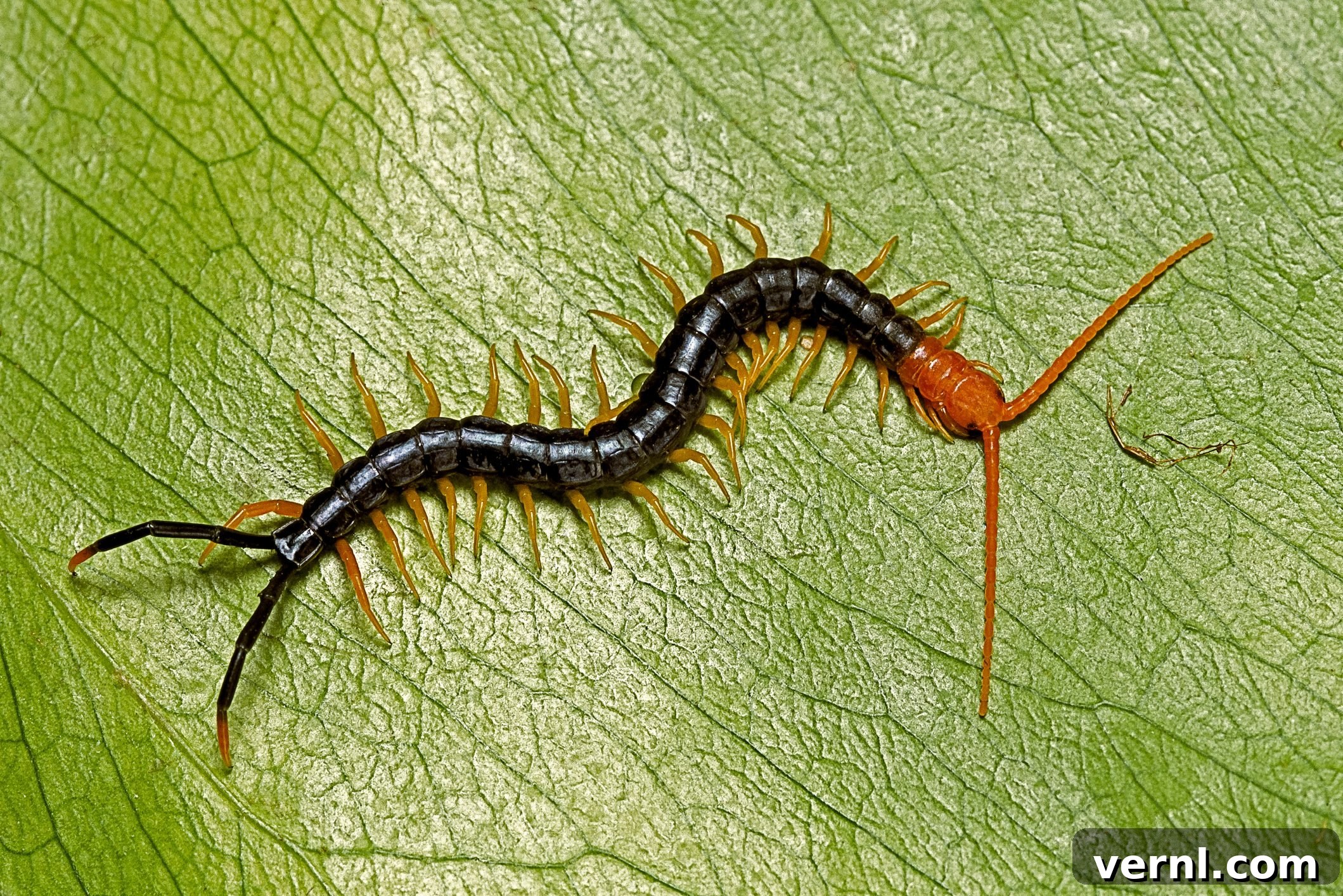
The sudden appearance of a centipede can undoubtedly trigger a primal sense of alarm for many. With their numerous legs, segmented bodies, and rapid, darting movements, these fascinating arthropods often provoke an immediate instinct to recoil or eliminate them. However, you may have encountered information advocating the case for leaving centipedes alone, particularly the common house centipede. If this concept is new to you, you likely belong to the majority who instinctively reach for a shoe or delegate the “dirty work” of dispatching these creatures to someone else.
It’s crucial to understand that the common house centipede (Scutigera coleoptrata) found across the United States is, in most cases, neither dangerous nor life-threatening to humans. While their alien-like appearance can be unsettling, gaining a clearer understanding of their nature, behavior, and the true risks associated with them can significantly alleviate unwarranted fears. This comprehensive guide will delve into the specifics of centipede bites, their potential effects, appropriate first aid, and preventative measures to help you manage encounters with these unique inhabitants of our homes.
Do Centipedes Bite, or Are Their Interactions More Akin to a Sting?
When discussing centipede interactions, it’s more accurate to describe their defensive action as a “sting” or “pinch” rather than a traditional “bite” in the mammalian sense. Centipedes do not possess teeth or mandibles for biting. Instead, they are equipped with a specialized pair of claw-like appendages located just behind their head, known as forcipules. These forcipules are actually modified first legs that have evolved specifically for capturing prey and injecting venom. They act much like a pair of sharp pincers designed for venom delivery.
Centipedes are indeed venomous predators, akin to smaller, multi-legged versions of certain snakes. They subdue their prey through a process called envenomation, where they inject a specialized venom directly into their victims. This venom is delivered through the pointed tips of their forcipules during a swift, defensive strike. Unlike snakes that use fangs, centipedes utilize these unique, pincer-like structures on their first segment to emit their potent chemical cocktail, which paralyzes or kills their insect prey.
Fortunately for humans, centipedes primarily target insects such as spiders, silverfish, cockroaches, and termites as their food source. This predatory behavior actually makes them beneficial allies in natural pest control within our homes. However, like most creatures, centipedes will act defensively if they feel threatened, are accidentally handled, or are inadvertently stepped upon. A centipede “bite” or sting directed at a human is almost invariably a self-defense mechanism, not an aggressive attack driven by hunger or malice.
Where and Why Do People Encounter Centipede Stings?
Centipedes exhibit a strong preference for warm, dark, and highly humid environments. This habitat preference largely dictates where they are most commonly found and, consequently, where human encounters leading to stings are most likely to occur. In the United States, they are particularly prevalent in the Southern states, where the climate consistently provides their ideal living conditions. However, their adaptability allows them to thrive in northern climates as well, often seeking refuge in basements, crawl spaces, and other sheltered areas during colder months to escape harsh outdoor temperatures.
Beyond human dwellings, centipedes naturally inhabit secluded, damp outdoor spaces. They frequently reside under rocks, within decaying logs, beneath piles of leaves, or nestled in mulch beds. These locations offer the essential moisture and darkness they require, alongside a rich supply of insect prey. As primarily nocturnal hunters, centipedes emerge after sunset to forage. This nocturnal activity increases the risk of surprise encounters for individuals engaged in outdoor tasks such as gardening, yard work, clearing overgrown areas, or working in dimly lit, damp indoor spaces like cellars and basements, especially during evening hours.
Statistically, centipede stings are most frequently reported on the hands and feet. Stings on the feet are often a result of centipedes seeking refuge in dark, enclosed spaces, such as shoes that have been left on the floor overnight. Accidentally slipping your foot into a shoe that has become a centipede’s temporary shelter can lead to an unexpected and painful defensive sting. Similarly, walking barefoot in areas prone to centipede presence—like basements, garages, damp bathrooms, or even certain outdoor pathways—significantly increases the chance of accidentally stepping on one and receiving a defensive sting.
Exploring Different Centipede Species and Their Biting Capabilities
While a vast array of centipede species populate the globe, a few are particularly notable for their presence in or near human habitation, especially concerning their ability to sting. The most commonly encountered species across North America, and the one responsible for the overwhelming majority of reported stings in homes, is the aptly named house centipede (Scutigera coleoptrata). This distinctive species is easily recognized by its elongated, segmented body, typically yellow-grey with three dorsal stripes, and its impressive number of exceptionally long, delicate legs. It can be found in all 50 states, underscoring its widespread distribution.
Beyond the ubiquitous house centipede, other species merit attention for their size and venom potency. The giant desert centipede (Scolopendra polymorpha), also known as the giant Arizona desert centipede, is another prominent North American species. Abundant in the arid and semi-arid regions of the American Southwest, this centipede is considerably larger and more robust than the house centipede, boasting a more formidable appearance and a more potent venom. While less common in residential areas, individuals living or recreating in desert environments should be aware of its presence, as it will readily sting if provoked, and its venom can cause a more intense and prolonged localized reaction.
On a global scale, the genus Scolopendra encompasses some of the most impressive centipede species, including the formidable Scolopendra gigantea, often referred to as the Amazonian giant centipede. These magnificent arthropods are among the largest identified centipede species, with individuals capable of reaching lengths of up to a foot (approximately 30 cm). Native to tropical rainforests, their venom is exceptionally potent, capable of incapacitating a wide array of prey, from large invertebrates like tarantulas to vertebrates such as lizards and frogs. There are even documented instances of these massive predators preying on larger animals, including birds, mice, bats, and small snakes. While these giant centipedes are not found in U.S. residential areas, their existence highlights the significant predatory prowess and venom capabilities found within the centipede family, underscoring the diversity and ecological importance of these ancient creatures.
What Does a Centipede Bite Look Like? Identifying the Visual Cues
If you suspect you’ve been stung by a centipede, recognizing the characteristic visual signs can help confirm the encounter and guide your next steps. A centipede bite is typically characterized by the presence of two small, distinct puncture marks on the skin. These marks correspond to the points where the centipede’s forcipules penetrated the skin to inject venom. The appearance of these marks can vary; they might resemble minor pinpricks, a pair of small scratches, or even tiny nicks, depending on the angle of the sting, the force applied, and the size of the centipede.
Immediately following the sting, it’s common to experience a sharp, localized pain that can range from a mild, fleeting sensation to a more intense, burning feeling at the site. Within a short period, typically ranging from a few minutes to an hour, the affected area will almost invariably begin to exhibit visible signs of the body’s reaction to the injected venom. The skin around the puncture marks will usually become red and may develop noticeable swelling. This redness and inflammation are natural physiological responses to the compounds present in the centipede’s venom, which often include histamine-like substances that trigger an inflammatory cascade.
The severity of these visible symptoms can vary considerably based on several factors, including the individual’s specific sensitivity to the venom, the quantity of venom injected, and the particular centipede species involved. In some instances, a small welt or a slightly raised bump might form at the bite site. It is crucial to thoroughly clean the affected area with soap and water as soon as possible after the sting to prevent any potential secondary bacterial infections. Monitoring the area for any changes or worsening symptoms over the next 24 to 48 hours is also highly recommended.
Are Centipede Bites Dangerous? Assessing the Real Risks
For the vast majority of people, a centipede bite, particularly from the common house centipede, is not considered dangerous and very rarely leads to severe health complications. While centipede venom contains a complex array of compounds designed to incapacitate insect prey, the quantity and specific composition delivered by most centipedes are generally insufficient to cause systemic, life-threatening reactions in healthy adults. However, individuals who are stung or pinched can certainly experience a range of uncomfortable, though typically mild to moderate, symptoms.
The most common symptoms include localized pain, which can range from a transient sting to a more persistent, burning sensation. This is usually accompanied by swelling and redness directly at the bite site. Less commonly, some individuals may report additional symptoms such as a mild headache, lightheadedness, nausea, or even vomiting. These symptoms are generally localized and tend to subside naturally within a few hours to a day. The venom often contains biogenic amines like histamine and serotonin, along with various proteolytic enzymes. These compounds are responsible for triggering the pain, localized inflammation, and other effects observed following a centipede sting.
As Ed Spicer, general manager of PestStrategies.com, explains, “They can be somewhat hazardous to humans due to their toxic venom.” However, he also provides essential context regarding the rarity of severe outcomes, noting, “There have only been a handful of deaths reported due to anaphylactic shock in the last 100 years.” This statistic underscores that while centipede venom is toxic, the likelihood of it causing serious harm to an average human is exceedingly low, unless the individual has a pre-existing severe allergy to insect venoms. If symptoms persist beyond 24-48 hours, worsen significantly, or if any signs of secondary infection (such as increasing redness, warmth, pus discharge, or fever) appear, it is imperative to seek prompt medical attention.
Effective First Aid and Treatment for a Centipede Bite
Treating a centipede sting or pinch is generally straightforward and follows protocols similar to those for managing a common bee sting or an itchy mosquito bite. The primary objectives are to alleviate discomfort, reduce inflammation, and prevent potential secondary infections. Most localized reactions can be effectively managed with readily available over-the-counter medications and basic first-aid techniques.
- Immediate Cleaning: As soon as possible, gently wash the bite area thoroughly with mild soap and water. This crucial step cleanses the wound, helps remove any residual venom or bacteria, and significantly reduces the risk of secondary bacterial infection.
- Apply a Cold Compress: To effectively alleviate localized pain, stinging, and itching, apply a cold compress to the affected area. A clean cloth dampened with cold water can offer immediate soothing relief.
- Reduce Swelling and Inflammation: If the bite site becomes noticeably swollen, applying an ice pack is highly beneficial. Wrap the ice pack in a thin towel or cloth to prevent direct contact with the skin and apply it for 10-15 minutes at a time, repeating the application several times an hour. The cold helps to constrict blood vessels, thereby diminishing both swelling and inflammation.
- Over-the-Counter Symptom Relief: For persistent itching, applying an antihistamine cream (e.g., hydrocortisone cream) directly to the area, or taking an oral antihistamine (e.g., diphenhydramine) as directed, can provide comfort. For pain management, over-the-counter pain relievers such as ibuprofen or acetaminophen can be taken according to package instructions.
- Monitor for Worsening Symptoms: It is paramount to closely monitor the bite site for any changes. If the pain intensifies substantially, the swelling spreads rapidly beyond the immediate area, or if other unusual or severe symptoms begin to manifest, immediate medical attention is warranted. Such developments could indicate a more significant reaction, a secondary infection, or, in rare cases, a sting from a more venomous centipede species (though highly uncommon in residential settings) or even a different type of insect or animal bite.
- Addressing Allergic Reactions: Individuals with a documented history of severe allergies to insect bites or stings (such as those from bees and wasps) are at an elevated risk of experiencing a more pronounced systemic reaction to centipede venom. Centipede venom contains various biochemicals, including histamine and serotonin, which are known allergens. If you are highly allergic to insect stings, you should treat a centipede sting with the same urgency and protocol as you would a bee or wasp sting. This includes the immediate use of an EpiPen (epinephrine auto-injector) if one has been prescribed to you for severe allergic reactions.
- Emergency Medical Care: Should you experience any severe systemic symptoms after a centipede bite, such as difficulty breathing, wheezing, significant dizziness, a rapid or irregular heartbeat, a widespread rash, or pronounced swelling of the face, lips, or throat, you must call 911 or proceed to the nearest emergency hospital without any delay. These are classic signs of anaphylaxis, a life-threatening allergic reaction that requires immediate professional medical intervention.
The Reality Check: Can a Centipede Bite Be Fatal?
The possibility of a centipede bite proving fatal is extraordinarily rare, almost negligible, especially in the United States. While the concept of a venomous creature can understandably evoke fear and anxiety, the actual risk of death from a centipede sting is minuscule. Ed Spicer, citing available data, highlights that studies conducted between 1979 and 2001 reported that centipede stings were implicated in only six deaths across the U.S. during that entire 22-year period. To put this into perspective, over the same timeframe, stings from more common Hymenoptera insects—bees, wasps, and hornets—were responsible for a staggering 1,060 deaths. This stark comparison vividly illustrates that centipedes pose a significantly lower threat than many other common stinging insects found in our environment.
The prognosis following a centipede bite is overwhelmingly excellent, with the vast majority of individuals recovering completely without any lasting complications, often with minimal medical intervention. However, it is quite common for people to report considerable anxiety and psychological distress after an encounter. Beyond the initial physical discomfort, which can range from a mild sting to a surprisingly intense pain, the mere thought or visual experience of a multi-legged creature swiftly moving, or the unsettling image of it crawling on your arm or leg, can be profoundly unnerving and contribute more to the overall distress than the physiological effects of the venom itself. This psychological impact often underscores the importance of education to demystify these creatures.
The Unsung Hero: Why House Centipedes Are Actually Beneficial
Despite their often-unsettling appearance, house centipedes are, in fact, valuable members of your home’s ecosystem. They serve as voracious and efficient predators of many common household pests, effectively acting as natural, organic pest control agents. Their diverse diet includes a wide array of nuisance insects such as cockroaches, silverfish, termites, carpet beetle larvae, flies, and even spiders. By actively hunting and consuming these unwanted invaders, house centipedes play a crucial role in regulating other pest populations, potentially reducing or eliminating the need for chemical pesticides within your living spaces.
Understanding this beneficial role can significantly shift your perception from one of fear or disgust to a grudging tolerance, or even a degree of appreciation. House centipedes are not interested in harming humans; their primary motivation is to hunt for their next meal, which often happens to be an insect you would prefer not to have sharing your home. Therefore, if you spot one, rather than immediately resorting to eradication, consider the option of gently relocating it outdoors or simply allowing it to continue its pest-controlling duties undisturbed.
Proactive Strategies for Preventing Unwanted Centipede Encounters
While house centipedes are generally harmless and possess beneficial predatory traits, it’s perfectly understandable that most individuals prefer not to share their immediate living spaces with them. Preventing centipede encounters primarily involves making your home and its surroundings less attractive to these creatures and by reducing their available food sources:
- Humidity Control: Centipedes thrive in damp and humid environments. Combat this by utilizing dehumidifiers in basements, crawl spaces, and bathrooms. Ensure these areas have adequate ventilation to actively reduce moisture levels. Promptly fix any leaky pipes or damp areas.
- Seal Entry Points: Conduct a thorough inspection of your home for any cracks, gaps, or openings in the foundation, around window frames, under doors, and where utility lines enter the structure. Seal these potential entry points with caulk, weatherstripping, or appropriate repair materials to prevent centipedes and other insects from gaining access.
- Reduce Clutter and Debris: Centipedes are attracted to dark, undisturbed hiding spots. Minimize clutter in basements, garages, storage rooms, and closets. Outdoors, keep firewood stacks, leaf piles, compost bins, and other organic debris away from your home’s foundation.
- Vigilance with Shoes and Clothing: Before donning shoes or articles of clothing that have been left on the floor, particularly in damp or rarely used areas, make it a habit to give them a quick shake. This simple action can dislodge any centipedes or other insects that may have sought shelter inside.
- Address Other Pest Infestations: Since centipedes primarily prey on other insects, a sudden increase in their population within your home could be an indicator of a larger, underlying infestation of their food sources. By addressing these primary pest problems (e.g., cockroaches, silverfish), you can naturally reduce the food supply for centipedes, thereby decreasing their numbers.
When to Consider Professional Pest Control Services
For most occasional centipede sightings, the preventative measures and first-aid tips outlined above are generally sufficient to manage the situation effectively. However, if you find yourself experiencing a persistent, recurrent, or unusually high number of centipedes inside your home, it may signal a more significant underlying issue. This could point to a widespread moisture problem that is attracting them, or a substantial, undetected infestation of their insect prey that is sustaining a larger centipede population.
In such scenarios, it can be highly beneficial to consult with a professional pest control service. Pest control experts can accurately identify the root cause of the infestation, implement targeted and effective treatments, and provide valuable, long-term advice on comprehensive prevention strategies. Their expertise can ensure your home remains a comfortable, healthy, and pest-free environment, restoring your peace of mind.
Conclusion: Coexisting Safely and Knowledgeably with Centipedes
In summation, while the initial sight of a centipede can be startling and a centipede sting can certainly cause temporary discomfort, it is rarely a cause for serious medical concern for the vast majority of individuals. Developing an understanding that these creatures are primarily defensive, often beneficial predators can significantly reframe our interaction with them, shifting from instinctive fear to informed caution. By adopting simple preventative measures to make your home less appealing to centipedes and by knowing how to administer basic first aid for a sting, you can effectively minimize encounters and ensure your safety.
It is important to reiterate that severe allergic reactions, while possible for highly sensitive individuals, are exceedingly rare. Nevertheless, vigilance for any unusual or persistent symptoms is always a wise approach. Armed with knowledge and practical strategies, coexisting peacefully—or at least safely—with these unique and often helpful arthropods is a very achievable goal for any homeowner.