
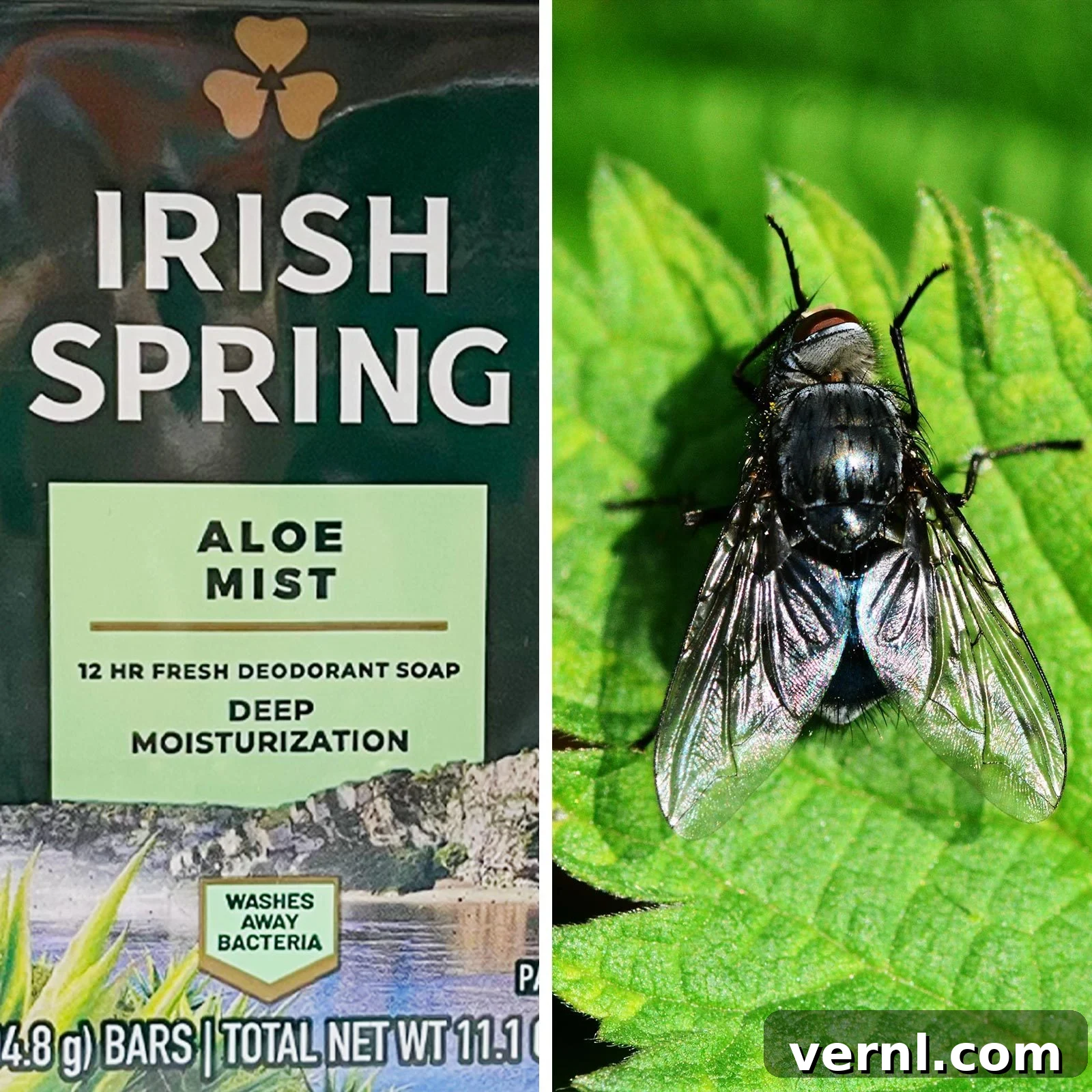
As the warmth of summer fully embraces us, leading to a surge in outdoor activities, many homeowners and nature enthusiasts are actively seeking effective strategies to keep mosquitoes, flies, and other nuisance pests at bay. Among the myriad of trending DIY solutions, Irish Spring soap frequently surfaces as a popular, seemingly simple answer to this age-old problem. Online platforms, particularly video-sharing sites, are rife with demonstrations suggesting its versatility. For instance, a notable YouTube video illustrates various applications: a bar placed strategically on a porch, rubbed onto outdoor furniture like doors and tables, grated flakes scattered in different locations, and even dissolved in water to create a spray for plants and personal skin application. These hacks promise an easy, inexpensive method to enjoy the outdoors without the incessant buzzing and biting.
The widespread appeal of such home remedies often stems from a desire for natural, accessible alternatives to chemical repellents. However, the critical question remains: Do these methods actually work? To thoroughly investigate the efficacy of Irish Spring soap as a deterrent against common summer pests like mosquitoes and flies, we consulted with four leading experts in the fields of entomology and public health. Their professional insights aim to cut through the anecdotal evidence and provide a definitive, science-backed answer to whether this popular hack holds up to scrutiny.
Understanding the Allure: Why Might the Irish Spring Soap Hack Seem Effective?
The theory behind using Irish Spring soap as a pest repellent often hinges on the strong, distinctive scent of the product. Many believe that this potent aroma could overwhelm or deter insects that rely heavily on their sense of smell to navigate and locate hosts. Mosquitoes and flies, in particular, possess an incredibly sophisticated olfactory system, making them highly sensitive to a variety of odors. Dr. Louisa Messenger, an Assistant Professor at the University of Nevada, Las Vegas, explains that female mosquitoes specifically are drawn to cues like carbon dioxide emitted from our breath, as well as the unique chemical components found in human sweat and the heat radiated from our bodies. These sensory inputs are crucial for them to pinpoint potential blood meal sources.
When certain soaps, creams, or lotions appear to offer some defense against bugs, it’s often not because they are actively repelling the insects. Instead, as Dr. Messenger points out, they are most likely causing a temporary alteration to our skin’s delicate microbiome. This change modifies our natural scent profile, potentially making us less detectable or less appealing to mosquitoes for a brief period. However, this effect is highly individual and inconsistent. “It means these soaps, creams and lotions will not function in the same manner for everyone and will not also cause the same effect consistently, since our skin microorganisms are constantly changing,” she states. The effectiveness, if any, is fleeting and highly variable, depending on a person’s unique body chemistry and the constantly evolving microbial environment on their skin. This nuanced understanding highlights that while scent plays a role, the mechanics are far more complex than simply “masking” an odor with another strong one.
The Expert Verdict: Does Irish Spring Soap Truly Repel Mosquitoes and Flies?
Given the robust, often pungent aroma of Irish Spring soap, it’s understandable why many might theoretically believe it possesses the qualities needed to repel bugs. The logic seems intuitive: if insects are sensitive to smell, a strong-smelling soap should deter them. However, when put to the test against scientific rigor, the consensus from experts suggests a different reality: it largely does not work effectively as a general insect repellent.
David Price, a seasoned entomologist at Mosquito Joe, is unequivocal on the matter. “There is no scientific evidence,” he asserts, directly addressing the lack of research supporting Irish Spring soap’s repellent claims. While some soaps formulated with specific essential oils (such as citronella, eucalyptus, or lemon grass) have demonstrated short-term repellent properties, Price clarifies that “Irish Spring soap specifically doesn’t have enough quantity [of effective repellent ingredients] to register for mosquitoes [and] no ingredients that would repel flies.” The key here is the concentration and type of active compounds. Commercial insect repellents, even those derived from plants, contain carefully measured amounts of active ingredients proven to interfere with an insect’s olfactory receptors or to create a barrier they are unwilling to cross.
Emma Grace Crumbley, an entomologist with Mosquito Squad, offers a slightly more nuanced perspective, acknowledging the potential for very localized, limited effects. She suggests that the strong scent of Irish Spring *may* indeed have some minor repellent properties if strategically placed in specific, confined areas. This effect, she explains, would be akin to how citronella candles function: they technically repel mosquitoes only within the immediate air column directly above the candle. This means their range is extremely limited and offers negligible protection across a wider outdoor space. Crumbley emphasizes, however, that even this marginal possibility would require substantial further research to definitively prove its efficacy and to identify the most effective applications. In essence, while the scent might be noticeable to insects, it’s not potent enough, or of the right chemical composition, to act as a broad-spectrum, reliable repellent. The common belief in its effectiveness often stems from anecdotal observations rather than empirical data, making it an unreliable solution for pest control.
Dissecting the Hacks: A Closer Look at Irish Spring Soap Applications for Pest Control
The YouTube video showcased several inventive ways to deploy Irish Spring soap against insects. Let’s break down each method with expert insights, revealing why most fall short of their intended goal and some even pose risks.
Does putting Irish Spring soap on the porch repel mosquitoes?
The idea of simply placing a bar of Irish Spring soap on a porch or patio as a passive repellent is a common suggestion. However, experts are not convinced. According to Emma Grace Crumbley, this method is highly ineffective. Even if the soap’s scent possessed legitimate repellent qualities, “the potency will not be direct enough to repel flying bugs” across an open outdoor area. Mosquitoes and flies operate over a broader range than the minimal scent diffusion from a stationary bar of soap. The open air quickly disperses any localized aroma, rendering it useless as a barrier for mobile insects.
Does rubbing Irish Spring soap on the door repel mosquitoes?
Another hack suggests rubbing the soap directly onto doorframes or doors to create a scented barrier. Crumbley dismisses this as equally impractical. “The thing that stops flies from coming through the door is the door,” she quips, highlighting that a physical barrier is far more effective than a barely perceptible scent. She further explains that “rubbing soap on would not be as aromatic” as one might assume, especially once it dries. For any significant effect, “Maybe a door frame made of soap would work,” she muses, underscoring the absurdity of expecting a thin layer of dried soap to emit enough fragrance to deter insects.
Does rubbing Irish Spring soap around your table repel mosquitoes?
Similar to the door application, applying soap around an outdoor table surface is believed by some to create a pest-free dining area. Again, the experts are skeptical. Crumbley notes that the soap is simply not aromatic enough to generate a protective zone. She suggests that any perceived reduction in flies might be coincidental: “This may be more repellent than a citronella candle in the middle of the table, since the soap covers more surface area. [Or] maybe fewer flies come over because you’re sitting at the table, not because of the soap.” The presence of people and their movements can naturally deter some insects, an effect often mistakenly attributed to the soap.
Does Irish Spring soap in a jar repel mosquitoes and flies?
Placing a bar or shavings of Irish Spring soap inside an open jar is another proposed method, presumably to concentrate and emit the scent. Crumbley critiques this by stating, “[Irish Spring soap in a jar] is a worse version of a citronella candle.” The enclosed nature of the jar, even if open, significantly restricts the dispersion of any fragrance. “Unless the flies are in the jar with the soap, no scent is emitted that the flies would detect,” she explains. The physical confinement prevents the odor from spreading effectively into the surrounding environment. The only potential “pro” for this hack, according to Crumbley, is its cleanliness, leaving “very little mess left behind,” which, while tidy, does not equate to effective pest control.
Do Irish Spring soap shavings in the trash deter mosquitoes and flies?
This hack involves scattering Irish Spring soap shavings directly into or around trash cans. This particular application garners a slightly different, though still limited, response from experts. “This could have a repellent effect, specifically on flies looking for nearby trash,” says Crumbley. Flies are powerfully attracted to the decaying organic matter and strong odors associated with garbage. Introducing a competing, strong odor like Irish Spring soap might, to a very small extent, confuse or briefly deter flies that are specifically seeking out trash as a breeding or feeding site. Additionally, Crumbley points out a practical advantage: “Putting the soap in the garbage also protects it from environmental factors like rain and sunlight, potentially making the soap’s potency last longer.” However, this effect is highly localized to the immediate vicinity of the trash and is unlikely to prevent a broader infestation or persistent attraction.
Do Irish Spring soap shavings in the grass/on the windowsill repel mosquitoes?
Scattering soap shavings across a lawn or along windowsills is another tactic promoted online. This method is largely deemed impractical and potentially harmful. “You’ll need a lot of soap shavings to cover that property,” notes Crumbley, highlighting the sheer volume of product required for even a negligible effect over a larger area. More concerning are the environmental implications: “Additionally, soap lying in direct sunlight can lose potency over time and leech into the soil, possibly harming plants, or melt onto the windowsill, leaving behind green gunk everywhere.” The chemicals in household soaps are not designed for direct application to soil or plants and can disrupt ecological balance.
Will an Irish Spring soap and water mixture repel mosquitoes from plants?
Creating a spray by dissolving Irish Spring soap in water and applying it to plants is another hack. Even if this concoction somehow managed to repel bugs, it is strongly advised against by experts due to significant environmental risks. Emily May, a pollinator conservation specialist at The Xerces Society for Invertebrate Conservation, issues a stern warning: “Covering plants and soil life with soap can damage both.” She explains that dish and hand soaps, including deodorant soaps like Irish Spring, “can be phytotoxic, disrupting plant cell membranes and weakening plant defenses.” This can lead to stunted growth, leaf damage, or even plant death. Beyond plants, these soaps pose a threat to the ecosystem: “Soaps can also be toxic to a variety of soft-bodied invertebrates, including caterpillars and earthworms, as well as soil microbes,” May adds. These beneficial organisms are crucial for soil health and the broader food web. While some horticulturalists do recommend soapy water sprays for specific garden pests like aphids and mites, they explicitly advise using only true castile soap or specialized insecticidal soaps, which are formulated to be less harmful to plants and beneficial insects, rather than harsh detergents or deodorant soaps.
Does spraying an Irish Spring soap and water mixture on your skin repel mosquitoes?
The idea of spraying an Irish Spring soap and water mixture directly onto the skin to deter mosquitoes is tempting for some. While it’s theoretically possible that “it would temporarily mask indicators for mosquitoes,” as David Price acknowledges, this is a far cry from an effective or recommended solution. Price emphasizes that “a DEET product is best” for reliable skin-applied repellency. Moreover, beyond its questionable efficacy, applying Irish Spring soap directly to your skin and letting it dry sounds like a direct “recipe for itchy skin.” The detergents and fragrances in such soaps are designed for washing and rinsing, not for prolonged contact with sensitive skin, and can cause irritation, dryness, or allergic reactions.
Effective and Safer Strategies: What Are Better Ways to Keep Pesky Insects Away?
Given the general ineffectiveness and potential downsides of relying on Irish Spring soap for pest control, experts strongly advocate for proven, science-backed methods. Dr. Louisa Messenger succinctly summarizes the prudent approach: “Instead of spending my time and money rubbing my house down with soap, I would instead invest in some EPA approved repellent.” She underscores the availability and reliability of established solutions: “There are plenty of over-the-counter products that can provide hours of protection and are backed up by robust, producible scientific data.”
When selecting a personal insect repellent, look for products containing active ingredients approved by the Environmental Protection Agency (EPA). These commonly include:
- DEET (N,N-diethyl-m-toluamide): Highly effective against mosquitoes and ticks, with a long history of safe use when applied as directed.
- Picaridin (KBR 3023): Provides effective, long-lasting protection against mosquitoes, ticks, and flies. It’s often preferred for its pleasant feel and lack of plastic-damaging properties.
- Oil of Lemon Eucalyptus (OLE) / PMD (para-menthane-diol): A plant-based option that offers protection comparable to lower concentrations of DEET, effective against mosquitoes and some ticks.
- IR3535 (Ethyl butylacetylaminopropionate): Effective against mosquitoes, ticks, and biting flies, known for its mild nature suitable for sensitive skin.
Always follow the product label instructions for safe and effective application, especially concerning children and frequency of use.
Beyond personal repellents, prevention is paramount, as emphasized by Emily May and Emma Grace Crumbley. Implementing proactive measures around your home and yard can significantly reduce pest populations and their presence:
- Eliminate Standing Water: Mosquitoes lay their eggs in stagnant water. Regularly check for and empty any containers that can hold water, such as bird baths (clean and refill weekly), clogged gutters, old tires, pet water dishes, planter saucers, and tarps. Even a bottle cap of water can be a breeding ground.
- Manage Lawn Watering: Avoid overwatering your lawn, as excessively damp soil can create favorable conditions for various insects and even encourage fungal growth that attracts pests.
- Utilize Fans Outdoors: For outdoor gatherings, strategically placed oscillating fans can be surprisingly effective. The breeze from a fan disrupts the flight patterns of lightweight insects like mosquitoes and flies, making it difficult for them to land. It also helps disperse the carbon dioxide we exhale, which attracts mosquitoes.
- Install and Maintain Screens: Ensure that all windows and doors have well-fitting screens, and promptly repair any tears or holes. This provides a crucial physical barrier to keep insects out of your home. Consider screening in porches or patios for a more permanent solution.
- Wear Protective Clothing: When spending time outdoors, especially during peak mosquito activity (dawn and dusk), wear long-sleeved shirts, long pants, and socks. Light-colored clothing may also be less attractive to some insects.
- Avoid Peak Activity Times: If possible, limit outdoor activities during times when mosquitoes are most active.
- Consider Outdoor Lighting: Yellow or “bug light” bulbs may be less attractive to certain night-flying insects compared to traditional white lights, though they don’t deter all pests.
- Professional Pest Control: For persistent or severe infestations, consider consulting a professional pest control service. They can offer targeted solutions and treatments that are safely applied and effective for your specific situation.
By combining EPA-approved repellents with comprehensive preventive measures, you can create a much more comfortable and pest-free outdoor experience, far more effectively than relying on unproven home remedies.
About the Experts
Emma Grace Crumbley is an entomologist at Mosquito Squad. A self-described bug nerd, she uses her extensive expertise to educate the public about the fascinating and often misunderstood world of insects, helping people understand their behavior and how to manage their presence effectively.
Dr. Louisa Messenger is an Assistant Professor in the Department of Environmental and Occupational Health at the University of Nevada, Las Vegas. With over 14 years of experience in international public health, her specialization lies in the control of vector-borne diseases, making her a leading authority on insect-related health challenges.
David Price is an Associate Certified Entomologist (ACE) and the Director of Technical Services at Mosquito Joe, a Neighborly company. In his role, he is responsible for training personnel and for the research and development of national product lines and services, ensuring effective and scientifically sound pest control solutions.
Emily May is an entomologist and pollinator conservation specialist on the pesticide reduction team at The Xerces Society for Invertebrate Conservation. Having served for the past nine years, she dedicates her work to protecting invertebrates and their habitats, emphasizing sustainable practices that minimize harm to beneficial insects and ecosystems.