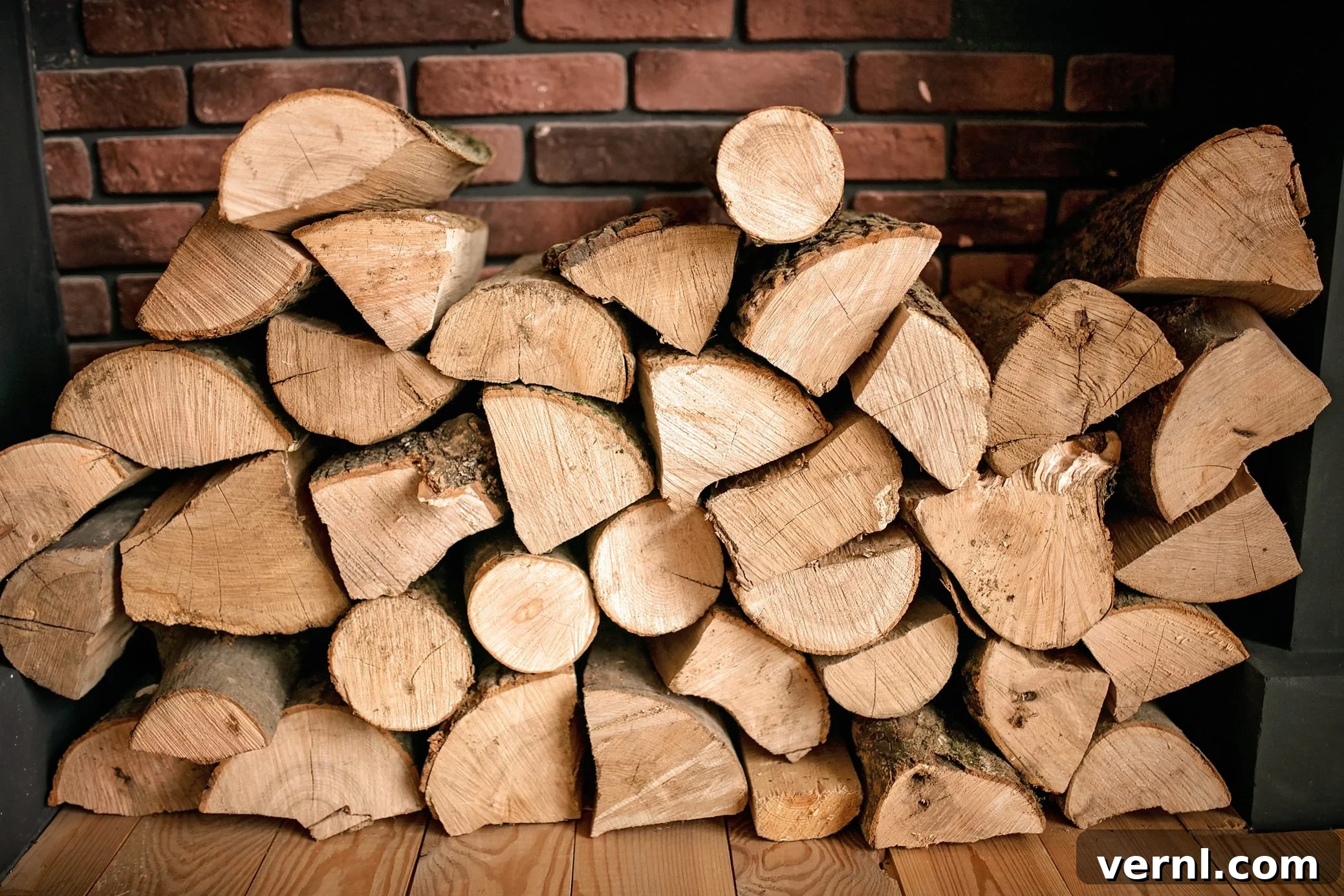
When it comes to building a fire, the choice between hardwood and softwood is crucial, profoundly impacting your experience. The ideal firewood depends heavily on your specific needs and the environment where you’re burning it. Are you aiming for sustained heat for home heating, a clean flame for cooking, or merely the comforting glow and crackle of a campsite fire? Understanding the distinct properties of each wood type is key to making an informed decision.
This comprehensive firewood guide simplifies the differences between hardwood and softwood, helping you select the best firewood for heating and various other applications, ensuring efficiency, safety, and enjoyment.
What is Hardwood? Understanding its Superiority for Burning
Hardwoods generally encompass a category of trees known for their slower growth rate and, consequently, their dense wood structure. These trees are typically deciduous, meaning they shed their leaves in the fall and regrow them in the spring. This characteristic growth pattern contributes to the tight grain and higher density that define hardwoods.
Common hardwoods favored for firewood include oak, ash, birch, and maple. Other hardwoods like walnut and mahogany are often prized in furniture making for their aesthetic appeal and durability. The inherent density of hardwood means it packs more energy per log. When properly seasoned, it burns significantly longer and produces a much greater, more consistent heat output compared to softwood. An interesting botanical fact often overlooked is that all hardwoods originate from flowering trees.
Key Characteristics of Hardwood:
- High Density: Hardwood is much denser than softwood, leading to a longer, more sustained burn.
- Higher BTU Output: It releases more British Thermal Units (BTUs) per cord, meaning more heat for your home.
- Longer Burn Time: Logs burn slowly and steadily, requiring less frequent stoking and refilling.
- Less Creosote Buildup: Produces less sap and moisture when seasoned, resulting in cleaner combustion and reduced creosote accumulation in chimneys.
- Minimal Smoke: Generates less smoke, especially when well-seasoned, making it ideal for indoor use and cooking.
- Hotter Coals: Forms a lasting bed of hot coals, perfect for extended heating or cooking.
What is Softwood? Exploring its Unique Uses
Softwood derives from gymnosperm trees, a group characterized by their “naked” seeds, meaning the seeds are not enclosed within a fruit. The most common softwoods by far are conifers, which are cone-producing trees like pines, spruces, and firs. Softwoods are considerably less dense than almost all varieties of hardwood, a factor that greatly influences their burning properties.
Because softwoods grow much faster than hardwoods, they are a readily available and economically viable resource, widely utilized in various manufacturing sectors, including the paper industry and construction industries. For firewood purposes, the most commonly burned softwoods include fir, pine, spruce, and cedar.
Key Characteristics of Softwood:
- Lower Density: Softwood is less dense, leading to a quicker, more aggressive burn.
- Lower BTU Output: Releases fewer BTUs per cord compared to hardwood, meaning less overall heat for the same volume.
- Faster Burn Time: Logs ignite quickly and burn rapidly, ideal for starting fires or quick bursts of heat.
- Higher Resin/Sap Content: Contains more resin and sap, which can contribute to increased smoke and creosote buildup, especially if not well-seasoned.
- More Sparks and Popping: The resin content can cause sparks and popping, making it less suitable for unsupervised indoor fires.
- Pleasant Aroma: Certain softwoods, like pine and cedar, emit a distinct, often pleasant aroma when burned, favored for outdoor ambiance.
When To Use Hardwood Firewood: The Preferred Choice for Efficiency and Safety
In most scenarios, hardwood is the superior choice for burning due to its efficiency, cleanliness, and sustained heat output. Its characteristics make it less problematic and more effective for a variety of applications where a consistent, long-lasting fire is desired.
- Indoor Fireplace: Hardwood is unequivocally the best choice for an indoor fireplace. Softwood burns much faster and gives off significantly more smoke and creosote-forming resin. Even if you primarily light your fireplace for ambiance rather than heating, softwood will likely smoke up your living space and leave behind a sticky, tar-like resin that rapidly builds up in your fireplace and chimney. This creosote buildup is not only inefficient but also a major fire hazard. Always adhere to expert tips on the safety of indoor fireplaces by using well-seasoned hardwood and regularly cleaning your chimney.
- Cooking Campfire or Outdoor Grill: As Tim Connelly, a product engineer for BioLite, advises, “Due to the sap content which makes for a smoky burn, softwood is not good to cook over. That smoke will stick to the food and be unpleasant to both the eyes and taste buds!” Hardwood is the clear winner for cooking. Its cleaner burn, sustained heat, and lack of strong, acrid smoke make it perfect for grilling, smoking, and baking. Oak and cherry, for instance, are highly favored not only for their high density but also for the delicious flavor profiles they impart to food. Other excellent cooking woods include hickory, apple, and pecan.
- Wood Stove: For the same reasons as an indoor fireplace, avoid using softwood in your wood stove. While modern wood stoves are highly efficient and designed to minimize smoke inside the house, the high resin content in softwood will inevitably gum up the stove’s internal components and the chimney over time, leading to dangerous creosote accumulation and reduced efficiency. Furthermore, softwood burns so quickly that it becomes highly inefficient for sustained home heating, requiring constant tending.
- Wood-Burning Furnace: Similar to a wood stove, burning softwood in a wood-burning furnace is simply not an efficient or practical way to heat a home or cabin. The rapid burn rate of softwood means you’d be constantly loading logs, especially if you aim to keep a fire burning all night. This constant stoking defeats the purpose of an efficient heating system and can be quite disruptive. The resin buildup and potential for chimney fires are also significant concerns with prolonged softwood use in these high-output heating systems.
- Wood-Fired Saunas and Hot Tubs: Unless you specifically enjoy the intense aroma of pine or cedar, most experts recommend hardwood to heat your wood-burning sauna or hot tub. Hardwood provides the intense, consistent heat required to quickly warm water or sauna stones and maintain temperature for extended periods. You might use some softwood kindling to get the fire going faster initially, but hardwood should form the bulk of your fuel. For wood-fired hot tubs, a strategic mix of softwood for rapid initial heating and hardwood for sustained warmth can be an effective approach.
- Outdoor Pizza Ovens: Hardwood, particularly oak or maple, is essential for outdoor pizza ovens. It reaches and maintains the extremely high temperatures (often 700-900°F) needed for crispy crusts and perfectly cooked toppings, providing a clean burn that won’t taint the food with excessive smoke or resinous flavors.
When To Use Softwood Firewood: Best for Quick Fires and Ambiance
While generally not preferred for sustained heating or cooking, softwood firewood has its specific advantages, primarily revolving around its quick ignition and rapid burn rate. It’s an excellent choice for outdoor fires that aren’t intended for elaborate cooking, or when you need a fast, cheerful blaze.
- Fire Starting (Kindling): “Softwood makes a great fire starter due to the sap content,” notes Connelly. The resins and lower density of softwood allow it to catch fire quickly and burn hot, making it perfect for kindling to ignite larger, denser hardwood logs. Many avid fire-builders keep a bundle of cedar shingles or pine scraps specifically for this purpose.
- Backyard Fire Pit: Softwood is perfectly acceptable for a backyard fire pit primarily used for ambiance, a little warmth, and a gathering spot to enjoy a few beverages or roast marshmallows. Some softwoods, like cedar and piñon pine, emit a distinct and pleasant scent when burned, adding to the sensory experience of an outdoor fire. The quick burn provides instant gratification, making it easy to start and enjoy a fire without a long wait.
- Wilderness Campfire: When you’re out in nature, your wilderness campfire might consist of dried wood provided at a campsite or fallen wood you gather yourself. If you’re not planning to cook anything larger than a roasted marshmallow or two, softwoods are perfectly fine to burn in a campfire ring. However, heed Connelly’s advice regarding safety: “Softwoods often produce large embers that pop far from the fire, elevating fire danger.” Always maintain a safe distance and keep a close eye on the fire. “Also, nobody likes holes burned in their fleece or down puffy jacket,” he wisely adds. Softwood is also lighter to carry if you’re backpacking, making it a practical choice for remote sites where local wood collection is permitted.
- Quick Heat Boost: In situations where you need a rapid, albeit short-lived, blast of heat – perhaps to warm a cold room quickly before hardwood takes over, or to get a roaring fire going for a short outdoor gathering – softwood can be quite effective.
Essential Firewood Tips and Safety for Every Fire Enthusiast
Beyond choosing between hardwood and softwood, several other factors are crucial when ordering firewood or deciding what kind of wood to burn. These tips ensure maximum efficiency, safety, and enjoyment from your fire.
Seasoning Your Firewood: The Golden Rule
Regardless of whether it’s hardwood or softwood, the most critical factor for a good fire is using well-seasoned firewood. Seasoned wood has been dried for at least six months, and often up to a year or more, to reduce its moisture content. Ideal moisture content is typically below 20%. Burning wet or “green” wood is incredibly inefficient, produces excessive smoke, leaves behind more creosote, and generates significantly less heat. Always look for wood that sounds hollow when hit, has cracked ends, and bark that easily peels off.
Never Burn Treated Wood or Construction Scraps
This is a non-negotiable safety rule. Pressure-treated, painted, stained, varnished, or composite wood should absolutely never be burned, whether indoors or outdoors. These materials contain a multitude of chemicals and toxins that, when burned, release dangerous fumes into the air. These fumes are harmful to humans, pets, and the environment. If you’re burning old construction wood (untreated), be meticulously sure to remove any nails, screws, or other metal fasteners before tossing it into the fire, as these can create dangerous projectiles or damage your fireplace/stove.
Other Woods to Avoid:
- Driftwood: While seemingly harmless, driftwood often contains high levels of salt. Burning salt can release toxic chlorine gas and other corrosive chemicals that can damage your chimney and fireplace.
- Poison Ivy, Poison Oak, or Poison Sumac: Burning these plants, even if they’re intertwined with other wood, can release irritant oils into the smoke, causing severe respiratory issues and skin reactions.
- Diseased or Insect-Infested Wood: While not necessarily toxic, burning diseased wood can spread fungal spores or insect eggs to other healthy trees, especially if the wood is not fully combusted. It’s also often less efficient.
Proper Firewood Storage:
Store firewood in a way that allows for optimal drying and prevents re-wetting. Stack logs off the ground (on pallets or racks) to promote air circulation and prevent moisture absorption. Cover the top of the stack to protect it from rain and snow, but leave the sides open for ventilation. This ensures your wood remains seasoned and ready to burn efficiently.
Fire Safety is Paramount:
Always maintain a clear area around your fire pit, fireplace, or wood stove, free from combustible materials. Keep a fire extinguisher or a bucket of water/sand nearby. Never leave a fire unattended. When extinguishing a campfire, ensure all embers are completely cold before leaving the site. Regular chimney cleaning is essential to prevent creosote fires, especially if you burn a mix of wood types or frequently use your fireplace/stove.
Conclusion: Make an Informed Choice for Your Fire
The choice between hardwood and softwood is not about one being inherently “better” but rather about selecting the most appropriate fuel for your specific purpose. Hardwood, with its density and high BTU output, is the champion for sustained heating, indoor fireplaces, and all cooking applications. Softwood, with its quick ignition and rapid burn, excels as kindling and for creating lively, short-duration outdoor fires where ambiance is key.
By understanding the unique properties of each type of wood and prioritizing proper seasoning and safety, you can ensure a more enjoyable, efficient, and responsible fire-burning experience. Whether you’re warming your home or enjoying a starlit night by the fire, making an informed firewood choice will elevate your experience.