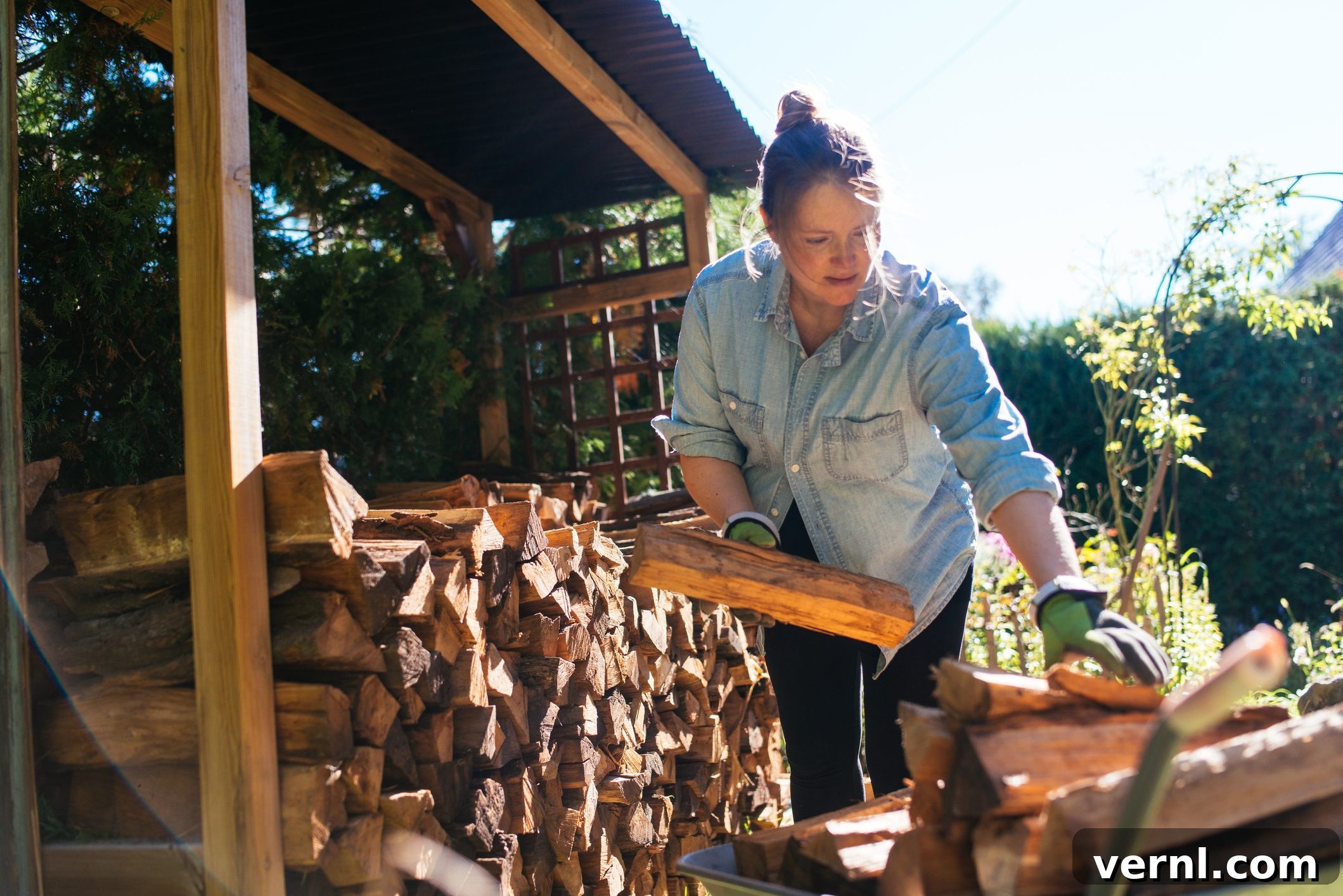
As the chill of winter approaches, firewood transforms from a mere commodity into a crucial asset for warmth and comfort. For many homes, a roaring fire is more than just ambiance; it’s an essential source of heat during the long, cold months. To ensure your fireplace or wood stove performs optimally, and to keep your home cozy and warm, it’s paramount to have a generous supply of properly prepared firewood on hand and ready to burn. The secret to effective, clean-burning wood lies not just in its initial cut, but crucially in how it’s stored and seasoned. Dry wood is efficient wood, and achieving this state is entirely dependent on meticulous stacking and thoughtful storage practices. This comprehensive guide will walk you through the best techniques to stack and store your firewood, ensuring it remains perfectly dry, seasoned, and ready to deliver maximum heat and enjoyment.
The importance of dry firewood cannot be overstated. When wood is green or damp, a significant portion of its energy is wasted simply boiling off the water content before the wood itself can combust. This results in less heat output, more smoke, and a higher risk of creosote buildup in your chimney, which is a major fire hazard. Conversely, well-seasoned, dry firewood ignites easily, burns hotter and cleaner, produces minimal smoke, and is far more efficient, ultimately saving you money and reducing maintenance efforts. Therefore, investing time in proper stacking and storage is not just a chore; it’s a vital step in optimizing your wood-burning experience and ensuring the safety and efficiency of your heating system.
The Art and Science of Stacking Firewood
Properly stacking firewood is fundamental to the seasoning process, which is how wood dries out over time, reducing its moisture content to an ideal level for burning. Estimates for how long you should dry firewood, typically ranging from six months to two years depending on the wood species and climate, always assume that the wood is stacked and stored correctly. Simply tossing logs into an unorganized pile, while seemingly convenient, is a recipe for disaster. Such piles trap moisture, prevent adequate airflow, and often result in a significant portion of your wood remaining damp, waterlogged, and largely useless for burning. While there are numerous variations of firewood stacking methods, all effective approaches adhere to a set of core principles designed to maximize air circulation and exposure to drying elements. By following these guidelines, you ensure that every log in your pile has the best chance to properly season and achieve its full heating potential.
Key Principles for Optimal Firewood Stacking:
- Expose the Cut Ends to the Elements: The ends of a log are like its lungs, where moisture can most effectively escape. When stacking, always position the cut ends of the logs facing outwards, exposed to sunlight and wind. This maximizes the surface area for evaporation, allowing the wood to “breathe” and release its internal moisture more efficiently. Stacking logs with their ends tucked away will significantly hinder the drying process, leaving you with greener, less effective fuel.
- Elevate the Wood Off the Ground: Direct contact with the ground is one of the quickest ways for firewood to absorb moisture, leading to rot, mold, and pest infestations. To prevent this, your firewood stack must be kept off the ground by at least a few inches. This can be achieved using a variety of materials such as pressure-treated lumber, concrete blocks, old pallets, or dedicated firewood racks. Elevating the wood creates an essential air gap underneath, promoting airflow and preventing capillary action from drawing moisture up into your logs from the soil or grass.
- Maintain Adequate Space for Air Circulation: Firewood should be stacked loosely enough that air can circulate freely around and through the entire pile. A tightly packed stack, while appearing neat, will trap moisture and prevent proper drying. The goal is to create numerous small gaps between the logs. This allows wind to pass through, carrying away evaporated moisture, and sunlight to penetrate deeper into the stack. Think of it as creating a natural convection oven for your wood, facilitating uniform drying across all pieces.
- Position the Stack in Direct Sunlight: Solar energy is a powerful, free drying agent. Whenever possible, orient your firewood stack in a location that receives ample direct sunlight throughout the day. In the Northern Hemisphere, a south-facing exposure is often ideal. The sun’s warmth helps to evaporate moisture from the wood and the surrounding air, significantly accelerating the seasoning process. Combining sunlight with good airflow creates the perfect environment for drying wood quickly and effectively.
Common Stacking Methods for Stability and Airflow:
Beyond these basic principles, various stacking methods offer different benefits. The most common is the **linear stack**, where logs are laid in parallel rows. To ensure stability, especially with long rows, it’s wise to build supports at either end using a criss-cross pattern of shorter logs or dedicated metal end-brackets. For a more advanced and often self-supporting stack, consider the **Holz Hausen**, or “wood house” method. This involves stacking logs in a circular pattern, with pieces gradually leaning inward, creating a domed structure. The center can be left hollow or filled with smaller, less uniform pieces. A Holz Hausen is incredibly stable, sheds water effectively, and offers exceptional airflow through its unique design, making it an excellent long-term storage solution in many climates.
Strategic Firewood Storage for Optimal Performance
Once your firewood is properly stacked, the next crucial step is strategic firewood storage. The primary goal is to protect your investment from rain, snow, and excessive humidity while ensuring continued seasoning and preventing unwelcome pest infestations. Thoughtful storage extends the life of your wood, maintains its dryness, and ensures it’s readily accessible when you need it most.
Outdoor Storage: The Preferred Method
For the vast majority of your firewood, outdoor storage is the safest and most practical option. All kinds of insects, spiders, rodents, and other small critters love to take up residence in firewood piles. Bringing a large amount of firewood into your house is essentially an open invitation for these pests to move in with you. Instead, keep the bulk of your wood outdoors, and only bring about a day’s worth (or enough for a few fires) inside at a time. This minimizes the risk of pest transfer while still providing convenient access to fuel.
Choosing the Ideal Storage Location:
- Proximity and Convenience: While keeping wood away from your house for pest reasons is smart, you also don’t want to trek across your entire property in a blizzard for a few logs. Pick a storage location reasonably close to your home – typically 20 to 30 feet away is a good compromise – so your trips out to grab more wood aren’t too much of an inconvenience. If you plan on burning a lot of wood and making frequent trips to your woodpile, consider investing in a sturdy wheelbarrow or a specialized log cart. This small investment can save you a lot of back strain throughout the winter.
- Sunlight and Drainage: Reinforce the principles from stacking. Choose a spot that receives ample direct sunlight, ideally south-facing, to maximize natural drying. Equally important, select a location that offers good drainage. Avoid low-lying areas where water might pool after rain or snowmelt. A slightly elevated patch of ground or an area away from gutter downspouts is preferable to prevent your stack from becoming waterlogged from below.
- Wind Exposure: While direct wind can sometimes destabilize a stack if not built properly, consistent airflow is vital for drying. A location that receives a gentle breeze can actually accelerate the seasoning process, helping to wick away moisture.
- Safety and Regulations: This is a critical, often overlooked aspect. Always check with your city, county, or homeowners’ association (HOA) for any regulations concerning firewood storage. City codes can be quite strict, often stipulating maximum stack heights, minimum distances from structures (like your house, garage, fence, or property lines), and even material restrictions. These regulations are usually in place for fire safety and pest control. Failing to comply can result in fines or demands to move your wood, so be sure you’re following those guidelines before you start stacking your winter supply.
Elevating Your Firewood: Beyond Just Off the Ground
As mentioned, getting your firewood off the ground is non-negotiable. But how you achieve this can vary based on budget and preference:
- DIY Elevation Solutions: You don’t need to spend a fortune. Simple, effective bases can be created using readily available materials. Two to four parallel pieces of pressure-treated lumber (which resists rot) laid on the ground can serve as an excellent foundation. Concrete blocks, bricks, or even old tires can also provide a sturdy, non-absorbent base. The key is to ensure the base is stable and lifts the wood uniformly, preventing sagging and promoting airflow.
- Commercial Firewood Racks: For a more organized and often aesthetically pleasing solution, consider investing in outdoor firewood racks. These come in various sizes and materials, typically steel, designed to keep wood elevated and neatly contained. Many commercial racks include built-in covers or are designed to integrate with specific covers, offering a complete storage system.
- Building Your Own Rack: For the DIY enthusiast, building a custom firewood rack is a rewarding project. Simple designs can be constructed from lumber, often incorporating a sloped roof for added protection. This allows you to tailor the size and design to your specific needs and available space.
Protecting Your Stack with a Cover:
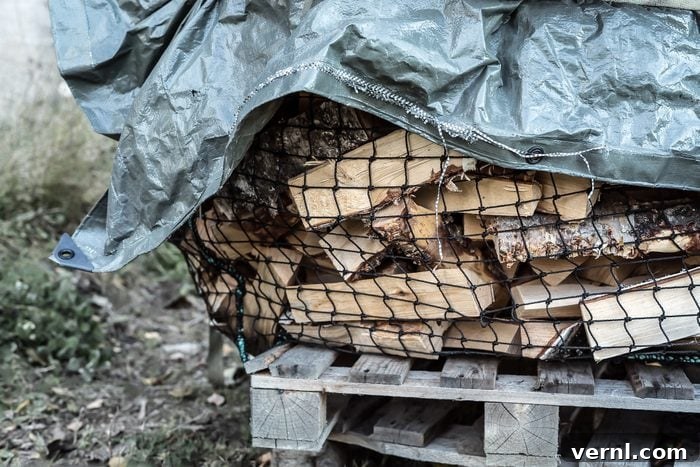
Once elevated and neatly stacked, your firewood needs protection from direct precipitation. The simplest and most common way to cover your stack is by throwing a tarp over it. However, proper tarping is crucial:
- Cover the Top, Leave the Sides Open: The most important rule for covering firewood is to only cover the very top of the stack, allowing the sides to remain exposed. While it might seem counterintuitive to leave parts uncovered, sealing the entire stack will trap moisture, inhibit airflow, and prevent the wood from drying. The goal is to protect against rain and snow falling directly onto the top of the pile, while still allowing air to circulate freely through the sides, facilitating continued seasoning.
- Secure the Tarp: A gust of wind can easily turn your protective tarp into a nuisance. To keep the tarp from flying off, tie it down securely using ropes, bungee cords, or anchor it with heavy objects like bricks, spare logs, or concrete blocks placed on the corners. Ensure the anchors are heavy enough to withstand strong winds.
- Specialized Firewood Covers: Beyond tarps, dedicated firewood covers are available. These are often made from heavy-duty, weather-resistant materials, sometimes with ventilation features built-in, and are typically designed to fit specific rack sizes. They offer a more tailored and durable solution than a generic tarp.
Long-Term Maintenance and Checking Seasoning:
Even with perfect storage, patience is key. Most hardwoods require at least 6-12 months to season, with some dense woods needing up to two years. You can tell if your firewood is seasoned by several indicators:
- Cracked Ends: Dry logs will typically have visible cracks or “checks” radiating from the center of their cut ends.
- Hollow Sound: When two seasoned logs are banged together, they produce a distinct hollow ‘clunk’ sound, unlike the dull thud of green wood.
- Lighter Weight: As moisture evaporates, wood becomes significantly lighter.
- Loose Bark: The bark on seasoned logs often peels off easily.
- Color: Seasoned wood usually appears duller or grayish compared to the vibrant color of freshly cut wood.
By diligently following these stacking and storage guidelines, you’ll ensure that your firewood supply is consistently dry, efficient, and ready to provide clean-burning warmth throughout the winter. This dedication to proper preparation will enhance your heating experience, prolong the life of your wood-burning appliance, and significantly reduce the risks associated with burning unseasoned wood.