
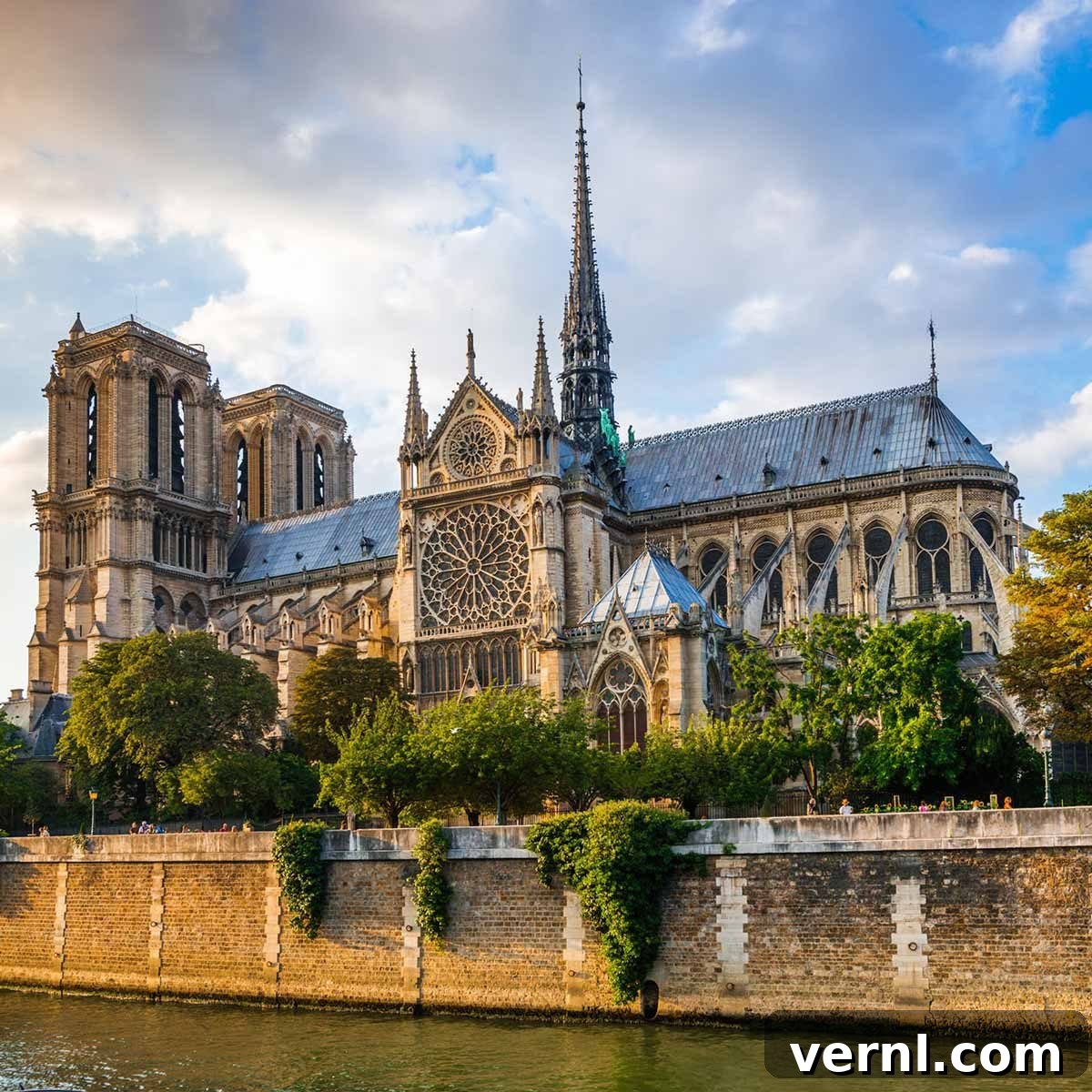
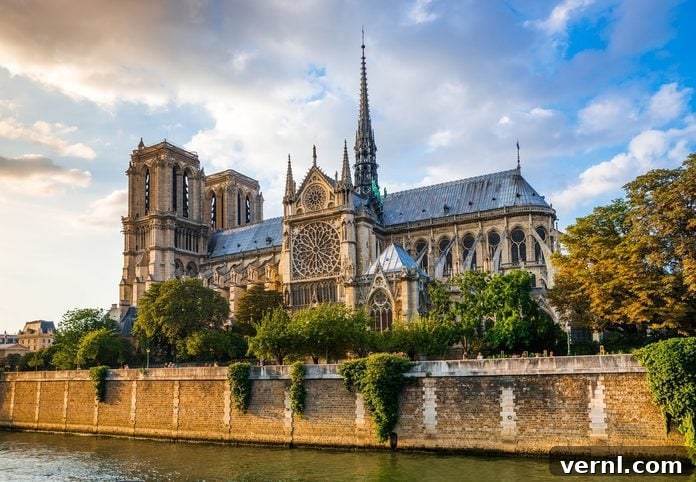
On the late afternoon of April 15, 2019, the world watched in collective horror and disbelief as flames engulfed Notre Dame Cathedral, one of Paris’s most treasured and historically significant architectural marvels. Situated majestically on the Île de la Cité, an island in the heart of the River Seine, this iconic Gothic masterpiece, a symbol of French history and Catholic faith for centuries, succumbed to a devastating blaze. People from across the globe, as well as thousands of Parisians, gathered near the cathedral, their faces etched with grief, as the centuries-old oak roof and its iconic spire collapsed into a fiery inferno. It was a profoundly sad day, marking a significant loss not only for architectural history but for global cultural heritage. The devastating fire, visible across the Parisian skyline, brought into sharp focus the fragility of even the most enduring structures and the deep emotional connection humanity holds for its cultural landmarks.
The Genesis and Grandeur of Notre Dame’s Construction
Looking back at the awe-inspiring images of this magnificent Gothic cathedral, it is truly remarkable to consider that the initial construction of this architectural masterpiece began more than 800 years ago. The ambitious project was commenced in 1163, during the reign of King Louis VII, reflecting the burgeoning power and artistic ambition of medieval France. Strategically positioned on the Île de la Cité, a location central to Paris’s ancient origins, the cathedral’s construction was a monumental undertaking that spanned an incredible 182 years. It was finally completed in 1345, standing as a testament to the skill, dedication, and long-term vision of countless craftsmen, architects, and patrons. The resulting structure was a pioneering example of Gothic architecture, featuring revolutionary elements like flying buttresses, intricate stained-glass rose windows, and ribbed vaults, all designed to create a sense of soaring height and divine light within its sacred walls. Notre Dame wasn’t merely a place of worship; it was a civic centerpiece, a place for coronations, royal weddings, and a sanctuary for the people of Paris.
Notre Dame: An Enduring Pillar of Parisian History
While the Eiffel Tower stands as an internationally recognized emblem of the City of Lights, it is, in fact, a relative newcomer compared to the venerable age of Notre Dame. The Eiffel Tower, a marvel of 19th-century engineering, was constructed starting in 1887 and completed just two years later in 1889, in time for the 1889 World’s Fair. Both structures are undeniably pivotal to the history and identity of Paris, captivating millions of visitors annually. However, in terms of sheer longevity, Notre Dame stands as an undisputed elder statesman. Even the majestic Arc de Triomphe, commemorating France’s military victories and centrally located at Place Charles de Gaulle, doesn’t come close in age. Its construction began in 1806, an astonishing 643 years after the foundational stones of Notre Dame were laid. This vast age gap underscores Notre Dame’s unique position as a living chronicle of French history, having witnessed centuries of triumphs, tribulations, revolutions, and the everyday lives of countless generations. Its ancient stones have absorbed the echoes of medieval kings, Napoleonic emperors, and the whispers of ordinary Parisians, making it a profound repository of national memory and cultural evolution.
A History Marked by Resilience: Notre Dame’s Past Trials
The 2019 fire, though devastating, was far from the first challenge Notre Dame has faced throughout its extensive history. The cathedral has, on several occasions, teetered on the brink of significant damage or even demolition, only to be saved by a combination of fate, determined individuals, and collective will. This remarkable resilience is a recurring theme in its long and storied existence.
Saved by Napoleon and the Power of Symbolism
According to historical records and Notre Dame’s own official website, the cathedral found itself in a severe state of disrepair in the late 18th and early 19th centuries, following the French Revolution. During this turbulent period, it was desecrated, its statues beheaded, and its very existence threatened with demolition. It was Napoleon Bonaparte who, recognizing the profound symbolic power of such a historic edifice, intervened dramatically. His decision to be crowned Emperor of the French within the cathedral in 1804 not only halted its decline but initiated a renewed interest in its preservation. This pivotal event cemented Notre Dame’s status not just as a religious monument, but as a central stage for French national identity, effectively rescuing it from ruin and paving the way for future restorations.
Protecting the Precious Rose Windows During World War II
The cathedral also endured significant threats during World War II. As German forces occupied Paris, there were credible fears that they might destroy the priceless stained-glass Rose windows—particularly the majestic western Rose window, an unparalleled masterpiece of 13th-century artistry and one of the largest glass windows in the world. To safeguard these irreplaceable treasures, the intricate stained-glass panels were meticulously removed piece by piece and carefully stored away from the city’s potential battlegrounds. After the war concluded and Paris was liberated, these magnificent windows were painstakingly reinstalled, allowing their vibrant colors to once again illuminate the cathedral’s interior. In a testament to this foresight and the resilience of the structure itself, initial reports after the 2019 fires confirmed that, remarkably, the Rose windows remained largely intact, offering a glimmer of hope amidst the destruction.
Cycles of Restoration: The Spire and the Gargoyles
Indeed, the 2019 disaster wasn’t the first time the cathedral has undergone extensive restoration or even significant architectural changes. The famous spire that collapsed so dramatically during the recent fire was itself a 19th-century replica. The original medieval spire, deemed structurally unstable, had been removed in 1786. Its magnificent replacement, reaching 93 meters into the sky, was conceived and executed during the ambitious mid-19th-century restoration led by the celebrated architect Eugène Viollet-le-Duc. His extensive work, spanning from 1844 to 1864, aimed to not only repair but also ‘perfect’ the cathedral, adding elements and interpretations of the Gothic style. This era also saw the creation and installation of the cathedral’s iconic gargoyles and chimeras—grotesque figures that serve both as decorative elements and functional waterspouts, designed to protect the building from rainwater erosion. These beloved figures, now synonymous with Notre Dame, were also products of this comprehensive 19th-century revitalization, demonstrating a long history of human intervention and care for this living monument.
Undergoing Renovations: The Pre-Fire Warning Signs
The tragic fire of 2019, while sudden and catastrophic, did not occur without prior warning signs. In fact, as early as 2018, CBS News reported on Notre Dame Cathedral’s critical need for extensive renovations, an announcement that highlighted the vulnerabilities of such an ancient structure. At the time of the fire, the cathedral was actively undergoing a significant $6.8 million renovation project, primarily focused on the spire and its surrounding elements. This intricate work involved handling components made of 250 tons of lead, a material that would later contribute to the toxic fumes released during the blaze. Problems within the cathedral’s ancient fabric had become increasingly evident, with visible cracks appearing in the stone masonry, raising serious concerns among conservationists about the overall structural stability of the building. These signs underscored the constant battle against time, weather, and pollution that any historical landmark, especially one of Notre Dame’s immense age and scale, must endure.
The Aftermath and the Road to Reconstruction
When the devastating fire finally extinguished itself, leaving behind a smoldering shell, the immediate concern shifted to the cathedral’s structural integrity. Despite the horrific loss of its entire roof structure, famously made from 5,000 oak trees (a forest’s worth of timber), and the collapse of the spire, The New York Times and other experts quickly reported that the main stone structure, including the iconic twin towers and the crucial flying buttresses, had miraculously held firm. This assessment provided a glimmer of hope amidst the profound sorrow. Investigations into the exact cause of the fire began immediately, though initial findings suggested it may have been accidental, possibly related to the ongoing renovation work. The global outpouring of grief was swiftly followed by an equally unprecedented surge of international support and pledges for financial aid, demonstrating the cathedral’s universal appeal and importance. French President Emmanuel Macron declared an ambitious goal to reconstruct Notre Dame within five years, a target that has inspired architects, historians, and craftsmen worldwide.
The journey to rebuild Notre Dame is an immense undertaking, requiring meticulous care, historical accuracy, and cutting-edge conservation techniques. It is a testament to the enduring human spirit and our commitment to preserving cultural heritage for future generations. As this incredible structure slowly but surely rises from its ashes, it will once again stand in all its majestic glory, a symbol of resilience, faith, and the timeless beauty of human endeavor. Experiencing such devastating news about a landmark can be a stark reminder of vulnerabilities closer to home. Keep an eye out for these 20 hidden things in your home that may be a fire hazard, ensuring your own sanctuary remains safe.