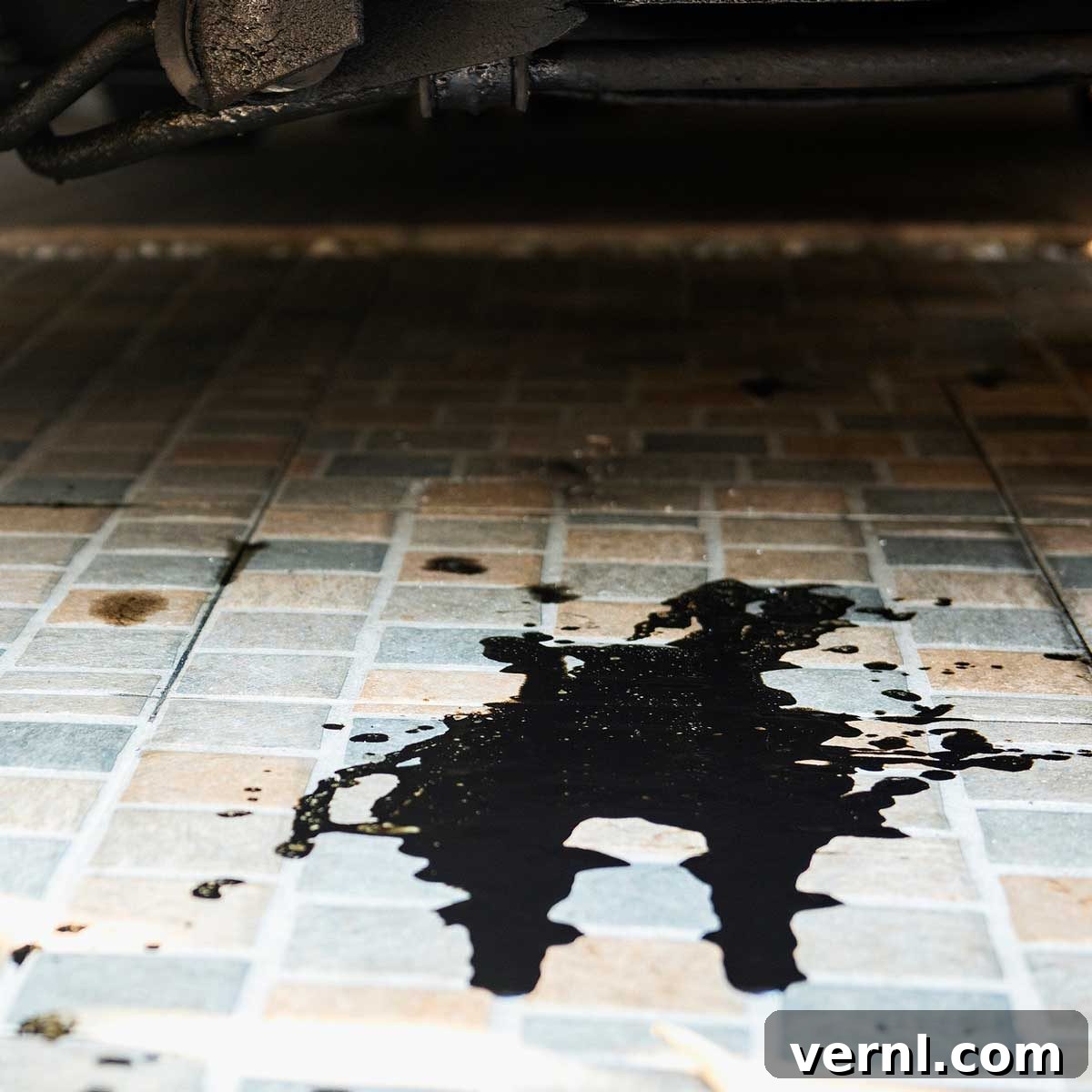
Decoding Car Fluid Leaks: What’s Dripping Under Your Vehicle?
Finding a puddle or a drip under your parked car can be an unsettling sight. While some leaks are perfectly normal and harmless, others signal a serious problem that demands immediate attention. Understanding what’s seeping from your vehicle is the crucial first step in determining the urgency and necessary course of action. This comprehensive guide will help you identify common car fluid leaks, differentiate between benign moisture and hazardous substances, and empower you to decide whether it’s a simple DIY fix or time for professional help.
The immediate concern often arises when the leaking liquid isn’t clear water, especially if it appears to be vital fluids like gasoline, which poses a significant fire hazard, or brake fluid, which can compromise your vehicle’s stopping power. Don’t let uncertainty lead to panic; instead, let’s learn how to systematically identify the culprit.
When Water Drips Are Nothing to Worry About
Before jumping to conclusions, it’s important to recognize that water leaking from your car is a common and usually benign occurrence. There are two primary reasons you might observe water under your vehicle after it has been running:
Air Conditioning Condensation
During normal operation, your car’s air conditioning system draws moisture from the air inside the cabin. This moisture condenses on the cold evaporator coils and then drips harmlessly onto the ground, typically near the back of the engine compartment or towards the passenger side. This clear, odorless water is a sign that your AC system is functioning as intended, much like condensation dripping from a cold beverage glass on a hot day. The amount of water will vary depending on ambient humidity and how long your AC has been running.
Exhaust Condensation
Another frequent source of water is the exhaust system. Combustion in your engine produces water vapor as a byproduct. As the exhaust gases cool down while passing through the tailpipe, this water vapor condenses into liquid water, which then drips out. You’ll often see this, especially on colder days or shortly after starting your car. This is a completely normal process and indicates healthy engine function. If the water has a sweet smell, however, it could indicate a more serious issue involving burning coolant, which we’ll discuss later. For now, plain water from the tailpipe is generally not a concern. Many common car myths often revolve around these harmless occurrences, leading to unnecessary worry.
Beyond Water: Identifying Other Critical Car Fluids
If the fluid beneath your car isn’t clear water, then it’s time to investigate further. Your vehicle relies on a network of seven other essential fluids to operate smoothly and safely. Pinpointing which one is leaking is critical for diagnosis. Once identified, you’ll be able to determine whether the problem can be addressed with a simple DIY fix or if it requires the expertise of a professional mechanic.
Systematic Approach to Leak Identification
When confronted with a mysterious fluid leak, a methodical approach is key. The main considerations for accurate identification are the fluid’s **color**, its **feel (texture)**, its distinct **smell**, and the **location** where the drip originates under your vehicle.
Preparation and Initial Steps
- Park Safely: Always park your car on a level surface in a well-lit area. Ensure the engine has completely cooled down before attempting any inspection, especially if you suspect a hot fluid leak.
- Check Fluid Levels: Before you even look for a leak, check the levels of all accessible fluids (engine oil, coolant, brake fluid, power steering fluid, transmission fluid, windshield washer fluid). This can give you an immediate hint as to which system might be compromised. Top them off if necessary, being careful not to spill any fluid, particularly around the engine compartment, as this could create misleading drips.
- The White Paper/Cardboard Test: For the most accurate identification, once the engine is cool, place a large, clean piece of white paper or cardboard directly under the suspected leak area. Leave it overnight or for several hours. The paper will collect the dripping fluid, allowing you to clearly observe its color, consistency, and even smell without it mixing with grime from the ground. Note the exact spot on the paper where the drip lands, as this will help pinpoint the origin under the car.
- Observe the Leak Location: The position of the leak provides valuable clues.
- Front of the car (under the radiator/engine): Often coolant, engine oil, or power steering fluid.
- Middle of the car (under the transmission/exhaust pipe): Frequently transmission fluid or engine oil.
- Rear of the car (under the fuel tank/differential): Could be gasoline, differential fluid (if RWD/AWD), or brake fluid lines.
- Specific Side (left/right): Can further narrow down components like brake lines, specific engine accessories, or even a sunroof drain.
Understanding what happens to your engine when you drive through high water, while not directly related to leaks, highlights the importance of being aware of your vehicle’s systems and potential hazards.
Detailed Car Fluid Color, Texture, Smell, and Common Leak Points
Here’s a breakdown of the most common car fluids you might encounter, along with their distinguishing characteristics and typical leak sources:
1. Coolant or Anti-freeze
- Color: Most commonly bright green or orange, but can also be pink, blue, or yellow, depending on the manufacturer.
- Texture: Slimy or greasy to the touch, feeling slicker than water.
- Smell: Distinctively sweet, almost like maple syrup or candy. This sweet odor is a key identifier.
- Common Leak Points: Look for leaks around the radiator hoses (especially at connection points), the radiator itself (cracks or corrosion), the coolant reservoir or expansion tank, the water pump, heater core, or thermostat housing. If you detect a sweet smell coming from the tailpipe and the exhaust is unusually thick white smoke, it’s a strong indicator of an internal engine leak, such as a bad head gasket or a cracked block, allowing coolant to burn in the combustion chamber. This is a serious issue requiring immediate professional diagnosis.
- Urgency: High. Coolant is vital for engine temperature regulation. Low coolant can quickly lead to overheating and severe engine damage.
2. Engine Oil
- Color: Ranges from yellowish or amber (for new, clean oil) to light brown, dark brown, or completely black (for old, dirty oil).
- Texture: Slick and oily to the touch, feeling thick and viscous.
- Smell: Typically a distinctive petroleum or slightly burnt smell, especially if it’s old or leaking onto hot engine parts.
- Common Leak Points: Very common leaks include the oil pan drain plug (often from improper tightening or a worn washer), the oil filter or its gasket (after a recent oil change or if loose), valve cover gaskets, front or rear main seals, oil cooler lines, or a damaged oil pan. Spilled oil during an oil change, particularly when replacing the oil filter, can also mimic a leak until it’s cleaned up.
- Urgency: Moderate to High. Small leaks can lead to significant oil loss over time, causing engine damage due to lack of lubrication. Large leaks require immediate attention.
3. Gasoline
- Color: Clear or slightly yellowish.
- Texture: Thin and watery.
- Smell: Extremely distinct, pungent, and unmistakable odor of gasoline.
- Common Leak Points: Check fuel hoses and lines, fuel filter connections, the fuel tank itself (cracks, rust), or fuel injector seals.
- Urgency: EXTREMELY HIGH. Any type of fuel leak is a severe fire hazard. Never drive a vehicle if you suspect a gasoline leak. Get it towed to a repair shop immediately.
4. Brake Fluid
- Color: Clear when new, gradually turning yellowish to light brown as it ages and absorbs moisture.
- Texture: Slick and oily, but thinner than engine oil.
- Smell: Often has a strong, bitter, or sour odor.
- Common Leak Points: While rare compared to other leaks, brake fluid leaks are critical. Look at brake lines, calipers, wheel cylinders, the master cylinder, or ABS module. Like a gasoline leak, never drive a car if you suspect a leak in the brake fluid hydraulic system. Loss of brake fluid means loss of braking power, a severe safety risk.
- Urgency: EXTREMELY HIGH. Compromised brakes are a direct threat to safety. Do not drive the vehicle.
5. Transmission Fluid
- Color: Bright red or pinkish when new and fresh, changing to dark brown or even black as it ages and burns.
- Texture: Oily and slick, generally thinner than engine oil but thicker than power steering fluid.
- Smell: Usually has a heavy petroleum odor. If it smells burnt, it indicates overheating or a serious internal transmission issue.
- Common Leak Points: Leaking transmission fluid is most likely due to a worn pan gasket, loose cooler lines, a damaged external seal (e.g., input or output shaft seal), or a cracked transmission case.
- Urgency: High. Low transmission fluid can lead to erratic shifting, transmission damage, and eventual failure, which is an extremely costly repair.
6. Power Steering Fluid
- Color: Reddish or light brown when new, darkening to brown or even black with age.
- Texture: Feels like a lighter motor oil, often described as oily but thinner than engine oil.
- Smell: Typically a burnt marshmallow or slightly sweet smell, similar to transmission fluid.
- Common Leak Points: Most often found around the power steering high-pressure line (due to high pressure and vibrations), the fluid reservoir itself (cracks), the power steering pump, or the steering rack/gearbox.
- Urgency: Moderate. While not immediately critical for safety like brake fluid, low power steering fluid will make steering difficult and can damage the power steering pump if ignored.
7. Windshield Wiper Fluid
- Color: Commonly blue, green, or orange, depending on the additive and brand.
- Texture: Exactly like water, as it’s primarily water with a cleaning agent and antifreeze.
- Smell: Mild alcohol or ammonia-like smell.
- Common Leak Points: Usually a cracked reservoir, disconnected or broken fluid lines/hoses, or a faulty pump.
- Urgency: Low. Annoying, but not a safety or mechanical hazard to the vehicle itself.
8. Water (Beyond AC and Exhaust)
- Color: Clear.
- Texture: Feels like water, odorless.
- Common Leak Points: In addition to air conditioning and exhaust system condensation, sunroof drains can get clogged, causing melting snow and rainwater to exit (depending on the vehicle design) by the back door or rear bumper, sometimes appearing as a leak. A cracked washer fluid reservoir might also leak water if it’s been filled with plain water.
- Urgency: Low. Usually a minor issue, though clogged sunroof drains should be cleared to prevent water ingress into the cabin.
Understanding Stop-Leak Additives: A Temporary Solution?
For minor, non-critical leaks, you might encounter various aftermarket sealant additives designed to temporarily mitigate the problem. These “stop-leak” products are available for oil, transmission fluid, and radiator/cooling systems. They typically work by swelling O-rings and gaskets that have shrunk and hardened due due to age, heat, and pressure, or by sealing tiny pinholes in components like the radiator.
Pros and Cons
- Pros: Can offer a temporary fix, potentially saving you from immediate breakdown or allowing you to safely drive to a repair shop. They can be cost-effective for very minor, isolated issues.
- Cons: These are rarely permanent solutions. Overuse or improper application can lead to significant problems, such as clogging radiator fins, heater cores, or other vital passages, which can cause even more expensive damage. The “if one is good, two is better” principle absolutely does not apply here; follow instructions meticulously.
- When to Use: Consider these as a last resort or a temporary measure to get you out of a tight spot. For example, a small pinhole leak in a radiator on a long trip.
- When NOT to Use: Never use stop-leak additives in critical systems like brake lines or power steering systems, where even a slight compromise in fluid flow or integrity could lead to catastrophic failure. They are also generally not recommended for significant leaks that require a mechanical repair. Car additives are not a one-size-fits-all solution; always ensure the product is specifically designed for your type of fluid and leak.
Conclusion: Act Promptly and Wisely
Identifying a fluid leak beneath your car is more than just a nuisance; it’s a diagnostic clue that should never be ignored. Even a small drip can be an indication of a bigger, underlying problem that could escalate into a costly repair or, more importantly, a safety hazard if left unattended.
By using the information provided – observing the color, texture, smell, and location of the leak – you now have a powerful toolkit for preliminary diagnosis. This understanding will help you decide if the leak is a straightforward DIY fix, like tightening a loose drain plug or replacing a simple hose, or if it warrants an immediate visit to your trusted mechanic for a more complicated repair, such as a head gasket replacement or transmission overhaul. Remember, timely detection and appropriate action are paramount to maintaining your vehicle’s health, ensuring your safety, and preserving your investment.