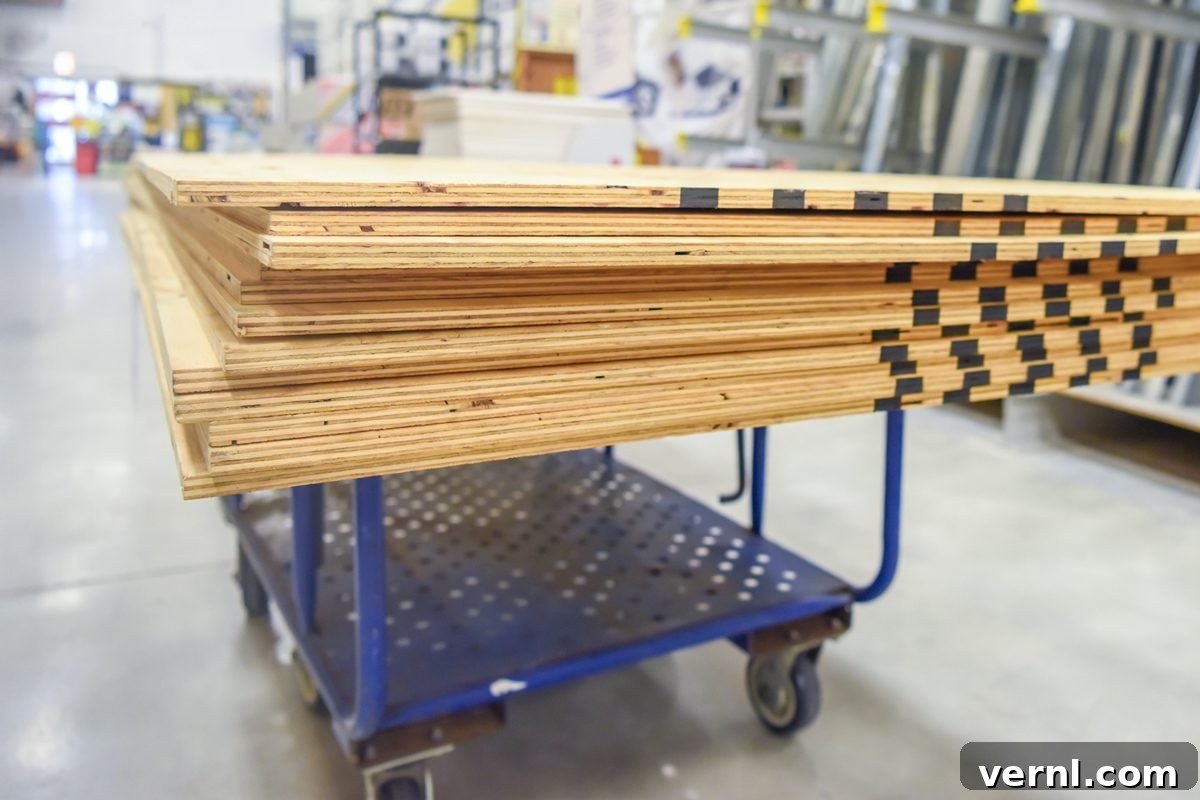
Embarking on a new DIY project often brings the excitement of creation, but it can also present practical challenges, especially when working with large materials like plywood. One of the most common hurdles for homeowners and weekend warriors is getting cumbersome 4×8 sheets of plywood home from the store without the luxury of a pickup truck. These standard sheets, while cost-effective and ideal for many construction and woodworking projects, are notoriously difficult to transport in smaller vehicles.
However, a lack of a truck doesn’t have to put a halt to your building ambitions. As Garrett Poshusta, co-founder of the popular home improvement blog The Grit and Polish, attests, “I’ve used all manner of transport options to get plywood to my house.” It simply requires a bit more planning, effort, and sometimes a small investment. This comprehensive guide will walk you through the top strategies for safely and efficiently transporting plywood, ensuring your next project gets off the ground smoothly.
Understanding Plywood: Sizes, Types, and Weights
Before diving into transport methods, it’s crucial to understand what you’re dealing with. Plywood is typically sold in large 4×8-foot sheets, a size that offers excellent material efficiency for a wide range of applications, from framing to furniture making. However, the weight of these sheets can vary significantly based on several factors, including thickness, moisture content, and the wood species used.
- Species: Hardwood plywoods, such as birch, oak, or maple, are denser and consequently heavier than softwood varieties like pine or fir.
- Core Material: The core layers also play a role. Plywood with an MDF (Medium-Density Fiberboard) core tends to be heavier than those with wood veneer cores due to the high density of MDF.
- Moisture Content: Freshly manufactured or stored plywood with higher moisture content will be heavier than drier sheets.
Understanding these variables helps you anticipate the handling requirements and select the most appropriate transport method. Here’s a general guide to common plywood weights:
- ¼-inch plywood: Approximately 20 to 25 pounds. These thinner sheets are relatively light and more flexible, making them easier to handle but also more prone to bending if not properly supported during transport.
- ½-inch plywood: Ranging from 30 to 50 pounds. This is a common thickness for various projects, offering a good balance of strength and manageability.
- ¾-inch plywood: Can weigh anywhere from 45 to a hefty 90 pounds. These thick, sturdy sheets are ideal for structural applications, flooring, or heavy-duty furniture, but their substantial weight demands careful planning for lifting and transport.
When selecting plywood, always consider its weight in relation to your chosen transport method and your ability to safely lift and maneuver it. Never hesitate to ask for assistance at the store or bring a partner along.
Clever Ways to Get Plywood Home Without a Truck
Don’t let the size of a 4×8 plywood sheet intimidate you. With a little ingenuity and these expert-backed strategies, you can safely bring your materials home for your next project. Garrett Poshusta’s insights, combined with practical advice, will guide you through each option.
1. Cut It Down at the Store
One of the simplest and most effective ways to manage large plywood sheets is to reduce their size before leaving the lumberyard. “Big retailers will cut plywood to specific dimensions for you,” Poshusta notes. This service is invaluable, transforming unwieldy 4×8 sheets into pieces that can comfortably fit inside your vehicle, or even smaller, more manageable sections for easier handling.
- Advantages: Significantly reduces transport bulk, minimizes the need for cutting tools at home, and saves you time and effort on your project site. It also ensures cleaner, straighter cuts than you might achieve with handheld tools.
- Limitations: Most home improvement stores offer “rough” or “breakdown” cuts, meaning they primarily do single, straight cuts to make the material more transportable. They typically avoid multiple, intricate, or multi-directional project-specific cuts due to time constraints and equipment limitations. However, as Poshusta mentions, “I’ve had luck getting multiple straight cuts done during slow business hours.”
- Tips for Success:
- Plan Your Cuts: Before you go, have a precise cut list ready. Know exactly which dimensions you need to break down the 4×8 sheet into.
- Timing is Key: Visit during off-peak hours (weekday mornings or late evenings) when staff are less busy and might be more accommodating to multiple cuts.
- Communicate Clearly: Explain that you need the cuts for transport purposes.
- Double-Check: Always verify the cuts for accuracy before loading them into your vehicle.
This method is highly recommended if your project plan already involves cutting the 4×8 sheet into smaller sections, as it essentially shifts a significant part of the initial labor to the store.
2. Utilize Your Vehicle’s Roof Racks
If your car or SUV is equipped with a roof rack system, it can be an excellent solution for transporting full or partial sheets of plywood. This method keeps the bulky material out of your car’s interior, preserving passenger space and cleanliness.
- Preparation is Crucial:
- Check Weight Capacity: Consult your vehicle’s owner manual for the maximum weight limit of your roof rack. Plywood can be heavy, especially multiple sheets.
- Support Rails: To prevent bowing or damage to thinner plywood sheets, and to protect your roof rack, place two 2x4x8s (or similar sturdy lumber) beneath the plywood. These act as essential support rails, distributing the weight evenly across the rack’s bars.
- Partner Up: Lifting a full 4×8 sheet onto a car roof is challenging and potentially dangerous for one person. “I would recommend bringing a partner to lift the plywood into place on the roof,” Poshusta advises.
- Secure Strapping (Safety First):
- Ratchet Straps are Essential: Do not rely on rope or cam buckle straps. “Use ratchet straps to secure plywood to roof racks,” emphasizes our expert. Ratchet straps offer superior tension and stability, preventing loosening as you drive. Use at least two, preferably three, straps to secure the plywood firmly across the width of the sheets and over the rack.
- Placement: Position straps over the plywood and around the roof rack bars, ensuring they are tightened evenly and securely. Shake the plywood gently to test for any movement.
- Protect Edges: Place cardboard or old towels under the straps where they make contact with the plywood edges to prevent crushing or marring.
- Driving Safely:
- Speed Matters: Avoid highways and high speeds. “Use secondary roads instead of highways to avoid traveling at high speeds,” is a critical safety tip. Wind resistance can put immense stress on your straps and rack.
- Check Frequently: Pull over safely after a few miles and re-check the tightness of your straps. Repeat this check periodically throughout your journey.
- Watch for Overhang: Be mindful of any overhang front or back. State laws vary regarding how much material can extend beyond your vehicle. If it extends more than a few feet, attach a red warning flag to the furthest point for visibility.
3. Opt for Professional Delivery Services
For larger quantities of plywood or if heavy lifting isn’t an option, professional delivery can be a worthwhile investment. “Another option to consider is delivery,” Poshusta suggests. “If you need multiple sheets and perhaps some other lumber, getting it dropped at your house could be worth the delivery charge.”
- Cost-Benefit Analysis:
- Home Centers vs. Lumberyards: In Poshusta’s experience, “local lumberyards charge much less for delivery than home centers, where delivery costs $75 to $125.” Always compare prices.
- Value for Money: If you’re purchasing multiple sheets of plywood, along with other heavy or bulky items like dimensional lumber, drywall, or bags of concrete, a delivery fee can quickly pay for itself in terms of saved time, effort, and fuel costs.
- Quality and Selection:
- Lumberyard Advantage: “Lumber yards also consistently offer higher-quality stock than home centers,” Poshusta notes. This is a significant advantage if you’re unable to personally select your plywood sheets, ensuring you receive straighter, flatter, and better-grade material.
- Convenience: Professional delivery eliminates the need for any lifting, loading, or securing on your part. It’s a hands-off solution that ensures your materials arrive directly at your project site.
- Considerations:
- Scheduling: Plan ahead, as delivery slots can fill up quickly, especially during peak seasons.
- Accessibility: Ensure your delivery location is accessible for a large delivery truck.
- Inspection: Be present to inspect your materials upon arrival, checking for any damage or inaccuracies before signing off.
4. Rent a Trailer for Hauling
If your vehicle is equipped with a tow hitch, renting a utility trailer opens up a robust option for transporting plywood and a multitude of other building materials. This is particularly efficient for larger projects.
- Hitch Requirements:
- Installation: If you don’t have a hitch, consider having one installed. Many auto shops can install hitches on sedans, SUVs, and minivans, significantly increasing your vehicle’s hauling versatility for future projects. Even small sedans often have some towing ability.
- Capacity: Ensure your vehicle’s towing capacity and the hitch’s tongue weight rating are sufficient for the combined weight of the trailer and your plywood load.
- Renting a Trailer:
- Sources: Trailers can be rented from home improvement stores, dedicated rental companies (like U-Haul), or even some gas stations.
- Types: Utility trailers come in various sizes. A small 4×6 or 5×8 utility trailer is usually ample for several sheets of plywood.
- Loading and Safety:
- Weight Distribution: Load plywood sheets evenly over the trailer’s axle to ensure proper weight distribution. Too much weight on the tongue can strain your hitch, while too much weight at the rear can cause sway.
- Secure the Load: Use at least two, preferably three, heavy-duty ratchet straps to firmly secure the plywood to the trailer’s tie-down points. Ensure the straps are tight and the plywood cannot shift during transit.
- Driving with a Trailer: Remember that driving with a trailer requires extra caution. Allow for increased stopping distances, make wider turns, and generally drive at a slightly reduced speed, especially on curves or uneven roads.
- Lights and Connections: Always verify that the trailer’s lights are functioning correctly and that the electrical connection to your vehicle is secure before driving.
5. Rent a Pickup Truck
Sometimes, the most direct solution is to temporarily acquire the right tool for the job. Renting a pickup truck, especially from a home improvement store, is a very common and convenient method for transporting large items like plywood.
- Rental Options:
- Home Centers: Major retailers like Home Depot and Lowe’s offer truck rentals, often on an hourly or daily basis. “If just using it for delivery, $75 will get you an hour and fifteen minutes, or rent it for the day for around $120 plus gas,” according to Poshusta’s experience.
- Dedicated Rental Companies: For longer durations or specific truck sizes, traditional rental companies are also an option, though they might be more expensive.
- Pros and Cons:
- Advantages: It’s the most straightforward way to transport plywood. Trucks are designed for hauling, making loading and securing relatively easy.
- Disadvantages: “The only downside is you can’t reserve a truck in advance” at many home centers, Poshusta advises. This means availability can be hit-or-miss, especially on busy weekends. Fuel costs are an additional factor.
- Tips for Renting:
- Timing: To maximize your chances of securing a truck, arrive early on a weekend morning or opt for a weekday rental when demand is lower.
- Inspect Before Driving: Always do a quick inspection of the truck before you leave the lot, noting any existing damage to avoid disputes upon return.
- Safety in the Truck Bed:
- Secure the Load: Even in a truck bed, plywood must be secured. “Tie down plywood in the truck with a ratchet strap,” Poshusta states. Use at least two ratchet straps, running them over the sheets and securing them to the truck’s tie-down points. This prevents shifting, which could cause damage or become a hazard.
- Protect Surfaces: If transporting finished plywood or delicate surfaces, place moving blankets or cardboard between sheets and against the truck bed to prevent scratches.
6. Purchase Smaller, Pre-Cut Sheets
For smaller projects, or if you simply need a minimal amount of plywood, buying pre-cut, smaller sheets can be the most convenient and hassle-free option for transport.
- Convenience vs. Cost:
- “My local lumber store also sells smaller sheets, which can be a good option if you need to fit it into your car,” Poshusta highlights. Common smaller sizes include 2×2 feet, 2×4 feet, and 4×4 feet.
- While undeniably convenient, these smaller pieces come at a premium. “These pre-cut pieces are convenient, but cost twice as much per square foot as a full 4×8-ft. sheet.”
- When to Choose Small Sheets:
- Small Projects: If your project only requires a small component of plywood (e.g., a shelf, a drawer bottom, a small repair), buying a smaller sheet avoids waste and the complications of transporting a full sheet.
- Limited Tools: If you don’t have the necessary tools or space at home to cut down a full sheet, pre-cut options save you that step.
- Absolute Necessity: When all other transport options are impractical or unavailable, smaller sheets guarantee you can get the material home in almost any vehicle.
- Cost-Effective Alternative:
- If you need small pieces but want to save money, combine this method with the “Cut it at the store” strategy. Buy a full 4×8 sheet and have the store cut it down into the largest manageable pieces (e.g., two 4×4 sections or four 2×4 sections) that will fit in your car. This provides a good balance between cost efficiency and ease of transport.
General Safety Tips for Transporting Lumber
Regardless of the method you choose, safety should always be your top priority when handling and transporting plywood:
- Wear PPE: Always use appropriate personal protective equipment, including work gloves to prevent splinters and cuts, and eye protection when handling large sheets or near moving parts (like straps).
- Lift Correctly: Plywood can be heavy and awkward. Always lift with your legs, not your back, to prevent injury. Bend at your knees, keep your back straight, and let your powerful leg muscles do the work.
- Get Help: Never hesitate to ask for assistance. Lifting heavy 4×8 sheets, especially onto a roof rack or into a tall truck bed, is a two-person job.
- Double-Check Securement: Before starting your journey, and periodically throughout, double-check all straps, ropes, or tie-downs to ensure they are taut and secure. Even minor shifting can become dangerous at speed.
- Drive Cautiously: Drive slower than usual, avoid sudden stops or sharp turns, and be extra vigilant for crosswinds, especially when carrying items on a roof rack.
- Know Your Local Laws: Familiarize yourself with state and local regulations regarding cargo overhangs and warning flag requirements.
Frequently Asked Questions About Plywood Transport
What size plywood fits in a standard sedan?
The exact dimensions vary significantly between car models, so it’s always best to measure your specific vehicle. Generally, pre-cut plywood in 2×2-foot sheets will fit into almost any vehicle’s trunk or backseat. 2×4-foot pieces can often fit into sedans with the backseats folded down. Some larger sedans or hatchbacks might accommodate 4×4-foot sheets if the front passenger seat is also pushed forward or reclined, but this usually obstructs driver visibility and is not recommended. Always measure the interior length from the trunk to the dashboard with seats folded to determine your maximum carrying capacity. Prioritize safety and visibility over squeezing in larger pieces.
Will Home Depot (or any other store) cut plywood for me?
Yes, most major home improvement retailers, including Home Depot, Lowe’s, and sometimes local lumberyards, offer cutting services for plywood and other sheet goods. Their primary goal is often to make the material transportable, so they usually provide straight, “breakdown” cuts. While complex cuts for project-specific dimensions might be limited, they will typically make a few straight cuts to help you fit the plywood into your vehicle. It’s always a good idea to call your local store ahead of time to confirm their specific cutting policies, available equipment, and any associated fees.
Is it legal to drive with plywood hanging out of my trunk?
In many regions, it is permissible for cargo to extend out of a vehicle’s trunk, but there are strict legal limitations and safety requirements. Typically, plywood can hang out by several feet (e.g., 3-4 feet in many US states) without requiring special markings. However, if the overhang exceeds a specified limit (often 3 to 4 feet beyond the bumper), you are legally required to attach a bright red or orange warning flag to the furthest point of the material. This flag must be at least 12×12 inches to ensure visibility for other drivers, especially at night. For any overhang, the material must be safely secured and tied down to prevent it from shifting, swaying, or falling off. Always check your specific state’s (or country’s) road laws regarding transporting items that extend outside a vehicle, as regulations can vary.
About the Expert
- Garrett Poshusta is one half of the dynamic husband-and-wife duo behind The Grit and Polish, a highly respected online resource for home maintenance, renovation, and improvement tutorials. Since 2008, Garrett and his wife, Cathy, have been passionately renovating and renting homes, sharing their invaluable hands-on experience and practical advice with a broad audience of DIY enthusiasts.