
In the meticulous world of fine woodworking, where every detail contributes to the overall masterpiece, the choice of hardware can significantly impact a project’s aesthetic appeal and functional success. When you’re crafting showcase-quality cabinets with doors, intricate display cases, or custom-designed wooden boxes, the ultimate goal is often to create a seamless, uninterrupted flow of design. You want all eyes to be drawn to the exquisite grain of the wood, the precision of the joinery, and the inherent craftsmanship, rather than to distracting metal components. This pursuit of visual purity and understated elegance is precisely where barrel hinges emerge as the quintessential choice for discerning woodworkers.
Functioning with unparalleled discretion and remaining entirely out of sight when installed, these ingenious pieces of hardware are truly the hidden gems that elevate woodworking projects from merely good to truly extraordinary. They ensure an unparalleled clean and professional finish, allowing the inherent beauty and design of your creation to take center stage without compromise.
Unveiling the Discreet Charm: What Exactly Are Barrel Hinges?
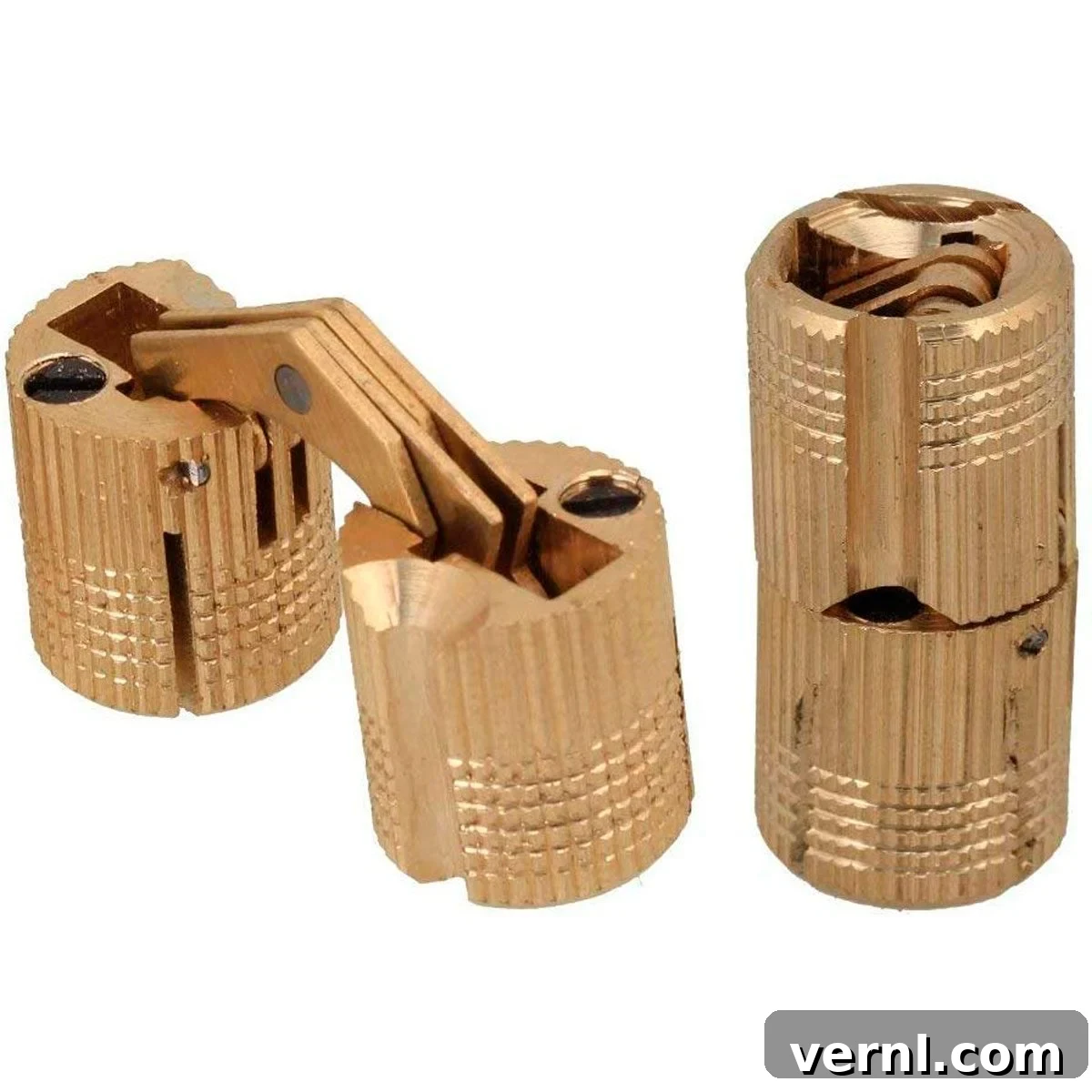
Barrel hinges, often referred to interchangeably as invisible hinges or concealed hinges, are a marvel of compact engineering specifically designed for applications where traditional, visible hinges would detract from the visual integrity of a piece. Unlike their more overt counterparts, barrel hinges are meticulously engineered to be entirely hidden within the thickness of the material, making them an ideal solution for achieving a sleek, minimalist aesthetic in fine woodworking. Their distinctive “barrel” shape is what gives them their name, and this design is key to their ability to provide smooth articulation while remaining unseen.
Typically crafted from robust solid brass, often including precision-machined brass links within their barrel, these hinges offer both durability and a touch of classic elegance. Brass is favored not only for its strength but also for its resistance to corrosion, ensuring longevity and consistent performance. While various manufacturers produce them, one of the most recognized and respected brands in this specialized niche is Soss, a name synonymous with precision and reliability in the realm of concealed hinge technology.
These specialized hinges find their primary application in a wide array of fine woodworking projects. Common uses include small decorative cabinets, delicate jewelry boxes, humidors, display cases, and various custom furniture pieces where a flawless exterior and an uninterrupted design are paramount. Their unique internal mechanism allows doors, lids, and panels to open fully, typically to a wide 180-degree angle, providing excellent access without revealing the hinge mechanism itself. This full range of motion, combined with their complete invisibility from either side when the door or lid is closed, makes them invaluable for high-end creations that demand a sophisticated touch.
However, it is crucial for any craftsman to understand their inherent limitations: barrel hinges are not recommended for vertical, structural, or heavy load-bearing applications. Their internal mechanism and mounting method are optimized for concealment and smooth operation within the material, not for supporting significant weight or handling strong shear forces. Attempting to use them in such applications could compromise their integrity, leading to premature failure of the hinges and potential damage to the entire project. For these heavier-duty tasks, alternative hinge types like heavy-duty concealed European hinges or traditional butt hinges designed for higher load capacities would be more appropriate.
Why Discerning Woodworkers Choose Barrel Hinges: Key Advantages
The decision to opt for barrel hinges often stems from a deep appreciation for refined aesthetics and functional elegance. For woodworkers and craftsmen who meticulously select their materials and painstakingly execute their designs, the hardware should complement, not compete with, the overall vision. Here’s a closer look at why barrel hinges stand out as the preferred choice:
- Unmatched Aesthetic Purity: The primary and most compelling advantage of barrel hinges is their ability to create an incredibly clean and uninterrupted visual line. With no visible hinge knuckle, pin, or plate, the entire focus remains on the exquisite wood grain, the precise joinery, and the design elements, resulting in a sophisticated, high-end appearance that speaks volumes about the craftsmanship.
- Seamless Integration: These hinges are designed to become an integral, almost invisible part of the structure, blending effortlessly into the door and frame (or lid and box). This seamless integration enhances the perceived value, quality, and overall craftsmanship of the finished piece, making it appear as though the components simply float or pivot without visible support.
- Smooth and Reliable Operation: Despite their hidden nature, high-quality barrel hinges offer remarkably smooth and consistent movement. Once properly installed with precision, they provide dependable articulation, allowing doors and lids to open and close with a satisfying fluidity and precision that contributes to the user’s experience.
- Durability and Longevity: As they are often made from solid brass, barrel hinges are inherently resistant to corrosion, rust, and wear. This makes them particularly suitable for projects that might be exposed to varying levels of humidity, such as humidors or bathroom cabinets. Their robust, though compact, construction contributes significantly to the overall longevity of the piece, ensuring that the hinge functions reliably for years to come.
- Enhanced Design Flexibility: By eliminating the need for visible hardware, barrel hinges provide designers and craftsmen with significantly greater creative freedom. They can confidently create pieces with complex curves, intricate inlays, continuous grain patterns that flow seamlessly across the joint, or custom profiles, knowing that no hardware will disrupt the visual harmony or necessitate design compromises.
- Subtle Security Benefit: While not their primary function, the entirely concealed nature of barrel hinges can offer a subtle, additional layer of security. Since they cannot be easily accessed or tampered with from the exterior when the door or lid is closed, they provide a measure of protection for valuable contents, making unauthorized entry more difficult than with exposed hinge types.
The Precision Craft: A Step-by-Step Guide to Barrel Hinge Installation
Installing barrel hinges is a precision-driven process that truly embodies the woodworking adage, “measure twice, cut once.” It demands meticulous accuracy and unwavering attention to detail, as there is very little room for error once holes are drilled into your precious project pieces. Unlike surface-mounted hinges that often offer some degree of adjustability after initial fastening, barrel hinges require perfect alignment from the outset. Here’s a detailed, step-by-step guide to ensure a flawless installation that brings your vision to life:
Essential Tools and Materials You’ll Need:
- Barrel Hinges: Select the correct size (diameter and length) that is appropriate for your project’s material thickness and the anticipated weight of the door or lid.
- Metric Drill Bits: Absolutely essential, as barrel hinges are almost exclusively manufactured and sold in precise metric sizes (e.g., 8mm, 10mm, 12mm). Ensure your bit exactly matches the hinge diameter.
- Drill Press: Highly recommended for drilling perfectly perpendicular and consistently accurate holes. While a hand drill can be used with extreme care and a dedicated drilling guide, a drill press minimizes error.
- Marking Tools: A sharp pencil, an awl for starting pilot points, a precise measuring tape, a square, and calipers (for very precise depth and spacing measurements) are all critical.
- Depth Stop: An indispensable tool for your drill bit. It ensures that all holes are drilled to the exact, consistent depth required, preventing too shallow or too deep drilling.
- Small Screwdriver: Required for expanding the set screws found on many barrel hinges, such as Soss hinges, to secure them in place.
- Clamps: To firmly secure your workpiece during marking and drilling, preventing movement and ensuring safety and accuracy.
- Scrap Wood: A vital piece of scrap wood, identical in thickness and type to your project material, for practicing your drilling technique and verifying your depth stop.
- Safety Glasses: Always protect your eyes when operating power tools.
The Detailed Installation Process:
- Achieve Precise Marking: This is arguably the most critical preliminary step. Carefully determine the exact desired location for each hinge on both the door/lid component and its corresponding frame/box component. Use your ruler and square to accurately mark the center point for each hole. For projects requiring multiple hinges, ensure perfect alignment and even spacing across the joint. Calipers can be invaluable for transferring measurements with utmost precision. Remember, the barrel hinge sits entirely within the material, so its precise position directly affects the eventual gap and flushness between the door and frame. Accuracy here prevents unsightly gaps or binding later on.
- Set the Drilling Depth with Utmost Care: Measure the full length of the barrel hinge. This precise measurement will dictate the exact depth of the holes you need to drill. It is absolutely critical that the holes are drilled to the correct depth – if too shallow, the hinge will not sit flush and the joint won’t close properly; if too deep, it can compromise the structural integrity of thinner material or cause the hinge to be loose. Attach a depth stop securely to your drill bit, setting it to the exact required depth. Always perform a test drill on your scrap wood of the same thickness to verify your depth stop setting before moving to your project pieces.
- Drilling the Holes: The Apex of Precision:
- Utilize a Drill Press for Superior Accuracy: If at all possible, use a drill press for this step. A drill press ensures that your holes are perfectly perpendicular to the surface of the wood, which is paramount for smooth hinge operation, precise door alignment, and the overall success of the installation.
- Select the Correct Metric Drill Bit: Choose a metric drill bit that precisely matches the diameter of your barrel hinge. A drill bit that is even slightly undersized will make inserting the hinge extremely difficult and could damage the wood, while an oversized bit will result in a loose fit, compromising the hinge’s stability and function.
- Execute Controlled Drilling: Drill slowly and steadily, allowing the sharp edges of the drill bit to cleanly cut through the wood. Frequently clear wood chips from the hole to prevent overheating the bit and to ensure a clean, smooth cut. Drill only to your pre-set depth stop. Avoid plunging the drill bit too quickly, especially with hardwoods, to prevent splintering.
- Careful Hinge Insertion: Gently slip the barrel hinges into the meticulously drilled holes in both the door/lid component and the corresponding frame/box component. The hinges should fit snugly but not require excessive force. If they are too tight, carefully re-check your drill bit size and ensure the holes are free of any debris or wood fibers. Never hammer the hinges in, as this can damage them or the surrounding wood.
- Assembling and Initial Alignment Testing: With the hinges loosely inserted, carefully bring the door/lid and the frame/box components together, aligning the hinge components. The pieces should close smoothly and squarely, revealing an even, consistent gap around the perimeter. If there’s any binding, rubbing, or noticeable misalignment, gently open the joint and re-evaluate your hole positions and depths before proceeding. This is your last chance for minor adjustments (by gently wiggling or re-seating hinges) before securing them.
- Securing the Hinges: Many barrel hinges, particularly higher-quality models like those from Soss, feature small internal set screws. Once the hinge is perfectly in place and the alignment of the door/lid is verified, use your small screwdriver to carefully turn these set screws. This action causes the barrel of the hinge to expand ever so slightly within the drilled hole, creating a secure friction fit that firmly locks the hinge in place. Exercise caution: do not overtighten, as this can potentially split softer woods, strip the screw, or deform the hinge itself. A firm but gentle twist is usually sufficient to achieve a secure hold. For barrel hinges without set screws, a tiny drop of high-quality epoxy or wood glue might be considered for a permanent fix, but be aware that this makes future removal or adjustment impossible without potentially damaging the wood.
- Final Operational Testing: Once all hinges are securely fastened, open and close the door/lid several times to ensure smooth, unhindered operation and full 180-degree movement (if designed for it). Check for any rubbing, uneven gaps, or unexpected resistance. Make any final minor adjustments if possible.
For those who prefer visual learning and desire more detailed demonstrations or advanced techniques, resources such as the Woodworkers Guild of America often offer valuable video tutorials on proper barrel hinge installation, which can be an excellent complement to written instructions.
Cost Considerations and Optimal Purchasing Strategies
The cost of barrel hinges is not static; it varies primarily based on several key factors including their size, the quality of the materials used, the brand reputation, and the quantity purchased. As a general rule, smaller hinges designed for delicate, lightweight projects will be less expensive per unit than larger ones intended for thicker or slightly heavier panels. Current market prices for barrel hinges at major home improvement retailers like The Home Depot typically range from approximately $1.87 to $4.08 per hinge. This makes them a relatively accessible and cost-effective option for many DIY enthusiasts and professional woodworkers alike. However, specialty woodworking suppliers or higher-end, precision-engineered brands might offer hinges at a slightly higher price point, reflecting advanced manufacturing precision, superior-grade materials, or specific finishes.
When you are ready to source barrel hinges for your next project, you have several excellent purchasing options:
- Large Retailers: National home improvement stores such as The Home Depot and Lowe’s typically carry a selection of common sizes and finishes, catering to general woodworking and DIY needs. Their accessibility makes them a convenient option for quick purchases.
- Online Marketplaces: Platforms like Amazon and eBay offer an extensive and diverse range from various manufacturers, encompassing both renowned brands and generic alternatives. This is an excellent avenue for finding a wider variety of sizes, materials (e.g., stainless steel, nickel-plated), and bulk purchasing options.
- Specialty Woodworking Suppliers: Stores and online retailers dedicated specifically to woodworking tools and hardware often stock premium barrel hinges. These suppliers can offer more specialized sizes, higher-quality finishes, and expert advice, making them ideal for high-end or unique projects.
- Manufacturer Websites: For specific, well-known brands like Soss, purchasing directly from their official website or through their authorized distributors ensures product authenticity, access to their full product line, and detailed technical specifications.
It is always a prudent practice to purchase a few extra hinges beyond your immediate project requirements, especially for critical or complex builds. This buffer accounts for any unforeseen installation issues, accidental damage, or potential future repair needs, saving you time and hassle.
Advanced Tips and Best Practices for Flawless Barrel Hinge Integration
Achieving a truly flawless finish and enduring functionality with barrel hinges often comes down to mastering a few advanced techniques and adhering to established best practices. These tips can help distinguish a good installation from an exceptional one:
- Invest in or Create a Hinge Jig: For projects requiring multiple hinges, or for craftsmen engaged in repetitive production, investing in a commercial hinge jig or fabricating a custom one for your drill press can drastically improve accuracy and consistency. A well-made jig ensures that every hole is drilled at the exact same location, depth, and angle, virtually eliminating errors and speeding up the process.
- Always Test on Scrap Material: Before drilling into your final, carefully prepared project pieces, always perform a comprehensive test run on a piece of scrap wood that is identical in thickness, species, and density to your actual material. This allows you to verify your chosen drill bit size, confirm the precise setting of your depth stop, and perfect your drilling technique without risking damage to your valuable work.
- Account for Wood Movement: While barrel hinges themselves are robust, remember that wood is a hygroscopic material that naturally expands and contracts with changes in ambient humidity. Design your door and frame clearances accordingly, leaving a small, consistent gap (e.g., 1/32″ or 0.8mm) around the perimeter to prevent the door from binding or swelling and getting stuck after installation, particularly in fluctuating environments.
- Utilize Non-Marring Clamps: When test-fitting, assembling, or performing any work where components need to be held securely, always use clamps that are equipped with protective pads (either rubber or soft wood blocks). This prevents unsightly dents, scratches, or compression marks on the delicate wood surfaces of your project.
- Practice Gentle Securing of Set Screws: When tightening the small set screws on the barrel hinges, remember that you are expanding a metal barrel into wood. Overtightening can easily split softer woods, strip the delicate screw threads, or deform the hinge itself, thereby compromising its hold. Apply firm but gentle pressure and stop as soon as the hinge feels securely seated. There is no need for excessive force.
- Lubrication is Rarely Necessary (and Use Wisely if So): High-quality brass barrel hinges are designed to operate smoothly without the need for lubrication due to the inherent properties of brass and precision machining. However, if a hinge ever feels stiff after many years of use, a tiny, almost imperceptible drop of a dry lubricant (such as graphite powder or a specialized, non-staining hardware lubricant) can sometimes help. Crucially, avoid oil-based lubricants as they can attract dust and grime, and potentially stain the surrounding wood, which would defeat the purpose of a hidden hinge.
- Plan for Potential Disassembly: If your project is designed to be disassembled or might ever require future repair or maintenance, be mindful of how you secure the hinges. Hinges with set screws are designed to be removable, offering flexibility. However, if you choose to secure hinges permanently with adhesive (e.g., epoxy), understand that this will make future removal or adjustment impossible without potentially damaging the wood. Consider the long-term implications during your design phase.
By diligently applying these advanced tips and embracing a meticulous, patient approach throughout the installation process, you can ensure that your barrel hinges perform their function perfectly and reliably. They will remain discreetly out of sight, allowing the true beauty, intricate details, and masterful craftsmanship of your woodworking project to shine brightly and unimpeded, delivering a truly professional and elegant finished product.