
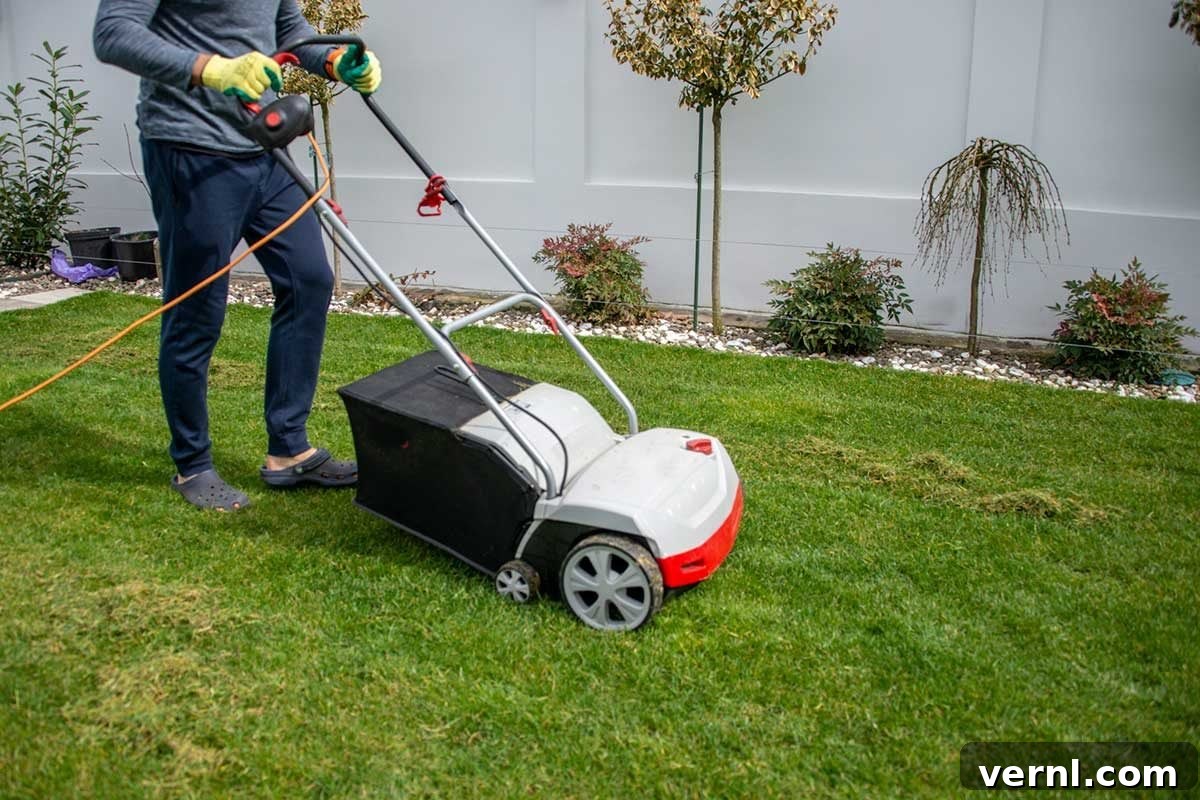
If neighborhoods start sounding a little quieter, the growing popularity of electric lawn mowers might have something to do with it. The transformation of lawn care is well underway, with more homeowners choosing battery-powered and corded electric models over their gas-guzzling counterparts. With a noise level on par with a dishwasher, typically ranging from 65 to 85 decibels, electric mowers are significantly less ear-piercing than gas-powered machines, which often operate at a roaring 90 decibels or more. This means firing up the mower early in the morning to beat the heat of the day is no longer out of the question, fostering a more peaceful community environment.
Beyond the immediate benefit of reduced noise pollution, electric mowers also play a crucial role in curbing air pollution. Traditional gas mowers are notorious for their emissions, contributing significantly to smog and greenhouse gases. In stark contrast, electric mowers drastically reduce harmful emissions. According to the National Gardening Association, electric models cut emissions of carbon monoxide, hydrocarbons, nitrogen oxides, and methane by an impressive 99 percent compared to their gas equivalents. Even when factoring in the power plant emissions required to generate electricity, they reduce overall carbon dioxide output by 38 percent. This makes electric lawn care an increasingly attractive option for environmentally conscious homeowners looking to minimize their carbon footprint and contribute to cleaner local air quality. The shift to electric isn’t just a trend; it’s a move towards a more sustainable and serene future for our communities.
Types of Electric Mowers
The electric mower market offers a diverse range of models designed to suit various lawn sizes, preferences, and budgets. From traditional walk-behind units to sophisticated robotic solutions, there’s an electric mower for almost every need.
You can find them with various cutting deck features, including side discharge for quick cutting, rear discharge for collecting clippings, or mulching capability, which finely chops grass clippings and returns them to the lawn as natural fertilizer. Some models are self-propelled, significantly reducing the effort required to push them, especially on larger or sloped terrains. For those seeking ultimate convenience, there are even advanced robot lawn mowers that operate autonomously, maintaining your lawn with minimal human intervention. Understanding the different types available is key to selecting the perfect electric mower for your home.
Corded Electric Mowers
Corded electric mowers are an excellent choice for smaller lawns, typically less than 8,000 square feet (about half an acre). These “plug-and-go” machines connect directly to an electrical outlet via an extension cord, providing a continuous and consistent power supply. One of their most significant advantages is that they won’t run out of power mid-mow, eliminating the need to wait for a battery to recharge before finishing your yard work. This uninterrupted operation can be a real time-saver for quick lawn maintenance.
However, the tether to a power source also means there’s a practical limit to how far you can mow. You’ll need to strategically plan your mowing path to avoid tangling the cord or, more importantly, running over it, which poses a safety hazard. Ideally, you should have conveniently located outdoor outlets in the front and back of your home, but you’ll still need to stay within a hundred yards or so of the power source. On the upside, corded mowers are generally lighter and easier to push compared to their cordless counterparts because they don’t house a heavy battery or gas tank. They also typically cost less than cordless models, making them an economical entry point into electric lawn care. The steady power delivery ensures consistent cutting performance without diminishing as you mow.
Cordless Electric Mowers
For medium-sized lawns, ranging from 8,000 to 1/2 acre or even up to an acre with multiple batteries, cordless electric mowers are often the more appropriate and practical choice. These battery-powered machines offer unparalleled freedom of movement, as they aren’t hooked up to a power supply. This makes them easier to maneuver, much like a traditional gas mower, and completely eliminates the worry of running over an extension cord. You can range further from an outlet and tackle every corner of your property without restriction.
While the enhanced mobility is a significant benefit, cordless mowers are generally heavier and costlier than corded models due to the integrated battery technology. To avoid interruptions and ensure continuous mowing on larger lawns, many homeowners opt to keep a spare battery on hand, allowing for a quick swap when the primary battery runs low. Modern lithium-ion batteries provide strong, fade-free power and have improved significantly in terms of run time and charge speed. Battery-operated mowers come in various styles, from classic walk-behind push mowers to self-propelled options and even advanced robotic models. For extensive properties, electric lawn tractors are available in both traditional and zero-turn configurations. These riding mowers boast significantly longer run times than walk-behind models, usually averaging one-and-a-half to two hours between charges, making them viable alternatives for larger landscapes.
Key Features to Look For in Electric Mowers
When selecting an electric lawn mower, considering its specific features can greatly enhance your mowing experience and the longevity of your investment. Beyond just corded or cordless, here are some important attributes to evaluate:
- Deck Size: The cutting width of the mower deck impacts how many passes you’ll need to make. Wider decks (20-22 inches) are more efficient for larger lawns, while narrower decks (13-17 inches) are ideal for smaller yards with tight spaces and intricate landscaping.
- Motor Type: Look for brushless motors, especially in cordless models. Brushless motors are more efficient, generate less heat, provide longer run times, and have a longer lifespan than brushed motors. They also tend to offer more consistent power delivery, which is crucial for tackling thicker grass.
- Cutting Height Adjustment: Most mowers offer a range of cutting heights, but consider the ease of adjustment. Single-lever height adjustment systems allow you to change the cutting height for all four wheels simultaneously, saving time and effort compared to individual wheel adjustments.
- Mulching, Bagging, and Side Discharge: Many electric mowers offer 3-in-1 capability. Mulching finely chops grass clippings and returns nutrients to your lawn, bagging collects clippings for disposal, and side discharge is useful for quickly clearing dense or taller grass. Choose a mower that offers the options best suited for your lawn care routine.
- Vertical Storage: For those with limited garage or shed space, models with vertical storage capability are a game-changer. These mowers can be folded up and stored upright, significantly reducing their footprint.
- Battery Voltage and Amp-Hours (Ah): For cordless models, voltage (V) indicates power, and amp-hours (Ah) indicate battery capacity and thus runtime. Higher voltage (e.g., 60V, 80V) often means more power for tough grass, while higher Ah (e.g., 4.0Ah, 6.0Ah) means longer run times. Many brands offer interchangeable battery systems across their tool lines, which can be a significant cost-saver.
- Load-Sensing Technology: Some advanced electric mowers feature load-sensing technology, which automatically adjusts motor speed and power output based on the thickness or density of the grass. This optimizes battery life and ensures consistent cutting performance without bogging down.
Top Electric Mower Brands
The electric lawn mower market is robust, with several reputable brands leading the way in innovation, performance, and reliability. Here are four brands with excellent reputations, known for their quality electric offerings:
- Greenworks: Greenworks is a pioneer in the electric outdoor power equipment industry, offering a wide range of models. Their offerings span from 40 to 80 volts, with deck sizes typically between 17 and 21 inches, available in both corded and cordless configurations. They provide options like rear-wheel drive, push mowers, and self-propelled mowers. Their Greenworks Pro 80V line is particularly notable for its high-efficiency brushless motors and a universal battery system that allows batteries to be interchanged across multiple tools, offering convenience and cost savings to users.
- Snapper: Known for robust and durable lawn equipment, Snapper’s electric mowers generally operate at 48 to 82 volts and feature 19- to 21-inch decks. They focus primarily on cordless models, offering convenient features such as push-button starts for effortless ignition, automatic drive for easy propulsion, versatile three-in-one mowing decks (mulch, bag, discharge), and vertical storage capability for space-saving.
- Toro: A household name in lawn care, Toro offers powerful 60-volt cordless electric mowers with cutting decks ranging from 20 to 22 inches. Their lineup includes both self-propelled and walk-behind models. The popular Toro Recycler series is renowned for its three-in-one capability, providing efficient mulching, side discharge, and bagging options, coupled with intuitive speed control systems that adapt to your walking pace.
- Ryobi: Ryobi specializes in providing accessible and innovative power tools, including their 40-volt electric mower range. These mowers come with deck sizes from 13 to 21 inches and are available in self-propelled, walk-behind, and riding configurations. Ryobi’s electric mowers often incorporate load-sensing technology, which intelligently maximizes power when needed to tackle tough grass, ensuring consistent performance and optimal battery life across their extensive 40V battery platform.
Why Choose an Electric Mower?
The decision to switch to an electric lawn mower goes beyond just environmental impact. Here are four compelling reasons why an electric mower may be the best choice for you, enhancing both your lawn care routine and your overall quality of life:
- Less Noise: This is arguably one of the most immediate and appreciated benefits. Gas mowers operate at about 90 decibels, making hearing protection an absolute necessity for extended use and often disturbing neighbors. Electric mowers, however, fall into the 65 to 85 decibel range, which is comparable to the level of normal conversation (around 75 decibels). This significant reduction in noise pollution means you can mow your lawn early in the morning or late in the evening without causing a disturbance, and you can even listen to music or podcasts while you work, making the chore a much more pleasant experience.
- Lightweight and Maneuverable: Electric mowers are inherently lighter than gas-powered mowers because they lack a heavy engine, fuel tank, or complex drive train. This reduced weight makes them considerably easier to push, maneuver around obstacles, and navigate tight spaces in your yard. The lighter design also translates to less fatigue during prolonged mowing sessions and simpler storage, as many models are designed for compact, vertical storage.
- Easy Starting: Gone are the days of wrestling with a stubborn pull cord, priming pumps, or adjusting chokes. Electric mowers offer an instant-on experience. Most models feature a simple push-button start or a flip of a switch, allowing you to get to work immediately. This reliable and effortless starting mechanism is a major convenience, especially for those who find pull-start systems challenging.
- Easy to Maintain: Electric mowers are remarkably low-maintenance compared to gas models. You eliminate the need for regular trips to the gas station, no more messy oil changes, oil filter replacements, or spark plug checks. The typical maintenance for an electric mower simply involves charging the battery after use, keeping the cutting deck clean, and occasionally sharpening the blade. This simplicity saves time, money, and the hassle associated with traditional engine upkeep, allowing you to spend more time enjoying your yard rather than maintaining your mower.
Considerations When Buying an Electric Mower
While the benefits of electric mowers are numerous, there are several key factors to keep in mind when making your buying decision to ensure you select a model that perfectly suits your needs and expectations.
- Maintenance: Although electric mowers require significantly less maintenance than gas-powered models, they are not entirely maintenance-free. You will still need to regularly sharpen the blade to ensure a clean cut and prevent tearing your grass, and clean the underside of the deck to prevent grass buildup. Crucially, proper battery care is essential for cordless models. Batteries typically come in two main forms: sealed lead-acid, which are durable and often more affordable but heavier, and lithium-ion, which are lighter, more expensive initially, but offer superior performance, a longer lifespan, and provide steady power that won’t diminish as the charge decreases. Always follow manufacturer guidelines for charging and storage to maximize battery life.
- Battery Runtime: For cordless models, battery runtime is a critical consideration. While the size (Ah) and voltage (V) of a battery are primary factors, other environmental and operational elements also play a significant part. These include the size of the cutting deck (wider decks consume more power), the thickness and/or wetness of the grass (denser or wet grass requires more energy), the terrain (slopes and uneven ground demand more power), and any attachments used. Always check the estimated runtime and consider purchasing a second battery if your lawn is at the upper end of a mower’s suggested capacity to avoid interruptions.
- Mowing Time and Efficiency: While electric mowers are often easier to maneuver due to their lighter weight, some models, particularly those designed for smaller yards, may cut a narrower swath than gas mowers. This means you might have to make more passes to cover your entire lawn, potentially increasing the total time spent mowing. However, this can be offset by the ease of use, instant start, and reduced fatigue, making the overall experience less strenuous even if it takes a few extra minutes. For larger lawns, opting for a self-propelled or riding electric mower with a wider deck can significantly improve efficiency.
- Cost Savings: The initial purchase price of an electric mower, especially a cordless lithium-ion model, can sometimes be higher than a comparable gas mower. However, the long-term cost savings are substantial. Cordless mowers, for instance, use just $3 to $4 of electricity per year on average, while a gas mower may consume $20 to $30 annually in gas and oil alone, not to mention additional costs for spark plugs, air filters, and engine tune-ups. Over the lifespan of the mower, the absence of fuel, oil, and extensive engine maintenance translates into significant financial savings, quickly recouping the initial investment.
- Environmental Impact: The environmental benefits of electric mowers are a major driving force behind their increasing popularity. This shift is fueled in part by stringent new emissions regulations and greater consumer awareness of climate change and local air quality. By eliminating direct emissions, electric mowers contribute to cleaner air in residential areas and reduce reliance on fossil fuels. As electrical grids increasingly incorporate renewable energy sources, the overall carbon footprint of operating an electric mower continues to shrink, making it an even more sustainable choice for eco-conscious homeowners.