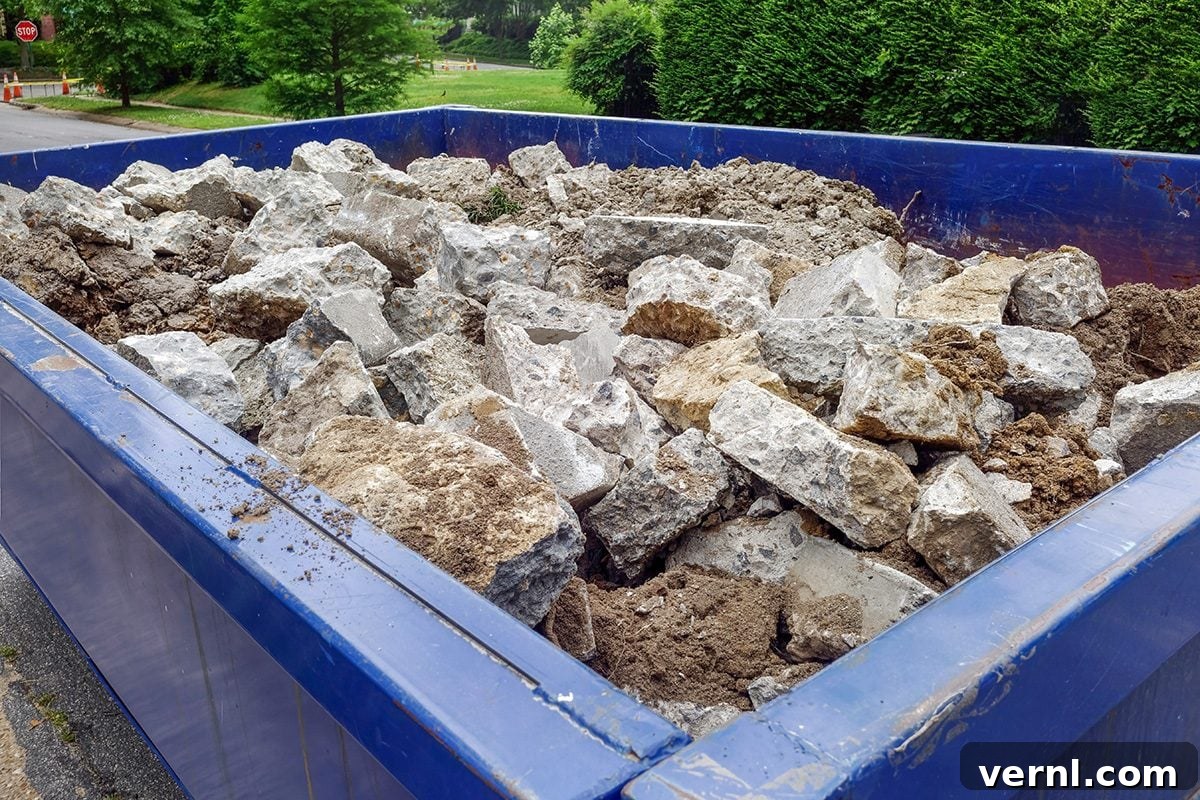
Concrete stands as one of the most fundamental and widely utilized construction materials across the globe. Its enduring strength and remarkable durability stem from a simple yet powerful blend of cement, water, and aggregates like sand or crushed stone. This versatile mixture hardens to form a robust product integral to virtually every aspect of our built environment, from sprawling urban skyscrapers and essential infrastructure like bridges and roads, down to everyday sidewalks and residential patios.
For homeowners, encounters with concrete are frequent, often defining the exterior landscape of their property. Whether it forms the sturdy foundation of a patio, the smooth surface of a walkway, or the reliable steps of a staircase, concrete plays a crucial role. However, just as pervasive as its presence is the challenge it presents when its useful life ends.
The task of removing old, cracked, or unwanted concrete – known as concrete demolition – is inherently labor-intensive and physically demanding. Yet, the work doesn’t stop once the concrete is broken up. Disposing of this heavy, bulky material introduces its own set of complexities, often becoming one of the most significant logistical and financial hurdles in a renovation or removal project. As one might experience when replacing a cracked patio with a new paver design, the cost and effort associated with proper concrete disposal can easily rival, if not exceed, the demolition itself.
This comprehensive guide delves into the critical importance of responsible concrete disposal. We will explore the environmental implications, local regulations, and offer practical, actionable advice on how to handle concrete waste effectively and safely in your area. Our insights are informed by the extensive experience of demolition and waste management professionals, including Scott Rumplik of GBS Dumpster Rentals and Louis Fiore, a seasoned retired demo and trash expert, ensuring you have the knowledge to navigate this challenging aspect of any construction or renovation project.
Why Proper Concrete Disposal and Recycling is Imperative
The implications of concrete disposal extend far beyond the immediate inconvenience of removing it. Understanding why proper disposal and, more importantly, recycling, is crucial involves examining its environmental footprint, potential health risks, and the strain it places on waste management systems.
Environmental Strain: Landfill Volume and Persistence
The most immediate and significant issue with discarding concrete is the sheer volume and weight it occupies in landfills. Unlike organic materials such as wood or yard waste, concrete is an inert, non-biodegradable material that does not decompose over time. This means that once it’s in a landfill, it stays there indefinitely, taking up precious space without breaking down. Given its high density, concrete contributes disproportionately to the weight and volume of landfill waste. If left unchecked, the unrestricted disposal of concrete would rapidly consume an inordinate amount of space in already overburdened landfills, reducing their lifespan and necessitating the creation of new, often environmentally contentious, disposal sites.
The extensive weight of concrete also places immense strain on waste collection and transportation infrastructure. Specialized heavy-duty equipment is required for its handling, leading to increased fuel consumption, emissions, and wear and tear on vehicles and facilities. Embracing recycling reduces this pressure significantly, promoting sustainability.
Health and Safety Considerations
Beyond its physical bulk, improper concrete handling and disposal can pose legitimate health risks. As Louis Fiore highlights, “Concrete contains lots of dangerous ingredients, like lime and silica.” While these risks are most pronounced during the initial mixing stage when fine cement dust containing crystalline silica becomes airborne, hardened concrete is not entirely risk-free. When concrete is cut, drilled, or crushed during demolition, these dangerous components can resurface in the form of respirable dust.
- Crystalline Silica: Inhaling fine crystalline silica particles can lead to silicosis, a severe and irreversible lung disease, as well as increasing the risk of lung cancer and other respiratory ailments.
- Lime (Calcium Oxide): Present in cement, lime is highly corrosive. Contact with skin or eyes can cause severe burns, and inhalation can irritate the respiratory tract.
- Heavy Metals and Contaminants: Older concrete, or concrete from industrial sites, might be contaminated with hazardous substances like lead paint, asbestos fibers, chemicals, or petroleum products. Demolishing and disposing of such contaminated concrete without proper precautions can release these toxins into the environment and expose workers to serious health hazards.
Thus, proper protective gear, ventilation, and dust suppression techniques are essential during any concrete demolition or crushing activity, regardless of whether it’s for disposal or reuse.
The Environmental Benefits of Concrete Recycling
The most compelling reason for proper concrete disposal is the opportunity for recycling. Concrete recycling offers a myriad of environmental advantages:
- Resource Conservation: Recycling concrete reduces the demand for virgin aggregates like sand, gravel, and crushed stone, conserving natural resources and minimizing the environmental impact of quarrying.
- Energy Savings: Producing new aggregate requires significant energy for extraction, processing, and transportation. Recycled concrete reduces this energy expenditure.
- Reduced Landfill Dependence: Diverting millions of tons of concrete from landfills extends their lifespan and reduces the need for new landfill development.
- Lower Transportation Costs and Emissions: Often, recycled concrete facilities are closer to construction sites than aggregate quarries, leading to shorter haul distances, lower fuel consumption, and reduced greenhouse gas emissions.
- Cost-Effectiveness: In many areas, the cost of disposing of concrete at a recycling facility can be lower than landfill tipping fees, offering economic benefits alongside environmental ones.
Local Laws & Regulations Governing Concrete Disposal
Navigating concrete disposal requires an understanding of the legal landscape, which can vary significantly by location. While concrete is a universal material, the rules for its disposal are predominantly governed at the state and local levels, reflecting regional environmental priorities and available infrastructure.
State and Municipal Regulations: The Local Imperative
A crucial first step for any concrete removal project is to check with your local public works department, municipal waste management authority, or transfer station. These entities can provide specific guidance on local concrete disposal options. Generally, municipal landfills, which are designed for household waste, typically do not permit concrete due to its immense volume, weight, and the fact that it can be recycled. Instead, concrete is usually directed to dedicated concrete recycling centers or Construction and Demolition (C&D) landfills.
Local jurisdictions may impose specific requirements regarding the cleanliness of the concrete, acceptable piece sizes, and whether rebar or other contaminants need to be removed prior to drop-off. Some areas might have mandates or incentives for recycling, making it not just an environmentally sound choice but also a legally or economically favorable one.
Federal Oversight: EPA and RCRA Guidelines
On a federal level, the Environmental Protection Agency (EPA) plays a guiding role. For “clean” or “cured” concrete – meaning concrete that is free from hazardous contaminants – the EPA generally classifies it as “non-hazardous solid waste.” This designation typically exempts clean concrete from the stringent regulations applied to hazardous materials, simplifying its disposal and encouraging recycling.
However, this classification changes dramatically if the concrete is contaminated. Concrete that has been exposed to or contains hazardous substances, such as lead-based paint, asbestos fibers, significant chemical spills (like oil or industrial solvents), or certain sealants, is reclassified as “hazardous waste.” In such cases, its disposal falls under the strict guidelines of the EPA’s Resource Conservation and Recovery Act (RCRA). RCRA mandates a cradle-to-grave management system for hazardous waste, requiring specialized handling, transportation, and disposal methods to prevent harm to human health and the environment.
If you suspect your concrete might be contaminated, it is imperative to contact your state’s environmental agency or a certified hazardous waste disposal company. They can provide detailed information on testing, removal protocols, and compliance requirements under RCRA, ensuring legal and safe disposal.
How To Dispose of Concrete Safely and Responsibly
Choosing the most appropriate concrete disposal method depends on several factors: your budget, physical ability, the volume of concrete to be removed, and local regulations. Here are the most common and effective options, prioritizing safety and environmental responsibility.
Recycling Centers: The Preferred Eco-Friendly Option
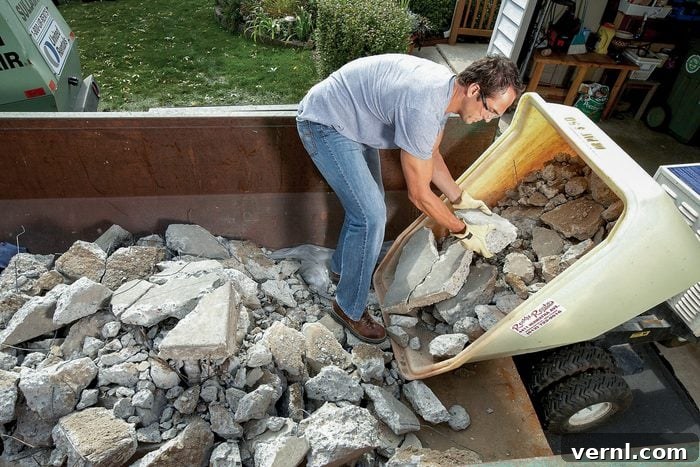
Hauling clean, unpainted, and uncontaminated concrete to a local concrete recycling center is often the most environmentally friendly and increasingly, the most cost-effective method. As Louis Fiore explains, “You usually pay by the ton,” making it economical for larger quantities. Most recycling centers will also have size limits per individual piece of concrete (e.g., a 2×2-foot maximum) to facilitate their crushing equipment.
At these centers, concrete undergoes a transformation. Specialized crushers break down the material into various sizes of aggregate. Fiore notes that this “gravel that’s used as underlayment for roads, or they might mix it with asphalt as a binder for paving.” This recycled concrete aggregate (RCA) has a wide range of applications:
- Road Base: A foundational layer for new roads, parking lots, and driveways.
- Fill Material: Used in construction projects to raise ground levels or fill excavations.
- New Concrete Mix: Finer RCA can be incorporated into new concrete mixes, reducing the need for virgin aggregates.
- Drainage Aggregate: Its porous nature makes it suitable for drainage systems.
Furthermore, Scott Rumplik emphasizes a key benefit: “They will also take out any rebar or metal and recycle that too.” This comprehensive recycling approach ensures that nearly all components of the old concrete find a new purpose, significantly reducing waste. Before heading to a recycling center, it’s advisable to call ahead to confirm their acceptance policies, hours of operation, and current tipping fees.
Utilize a Construction and Demolition (C&D) Dumpster Service
For larger projects or those who prefer convenience, renting a C&D approved dumpster is an excellent solution. These specialized dumpsters are designed to handle heavy construction and demolition debris. The process is straightforward: you rent a dumpster specifically designated for concrete (or sometimes mixed C&D if acceptable), fill it with your clean concrete waste, and the rental company handles the pickup and proper disposal for a fee.
Before booking, always verify with the dumpster rental company that concrete is acceptable. Some companies have specific dumpsters for “clean concrete” (meaning only concrete, no other debris) which may offer a different pricing structure. Others might accept concrete as part of a mixed C&D load, though this can sometimes incur higher costs. This option eliminates the need for personal hauling and ensures the material is transported to an appropriate facility, whether it’s a recycling center or a C&D landfill.
Transport to a Dedicated C&D Landfill
In regions with high construction and demolition activity, particularly large urban and suburban areas, dedicated Construction and Demolition (C&D) landfills are common. Unlike municipal landfills, C&D landfills are specifically permitted to accept non-hazardous, non-putrescible construction and demolition debris. This can include a wide array of materials in the same load, such as concrete, asphalt, wood, glass, drywall, bricks, and roof shingles.
This option is particularly useful for projects that generate a mix of demolition debris that would be difficult to separate for individual recycling streams. While C&D landfills primarily serve as a disposal point rather than a recycling hub, many now actively sort incoming materials to recover valuable recyclables, including concrete. To find C&D landfills in your vicinity, contact your local solid waste department or perform an online search for “C&D landfill near me” or “construction debris disposal facilities.”
Re-use Concrete On Your Own Property: A Sustainable DIY Approach
“It’s a lot of work to haul concrete,” remarks Louis Fiore, highlighting the physical demands of off-site disposal. For those looking to save money, reduce their environmental footprint, and add unique features to their landscape, reusing concrete directly on your property is an appealing and sustainable alternative.
Creativity is key when repurposing broken concrete. Larger, flatter pieces can be ingeniously transformed into:
- Stepping Stones: Arrange them to create rustic and durable pathways across your lawn or garden.
- Walkways and Patios: Laying larger pieces close together can form an attractive, hard-wearing surface.
- Decorative Walls or Garden Edges: Stack flat pieces, mortar them together, or simply arrange them to define garden beds, create raised planters, or build low retaining walls.
- Sub-base or Fill Material: For new concrete projects, or any area needing a stable foundation, crush old concrete into gravel using a sledgehammer or a rented plate compactor for smaller aggregate. This hardpack base provides excellent drainage and stability, serving as an ideal foundation for patios, sheds, or even new concrete slabs.
When cutting, breaking, or crushing concrete for reuse, always prioritize safety. Wear a high-quality dust mask (N95 or better) to protect against silica dust inhalation. Don protective gloves and eye protection. Using water to dampen the concrete surface during cutting or breaking can significantly help in suppressing dust, making the process safer and cleaner.
How To Find Where to Dispose of Concrete Near You
Locating the right concrete disposal facility in your area is straightforward if you know where to look. Here’s a systematic approach to finding options near you:
- State and Local Environmental Agencies: Begin by checking the official website of your state’s environmental protection agency or your local county/city environmental or public works department. These sites often provide comprehensive lists of permitted C&D landfills, concrete recycling centers, and transfer stations within their jurisdiction.
- Local Landfills, Transfer Stations, and Public Works: A simple phone call can yield direct answers. Contact the administration of your local municipal landfill, transfer station, or public works department. They can inform you about their acceptance policies for concrete and direct you to appropriate facilities that do accept it.
- Online Search Engines: Leverage the power of online search with specific keywords. Try phrases like:
- “concrete recycling near me”
- “concrete disposal near me”
- “demolition waste disposal [your city/region]”
- “C&D landfill [your city/region]”
- “recycled concrete aggregate facilities”
- Dumpster Rental Companies: Many local dumpster rental services, especially those specializing in construction and demolition debris, are excellent resources. They are well-versed in local regulations and disposal sites and can provide guidance even if you don’t use their service for the haul.
- Local Contractors: If you know any local demolition contractors, landscapers, or concrete professionals, they can often provide valuable insights into where they typically dispose of concrete waste in the area.
Always confirm the facility’s hours, acceptance criteria (e.g., clean concrete only, size limits), and current pricing before transporting your material.
About the Experts
- Scott Rumplik is the owner of GBS Dumpster Rentals in Hampden, Massachusetts, a trusted family-owned business serving its community since 2001. His expertise lies in efficient and responsible waste management solutions for construction and demolition projects.
- Louis Fiore is a retired demolition and trash professional based in Springfield, Massachusetts. With over thirty years of invaluable industry experience, Louis offers practical insights into the complexities of waste disposal and the best practices for handling construction debris.